The Untold Cost of a Classic: Why Ice Cube Says the Magic of Friday Was Shattered By a Battle Over Credit
When Friday hit theaters in 1995, it wasn’t just a movie; it was a cultural lightning bolt. It redefined the American comedy landscape, replacing the grim narratives of urban struggle with a sun-drenched, hilariously honest look at one day in South Central Los Angeles. The film was an immediate, quotable, and infinitely re-watchable success, launching the careers of its stars and setting a new standard for neighborhood comedy. Yet, behind the infectious laughter, the quick-witted banter, and the seemingly effortless chemistry, a quiet storm was brewing.
In a candid, long-awaited admission, Ice Cube—the film’s co-writer, star, and producer—has finally revealed the deeper, more painful truth that most fans have never figured out: the cost of Friday‘s success was the fracture of the creative partnership that brought it to life. The drama that led to Chris Tucker’s stunning, multi-million dollar refusal to return for the sequels was not simply about faith or finance; it was about a deeply human, deeply painful battle over credit. It was a collision of egos, a war between the creator’s vision and the performer’s spontaneous genius, that permanently changed the face of the franchise.
The Audacious Vision: From Gangsta Rap to Giggles
To truly grasp the significance of Friday, one must understand its origin and the tremendous career risk it represented for Ice Cube. Before 1995, O’Shea Jackson was not known for making people laugh; he was known for making people think and occasionally fear. As a driving force behind NWA, his music was a chronicle of anger, complex survival, and non-nonsense street critique. His transition to a comedy film about friends smoking weed on a porch was met with widespread skepticism.
In the early 1990s, Hollywood’s depiction of Black neighborhoods was dominated by heavy, powerful crime dramas like Boyz n the Hood. While Cube knew the dangerous, relentless pursuit of money and survival shown in those films, he recognized they only told half the story. The full truth of life in South Central L.A. included laughter, friends hanging out, neighbors arguing, and families striving for happiness amidst hardship. This joy was missing on screen, and Cube decided he was the one to change it.
When he shared his plan to write a low-budget comedy, his friends, his crew, and the industry at large questioned him. Some suggested he was “selling out,” believing the move would dilute the formidable legacy he had built with his music. But Ice Cube wasn’t seeking validation; he was seeking authenticity. He aimed to prove that life, even in the hardest times, could still be funny and real.
He teamed up with his friend, DJ Pooh, who also grew up in South Central. Together, they wrote a story focused on one single, eventful day, deliberately avoiding violence, guns, and typical gang narratives. Their simple, groundbreaking idea—a slice of life centered on friendship and everyday moments—was revolutionary. It was this determination, fueled by the same spirit that drove him as a kid from Los Angeles who learned the value of hard work, that got the project off the ground.
The Impossible Birth of an Accidental Blockbuster
Despite the strength of their script, the journey to the big screen was fraught with difficulties. Money was tight, and major studios were uninterested in what they dismissed as a small “hood comedy.” Cube and Pooh took inspiration from filmmakers like Robert Townsend and Kevin Smith, who proved that a strong story could be told on a shoestring budget without waiting for industry approval.
Their breakthrough came with New Line Cinema, which saw the potential and agreed to fund the film. But the studio had conditions. The most painful was the decision regarding the casting of Smokey. DJ Pooh, who was instrumental in co-writing the story and serving as a mirror for the character, was deemed too inexperienced to play the role and stepped aside to take a smaller part. It was a testament to Cube’s dedication to the vision that he allowed a core partner to be sidelined to ensure the film’s survival.
With DJ Pooh out of the running for the co-lead, Ice Cube needed a new Smokey. The studio suggested established, proven names like Chris Rock or Tommy Davidson, but Cube wanted authenticity and a fresh face. He saw Chris Tucker, a young, loud, fast-talking comic he had watched on Def Comedy Jam, and believed Tucker had the raw, unpredictable energy the role needed.
However, the casting risk nearly backfired. Tucker’s first audition was a disaster. Tired and unprepared from non-stop stand-up shows, he failed to land the jokes, and the excitement around him vanished. The team worried that Cube had made a terrible mistake. Time was running out, and the studio was growing impatient.
This is where the magic of collaboration truly saved the film. Director F. Gary Gray, seeing the unique potential others missed, fought to give Tucker a crucial second chance, using his own influence to convince the studio. Meanwhile, actress Angela Means (Felicia) stepped up, inviting Tucker into her home, sharing dinner, and patiently running lines with him. That critical support allowed Tucker to return, confident and full of life. His second audition was electric, turning him from a casting risk into the perfect match.
The Unscripted Gold and The Quiet Rivalry
Friday was a triumph of execution under pressure. Shot in just 20 days with a budget of less than $3 million, every single minute counted. The set was fun, but Ice Cube, as producer, remained sober and hyper-focused, acutely aware that he could not afford to lose control of his first major film effort.
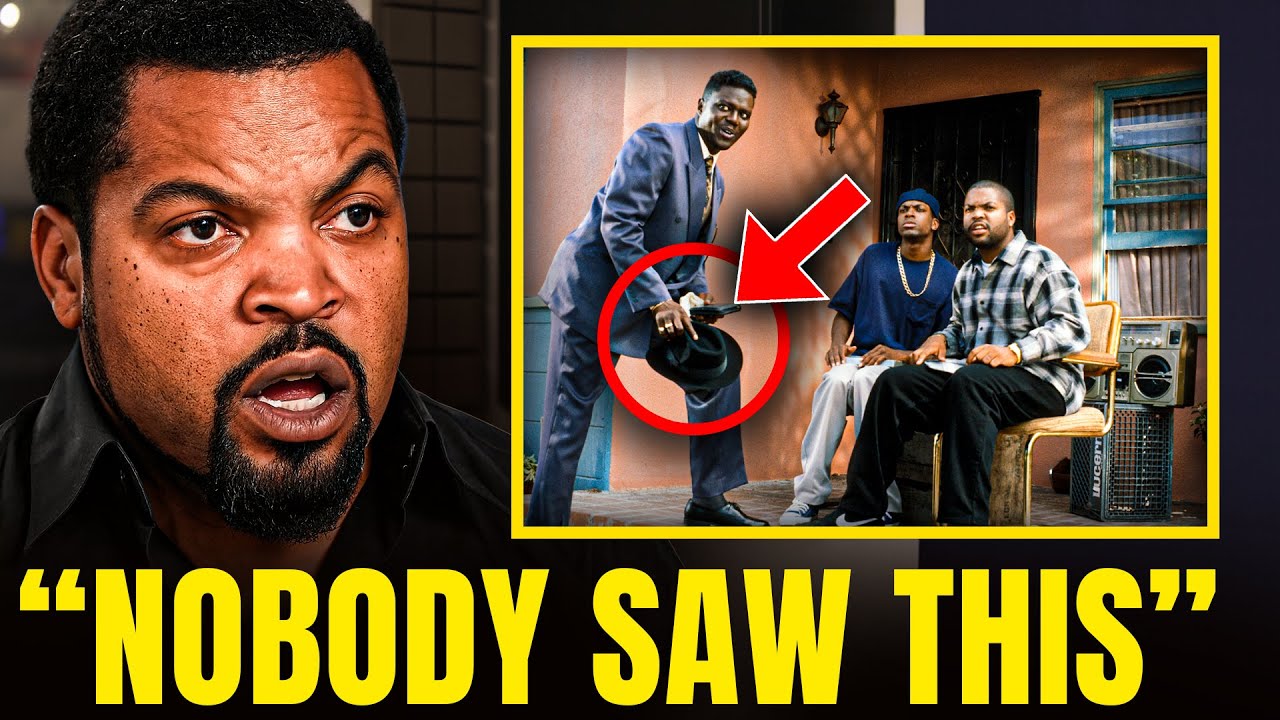
What truly transformed Friday from a simple comedy into a cultural classic was the spontaneous brilliance that bled off the script. Moments like Angela Means deciding to step right between Craig and Smokey on the porch—a change that was not in the script—made the scene unforgettable. Tucker’s genuine, annoyed reaction made the moment funnier and more believable. His quick wit and improvisational skills were pure, unadulterated gold. His chemistry with Ice Cube was the film’s heartbeat, making Smokey one of the most beloved and memorable characters in comedy history.
But as the film’s popularity soared and the sequels were greenlit, the foundation of the partnership began to crack. The improvisational genius that made the film shine became the source of a deep, unseen tension between the two leads.
When Next Friday came out in 2000, Chris Tucker’s absence was the glaring question mark. The official stories were known: he had grown deeply religious and felt the role of Smokey—which promoted drug use—no longer aligned with his personal beliefs. He confirmed this, stating he didn’t want to promote marijuana use, especially to young, impressionable fans. Furthermore, he was poised to become an international superstar, with offers for the Rush Hour franchise reaching an astronomical $20 million per movie—a figure no Friday sequel could touch. John Witherspoon, who played Craig’s father, jokingly noted that anyone would take that kind of money.
However, Ice Cube has now revealed that these reasons, while true, only tell part of the story. According to those close to the project, a deeper, more personal issue was already poisoning the well: the battle for recognition.
The Creator vs. The Star: A Battle for Recognition
Ice Cube was the architect of Friday. He created, wrote, and produced the film; it was his vision and his risk. He built the foundation, secured the funding, and stood by the project when others laughed. Yet, as the film grew into a phenomenon, Chris Tucker’s spontaneous comedic timing and off-script ad-libs became the film’s defining feature. Fans loved Smokey so much that many began to believe his performance alone carried the movie, overshadowing Ice Cube’s indispensable role as the creator and foundation-builder.
To Cube, it felt like his hard work and original creative vision were being forgotten. He had shaped the story, but Tucker was receiving the lion’s share of the applause for bringing it to life with his instinct. To Tucker’s supporters, his comedic energy was the vital ingredient that gave the movie its unique identity, making him more than just an actor but an essential collaborator whose unwritten brilliance was indispensable to its cultural resonance.
This inherent tension—between the writer/producer who demands control over his work and the improvisational artist who relies on natural flow—slowly evolved into a “quiet rivalry.” What had started as a partnership based on mutual respect faded into a distance fueled by tension over who deserved the greater recognition.
The conflict never exploded into a public feud, but it was clear to the inner circle that the relationship was strained. The unity and spark that defined the first film were slowly replaced by disagreements over creative ownership. When the sequel offers came, Tucker chose not only the path of faith and bigger paychecks, but also the path of distance from a partnership that had become creatively contentious. He moved on to new projects, and Cube continued the franchise without him, determined to protect his built vision from being changed by others, even if it meant sacrificing the chemistry that made Friday a timeless masterpiece.
The legacy of Friday remains one of comedy’s greatest achievements, yet its success is forever tethered to this quiet tragedy. The story serves as a profound, bittersweet reminder that even the most successful collaborations can be fragile, and that the beautiful, unscripted magic that makes a classic can often be the very force that drives its creators apart.