The Laughter That Broke the Code: Gunna’s Silent Response Exposes Lil Baby’s Staggering Hypocrisy in the Wake of the YSL Fallout
The history of hip-hop is littered with the ruins of shattered relationships, but few feuds have been as publicly brutal, as financially consequential, or as culturally defining as the bitter fallout between Gunna and Lil Baby. Once inseparable collaborators, the architects of the trap anthem “Drip Too Hard,” their friendship, built on shared struggles and mutual success, collapsed instantly following Gunna’s 2022 Alford plea deal in the sweeping YSL RICO case. The rupture created a deep, painful rift in the Atlanta music scene, turning a brotherhood into a vicious, one-sided rivalry. For two years, Lil Baby has been the aggressor, the judge, and the moral executioner, publicly branding Gunna as a “rat” and a pariah.
But a tectonic shift is occurring. Amidst the relentless disses and the unforgiving judgment from the community, Gunna has responded not with a retaliatory track, not with a furious social media post, but with a simple, genuine, and profoundly cold act: laughter. That singular moment on stage, where Gunna was filmed openly laughing at a fan’s attempt to stir the rivalry, has arguably delivered a more devastating blow to Lil Baby’s credibility than any diss record could. It’s the ultimate dismissal, an unbothered affirmation of victory that exposes the glaring hypocrisy lurking beneath Lil Baby’s fierce adherence to the street code.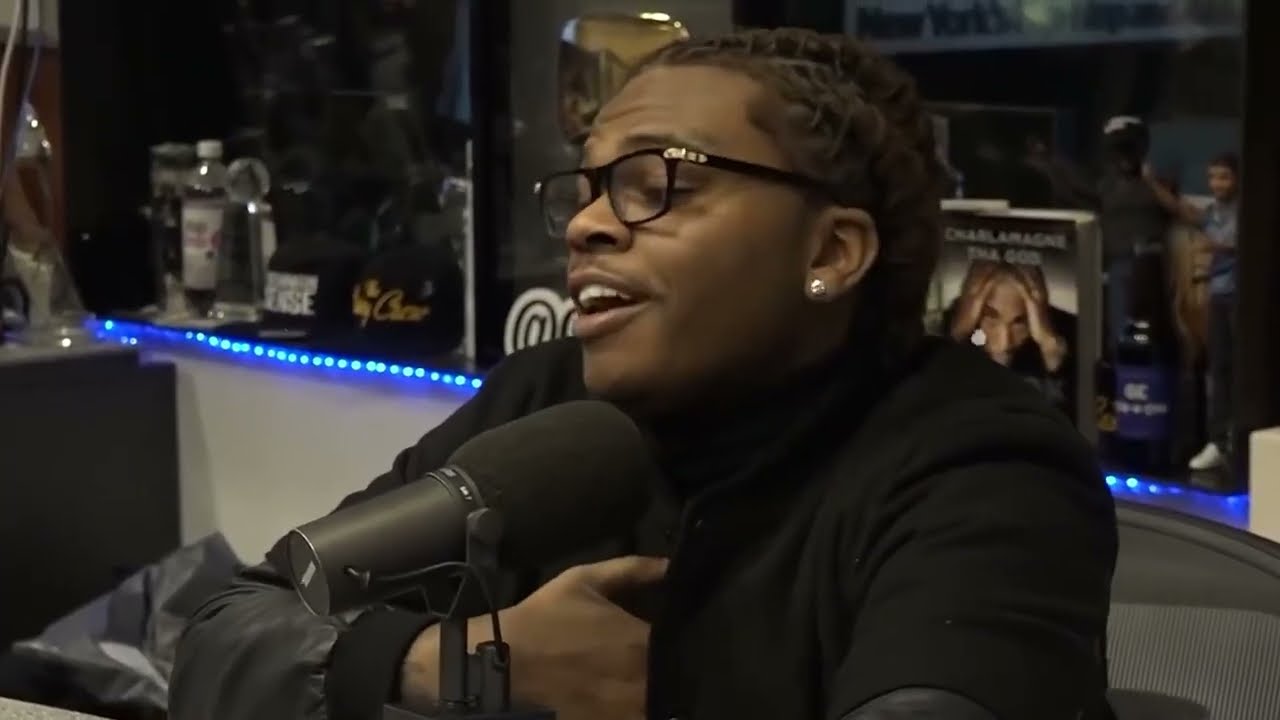
The Rise and Ruin of an Undeniable Partnership
To understand the depth of the current animosity, one must appreciate the magnitude of the partnership that preceded it. Gunna and Lil Baby were more than peers; they were a creative nexus. Their 2018 joint mixtape, Drip Harder, was an undeniable commercial and cultural moment, catapulting them both to superstar status and defining a specific, melodic subgenre of trap music. They lived together, traveled together, and in Baby’s own words, Gunna was a mentor, even allegedly paying him to write verses to help him learn the fundamentals of rapping. This was a bond forged in the trenches of the industry, seemingly impervious to the usual pitfalls of fame.
That bond shattered on December 14, 2022. Facing a mountain of evidence in the expansive YSL RICO indictment, Gunna—whose real name is Sergio Kitchens—took an Alford plea. This specific legal maneuver allowed him to maintain his innocence while acknowledging that the prosecution had enough evidence to secure a conviction, thus minimizing his sentence and securing his freedom.
In the eyes of the law, it was a sound legal strategy. In the merciless court of hip-hop and street justice, it was branded as definitive cooperation. The moment Gunna admitted that YSL was a gang and acknowledged that his music had “indirectly furthered YSL the gang,” the industry turned its back. No one’s rejection was more immediate or more impactful than Lil Baby’s. He unfollowed Gunna on social media, signaling a public, immediate, and permanent severance of all ties.
Lil Baby: The Judge, Jury, and Executioner
For the next two years, Lil Baby took the moral high ground and used it to launch a campaign of public degradation against his former friend. This was not a subtle beef; it was a public execution of a relationship and a legacy.
The first major strike came in December 2023 during Baby’s “It’s Only Me” tour. When the opening strains of “Drip Too Hard” began to play—a song that built both their fortunes—Baby abruptly stopped the music, declaring for thousands of fans to hear: “Turn that off, I don’t mess with rats.” This single action not only humiliated Gunna but effectively attempted to erase their entire shared musical history, sacrificing millions in potential royalties and years of shared legacy just to make a point about street code.
The disses only became more direct. Just over a week later, Baby dropped the track “350,” leaving no room for interpretation with the savage lyric: “I don’t care what he a rat still and I said what I said don’t at me.” The statement was clear: in Lil Baby’s reality, the friendship and the code were mutually exclusive, and the latter always prevailed.
But the most cutting attacks were often the most personal. The rivalry dipped into cruelty when Baby made a “gym reference” in a verse, mocking Gunna’s significant post-prison weight loss and physical transformation. Gunna had been open about how fitness had helped him mentally and emotionally, making Baby’s jab an attack not just on his character, but on his personal recovery and well-being. It signaled that the relationship was truly dead, having crossed the line from professional enmity to deep, personal venom.
The Crippling Hypocrisy: Why Lil Baby’s Stance is Crumbling
While Lil Baby’s stance has been unwavering, the foundation it stands upon is reportedly crumbling under the weight of glaring hypocrisy, as detailed in recent reports and revelations.
The first crack in the armor came, ironically, from the source of the initial conflict. According to an allegedly leaked jail call, Young Thug—the central figure in the RICO case—admitted that both Lil Baby and Lil Durk “jumped the gun” by immediately labeling Gunna a snitch. Thug suggested that the rappers reacted emotionally and created a narrative that he was forced to follow to maintain his own street credibility. This revelation suggested that Baby’s moral outrage wasn’t born from intimate knowledge of the facts but from a rushed decision to follow public perception and street politics.
The more devastating exposé, however, lies in Lil Baby’s business dealings. His own label, Quality Control Music, is co-owned by Pierre “P” Thomas, one of the most powerful executives in hip-hop. P Thomas has a documented history of law enforcement cooperation; paperwork leaked online allegedly details his cooperation with Atlanta police in a 2010 murder investigation following the death of his friend. If the street code, as articulated by Lil Baby, condemns any cooperation with authorities as “snitching,” then P Thomas would technically be subject to the same judgment Gunna received.
Yet, Lil Baby has never distanced himself from Quality Control. He continues to make millions of dollars through a company co-owned by a figure who, by his own stringent standards, should be a pariah. The double standard is undeniable and glaring. Lil Baby is comfortable doing business with a “cooperating witness” when it involves the flow of millions of dollars, yet he destroyed a genuine friendship and musical partnership when it involved a personal, complex, life-or-death decision made by Gunna in a legal battle he himself has never faced.
The irony is thick: it is easy to preach about “staying solid” when one has never had to choose between a plea deal and a potential life sentence. Lil Baby’s selective outrage is based not on absolute principle but on convenience and public perception, making his judgment of Gunna seem less about loyalty and more about preserving his own untouchable image.
Gunna’s Coldest Comeback: Success and the Sound of Laughter
In the face of this sustained attack, Gunna has employed the ultimate strategy of composure and success. He has refused to engage in a messy, back-and-forth beef, instead focusing entirely on his career. His 2023 album, A Gift & a Curse (which included the subtle diss track “Bread & Butter”), and his 2024 album, The Last One, have both been commercial successes, proving that his loyal fanbase largely discounts the “snitch” narrative. He has been selling out major venues, from the Barclays Center to the YouTube Theater, affirming his status as a certified star independent of his former partner.
Gunna’s musical output has been his quiet, sustained victory. But the true, viral climax of this feud occurred recently on stage at one of his sold-out concerts. A fan in the audience held up a phone with a message meant to provoke Gunna into a public response against Lil Baby. Instead of reacting with anger, instead of ignoring the sign, or launching into a fiery diss, Gunna looked down, read the sign, and burst into genuine, unforced laughter.
That unbothered, amused reaction was captured on video and immediately went viral. It was not a chuckle of nervousness or bitterness; it was a man truly finding the entire, long-running drama hilarious.
This laughter is arguably the “coldest non-response in rap history.” It conveyed a message far more devastating than any lyric could: that Lil Baby’s opinion, his anger, and the two-year-long campaign of character assassination are irrelevant to Gunna’s current success and happiness. The amusement signaled a complete moving on, an affirmation that Gunna is mentally and emotionally free from the weight of the feud.
By laughing, Gunna has essentially told the world that the man who was once his brother—and who has been trying to tear him down—no longer matters. It’s the ultimate dismissal, a quiet, powerful display of emotional maturity that contrasts sharply with the frantic, aggressive disses emanating from Lil Baby.
Conclusion: A New Era of Loyalty
The feud between Gunna and Lil Baby is more than just hip-hop drama; it’s a cultural case study on the selective application of the street code when millions of dollars and personal freedom are on the line. Lil Baby’s aggressive, principled stance—now heavily scrutinized for hypocrisy—clashes violently with Gunna’s approach of self-preservation, continued success, and, finally, his calm, powerful dismissal.
As Lil Baby’s recent projects allegedly struggle to maintain the same creative spark they had during the “Drip Harder” era, some critics suggest he may have hurt his own artistry more by severing a vital creative partnership. Gunna, meanwhile, stands on stage, laughing. His career is thriving, his fan base is loyal, and his response to the years of hatred was to find the situation funny.
In a genre defined by aggressive confrontation, Gunna’s decision to choose composure over conflict, and success over revenge, has proven to be the most devastating comeback of all. The laughter at that concert will stand as a symbol: not of fear, but of an artist who has truly moved on, leaving his former brother and his hypocritical judgment firmly in the rearview mirror.