The Gun Plea: YNW Melly’s Co-Defendant Flips, Sealing the Rapper’s Fate with Chilling Testimony and Unseen Evidence
The saga of YNW Melly, born Jamell Demons, has been one of sensational highs and devastating lows. Accused of the 2018 double murder of his childhood friends, YNW SakChaser (Anthony Williams) and YNW Juvy (Christopher Thomas Jr.), the rapper’s legal battle has captivated the public, swinging wildly between mistrials and life-threatening charges. Now, the entire case has exploded, shifting from a defensive struggle for humane treatment to a full-scale legal reckoning, all due to a calculated maneuver by his co-defendant that experts are calling a “gun plea.”
In a stunning turn of events, Courtland “YNW Bortland” Henry, Melly’s alleged accomplice, has accepted a plea deal that requires him to provide a factual basis for his role as an accessory after the fact. This decision is poised to unravel Melly’s defense and provide prosecutors with the final, missing details needed to secure a conviction. As one attorney bluntly put it, Melly is officially “cooked.” The question is no longer if the state can prove Melly pulled the trigger, but how long it will take for Bortland’s testimony to expose the complete, terrifying truth.
Melly’s Lawsuit: A Fight Against ‘Cruel Treatment’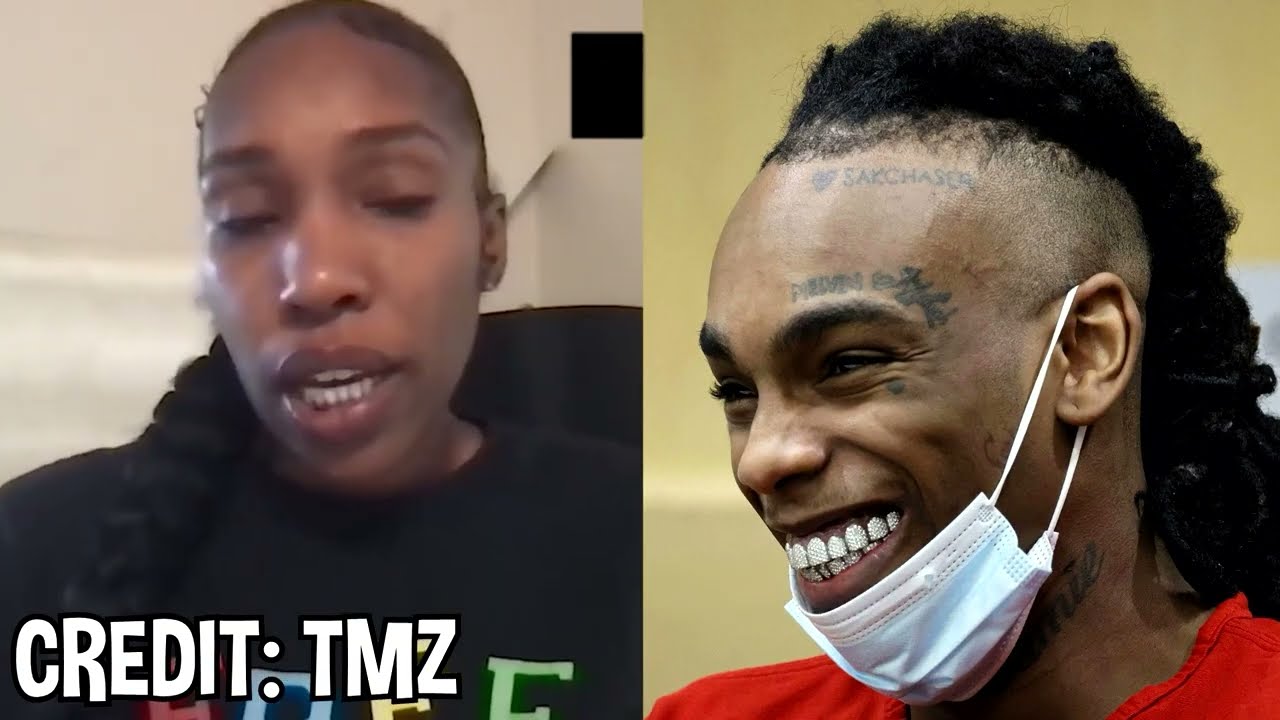
The legal drama initially centered on Melly’s fight against the conditions of his confinement. The rapper filed a lawsuit against the Broward Sheriff’s Office (BSO), alleging “cruel treatment” and violations of his constitutional rights. According to the lawsuit, Melly had been confined to a freezing cold jail cell, denied edible food, and, most agonizingly, prevented from seeing or speaking to any family members for three years.
Melly’s mother painted a disturbing picture, revealing her son was scared for his life and making her feel “completely helpless.” She tearfully explained that even convicted inmates have basic rights—like using a telephone or receiving mail—that were being denied to Melly, who has not yet been convicted of any crime. She accused the BSO of “making up their own rules,” operating outside the jurisdiction of judges, and causing her unbearable heartbreak.
The public reaction was sharply divided. While some rappers immediately offered their support, crying out “Free him, he been in there too long,” others, like controversial figure Charleston White, took a harsh stance. White declared that Melly should be living in precisely this manner, arguing he shouldn’t receive special treatment just because he is a famous rapper. “When you take a life, homie, you ain’t got a right to complain about a motherf***ing thing about being mistreated,” he venomously stated.
Melly’s lawsuit was a strategic move, designed to leverage his poor conditions for a potential plea deal or immediate release. But the state’s counter-move was swift, devastating, and entirely unexpected.
The Tampering Trap and the Code Words
Just as Melly’s legal team pressed their case for his release, his ex-girlfriend, Mariah Hamilton, suddenly flew back into the United States after spending three years out of the country. Her arrival was immediately met with U.S. Border Patrol agents, who arrested her at Miami International Airport.
Mariah Hamilton, who had no previous arrest record, was vital to the case. She had been ordered to testify in the first trial, and the judge had ensured her agreement to testify in any future proceedings before her initial release. However, after she was freed, she wrote a cryptic Facebook post: “Thank you to my village i love y’all so much god’s plan not mine.” To the state, this signaled she was being coerced.
The feds instantly charged Melly with witness tampering, a devastating felony that carries a full life sentence, regardless of whether he is convicted of the double murder. Prosecutors claimed they possessed phone data revealing Melly forced her to withhold testimony and helped orchestrate her flight from the country so she couldn’t incriminate him.
The severity of the charge was compounded by allegations of Melly’s covert communication methods. Prosecutors filed six new charges against Melly and others, including criminal solicitation and the unlawful use of a two-way communication device. It was alleged that because Melly was restricted from using the phone, he communicated using passed notes and code words, which were then relayed through a chain of people. Shockingly, the father of YNW Juvy confirmed that Melly’s camp was using code phrases like “Rihanna and ASAP Rocky’s baby mom” to communicate about the case and witnesses like Mariah—a chilling illustration of an alleged conspiracy executed from behind bars.
The Digital Trail of Guilt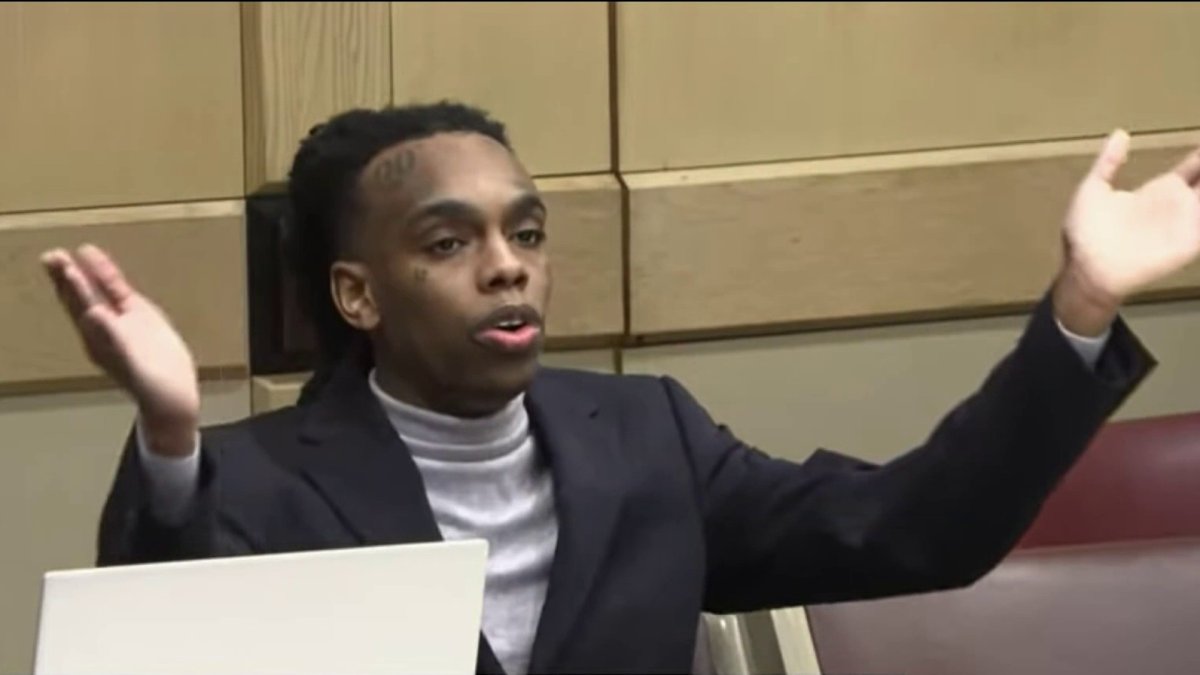
The prosecution’s case, which led to the initial mistrial, has been significantly strengthened by an influx of digital and physical evidence that paints an increasingly damning picture of the night of the murders.
One of the most alarming pieces of evidence presented was a message from Melly’s own PC Gambino social media account on the night of the crime, which asked if he was okay. His response: “I did that.” followed by a smiley face emoji. While the defense could argue context, the statement is a devastating admission of guilt in the timeline of events.
Further undermining Melly’s defense was the release of video footage showing the rapper dancing in a parking lot with Bortland just five hours after the crime. In the video, Melly appeared happy, or “still turned,” showing no evident sadness or distress over the violent deaths of his two best friends.
Physical evidence also placed Melly at the center of the crime. Court documents and video footage confirmed that Melly was positioned in the back-left seat (the rear driver’s side) of the Jeep just minutes before the crime went down. This location aligns perfectly with the forensic report, which determined the direction of the rounds’ travel was from left to right inside the car—supporting the claim that the shots originated from the back left seat where Melly was sitting. Even Juvy’s mother, Miss Phillips, confirmed this seating arrangement for the jury.
The courtroom drama continued when prosecutors attempted to introduce evidence of Melly’s alleged gang affiliation with the “Red Street Team,” a movement also linked to Young Thug’s YSL case. Melly’s attorneys advised against this, but Melly, against his legal team’s judgment, erupted in open court. He yelled, “I don’t care, I’m not in no team, they can’t prove that,” creating a defiant outburst that publicly went against his own counsel and provided the prosecution with fresh evidence of volatility.
Finally, an alleged motive was exposed when a former Oblak member claimed that Melly had asked King Van for advice on how to deal with people who were “trying to extort him.” This testimony suggests Melly was operating under the belief that the two victims, SakChaser and Juvy, were attempting to extort him, providing a chilling, if unverified, potential reason for the killings.
The Final Domino: Bortland’s “Triple Lindy”
All of these pieces of evidence, however, still lacked the critical, in-car account of what truly transpired. That missing link was delivered by none other than Melly’s long-time associate and co-defendant, YNW Bortland.
In what is being called “one of the best plea deals of all time,” Bortland accepted an agreement with the state, pleading no contest to two counts of accessory after the fact and four additional counts, including the witness tampering charge—a decision that reduces his potential five life sentences down to just 10 years in Florida State Prison, followed by six years of probation.
The key to this deal is the proffer, which transforms the plea into what attorneys are calling a “gun plea” or the “triple Lindy.” To accept the accessory charge, Bortland must provide a factual basis for the crime, meaning he must tell a factual story of how he committed accessory to the crime. This means Bortland must acknowledge that a murder took place and that he assisted someone in covering it up.
As legal academics broke down, this is not a plea where Bortland is required to explicitly “snitch” on Melly, but one where he must provide all the critical details the state was missing to convict him. If Bortland testifies that SakChaser and Juvy died from an “inside the car” situation, Melly will be undeniably exposed as the killer. This requirement is why the presiding judge himself expressed astonishment at the deal, stating, “I don’t know how your lawyers pulled this off.”
The urgency of Bortland’s flip became even clearer after a raid on his home uncovered a notebook containing detailed drawings and notes about the jurors in the first trial—including where they were sitting and what they looked like. This blatant evidence of jury tampering likely forced the co-defendant’s hand, giving him little choice but to “bit the cheese” and cooperate to avoid a fresh wave of severe charges.
Legal expert and attorney to figures like Lil Wayne and Kodak Black, Bradford Cohen, was unequivocal: Bortland is going to “tell all about anything he knows” and, crucially, Cohen anticipates he will confirm that YNW Melly is responsible. The rapper 6ix9ine, a controversial figure familiar with high-profile legal cooperation, offered the final word on the matter: “Melly is cooked.”
The conclusion of this chapter is devastatingly clear. YNW Melly’s initial struggle for humane treatment has been completely overshadowed by the legal catastrophe of his co-defendant’s cooperation. The confluence of Melly’s own admitted guilt, the unmasking of his communication methods, and Bortland’s imminent confession to the cover-up suggests that the young rapper’s complex legal battle is rapidly approaching a final, grim verdict.