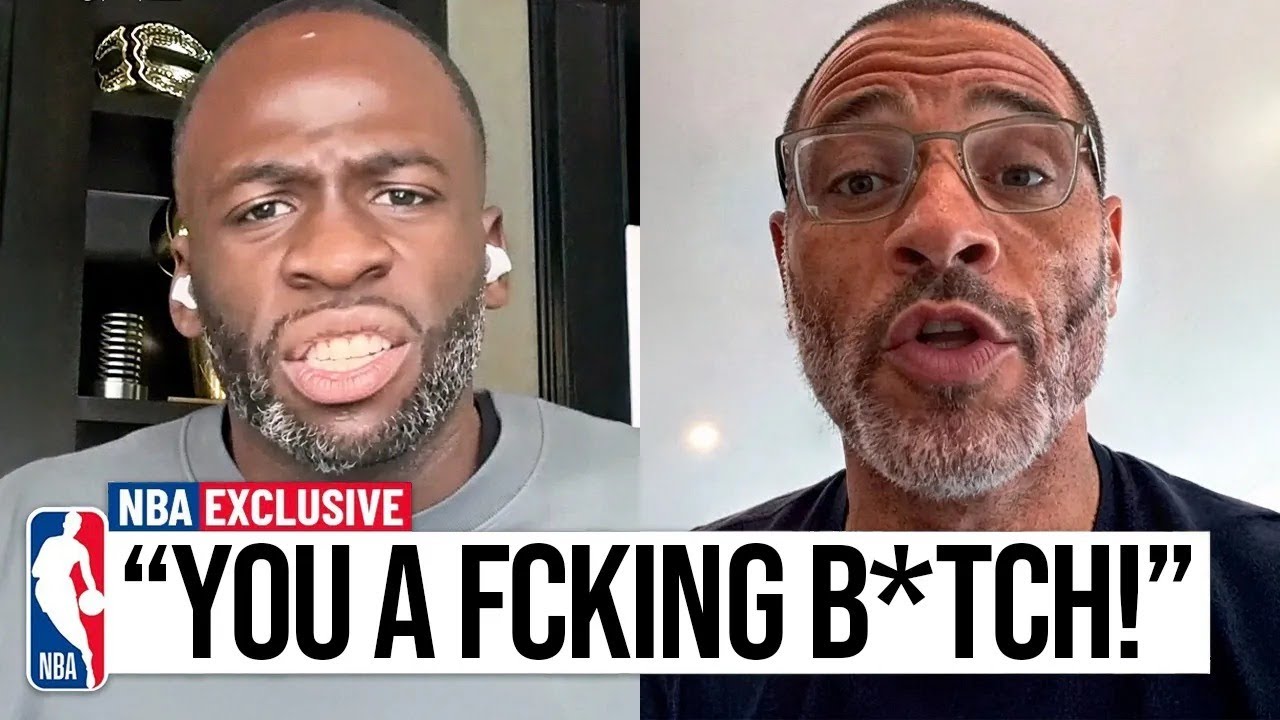
In the modern landscape of the NBA, where podcast studios have replaced arenas as the primary battlegrounds for discourse, a verbal feud has erupted that transcends mere trash talk. It’s a philosophical war over generational identity, the definition of toughness, and the ultimate measure of NBA greatness. At the center of this firestorm are two men cut from the same intensely competitive cloth: four-time NBA champion and Defensive Player of the Year, Draymond Green, and former number one overall draft pick and one-time All-Star, Kenyon Martin.
This conflict, which unexpectedly boiled over, is shocking not for its intensity—both players are notorious for their fire—but for its sheer unlikeliness. They share a hometown, Saginaw, Michigan, representing different generations of basketball excellence from the same community. Yet, research confirms they shared virtually no meaningful on-court history, facing each other only twice in low-impact regular season games. How did two men, practically strangers on the court, find themselves trading some of the most personal and career-defining insults in recent memory?
The answer lies in the volatile intersection of legacy, era, and the relentless demands of the 24/7 sports media cycle.
The Spark: When a Hometown Hero Becomes the Critic
The first shot, the one that ignited this entire blaze, was fired by Kenyon Martin. Appearing on the popular Gils Arena podcast, Martin, a player whose career was defined by raw physicality and enforcement, leveled a staggering charge against Draymond Green: he labeled him a “fake tough guy.”
In the contemporary NBA, where Green’s reputation is inextricably linked to his fiery intensity and willingness to cross the line—an identity built on kicks, strikes, chokes, and a history of suspensions—Martin’s accusation was a direct attack on Green’s core persona. But Martin didn’t stop at the surface. He elaborated that Green’s toughness wasn’t genuine; it was calculated.
Martin’s analysis was that Green “strategically picks fights with opponents unlikely to retaliate,” omitting the Golden State star from his personal list of the NBA’s most intimidating players. The implication was clear: Draymond Green is a bully who chooses his victims, a showman who protects his reputation by avoiding true confrontations. For Green, who looked up to Martin as a fellow Saginaw native, this criticism from a person he admired was more than just a media jab; it was a deeply personal slight, a sense of confusion and genuine hurt that resonated in his subsequent response.
The Retaliation: The Scar of the “Underachiever”
Draymond Green delivered his counter-punch on his own platform. Unlike Martin’s focus on character, Green’s response was a surgical strike directly aimed at Martin’s professional legacy.
“I just don’t know how you can continue to shoot at me and you underachieve,” Green stated, before dropping the grenade: “It’s kind of an underachievement.”
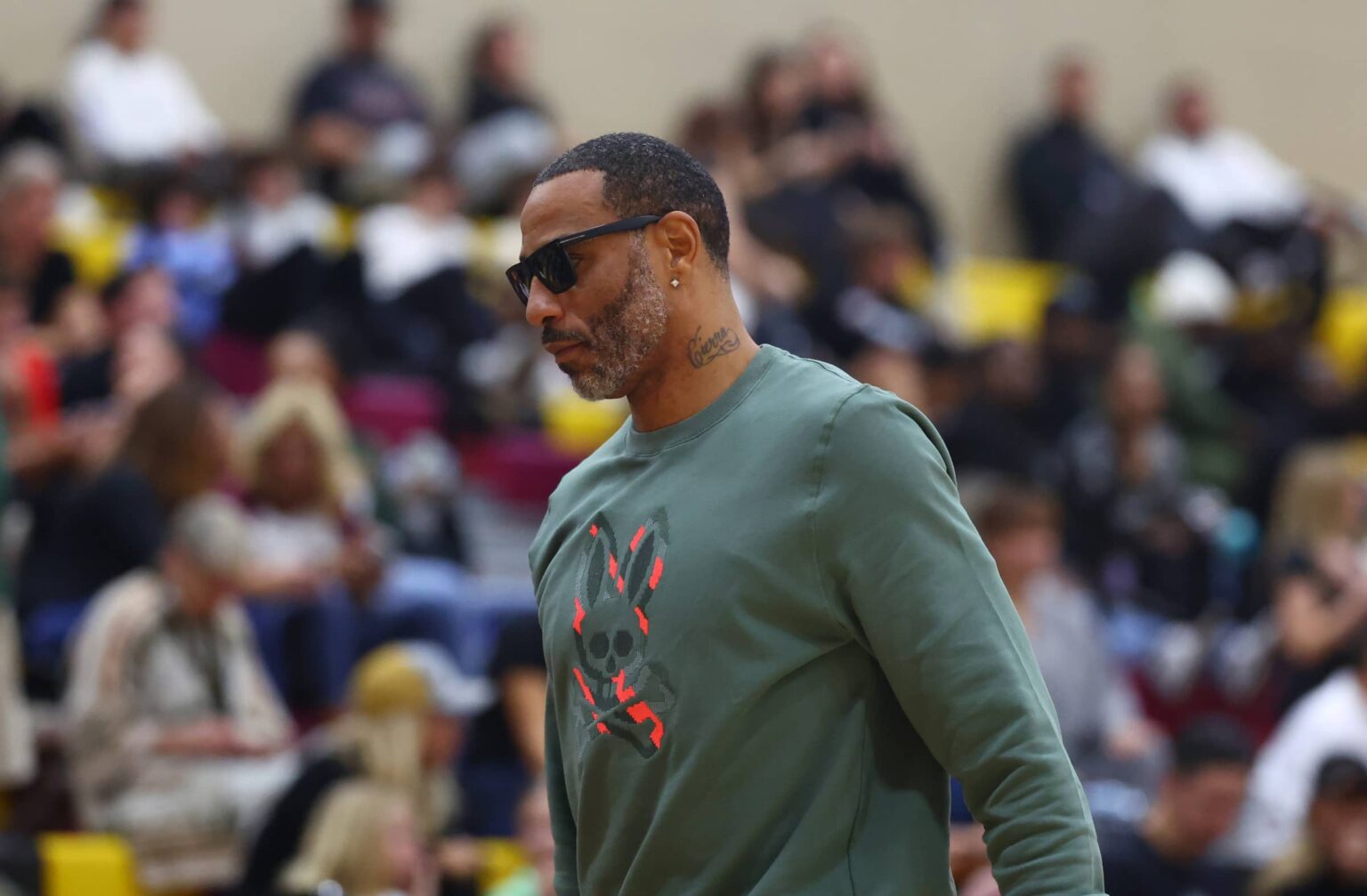
Green meticulously highlighted Martin’s career arc: a number one overall pick in the NBA Draft, yet a player who managed only a single All-Star selection. The most damning part of the critique, however, was Green’s attack on Martin’s perceived defensive prowess. Despite being hailed as a defensive force, Martin never made a single All-Defensive Second Team—a category where Green himself holds a commanding nine selections and a Defensive Player of the Year award.
Green was essentially arguing: “You had all the potential in the world, the highest possible draft status, and you simply didn’t maximize what you were given.” By using the term “underachiever,” Green weaponized Martin’s unfulfilled potential against his personal attack, changing the fundamental nature of the debate from ‘who is tougher’ to ‘who is the more successful NBA player.’ When you call a former number one pick an underachiever, you better be prepared for the consequences.
The Nuclear Option: Fifty Names Better Than Draymond
Kenyon Martin’s retaliation was not measured; it was volcanic. Martin took to Instagram Live for an explosive rant that broke the internet. While he defended his career by citing debilitating injuries, including two microfracture surgeries, and his role in leading the Nets to back-to-back NBA Finals, his rebuttal quickly escalated beyond personal defense.
Martin shifted the argument entirely to pure, individual basketball skill, making the most audacious statement of the entire feud: “I can name 200 people better at basketball than you,” and asserting that Green—a foundational piece of one of the greatest dynasties in history—”wouldn’t have made a roster” in the NBA of the early 2000s, a league he described as one “where real men played.”
To prove his point, Martin then did the unthinkable. He proceeded to list over fifty power forwards he considers superior to Draymond Green. This list wasn’t confined to perennial All-Stars; it included names like Giannis, Tim Duncan, and Kevin Garnett, but it controversially extended to players like Popeye Jones, Bo Outlaw, and Reggie A—role players most casual fans would struggle to recognize.
The sheer audacity was breathtaking. Martin, in his fury, was saying that a four-time NBA champion and Defensive Player of the Year isn’t even better than established role players from his era. It was an ultimate act of disrespect, a visceral rejection of Green’s entire skill set.
The Generational Chasm: Skill vs. Impact
This feud rapidly crystallized into a profound philosophical debate about the NBA’s identity. The core conflict stems directly from the generational divide.
Kenyon Martin’s era, the early 2000s, valued pure basketball skill: the ability to create one’s own shot, dominate in the post, and carry a team as a primary scorer. Martin himself averaged 12.3 points per game for his career, compared to Green’s 8.7 PPG. Martin was “actually asked to score for us to win.”
Draymond Green’s era, the pace-and-space league of the 2010s, values impact, versatility, and winning. Green excels as the ultimate glue guy, a defensive anchor, and an elite playmaker for others. By this metric, Green is indisputably superior: four championships to Martin’s zero, nine All-Defensive selections to Martin’s zero, and a Defensive Player of the Year award.
Martin’s crucial counter-argument was that Green’s success is a product of his circumstance. Green spent his career alongside Steph Curry and Klay Thompson, two of the greatest shooters of all time, arguing that Green was simply a beneficiary of generational talent, not a dominant player in his own right. The debate, therefore, became: is greatness measured by what you do with a basketball in isolation, or by how effectively you enable a historic dynasty to win championships?
Chaos Theory: Nick Young’s Emotional Intervention
The feud’s peak tension arrived when the debate intensified on a subsequent Gils Arena episode with the involvement of a third party: Nick Young, known as “Swaggy P,” who won a championship with the Warriors.
Young, who entered the fray wearing a Warriors jersey, delivered a personal and emotional jab at Martin, tearing down his defense of his career with Jason Kidd and the Nets. Young essentially told Martin that he was the reason he never won a ring, stating that Green has “more rings than anybody in your draft.”
The argument quickly became volatile. When Martin cited his years of service with Kidd, Young retorted sharply, “They got rid of you so obviously you didn’t.” Martin exploded, his frustration boiling over as he struggled to contain himself, pushing the confrontation to the absolute edge of physicality before it remained, miraculously, verbal. The presence of Young, a role player on Green’s dynasty team, further stoked Martin’s feeling that his fifteen years of physical, bruising basketball were being diminished by a generation that failed to appreciate the grit of the 2000s.
The Historian’s Warning: The Unthinkable Confrontation
Amidst the chaos, a crucial voice of reason and historical context emerged: Richard Jefferson. Having played with both Kenyon Martin on the Nets and Draymond Green on the Warriors, Jefferson was uniquely positioned as an eyewitness to both eras of basketball. He urged reconciliation, acknowledging that both players share a similar, fierce competitive spirit, but he also issued a chilling, necessary warning.
Jefferson, who admitted to actually fighting Martin in a locker room, made it clear that the trash talk Draymond engages in today would have crossed a fatal line in Martin’s prime. “If you would have talked like that to Kenyan… y’all would have fought 100%,” Jefferson warned.
This was not hyperbole. Martin has a documented history of handling disrespect with physical force, including a notable altercation where he threw punches, resulting in a suspension. He was a man who famously fought Carl Malone and Tracy McGrady and was known for his “fearless mindset.” Jefferson was providing a vital reality check, confirming that Martin’s “tough guy” reputation was built on genuine, era-appropriate enforcement, while simultaneously acknowledging that Draymond is, undeniably, “the most important defender of this generation.”
Legacy and Respect: The Unresolved Debate
The full career comparison highlights the undeniable chasm between the two: Green boasts four championships, four All-Star selections, and nine All-Defensive nods, while Martin holds zero rings, one All-Star appearance, and zero All-Defensive selections. Yet, Martin has the superior scoring average (12.3 PPG to Green’s 8.7 PPG) and playoff scoring average (12.9 PPG to Green’s 11.4 PPG).
The truth is that both Draymond Green and Kenyon Martin are products of their respective environments. Martin was the prototypical, physical power forward in a slower, post-centric league. Green is the quintessential small-ball, versatile defender who thrived in a fast-paced, space-and-shoot system. Neither man is entirely wrong in his critique. Martin is right that the physicality of the game has waned; Green is right that the ultimate goal is winning championships.
As of today, the feud persists without resolution, highlighting broader discussions on the true value of legacy and toughness in the NBA. But perhaps the final word should belong to Richard Jefferson, who recognized the shared competitive fire in both men and called for “mutual respect.” Both Draymond Green and Kenyon Martin dedicated their lives to the game, and both deserve respect for what they accomplished—even if they accomplished it in very different ways, and in very different eras. The question remains for fans: if greatness is the goal, should one prioritize individual Skill like Martin, or unparalleled Impact like Green?