The atmosphere crackled with a distinct, almost electric tension on the night the Oklahoma City Thunder hosted the Sacramento Kings. This wasn’t just another early-season matchup; it was a high-octane collision between the relentless momentum of youthful brilliance and the explosive, unpredictable power of veteran fire. What unfolded was a chaotic, mesmerizing basketball drama that saw an improbable Kings lineup assert early dominance, only to be dismantled in the final minutes by the cold-blooded, MVP-caliber execution of Shai Gilgeous-Alexander and the surprising emergence of a clutch rookie hero.
The Thunder ultimately clawed their way back from the brink, securing a hard-fought 107-101 victory, but the story of the game was defined not just by the final score, but by the astonishing rollercoaster of emotional swings and stunning individual takeovers that preceded it.
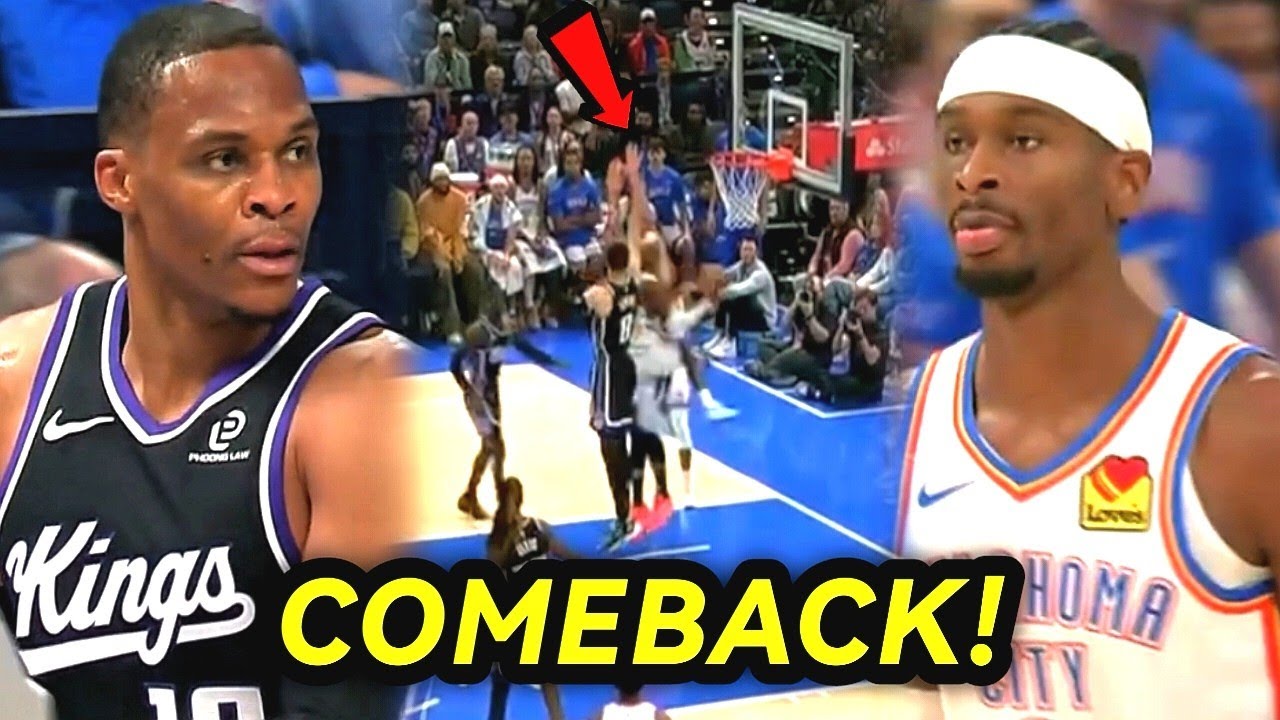
The Unthinkable Kings Superteam: An Explosive Start
The pre-game buzz was palpable, fueled by an almost unbelievable assembly of talent on the Sacramento Kings’ side. This was a Kings starting five that seemed to defy the natural order of the league, featuring an improbable mix of All-Star caliber veterans: Domantas Sabonis anchoring the interior, alongside the offensive firepower of DeMar DeRozan, Zach LaVine, and, most explosively, Russell Westbrook. The presence of Westbrook in the starting lineup immediately dictated the tone of the game, transforming the Kings from a steady contender into an unpredictable, high-risk, high-reward powerhouse.
And they started like one.
The opening moments saw a swift 4-0 run from the Thunder, suggesting OKC’s trademark speed would carry the night. But Russell Westbrook, a player known throughout his career for his volcanic, instant “takeover mood,” was having none of it. Westbrook instantly set the arena alight, demanding the ball and launching his signature corner three-pointers. His first attempt was a smooth correction to an earlier missed connection with Sabonis, followed quickly by another deep triple. This was the Russ that strikes fear into opponents—aggressive, relentless, and playing with an emotional intensity that raised the floor for everyone around him.
The Kings’ veteran firepower was immediately on display. Sabonis followed Westbrook’s lead with a powerful layup, and Zach LaVine added his own three-point contribution, though even that was immediately eclipsed by yet another Westbrook three. The sheer volume and velocity of the Kings’ attack, fueled by Westbrook’s fiery play, forced the Thunder to call an immediate timeout. It was clear that the established WNBA team was not holding anything back. They were treating this regular-season game like a playoff elimination, and their veterans were driving the charge.
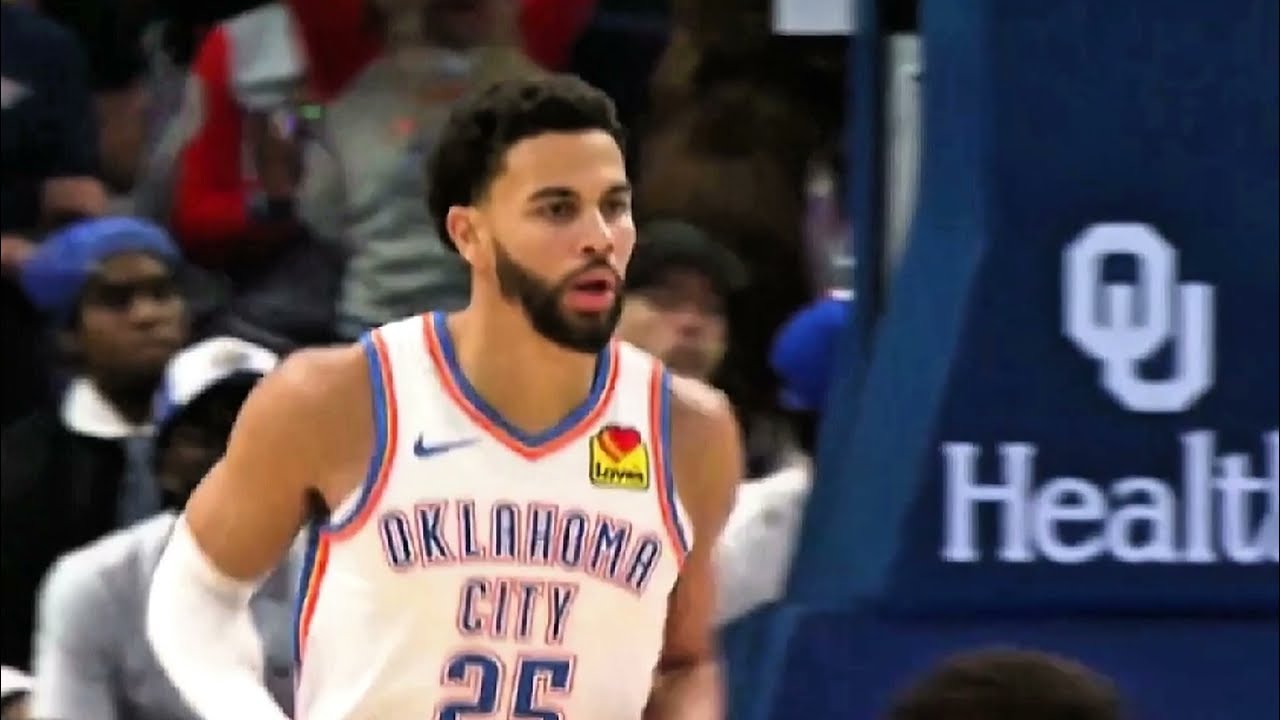
The Thunder’s Struggle and the Rise of DeRozan
Following the timeout, the Thunder attempted to stem the bleeding by introducing their second unit, but the Kings’ momentum was too strong. Sabonis asserted himself inside, utilizing his strength to posterize the Thunder’s interior defense and score off two tough shoulder shots. Even as OKC managed to scrape together five straight points, the Kings maintained the pressure. DeMar DeRozan, the master of the mid-range game, then stepped up to lead the Kings through the end of the first quarter, tallying seven points with his smooth, calculated efficiency. By the buzzer, the Kings held a decisive lead, 29-24, establishing a clear narrative of veteran dominance.
The second quarter began with the same heavy-handed urgency. DeRozan continued his individual takeover, but this time, the Thunder’s superstar was ready to respond. Shai Gilgeous-Alexander, the anchor of the Thunder and a genuine MVP candidate, answered DeRozan’s pull-up jumpers with his own. A forced turnover on the Kings’ side led to an easy fast-break dunk for SGA, a moment that served as a subtle warning: the Thunder star was waiting, calculating, and ready to strike.
The quarter then saw the surprising entry of an unexpected new hero for OKC: the rookie A.J. Mitchell. Mitchell, playing with a composure that belied his experience, immediately knocked down a triple, contributing eight points in the second quarter alone. His presence, alongside the defensive grit of Luguentz Dort, helped the Thunder stabilize. But the Kings’ veteran trio continued to push back, with Sabonis and Malik Monk answering every OKC surge. The half ended with the Kings still in the lead, 62-58, but the emotional balance had begun to shift. Westbrook’s fiery start had been cooled by SGA’s quiet resolve and Mitchell’s sudden burst of brilliance.
The Duel of Dominance: SGA vs. DeRozan
The second half began with the expected escalation of intensity. The game became a duel of high-stakes individual brilliance. DeMar DeRozan, in his own “takeover mode,” went shot-for-shot against SGA. This was a masterclass in scoring, a thrilling exchange between the league’s best mid-range veteran and one of the most unpredictable, dynamic young stars.
The Thunder, however, found ways to briefly seize the momentum. Timely three-pointers from Aaron Wiggins and Isaiah Joe cut the Kings’ lead down to just one point, forcing Sacramento to call another timeout to reorganize. It was a clear sign that the defensive pressure and high-energy play of OKC’s young core were starting to wear down the veteran Kings.
Following the stoppage, SGA shifted into his highest gear. He completely took over the game, demonstrating why he is mentioned in MVP conversations. His aggressive drives, culminating in a beautiful spin move over Sabonis for a crucial two points, left the Kings’ defense reeling. His effortless ability to navigate traffic and score complex layups put the Thunder ahead, forcing the Kings to call a desperate timeout. The MVP had arrived, and his relentless scoring run, coupled with a seamless alley-oop assist to his teammate, generated easy points and shifted the psychological advantage entirely to OKC. The Kings, perhaps fatigued by their frenetic first-half pace, began to commit uncharacteristic turnovers, one of which led to an easy two points and an accompanying foul on Westbrook. The third quarter ended with the Kings clinging precariously to a three-point lead, 83-80, setting the stage for a final, explosive twelve minutes.
The Cold-Blooded Comeback: The Rookie’s Daggers
The fourth quarter was nothing short of a spectacle—a complete, high-speed collapse by the Kings and a definitive, cold-blooded takeover by the Thunder. DeRozan again tried to initiate the offense, but the momentum was now irreversibly with OKC. Westbrook, summoning the last reserves of his legendary competitive fire, hit one more vital three-pointer, pushing the Kings’ lead to 89-83. But this was the last major surge of the night for Sacramento’s veterans.
The Thunder’s response was a tidal wave of youth-driven clutch play. Rookie A.J. Mitchell, the unexpected hero, answered Westbrook’s three with one of his own. The veteran’s bomb was immediately countered by the rookie’s dagger. This was followed by a silky-smooth driving floater from SGA, whose effortless movement made Sabonis look flat-footed. Mitchell, now playing with pure, unadulterated confidence, was not finished. He hit yet another clutch three-pointer, igniting the crowd into a frenzy. With 18 points, the rookie had stepped up on the biggest stage, proving he had the ice in his veins necessary to complement SGA’s brilliance.
SGA, smelling blood, delivered the killing blow. He drove hard for a layup, sending Sabonis flying and demonstrating the sheer physical dominance of his late-game attack. The momentum was fully secured when Lu Dort hit another crucial three-pointer, quickly followed by an easy basket from Isaiah Joe. The Kings’ final attempts to respond—including free throws from LaVine—were immediately nullified by yet another Thunder three, this time from Alex Caruso, who was visibly cheered on by his teammates.
The final, definitive statement came from Shai Gilgeous-Alexander. He drove the lane, finishing with his signature control and precision, giving him a total of 31 points for the night. The final score was 107-101. The Thunder’s comeback was complete.
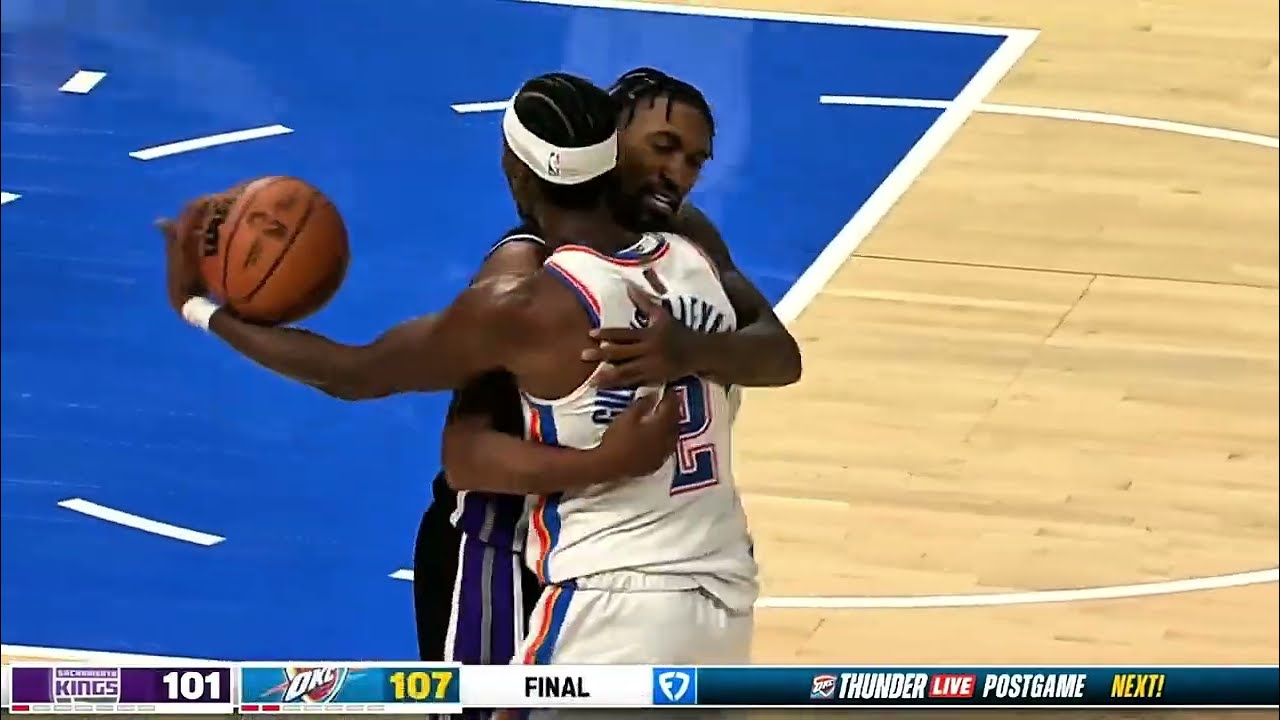
The Emotional Aftermath: A Lesson in Legacy
The game served as a powerful, emotionally charged lesson in the shifting dynamics of the league. It was a narrative of stark contrasts: Westbrook’s high-volume, emotional firepower versus SGA’s cold, calculated, and efficient brilliance. The Kings’ experiment with an All-Star-caliber lineup, while successful in generating an explosive start, ultimately failed against the relentless, four-quarter consistency of a team built around a superstar and a dynamic, emerging youth core.
For Shai Gilgeous-Alexander, the 31-point outing was simply another confirmation of his status. He is not merely a high scorer; he is a clutch performer, a player whose composure and skill rise with the stakes. His ability to turn the tide of a game single-handedly, while allowing a rookie like Mitchell to find his footing, speaks to a leadership style that is both demanding and empowering.
For the Kings’ veterans, particularly Russell Westbrook, the game was a painful reminder that sheer will and emotional intensity can only carry a team so far. His early takeover was spectacular, generating the kind of frenetic energy his fans have always loved, but it was unable to sustain itself against the organized attack of the Thunder.
Most significantly, the emergence of A.J. Mitchell as a clutch scorer signals that the Thunder’s future is arriving faster than anyone anticipated. His calm execution in the fourth quarter, directly countering the last gasps of Westbrook’s effort, symbolizes the passing of the torch in the most dramatic fashion possible.
The 107-101 win for the Oklahoma City Thunder was more than just a tally in the standings; it was a statement victory, cementing Shai Gilgeous-Alexander’s place among the elite and showcasing a youth movement ready to deliver not just potential, but cold-blooded, late-game execution. The Kings brought the fire; the Thunder brought the ice, and in the end, the ice proved stronger.