Aaron Cole and Marissa Vale were only 4 months into marriage when their Willowbrook rental became a crossroads. They were saving for grad school, joking about paint colors, and dreaming of a place near the river. Nothing in those plans made room for a stroller, medical charts, or a baby who could not move his legs. Rain stitched the street into silver.
Aaron sat alone at the dining table, laptop open, tea gone cold. Marissa was on a late shift at St. Riverbend Medical Center, so the rooms felt oversized. Then the doorbell detonated again and again, like someone sprinting from a disaster. Aaron opened the door and forgot how to inhale.
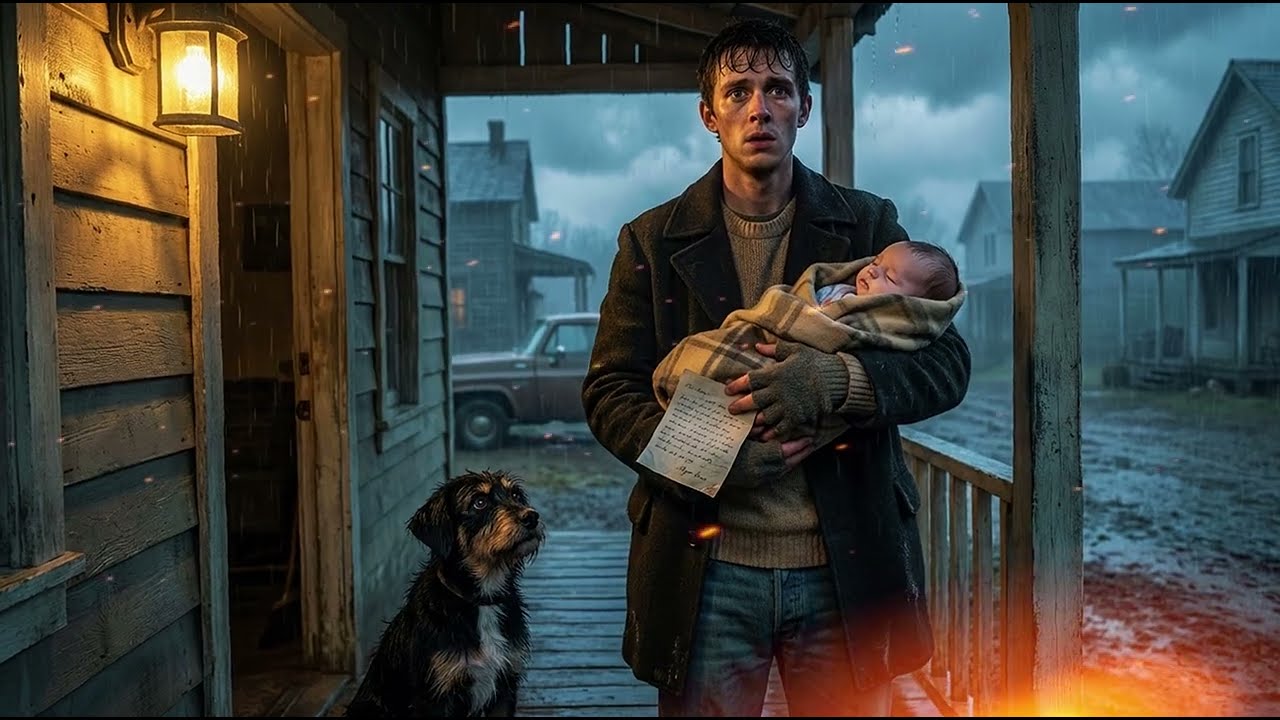
A young woman stood under the porch light, drenched, eyes raw with fear. She thrust a six-month-old boy toward him. The baby was warm, alive, and eerily still from the waist down. His feet limp against Aaron’s forearm as if sleep had unplugged them. “Take him, please. I’m out of time.” She pressed a folded note into Aaron’s palm, then staggered backward, crying, fleeing.
He called after her, but she dissolved into the rain as though the street swallowed her whole. Inside, the baby blinked once, then drifted asleep against Aaron’s chest, trusting a stranger with a calm that made Aaron’s throat tighten. The note was damp, ink smudged, and sealed with a thumb print.
Before Aaron could open it, a scrape came from the porch. He looked out and saw a stray puppy, ribs showing, ears pinned low, staring at the child like he’d been waiting. The pup didn’t bark. He didn’t move. He just watched, trembling, as if listening for a sound only he could hear. Aaron didn’t know that in the next hour that Puppy would make a choice no doctor could explain, and that choice would decide whether Elor saw morning.
Marissa came home close to midnight, shoulders tight from 12 hours of fluorescent hallways and clipped alarms. Rain had followed her out of St. Riverbend Medical Center and into Willowbrook’s empty streets. She parked along Maplerest Lane, swept damp hair from her cheek, and climbed the steps with her tote.
The porch light made a small island of gold in the downpour, and she expected the usual calm. Aaron at the table, a half-finished mug, maybe a sleepy wave. Instead, she heard a hush that felt wrong, like the house was holding its breath. When she opened the door, warm air met her face, and then she saw Aaron standing in the living room with a baby in his arms.
For one stunned second, her mind refused to place the scene. The child was bundled in worn blankets, cheeks flushed from sleep. His legs lay limp against Aaron’s forearm, not kicking, not curling. Aaron looked as if he’d been caught in a flash of lightning and was still deciding whether it was real. “Marissa,” he said softly.
Someone left him. Her bag slid from her shoulder. Left him? Aaron? Whose baby is that? I don’t know. His voice shook. She rang the bell. A young woman. She put him in my arms and ran. Marissa stepped closer. The nurse and her automatically checking breathing, color, and fever. The baby’s chest rose evenly. His eyelids fluttered once, then settled again. He didn’t cry.
That silence pierced her more than any scream. Aaron held out a folded note, edges swollen from rain. She said you could keep him safe. That’s all. Marissa took the paper with hands that suddenly felt clumsy. Ink had bled in places, but the words were readable.
She read once, then again, slower, as if attention could soften what it said. To whoever opens this, I am sorry to bring you into my storm. My son is 6 months old. The doctors say his legs may never move, and I have tried everything I can. His father left when he heard the news. I work two jobs, and still we fall behind. We were evicted last week. I have no family nearby.
Neighbors stare when he won’t kick, when he won’t crawl. They whisper that I did something wrong. I don’t have money for therapy, for heat, for medicine. I am scared that one night I will fail him. I don’t want him. Below the letter, a shaky signature trailed into a smudge. A second sheet was tucked behind it. A simple handwritten guardianship statement dated that afternoon, naming no court, but stating voluntary custody transfer to Aaron Cole and Marissa Vale of Willowbrook. It was not official yet.
The intent was clear. She had thought about this long enough to put her name under it. Marissa felt her throat close. She read the note one more time, then looked at the sleeping baby. A practical part of her wanted to list risks, infection, legal unknowns, missing history.
Another part, older and deeper, heard only the raw plea threaded through every line. Aaron watched her face like a man waiting for a verdict. “I called the non-emergency line,” he said. “They told me to bring him in unless we knew a name or address. I didn’t want to move him without you. You did the right thing.” She sank onto the sofa, still studying the child.
“Did she say anything else? A name? Where was she going?” “No, just please.” He swallowed. Then she was gone. Marissa reached out and brushed the baby’s sleeve, fabric thin for many washes. His fingers were curled around a threadbear corner of the blanket. When she touched his knuckles, he made a tiny sound, half sigh, half question, and fell still again. His legs, she murmured. Aaron nodded, eyes red.
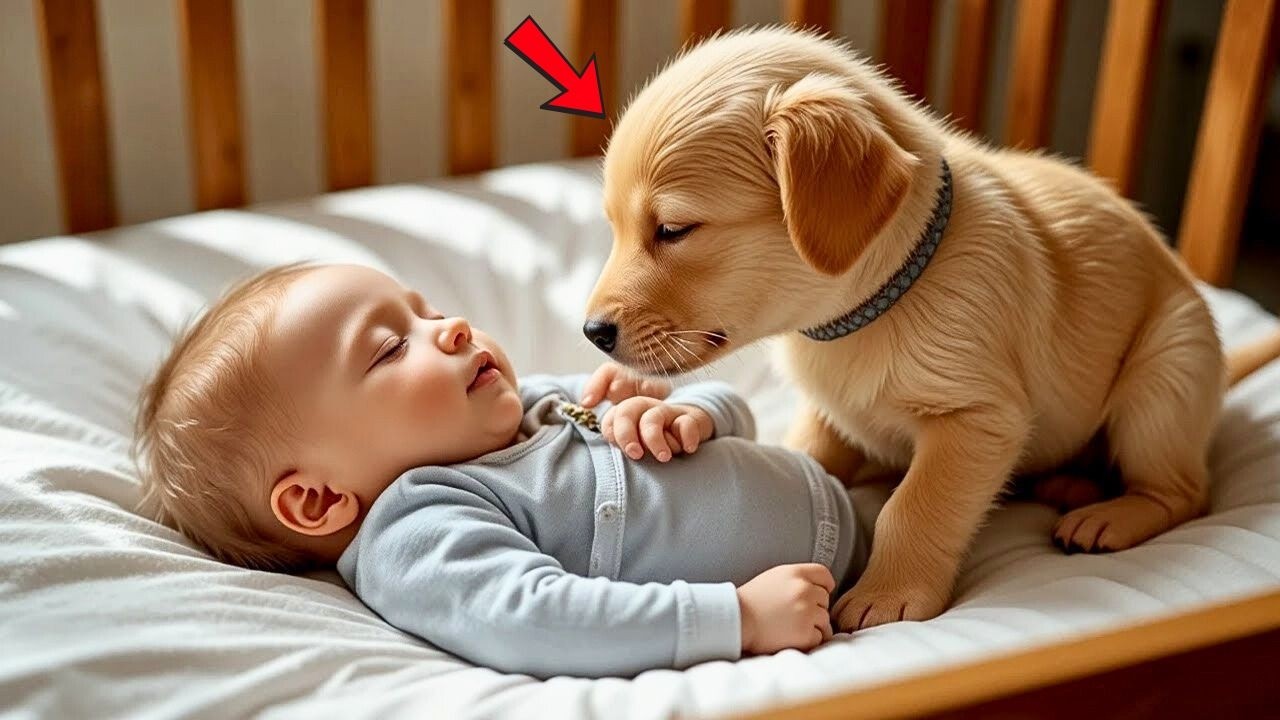
They don’t move. I noticed right away. She lifted the blanket gently. The baby’s feet were pale, toes relaxed. She checked for swelling, bruising, and any sign of fresh injury. Nothing, just a quiet body beneath a bright face. Whatever had happened to him, it wasn’t a new wound. It was something the mother had carried alone for months.
Marissa went to wash her hands, then returned with a clean towel. Let me hold him. Aaron passed the baby over. her carefully. The child settled against her shoulder without protest. His head fit under her chin. She could smell old soap and milk. Her chest tightened with the protective reflex she usually saved for patients.
“We should take him back to the hospital,” she said. “Not to hand him over, but to check him and document his condition. And then they’ll call social services.” Aaron said eventually. Yes. She looked up at him. But we can be there. We won’t let him vanish into the system without someone fighting for him. He paced once, then stopped.
Do you think she’ll come back? Maybe, Marissa said. Or maybe it took every ounce of courage she had to walk away. She glanced at the door, half expecting the bell to start again. Rain slid down the glass in fast lines. Either way, she trusted us with something sacred. Aaron sat beside her, knees bouncing. For a while, neither spoke. The baby’s breathing filled the gap like a soft metronome.
The house hummed with the heater, the roof answering the storm. Marissa read the guardianship sheet again. The mother had written their full names, the street, and even the porch color. She had been watching them. That realization sent a chill across Marissa’s skin.
Not fear, but awe at the desperation that makes someone study strangers for hope. We don’t know who he is, Aaron said quietly. No record, no past. I know. She kissed the baby’s forehead. But he is here. Aaron’s eyes moved from the child to Marissa with a question he couldn’t voice. She answered anyway. We can’t pretend this is simple. She said, “We’re young, renting, building a life.
But if we close this door, what happens to him? He goes back into a night where no one can keep him safe.” Aaron let out a breath that sounded like surrender. “So, we keep him.” Marissa met his gaze. She didn’t need a speech. The decision was already living between them. She nodded once. “Okay,” he whispered. Then, with the smallest trembling smile, he added, “He needs a name.
” Marissa looked down. The baby’s eyes had opened, dark and curious. He studied her with calm seriousness that didn’t belong to someone so small. “Eleor,” she said. The word came softly, a name meaning light. It fit the porch glow, holding back the rain the way a plea had found them through darkness.
Aaron repeated it, testing the sound. Elier, hi, little man. Ior blinked at him, then relaxed into Marissa’s shoulder, trusting the rhythm of her heartbeat. The storm kept tapping at the windows, the street outside still slick and black. Inside, the porch light threw long shadows across the floor, and two newlyweds sat with a sleeping boy between them, listening to the rain, and to the quiet truth settling into their home.
Before dawn, the rain thinned into mist along Mapler Lane. Aaron had slept in the armchair with Elier on his chest, afraid to set him down longer than a minute. Marissa, still in clinic scrubs, sat on the rug beside the sofa, watching the baby’s steady breathing. The folded note and the informal guardianship page rested on the coffee table, edges curling from moisture.
A thin whimper slipped through the front door. Not a knock, not the bell, something smaller. Marissa lifted her head. The sound came again with a faint scratch like claws on wood. Aaron stirred. Did you hear that? She opened the door and cold air curled around her ankles.
On the lowest step crouched a stray puppy, no bigger than a football, ribs showing beneath muddy tan fur. His ears were too large for his head. One flopped sideways and his paws trembled from chill. He looked exhausted and hungry. Yet he had dragged himself toward their porch like it was the only safe place left. The puppy didn’t bark. He stared past Marissa at the bundle in Aaron’s arms.
His tail twitched once and went still. He took two unsteady steps, then sat, chin lifted, waiting. Oh, sweetheart. Marissa whispered, crouching so he wouldn’t bolt. “Where did you come from?” He sniffed her hand, then leaned into her fingers with cautious trust. Inside, Eleior made a tiny sleepy sound. The puppy’s head snapped toward it, body going tense, as if that faint noise had called him by name. Arun came to the doorway, holding Eleior securely.
“He must have been nearby,” he said. Maybe he followed her. Or maybe he followed the light, Marissa replied. She slid her palm along the puppy’s neck. His coat was cold and thin. He needs warmth. They brought him inside. He crossed the threshold slowly, paws, leaving little wet prints on the rug. Marissa dried him with a kitchen towel until his shivers eased. The puppy watched Elier the whole time.
not fearful, just intent. When she finished, he stepped nearer to Aaron, sniffing the baby’s blanket. “Easy,” Aaron murmured. “He’s just a baby.” The puppy froze at Aaron’s voice and backed half a step. No growl, no teeth, only weary eyes.
Aaron lowered himself to a knee, relaxed his shoulders, and kept his hands visible. You’re safe here,” he said softer. Marissa warmed milk on the stove and poured it into a shallow bowl beside a folded towel. The puppy approached, sniffed once, then lapped quickly as if he feared the bowl might vanish.
When he finished, he licked the rim, and looked up at Marissa, milk clinging to his whiskers. “We can’t keep calling him the puppy,” Aaron said. Marissa smiled, tired, but sure. Nico, Nico, Aaron repeated. It means victory, she said. Small victories for him, for Ior. For us. The puppy wagged once at the sound. Marissa rubbed his chest. Nico, I’m Marissa. She pointed to Aaron.
That’s Aaron. She glanced at the crib. And that little one is Ellier. Nico’s gaze flicked to Aaron, then softened back toward Marica. He pressed against her shin as if claiming it. They made a corner bed in the living room using an old shoe box, a fleece throw, and a towel warmed in the dryer. Nico stepped inside, turned twice, and collapsed with a sigh.
10 minutes later, he crawled out and followed Marissa into the kitchen near her all the time. He was clingy with her from the start. If Marissa went to the sink, Nico went too. If she sat, he settled beside her chair. With Aaron, he stayed careful. If Aaron stood quickly, Nico flinched.
If Aaron crossed the room, the puppy’s body stiffened, ready to retreat behind Marissa’s legs. Still, there was no aggression, only uncertainty built from old lessons. Later, Marissa took the rocker and tucked Elier into the crook of her arm. She hummed low, a tune that kept her calm on hard shifts. Nico trotted in, saw Elor resting against her, and stopped, his ears lifted.
He padded closer, sniffed the air near Elior’s limp feet, then began pacing tight circles around the rocker. He didn’t bark or whine. He simply moved, pausing to stare at the baby. then circling again, restless as a guard without a post. Aaron frowned. “What’s he doing?” “I’m not sure,” Marissa said softly. “Maybe he senses Elor is fragile.
” Nico hopped onto the rug beside the rocker, eyes fixed on the baby. Each time Elor shifted her side, Nico rose to his paws and leaned in. ready for something he couldn’t name. Marissa carried Elier to the crib so she could wash her hands. Nico followed, nose to the rails. When Elier’s blanket slid toward the slats, Nico nudged it back with his snout, then sat chest forward, guarding the space. Arin felt a spark of worry.
“Marissa, he’s hovering.” She looked at Nico’s posture and nodded. He is alert, but he’s careful. But what if he’s unsafe? Aaron asked. Elor can’t move away if Nico gets excited or scared. Marissa knelt beside the puppy. Nico leaned into her touch and licked her fingers. “Your concern matters,” she said. “We’ll be cautious.” “But I don’t see danger in him.
I see fear and instinct. Give him a chance to learn this house.” Aaron stared at Niko. The puppy looked back, then lowered his gaze politely. Aaron extended a hand slowly, palm down. Nico sniffed, tense for a heartbeat, then stayed. His tail made a tiny, uncertain wag.
Aaron placed his hand on Nico’s shoulder for two breaths, then withdrew before the puppy could panic. “All right,” Aaron said. “A chance, but we watch him. We watch everything now,” Marissa replied. By afternoon, the rain returned, steady and quiet. The house settled into a new rhythm. Eleior slept in short stretches, his expression peaceful, as if he didn’t know his world had changed twice in one night.
Nico slept in shorter bursts, waking at every creek. He moved between Marissa and the nursery door like a shadow. Sometimes lying at her feet, sometimes stationed at the crib, ears twitching toward the hallway. Aaron phoned the pediatric ward, the county office, and a nearby shelter about missing pets. No one had reported an infant. No one had claimed a puppy. Each unanswered call deepened the mystery.
Yet each hour with Elier and Nico made the situation feel less like chaos and more like a quiet calling. When evening fell, Marissa fed Aier a bottle and burped him against her shoulder. Nico stood close, ears flicking at the baby’s soft gulps. Aaron sat on the floor and offered Nico a chew toy he’d bought at the corner store.
The puppy took it, carried it two steps, then hurried back to Marissa and dropped it by her knee, as if gifts felt safer when they came through her first. Marissa laughed quietly, and even Aaron smiled. For the first time since the doorbell, warmth entered the room that had nothing to do with heaters. Two strangers had arrived in one stormy night, and two hearts had opened without understanding why.
If you believe God shows direction through small signs, comment hope. Morning arrived in gray layers and their new life began on schedules scribbled across the fridge calendar. 3 days after Elier’s sudden arrival, Marissa carried him back through the glass doors of St. Riverbend Medical Center.
This time not in scrubs, but in a borrowed coat and dazed for motherhood she hadn’t planned. Aaron walked beside her with Nikico trotting close, leash loose, eyes scanning every corridor as if the building itself might steal the baby away. That day, the first exam was quiet but thorough.
A resident checked reflexes, and an attending studied his legs, then his eyes. Eleior watched everything with focus, turning toward voices, clutching Marissa’s finger with surprising strength. The doctors noted his alertness, his way of listening, and the quick spark of curiosity that didn’t match a body that stayed still below the waist. Results came in pieces over the next week. Neurology described impaired motor response in both legs.
Physical therapy confirmed nonweightbearing and lack of spontaneous movement. One specialist used careful language, but the meaning was blunt. The paralysis was likely permanent. They could not promise a cure. They could only promise support, therapy, and a fight for every small function that might appear.
Marissa felt the verdict like cold water. She kept her voice steady, asked questions, took notes, then stepped into the hallway and leaned against a wall until her knees stopped shaking. Aaron found her there, hand on her shoulder. He didn’t offer solutions. He simply stayed close, letting her breathe through the shock.
Behind them, Nico sat at their feet, head up, gaze on the exam room door. When Eleior whimpered inside, the puppy rose instantly. Appointments became a rhythm. Mondays for pediatric follow-ups, Wednesdays for therapy, and Fridays for check-ins to track weight and muscle tone. St. Riverbend’s waiting room grew familiar.
The mural of River Reeds, the corner fish tank, and the receptionist who always wore bright scarves. Marissa learned about every therapist who guided Ellier’s legs. Aaron learned how to lift Ellie without twisting his spine, how to read the simplest charts, and how to ask the next smart question. In therapy rooms, they learned new languages.
A therapist rolled Elor’s ankles in slow arcs, showed Marissa how to massage his soles to wake dormant pathways, and marked progress in neat columns. Aaron held toys at the right angle so Eleior would reach, twist, and strengthen his core. They kept a binder of charts, oxygen levels, feeding logs, pressure relief schedules, and notes about moods and sounds that made him laugh.
Each session ended with the same calm rule. Protect his spine, prevent infection, and celebrate effort. Marissa left the hospital steadier, Aaron carrying the binder like a map. Nico quietly padding behind them as if sworn to guard it. At home, they turned the living room into a tiny clinic. A foam mat covered the rug. Rattles hung from a low bar. Stretch diagrams were taped beside the crib.
Marissa counted bottle ounces, timed naps, and did therapy sets in gentle cycles. Flex, extend, pause, smile. She sang while she worked, partly for Elier, partly for herself. Aaron set alarms on his phone for diaper checks and position changes, then brought his laptop to the kitchen table instead of his office chair.
He cut back coding contracts, taking only small projects he could pause at a moment’s notice. “Are you sure?” Marissa asked him one night while washing bottles. “We’ll manage rent,” he said. “Right now, he needs us awake.” 4 months earlier, they’d argued about whether to buy a secondhand couch. Now, they were budgeting for braces, therapy, and adaptive gear they hadn’t known existed.
Still, when Eleior’s mouth curved into a slow grin at Aaron’s silly whistle, the fear loosened. Marissa officially requested leave from St. Riverbend 2 weeks later. Her supervisor hugged her in the hall and promised the position would wait. Walking out with paperwork in one arm and a baby carrier in the other felt unreal.
She had spent her adult life caring for other families. Now, one had landed in her hands. News traveled fast in Willoughbrook. Aaron’s sister drove in with a casserole and worried questions. His mother came next, eager to help. Marissa’s brother arrived with a spare car seat. Everyone meant well, yet Nico did not understand intentions. He understood only the baby he guarded.
When relatives stepped inside, Nucko planted himself between them and the crib, back stiff, a low growl rolling from his chest. It wasn’t loud, but it was firm enough to halt the room. Aaron knelt beside him. Easy. They’re safe. The puppy glanced at Aaron, then at Elier, then settled into a wary sit without moving aside.
Visitors could stay, but only after Nico decided they were not a threat. Some people took offense. One uncle muttered about a mut running the house. Marissa ignored it. She watched Nico’s posture and saw vigilance, and sometimes that vigilance saved them from mistakes. Once a cousin reached into the crib to tickle Ilior while he slept.
Nico gave a short warning sound. The cousin pulled back and Marissa adjusted A Leor’s head before it rolled into a bad angle. Nico wasn’t being mean. He was being careful in the only way he knew. Weeks slid into a month. The exhaustion was not roma
ntic. It was bottles at 2:00 a.m. Laundry damp from spills and hands sore from repetitive stretches. Yet tiny victories began to appear like bright beads on a dark thread. Elor learned to recognize their faces. When Marissa leaned over him, he kicked his arms in excitement, eyes shining. When Aaron spoke, Ellier squealled, then tried to mimic the sound with his gums. He held Nico’s ear between two fingers and laughed when the puppy did a clumsy spin to reclaim a toy.
Nako, delighted by any attention from his small human, began to perform wobbly circles whenever Elier smiled as if the baby’s joy had become his favorite command. One afternoon after therapy, Marissa placed Ellar on his belly and set a soft ball in front of him. The baby grunted, strained, then pushed forward with his forearms, dragging his legs behind. He made it 2 in. He looked up, waiting.
Her eyes filled, but her voice stayed bright. Yes, Ellier, that’s you choosing. Aaron watched from the doorway with Nico beside him. The puppy wagged so hard his back end swayed. Aaron scratched his neck. Good job, partner. They didn’t say aloud what they feared, that maybe the doctors were right. Maybe those legs would never wake.
But they also didn’t let that thought rule the air. They lived in what was possible today. A smile was possible. A stronger neck was possible. A quiet night without fever was possible. Hope was not a loud promise. It was work repeated until it became love. By the end of the sixth week, their house felt less like a rented place, and more like a sheltered world built around one bright child and one watchful puppy.
Rain still came in sheets some evenings, tapping out the same rhythm as the night the bell had rung. Yet now, when the porch light flicked on at dusk, it didn’t signal mystery anymore. It signaled home. The fever came on a night that already felt brittle. Wind combed the bare trees outside their willowbrook rental, and rain pressed against the windows in cold, sideways sheets.
Aaron had just finished warming Elliier’s bottle when he noticed the baby’s cheeks were hotter than usual. At first, he thought it was the heater running high, but when he touched Ellier’s neck, his palm met a heat that didn’t belong to sleep. Marissa checked the thermometer twice, hoping for a mistake. The number stayed stubbornly high.
Eleior’s eyes looked glassy, his breathing shallow and fast. He gave a thin cry that sounded more confused than afraid. Nico, who usually dozed near the crib, lifted his head at once. He didn’t pace. He didn’t whine. He stood still, ears forward, reading the room. “We’re going in,” Marissa said, already grabbing her coat.
Aaron’s hands shook as he strapped Ellier into the carrier. The baby’s legs lay quiet as ever, but his fingers gripped the blanket as if trying to hold on to something solid. Marissa scooped Nico back from the doorway and asked a neighbor to watch him. The puppy resisted, planting his paws, yet a single look from Marissa made him soften.
He sat at the threshold, watching them leave. A small sentry left behind. The drive to St. Riverbend Medical Center felt endless even though it was only 12 minutes. Wipers beat time against the windcreen. Street lights blurred into halos. Aaron kept one hand on the carrier, murmuring steady words he didn’t fully hear. Marissa drove with the kind of focus she used in triage, eyes sharp, jaw set, praying for green lights. At the emergency entrance, nurses recognized her and moved quickly.
Eleior was whisked into a warm bay. Monitors clipped to his tiny chest. His fever spiked again, and for a terrifying half hour, the team worked to stabilize him. Fluids, labs, cooling pads, careful assessment. Aaron stood near the wall, useless and terrified, while Marissa shifted between professional instincts and the raw fear of a mother who had not expected to become one this way.
When the fever finally began to drop, a specialist came in with a chart and a gentle, tired face. Dr. Hanley was a pediatric neurologist Marissa had seen once in passing, calm, meticulous, and not given to dramatic promises. He listened to their story without interruption, then examined Elor in a way that looked almost like conversation, watching his eyes track light, testing tiny reflexes, noting every flinch, every pause. I know you were told his paralysis is likely permanent, he said softly.
That was a fair conclusion from early signs, but I’ve reviewed his imaging and his therapy logs. I don’t think we can call it permanent yet. Marissa blinked. Aaron leaned forward as if the words had physical weight. Dr. Hanley pointed to a scan on the tablet. Eleior’s spinal structure is intact.
There’s no clear injury. What he’s showing fits a rare neurological delay. It’s not common, and it’s easy to mistake for irreversible damage early on. Some children with this pattern recover motor function gradually once pathways mature. I can’t promise how much or how fast, but there’s a real chance movement may return.
For a second, the room went silent, except for the monitor’s steady beep. Marissa felt her lungs fill properly for the first time that night. Aaron’s mouth opened, then closed, tears appearing without warning. So he might walk, Aaron asked. Possibly, Dr. Hanley replied. Maybe with support at first, maybe later on his own.
The brain is plastic at this age. But there are conditions. We protect his spine. We avoid infections, and we handle him with extreme care. A fever like tonight can stress the whole system. If he gets sick often, recovery becomes harder. Marissa nodded. absorbing each sentence the way she absorbed vital signs.
“We’ll do whatever it takes.” “I believe you will,” the doctor said. “You’ve already done more than most people could.” Elor slept through the conversation, his lashes resting on his cheeks. The fever had left him limp with exhaustion, yet his breathing was even now, his face calm.
Aaron reached into the carrier and touched Ellier’s hand. The baby’s fingers curled around his thumb, a small anchor in the middle of a storm. Outside the bay, Marissa and Aaron stood in the corridor under muted lights. The relief should have felt like fireworks, but it arrived as something quieter, something almost fragile. Hope could be a gift, but it could also be a responsibility heavier than fear.
We don’t give up,” Aaron said, voice rough. Marissa looked at him, eyes wet and nodded. “Not now, not ever.” They were discharged near dawn with new instructions and a follow-up schedule that doubled overnight. On the ride home, rain turned to a thin drizzle, and the sky held that pale blue that comes just before sunrise.
Aaron kept glancing at Eleior as if expecting to wake from a dream. Back in the house, the temperature felt warmer than before, even though the heater hadn’t changed. Nico was waiting on the rug, leash still clipped from the neighbor. He rose the moment they entered, wagged once, then trotted directly to the crib as if checking his post.
When Marissa sat Ellie down, Nico did not crowd the baby. He simply sat beside the crib, body angled forward, eyes steady, calm in a way that looked intentional. “He knew,” Aaron whispered. “He knows things we don’t,” Marissa said, smoothing Nico’s head. The puppy sighed and rested his chin on the crib mattress edge, watching Eleior’s chest rise and fall.
The next days moved in cautious, brighter steps. Marissa sterilized surfaces like a scientist, kept visitors away, and tracked every cough and every temperature change. Aaron installed a second air purifier, adjusted their sleep shifts, and read every medical paper Dr. Hanley recommended. They handled Elier like crystal and like treasure at the same time. Each therapy set became a promise.
Each quiet night felt earned. Somewhere between stretching exercises and bottle warmers, a new thought took root. They weren’t just maintaining Ilior anymore. They were waiting for him to surprise them. And in the middle of that waiting, with Nico holding his silent guard and Elor breathing softly in his crib, the world shifted from survival to possibility.
A week later, during a slow afternoon session, the therapist lifted Eleor under the arms and let his feet brush a padded bench. It was routine, almost boring, until Marissa noticed a faint tightening in his left thigh. The motion was tiny, more like a question than an action. Yet, it was real. The therapist paused, then smiled without making a show of it. “Did you see that?” she asked. Aaron saw it.
He felt it in his own body, a spark traveling from chest to fingertips. Nico, lying nearby, raised his head and gave a soft huff, then settled again, watchful, no one cheered, no one dared. They only repeated the exercise, careful, hopeful, letting that single flicker stand as proof that the door Dr. Hanley had opened was not imaginary after all. Like the video here, because what’s coming next changes everything.
Cold tightened its grip on Willowbrook as if Winter wanted to test their promise. Nights came early, and the house seemed to shrink into the circle of lamplight around Elier’s crib. The heater clicked inside, never catching up, so Marissa kept extra quilts folded at the foot of the rocker. Aaron taped towels along the drafty window seams, then checked the thermometer again because now every degree felt like a decision. They ran on rotating sleep shifts.
From 10 to 2, Aaron stayed awake with the baby monitor near him, laptop closed, attention tuned to every breath. From 2 to 6, Marissa took over, her body trained for night work, but her heart still learning how to relax. In the slivers between, they traded places wordlessly in the hallway, using nods and squeezed hands instead of conversation.
They learned to speak in glances that meant, “He’s okay. I’m scared. Go lie down, and thank you.” The baby monitor became a third heartbeat in the house. It hissed with soft static whenever rain thickened outside, and sometimes it cut out for a second, making both of them jerk upright.
Ilier slept in short stretches, waking for bottles or comfort, then drifting off again with his palm pressed against Marissa’s thumb. Each time he stirred, Nico appeared at the crib before either adult could reach the nursery door. The puppy never pushed in. He simply watched, ears angled toward Ellier’s tiny sounds. Aaron tried not to show how much that vigilance unsettled him. He trusted Nico’s gentleness.
Yet the memory of that first frantic night still lived under his skin. The doctor’s warning echoed, too. Avoid infection, protect his spine, and minimize stress. Sometimes when Nico hovered near the crib with eyes too bright, Aaron felt a flicker of worry that he couldn’t name. He hated that feeling because it sounded like doubt.
And doubt felt like betrayal of everything they had chosen. So he decided to build trust on purpose instead of hoping it would arrive on its own. On a clear afternoon, when the rain finally paused, he clipped No’s leash and called softly, “Come on, buddy.” The puppy trotted over, tail low but willing.
Marissa wrapped Ilia in a scarf and stood on the porch to watch them go, her smile quiet and encouraging. The Willowbrook Riverside Trail was a narrow path that followed the Green River behind town. Bare branches arched above it like ribs, and the water moved fast from last week’s storms. Aaron walked slowly so Nico could sniff. The puppy explored everything.
Leaf litter, fence posts, puddles, the faint tracks of rabbits. He kept glancing back at Aaron, checking distance, checking tone, as if asking what the rules were. Aaron answered with patience. He didn’t tug the leash hard. He let Nico choose the pace. At first, Nico stayed half a step behind. If a jogger passed, he froze.
If a car backfired on the nearby road, he pressed close to Aaron’s leg. Aaron crouched, rubbed his chest, and waited until the puppy’s breathing settled. The second walk was easier. The third added a quick trot. By the fifth, Nico walked beside Aaron with a loose tail and a curious nose, no longer bracing for harm around every corner.
They made it a daily ritual. After breakfast and therapy stretches, Aaron took Nico out while Marissa fed Eleior and logged his temperature. The trail became their classroom. Aaron practiced puddles and simple commands. Sit, stay gentle. rewarding Nico with praise instead of treats at first because he wanted the puppy to learn that calm attention was the real reward.
Nico learned quickly. He watched Aaron’s hands and face the way Elor watched mobile above the crib. One late afternoon, a gust rattled the reads and sent a swirl of dried leaves across the path. Nico startled, then recovered. Aaron laughed softly. You’re okay. You handled that.
The puppy wagged, proud of the approval. Aaron felt something loosen in his chest. He had wanted to be a protector for Elear. But the strange truth was that he also needed to feel protected by the tiny animal who had walked into their lives without knocking. Trust was not a switch. It was a series of small shared moments that stacked up until fear had less room to live.
Back home, Nico began to look at Aaron differently. He no longer waited for Marissa to bridge the space between them. If Aaron entered the kitchen, Nico followed. If Aaron sat on the floor to assemble a new crib rail cover, Nikico curled near his knee.
When Aaron practiced stay while Marissa carried Alier past the living room, Niko held position, trembling with effort, but refusing to break the command. Aaron praised him, and Niko leaned into the touch, finally certain that this man belonged to his circle. Yet the puppy’s alertness near Elor did not fade. It sharpened. Nako took his place at the nursery door during every nap.
At night, he slept on a small cushion beside the crib, body angled toward the hallway. If the monitor crackled, Nico’s head lifted before the sound reached human ears. When the floorboards creaked from settling or wind, Nico rose and listened, then glanced at Eleior, then at Aaron or Marissa, passing silent information like a lookout.
Marissa noticed that Nico’s eyes followed Elor even in sleep, and she felt a strange comfort, like the puppy was stitching an extra layer of safety there tonight. Sometimes the house seemed full of whispers. Rain returned in thin tapping waves, and the roof answered with low groans. Pipes clicked as water cooled. The nursery door swelled with moisture and made a faint tick when it shifted.
None of those noises were dangerous, yet they formed a background of tension that never fully left. Marissa felt it, too. She washed her hands so often her skin cracked. Aaron sanitized door handles twice a day. They weren’t panicking. They were learning a new kind of care in a world where ordinary sounds could mean trouble.
On the coldest night of that week, Elor woke crying at 3:00 a.m. Marissa was asleep, so Aaron took the shift. He warmed a bottle, rocking Elor against his chest with careful support under the spine. Nico sat beside them, eyes solemn, tail still. When Elor finally settled and drank, Niko exhaled in a soft puff, then rested his head on Aaron’s ankle. Aaron stroked his ears.
The puppy did not flinch. He stayed close, warm, and steady. Aaron looked down at the sleeping baby and the quiet guard at his feet. “We’re doing this together,” he whispered. “Not to anyone in particular, but to the house, to the winter outside, and to the fragile hope inside their walls.
The static on the monitor faded into silence. The rain slowed. In that stillness, Aaron felt the tension of the last months shift into something calmer, still vigilant, still afraid of what one careless second could cost, but also certain that they were not alone in the watch. Nico had chosen them. Now Aaron had chosen Nico back, and the bond between man, puppy, and child tightened like a rope meant to hold through any storm.
The night had been long before it even turned late. Eleior’s nap schedule had shifted again, and every hour felt like a small negotiation with his body. Marissa had finally fallen asleep in the bedroom after her turn on the night shift, her face still tense even in rest. Aaron told himself he would stay alert until dawn.
Yet fatigue had been stacking on his shoulders for weeks, and tonight it pressed down hard. He sat on the couch with the baby monitor beside him, volume low, eyes fixed on the green glow of the screen. The living room lamp cast a puddle of light on the rug where Nico lay curled, paws tucked under his chin. The puppy wasn’t fully asleep.
One ear twitched toward the nursery door, the other angled toward Aaron, tracking both at once. Every few minutes he lifted his head, listened to the house, then settled again as if doing rounds. Outside, rain returned in a soft, steady curtain. Wind tapped a loose branch against the gutter, and the roof answered with a slow creek. The monitor whispered static whenever the storm thickened, a hiss that rose and fell like distant surf.
Aaron tried to read a paragraph on his phone, then gave up and stared at the hallway instead. He didn’t want to miss anything. He couldn’t afford to. Around 2:30, the static grew louder for a moment, then fell quiet. The sound should have pulled him awake. Instead, it blurred into the rhythm of his breathing.
His head tipped back against the couch cushion. His fingers loosened around the warm mug he had reheated twice. He told himself he would close his eyes for just a minute. His body chose otherwise. He drifted into sleep so fast it felt like a light switching off.
The monitor sat inches from his hand, still glowing, still listening. Nico lifted his head at Aaron’s sudden stillness, watched him, then looked toward the nursery door again. He rose, stretched, and lay back down a little closer to the hallway, half awake now, guard mode, settling over him like a coat. Minutes slid by. In the nursery, Ior slept on his back, tucked beneath a lightweight blanket.
The upgraded crib rails were padded, the slats evenly spaced, everything checked twice that evening. Yet nothing in a house is ever perfectly still. The humid air from the heater shifted the wood. A tiny object on the mobile loosened and swung a bit lower.
Eleior turned his head, then his shoulders, searching for comfort the way babies do without thought. A faint thump sounded, so soft it could have been a toy tapping a rail or a book settling on a shelf. Then came a creek, small and wrong, like pressure in a place that shouldn’t have it. Nico snapped fully awake. His ears shot forward. His body uncoiled in one smooth motion. He didn’t bark. He didn’t hesitate.
He bolted down the hallway, nails skittering on the floorboards. The monitor carried nothing but light static. Aaron slept through it, face slack, unaware that the next seconds were breaking toward them. In the crib, Elor had shifted closer to the side. One arm had slipped through the slats, then his shoulder. The blanket bunched around his chest.
The angle of his body changed, slow at first. Then with the weight of gravity, his soft torso slid into the narrow gap between bars, his head tilting forward, chin pressed awkwardly toward his collarbone. His legs, unable to push him back, stayed inside while his upper body folded into a position that no six-month-old could correct alone.
Nico reached the nursery doorway and froze for a heartbeat. The sight hit him like a silent alarm. Ilior was wedged at a dangerous slant, breath beginning to quicken, tiny hands fluttering in confusion. His face was turning toward the mattress, not fully trapped yet, but close enough that the next slip could tighten everything fast. Time thickened.
Nico sprang to the crib. He put his front paws on the rail, balanced himself, and sniffed once, calculating. His eyes flicked to Elier’s mouth, then to the slats, then to the blanket. He didn’t panic. He acted. He nudged Ellier’s shoulder with his snout, trying to lift and push at the same time. The baby made a weak sound, more startled than scared.
Nico adjusted, pressing his body against the rail to steady himself. He hooked the blanket with his teeth and pulled it away from Elier’s chest so it wouldn’t tighten. Then he pushed again, firmer, using the broad part of his muzzle against the baby’s upper arm. Elor shifted a fraction back toward the mattress. Not enough. Nico’s tail held straight, concentration tightening every muscle.
He wedged his head between the slats beside Eleior’s shoulder, not forcing, just inserting himself as a cushion. His neck took the pressure that the bars would have taken. With his body braced, he shoved upward gently, lifting Ellier’s torso a little at a time, creating space where none existed. In the living room, the monitor gave another burst of static, sharper this time.
Aaron stirred, blinking into darkness. For a second, he didn’t know where he was. Then the hallway looked empty, and Nico wasn’t on the rug. His blood went cold. He lunged for the monitor, saw Elier’s image angled strangely, and heard a muffled whimper through the speaker. He was off the couch before his feet even found the floor, sprinting down the hall, heart hammering like it wanted out. He hit the nursery doorway and saw everything at once.
Ilior half through the slats, eyes wide. Nico braced against the crib like a living wedge, trembling but steady. The baby’s breath catching in short, panicked pulls. Aaron. Marissa’s voice cracked from the bedroom. Already waking, already running. Aaron didn’t answer. He reached over the rail and lifted Elier carefully, easing his shoulder back through the slats with a slow, controlled motion the therapist had taught him.
The baby slid free into his arms, warm and shaking. Nico backed away an inch, still watching, still ready, then sank onto the floor, panting softly. Ilior let out a thin cry and then collapsed against Aaron’s chest. Aaron pressed his cheek to the baby’s hair, whispering nonsense comfort, feeling terror drain through his skin in waves.
Marissa rushed in, hands flying over Elier’s spine and neck, checking alignment, checking color. When she saw he was safe, her knees nearly gave out. Nico stood again, wobbling, and stepped closer to the crib as if to make sure the danger was truly gone. His ears were flat now. his whole body trembling from effort, but his eyes never left Eleor.
Aaron looked down at him, breath ragged, and understood that the puppy had heard what he hadn’t, moved when he couldn’t, and held the line between disaster and rescue with nothing but instinct. If Nico had not been there, those few seconds would have stretched into something irreversible, and the house would have learned grief instead of gratitude. The storm rattled the windows.
The nursery light burned low and the heartbeat loud silence after the scare filled every corner of the room. Nico moved without sound the way a creature does when instinct is sharper than fear. He didn’t bark, didn’t scramble, and didn’t make the wild noise that might startle a fragile baby into worse danger. His eyes stayed locked on Elor’s tiny body, wedged at that wrong angle, and his small chest drew slow, measured breaths, as if he were thinking through steps.
He rose onto the rail, balanced, then lowered his nose to Elier’s shoulder. First came a gentle nudge, a testing push, like tapping a door before entering. Eleior’s head shifted a fraction, but the slats still held him in a cruel pinch. Nico adjusted. He tugged the blanket loose with his teeth so it wouldn’t tighten around Elor’s chest.
Then he pressed again, steadier, using the broad curve of his muzzle to lift the baby’s upper arm back toward the mattress. When that wasn’t enough, Nico did something no one had taught him. He turned his body sideways, climbed higher on the rail, and wedged himself between Eleior and the bars. His ribs took the pressure. His shoulder became a brace.
He positioned his whole frame as a cushion, so the baby’s weight rested on warm fur instead of hard wood. The tremor in Nico’s legs showed how heavy the effort was for a puppy so young. Yet, he held, refusing to slip. In the living room, the monitor hissed. Aaron’s eyes snapped open to darkness to the empty rug where Nico should have been. A cold alarm flooded his blood.
He grabbed the monitor, saw Elier’s shape tilted strangely on the screen, and heard a faint whimper. He was running before his thoughts caught up. His bare feet pounded the hall. The nursery door was half open, light spilling out in a narrow blade. Aaron burst through it and froze for a heartbeat at what he saw.
Ellier caught between slats, eyes wide, breath fast. Nico braced against the crib like a living wedge, muzzle pressed to the baby’s shoulder, body taking the load. Aaron moved with the careful speed of someone whose hands had been trained by therapy sessions and quiet terror. He reached over the rail, slid one palm beneath Ilier’s chest, and eased the shoulder free.
Millimeter by millimeter, he lifted in a smooth arc so the spine stayed aligned, then drew the baby into his arms against his own heartbeat. Ilier let out one shaky cry and then folded into Aaron’s chest, safe. Nico backed away as soon as he felt Alor’s weight leave his fur. His legs buckled. He dropped to the floor with a soft thud, sides heaving.
Even collapsed, he didn’t turn away. His chin stayed lifted toward the crib, eyes tracking Eleior, still guarding as if the danger might return the moment he blinked. Marissa rushed in, hair loose, face pale. She scanned Eleor with practiced hands, neck, shoulders, chest, color, breath.
When her fingers found no sign of harm, a sob broke from her like a dam giving way. She covered her mouth, then sank to her knees beside Aaron, pressing her forehead to Elior’s blanket. “I’m here, sweet boy,” she whispered, voice shaking. “You’re okay.” Aaron couldn’t speak. Tears came hot and silent, sliding down his cheeks as he cradled the baby and stared at Nico on the floor.
He had thought he was the watchman tonight. He had been the one who fell asleep. And yet the smallest member of their strange new family had held the line. Marissa reached for Nico with a trembling hand. The puppy lifted his head, tried to stand, then sank again. Exhausted. She stroked his neck and felt his whole body quiver. Good boy.
She breathed. Oh, Nico. Good boy. Nico’s tail tapped once faintly and then went still. He closed his eyes for a moment, not sleeping, just letting the adrenaline drain. When Eleior made a tiny sigh, Nico opened his eyes again and looked straight at him as if checking that the breath was real.
They didn’t sleep after that. Marissa sat in the rocker with Elor tucked against her shoulder, rocking slowly until sunrise bled into the storm clouds. Aaron stayed on the nursery floor beside Nico, one hand on the puppy’s back, the other wrapped around his own knee. Every few minutes, he whispered, “Thank you,” to a dog that had no words to answer.
By morning, they were back at St. Riverbend. The pediatric team listened carefully as Marissa described the slip, the angle, and the rescue. Dr. Hanley examined a layer, ran quick tests, and then looked up with quiet relief. “You got him in time,” he said. “No trauma, no strain. His vitals are stable.” Aaron cleared his throat.
If Nico hadn’t, he couldn’t finish. Dr. Hanley glanced down at the puppy curled under Marissa’s chair. “That little guardian changed the outcome,” he said, not romanticizing it, simply naming truth. “You were lucky and you were prepared. Keep the crib safe, keep him supported, and you’ll avoid repeats.” They upgraded everything that week.
Aaron replaced the crib with one designed for special needs infants, added tighter slat spacing, and installed breathable mesh bumpers. Marissa ordered a pressure sensor mat approved by therapy. They kept fresh batteries ready, taped a checklist by the door, and followed it like a ritual. The scare didn’t vanish from their minds, but it sharpened their care. Night shifts became stricter.
They traded naps earlier, and if one of them felt drowsy, the other took over without argument. Nico kept guarding, yet he also started playing again, as if the crisis had fused him more firmly into the family. Weeks passed. Winter loosened. Mornings began to hold pale gold instead of steel gray.
With every session, Eleior’s trunk grew stronger. He held his head longer. He rolled more smoothly. He babbled in bright bursts that made Nico trot in clumsy circles. Then one quiet afternoon, Marissa noticed a flicker under Elor’s left thigh during stretches. It was so small she thought she imagined it. She paused, watched, and saw it again.
A faint twitch, a muscle waking like a spark in fog. Aaron leaned in, breath held. Did he just? Yes, Marissa whispered, eyes filling. He did. The therapist confirmed it a week later. We’re seeing emerging motor signals, she said, careful, but excited. Not full movement yet, but these are the first doors opening.
Hope, once a fragile idea, started to grow ribs and bones. They smiled at each other, knowing tomorrow could be kinder. Eleior’s twitches became more frequent. He kicked once in his sleep, a single soft thump against the mattress that made both parents freeze, and then laugh through tears. Nico lifted his head at the sound, tail sweeping the floor, as if he understood the miracle he’d helped protect.
By early spring, sunlight lingered on Mapler Crest Lane. Marissa opened the windows and let the house breathe. Aaron carried Ellier onto the porch, wrapped in a light blanket, and Nico bounded beside them, no longer a stray, no longer afraid. The world outside was still full of risks. But their small home felt brighter and steadier, held together by the night, a puppy chose silence over panic and love over leaving. Sunlight poured over Maplerrest Lane, warm and unhurried.
The yard behind the rental had changed since the first stormy night. Aaron had built a low ramp from the back door, planted maragolds in crooked rows, and hung a swing that creaked in the breeze. The grass was thick now, and a blue picnic blanket lay spread near the old oak, its corners pinned with smooth stones. Marissa sat on the blanket with iced tea beside her, eyes soft with a piece she used to think belonged to other people.
Aaron leaned back on his elbows, watching two small figures zigzag through the sun. Nico, no longer a rib showing stray, had grown into a sturdy young dog with a glossy coat and a tail powered by pure joy. Eleior, now a toddler in yellow overalls and tiny sneakers, toddled after him with a laugh that rang like windchimes.
“Slow down!” Aaron called, though he was smiling. Eleior didn’t slow. His steps were wobbly, still a little wide, but they were steps, real ones, each landing a victory that once felt unreachable. He lifted his knees high as if the earth were a playful challenge. Nico darted ahead, then doubled back, trotting in teasing circles just out of reach, always close enough for Ilior to feel brave.
When I stumbled, Neco paused and stood beside him until the boy pushed up again. No command had taught that loyalty. It lived in the dog’s bones. Marissa clapped. You’ve got him, Ellier, again. Ellier squealled, chased, and kicked a small rubber ball toward Nikico. The dog caught it midbounce, spun once, and dashed away.
Eleior threw his hands up in delighted outrage and followed, laughter filling the afternoon like a promise kept. They had learned to live in progress instead of fear. Therapy had become play. The binder of charts had turned into a box of keepsakes. There were still appointments and still careful rules about rest and health, but the house had stopped holding its breath. The doorbell rang. The sound was ordinary, a single chime.
Yet, it froze the yard. Aaron’s smile slipped, replaced by that old lightning feeling. Marissa’s shoulders tightened. Nico stopped mid-stride, ears lifting, body alert, but not tense. Ilior looked toward the porch, curious. Aaron stood first. I’ll get it. He walked through the kitchen, past the framed photo of Eleior’s first assisted steps, past the shelf where Nico’s worn puppy collar hung like a relic, and opened the door.
A woman stood on the porch in a gray coat, hair pulled back, cheeks fuller than they had been in the rain. Her eyes were the same. Dark pools of memory. With a shaky breath, she said, “Hi, I’m his mother.” Aaron’s throat went dry. “You came back?” “Yes.” She glanced past him toward the yard. “Is he okay?” “Come in,” Aaron said, stepping aside.
Marissa had risen and stood near the blanket. Nico trotted to her side, not growling, simply present. Ilior clapped when he saw the visitor. The woman walked slowly down the path, eyes fixed on the child. When Helor took three quick steps toward Nico in the ball, her breath caught. Tears fell before she could stop them.
“Oh,” she whispered. “Elior.” Marissa’s voice stayed gentle. “You knew the name?” “I didn’t,” the woman said. But I hoped you’d choose something that meant light. She reached into her bag. I brought documents. A legal clinic helped me file everything properly. I want you to have full guardianship, no doubts. She held out a folder.
Aaron took it. Inside were court forms, notorized statements, medical releases, and assigned consent for adoption. Each page was clear, deliberate, and final. Marissa looked from the papers to the woman. You don’t want custody. The woman shook her head. I’m stable now. I found housing. I’m paying off debts.
But when I left him on your porch, I wasn’t choosing to stop loving him. I was choosing his life over my pride. You gave him what I couldn’t. I won’t pull him back into a storm. I only want to know he’s safe. And if you can, pray for me sometimes. That’s all. Aaron’s eyes blurred. We never stopped hoping you’d be okay. She nodded, surprised by the kindness.
Thank you for not hating me. Marissa stepped closer. The silence held terror, sleeplessness, hope, and the memory of that rain soaked porch. She put a hand over her heart. I never hated you. I understood you. The woman’s shoulders loosened. She glanced at Ellier, who was now tugging Nico’s tail into a game.
Nico let him, tail wagging. The sight seemed to settle something inside her. “May I say goodbye the right way?” she asked. Marissa looked at Aaron. He nodded. “Sit with us.” They returned to the blanket. The woman lowered herself onto the grass, hands folded, watching Ellie play.
She didn’t reach to claim him. She simply witnessed him as if storing every motion. Eventually, Elor wandered close, curious, and offered her the ball. Her face crumpled with joy. “Hi, sweetheart.” She rolled it back softly. Elior giggled and rolled it again. Nico nudged it between them like a referee keeping the game fair. Marissa felt a quiet flutter low in her belly.
She had planned to tell Aaron after dinner, maybe during a walk on the trail, but life kept choosing its own timing. “Aaron,” she said. He turned. “Yeah.” She took his hand and placed it on her abdomen. “We’re going to need another crib.” He blinked. Then the meaning arrived like sunrise. Marissa, are you? She nodded, eyes shining. 8 weeks.
Aaron covered his mouth, laughing and crying at once. Nico barked once in startled excitement and wagged furiously. Eleior laughed too, not knowing why, only feeling joy. The birthother smiled through her tears. He’ll be a big brother. Marissa squeezed Aaron’s fingers. Seems like fate doesn’t wait for perfect plans.
Aaron looked at Alor, who had arrived as a mystery, grown into a miracle, and turned their rented house into a family. He looked at Nico, once a trembling stray, now a guardian with a heart too large for his chest. Then he looked at Marissa, the woman who had chosen love without needing permission.
Family isn’t only what you schedule,” Aaron said quietly. “Sometimes it’s what you say yes to when the doorbell rings.” The woman nodded, accepting the truth as closure. She signed the last page there on the grass, kissed Elier’s hair when he leaned into her shoulder for a second, then stood and walked down Mapler Lane with lighter steps than the ones that had carried her into the rain.
When the gate clicked shut behind her, the yard returned to laughter. Elor squealled and chased Nico again, legs pumping, arms spread for balance. Nico dashed ahead, then slowed so Elor could catch up, their shadows stretching long and tangled across the grass. Aaron and Marissa sat together on the blanket, fingers intertwined, watching sunlight dance over their two wonders.
If this story touched you even a little, subscribe now, turn on the bell, and comment on what miracle means to you. The next story is even more shocking. Don’t miss it.