In the world of professional sports and hip-hop, “clout” is often measured by who you can call out without consequence. However, when Memphis rapper Pooh Shiesty decided to use his highly anticipated “First Day Out” track to take a shot at the most famous family in basketball, he may have ignited a cultural debate that goes far beyond music. After serving a federal prison sentence, the man who made the ski mask a global fashion icon returned to the booth with a singular, biting message that has turned Bronny James into the unexpected poster boy for a “soft” generation.
The Return of the Shiesty Season
Pooh Shiesty was released on October 6, 2025, after serving time for a series of high-profile federal charges. While fans expected a celebratory anthem, Shiesty waited two months to drop his official first single. When it finally arrived, the lyrics sent the internet into a tailspin: “My dad first jumped in the streets, he showed me lame. Your daddy a killer, but you ain’t. You just like Bronny James.”
The comparison was as clear as it was cruel. Shiesty was using Bronny as the ultimate example of a child who inherits the fame and “killer” reputation of a legendary father but fails to possess the same grit or talent. In the streets and in the rap game, being compared to Bronny James has suddenly become shorthand for being an underachiever who is only in the room because of his last name.
Bronny James: The Poster Boy for Parental Ambition?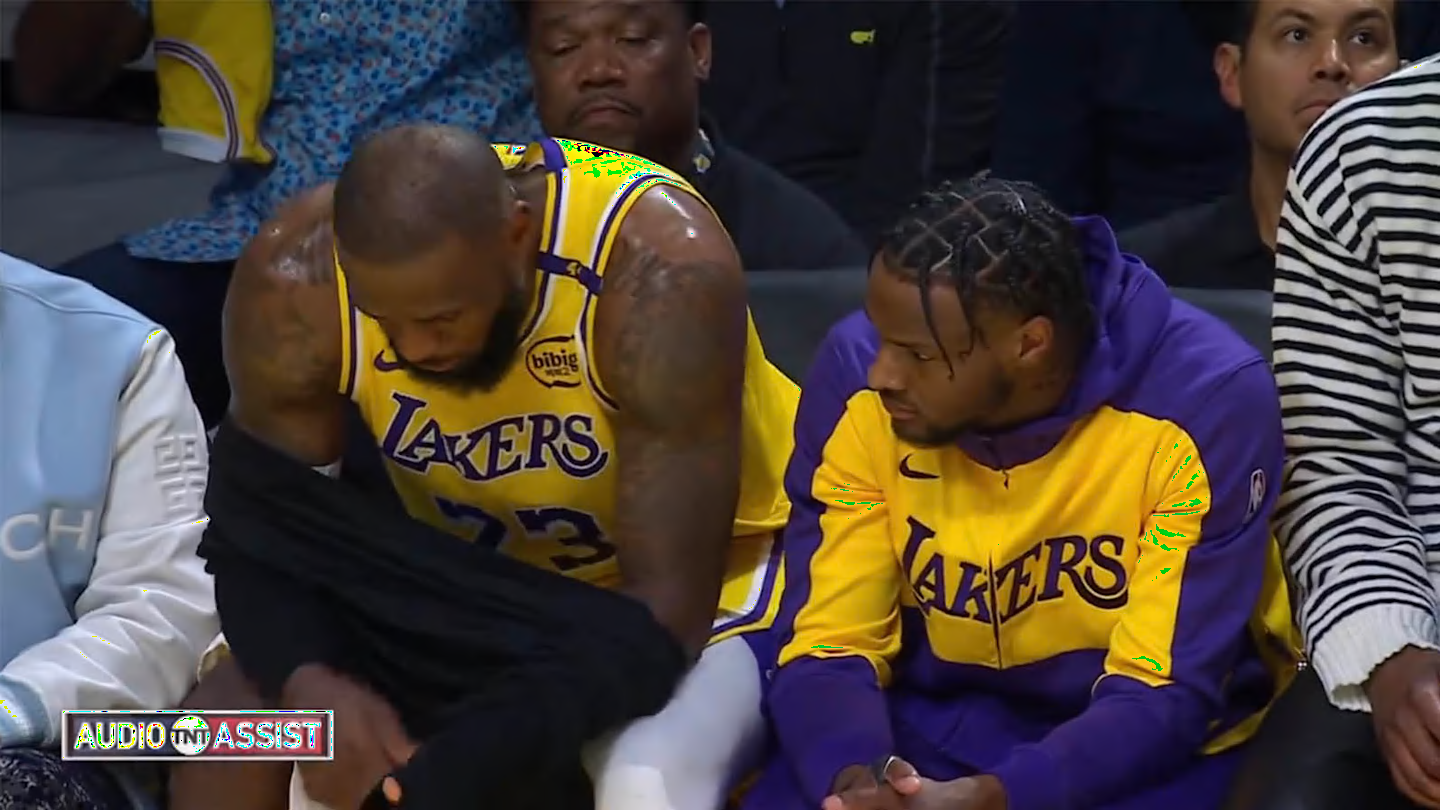
The reaction from LeBron James’ fanbase—often referred to as the “LeBronies”—was swift and vitriolic. Social media platforms like X were flooded with fans wishing for Shiesty’s return to prison, while others called for a total boycott of his music. However, beneath the anger, a more uncomfortable conversation began to emerge: Did LeBron James set his son up for this type of public humiliation?
Analysts and cultural commentators are now pointing to the stark difference between how Michael Jordan and LeBron James handled their children’s athletic careers. Jordan, a billionaire with global influence, famously allowed his sons to find their own paths. When they didn’t make the NBA on their own merits, Jordan accepted it. LeBron, conversely, has been criticized for “forcing” the narrative of playing alongside his son on the Lakers, potentially sacrificing Bronny’s development and happiness for the sake of his own “legacy.”
Because Bronny was fast-tracked into the NBA and the G-League despite lukewarm scouting reports, he has become an easy target for anyone looking to “punch down.” As 93 Zay pointed out, Bronny is being told he is the next Jrue Holiday by some, while his actual performance suggests he isn’t even the best player on his G-League squad.
The “Killer” Comparison
The irony of Shiesty’s lyrics isn’t lost on the basketball world. The rapper refers to LeBron as a “killer,” a term usually reserved for players like Kobe Bryant or Michael Jordan who demanded the final shot and played with a sociopathic competitive edge. LeBron, known for his “make the right play” philosophy and willingness to pass to an open teammate, has often been critiqued for lacking that specific “killer” gene.
Yet, in the context of the song, the “killer” label serves as the peak of success—the standard that Bronny is failing to meet. Shiesty’s line implies that even if we accept LeBron as the greatest, Bronny is so far removed from that greatness that he has become a punchline in the very community his father helped build.
A Final Straw for the James Family?
For Bronny James, this isn’t just another troll on social media; it’s a direct hit from one of the most influential figures in youth culture. Pooh Shiesty’s music is played in locker rooms and high schools across the country. When the “king of the ski mask” tells the youth that Bronny is the definition of “lame,” it carries a weight that a thousand sports talk show segments cannot match.
The question now remains: will LeBron James acknowledge the “strain” his son is catching, or will the James family continue to push the narrative of NBA success? As Shiesty’s track climbs the charts, Bronny finds himself in a difficult position—trying to find his own identity while being used as a lyrical weapon against his father’s legacy. Whether Pooh Shiesty took it too far or simply spoke a truth that many were thinking, the “Bronny James” brand has taken a hit that no amount of highlight reels can easily fix. The marathon continues, but for Bronny, it’s currently uphill, and everyone is watching him stumble.