In the heated, ceaseless debate over basketball supremacy, the loudest arguments often come from the most predictable voices: talking heads chasing clicks, former players settling scores, or statistical purists waving spreadsheets. But sometimes, the most devastating critique arrives with the quiet, chilling clarity of a perfectly thrown entry pass. That moment arrived when John Stockton, the legendary Utah Jazz point guard, sat down, cool as ice, and delivered a reality check that has ripped a hole in the fabric of LeBron James’s carefully constructed legacy.
Stockton’s words were simple, yet profound: “You’re not climbing the mountain, you’re taking a helicopter to the top.”
That shot wasn’t random; it was a targeted missile aimed directly at the heart of the modern NBA’s most successful, yet most scrutinized, career. Coming from Stockton—a man who spent 19 seasons battling in the trenches of Utah without ever chasing a brighter spotlight or begging for a shortcut—the message hit with the force of an earthquake. It wasn’t merely an old-school complaint; it was a stark, brutal differentiation between the ethos of building a legacy and buying a brand.
The Anatomy of the Helicopter Mindset
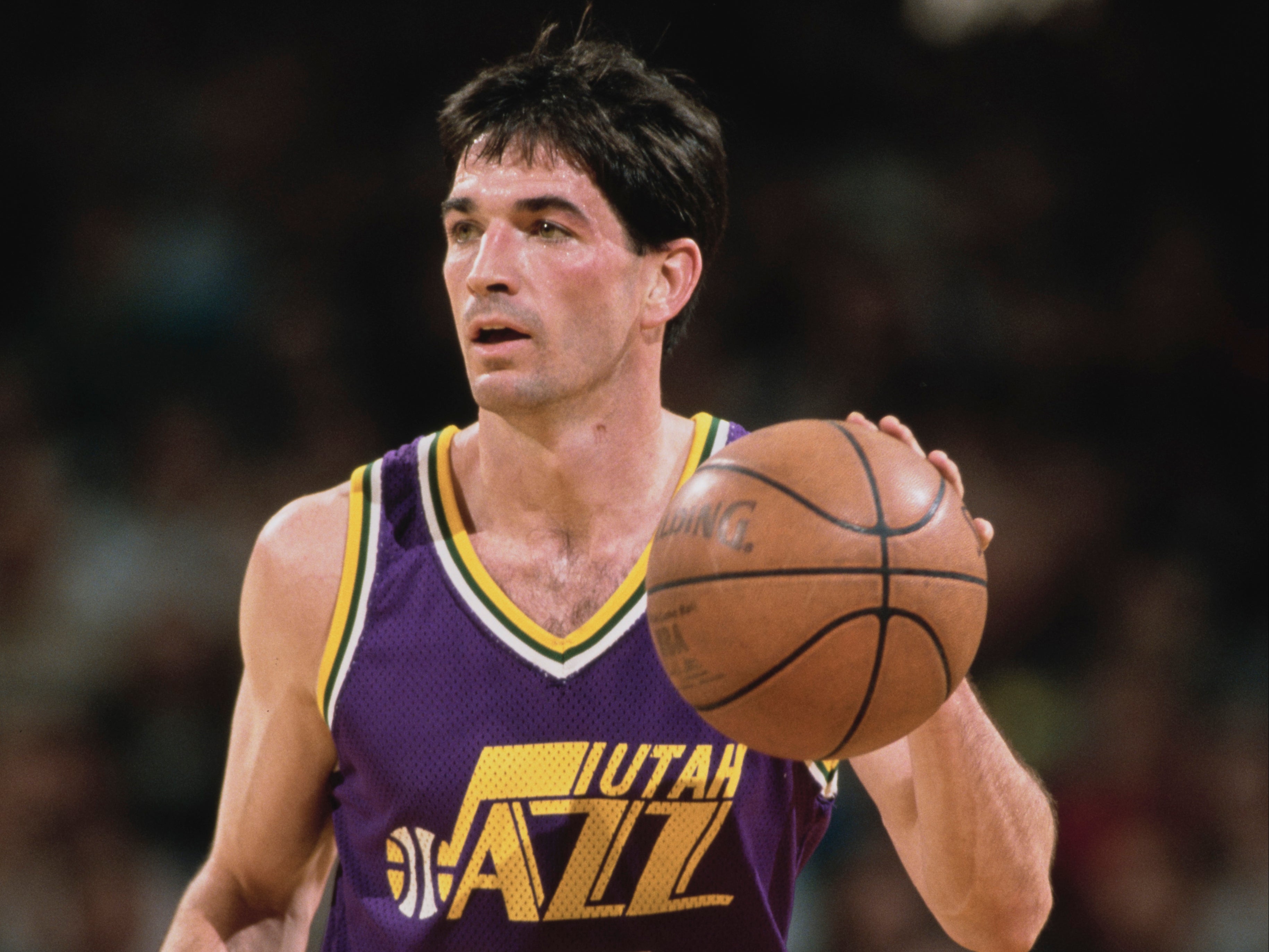
To understand the weight of Stockton’s statement, one must first grasp the context of his own career. He and Karl Malone, the foundational pillars of the Utah Jazz, spent nearly two decades in the unforgiving Western Conference, showing up year after year, ready for more smoke. They watched Michael Jordan break their hearts not once, but twice, in the Finals, only to come back the next season with their belts tightened, dedicated to the grind. Their mantra was simple: We got to get better. We got to play harder. We got to play smarter. They never once entertained the idea of fleeing Utah for “greener grass.”
This is the definition of climbing the mountain. It is the painful, relentless, and often unrewarded process of earning every step, every inch of progress, through loyalty, development, and sheer will.
LeBron James’s career, by contrast, reads like a series of meticulously planned logistical operations designed to optimize success and minimize resistance. The moment things got rough in Cleveland after his initial run, he bolted to Miami, engineering the first super-team of the modern era with Dwyane Wade and Chris Bosh. When that squad aged out, he returned to Cleveland, only after the franchise stacked the deck with Kyrie Irving and Kevin Love. And when that configuration started to crack, he shot out to Los Angeles to link up with Anthony Davis.
As Stockton’s metaphor suggests, every time the climb got steep, every time adversity threatened to delay his championship timeline, LeBron found himself a new helicopter. His rings are undeniably impressive, but the question that now hangs heavy in the air—and one that is aging like premium wine—is this: How many of those rings did he truly earn through the painful, authentic, Jazz-style grind? The difference between building a championship contender piece by piece, draft by draft, and assembling one overnight through blockbuster trades and big-name free agency is the difference between a mountain climber and a helicopter tourist. And increasingly, fans are seeing the latter.
The True Test: Why Retirement Is a Threat to LeBron’s GOAT Case
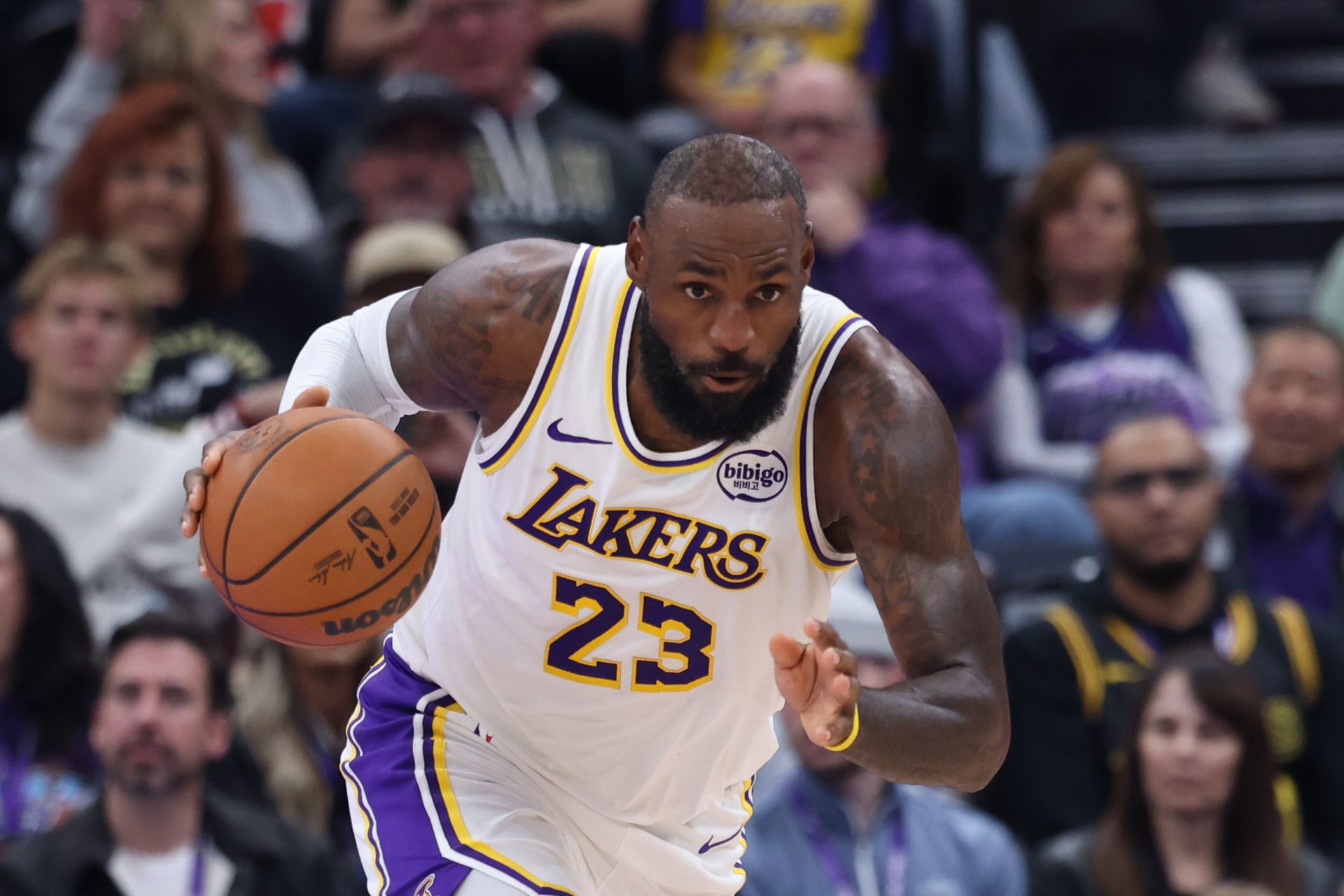
The most alarming aspect of Stockton’s critique lies in the long-term prognosis for LeBron’s standing among the greats. The conversation around legends shifts dramatically once they retire. Once the lights fade and the volume statistics freeze, all that remains is the mythology and the character revealed during their journey.
Michael Jordan’s legend, for instance, has only grown since he walked away. His story is defined by mythical moments: the flu game, the push-off on Russell, the sheer, unadulterated will to dominate. Even his losses make his story stronger because they were battles fought, not challenges avoided.
LeBron’s argument, however, is built on volume, stats, and longevity. He is the all-time scoring leader, an astonishing feat, but one that required more games than anyone else. He played 21 seasons, a testament to his maintenance, but a reality that means he spent the latter stages being, by his own standards, average just to keep piling up numbers. When the numbers freeze, the scrutiny starts. People will look back and realize the necessity of the Super Team era to maximize those statistics, diminishing the solo brilliance and mythological aura that defines Jordan and Kobe Bryant.
In the vacuum of retirement, fans crave authentic storytelling about fighting adversity, not optimization. LeBron’s career, while a masterpiece of consistency and business acumen, is starting to feel calculated and cold. And in a world craving purity, cold calculation doesn’t create mythology.
The Authenticity Problem and the Corporate Crown
Stockton’s loyalty was a badge of honor. He stayed in Utah, not exactly a superstar vacation spot, for 19 straight years. He could have forced a trade to chase rings in a major market, but he stayed and built with what he had. That is genuine. That is raw.
LeBron’s career, fairly or unfairly, has become the face of everything people hate about the modern athlete: the polished brand, the corporate maneuvering, and the pervasive influence of an external business empire. Every move, from “The Decision” being a TV special to his social media posts being “polished, filtered, and approved by a committee,” feels designed by his media squad at Clutch Sports.
When Stockton speaks, he is speaking freely, unbound by any corporate allegiance. When many modern players or commentators stay quiet, they do so because they are entangled in the sprawling web of the Clutch machine. This empire of power, which influences draft picks, free-agent moves, and media narratives, has secured LeBron’s success off the court but has simultaneously poisoned the well of his authenticity on it. Every time he made a business-driven choice—going to the Lakers for Hollywood access and life after the league, for example—his basketball authenticity took a corresponding hit. Fans are catching on; they can tell when choices are about business and legacy polishing, not just the simple, pure desire to win.
The Bronny Factor: The Ultimate Shortcut
The most damning piece of evidence supporting Stockton’s critique is the recent situation involving his son, Bronny James. This saga provides the perfect, undeniable illustration of the “helicopter mindset” in full, brutal display.
LeBron utilized his enormous power to essentially pressure the Los Angeles Lakers into drafting Bronny. This was not a pick based on collegiate dominance or draft consensus; it was a pick made because the Lakers were reportedly terrified that not taking Bronny would lead to LeBron walking away.
This is the antithesis of “climbing the mountain.” Instead of allowing Bronny to grind, to earn his minutes in the G-League, or prove his worth in a system where he wasn’t protected by his surname, LeBron airlifted him straight into the league. It is the use of status and privilege to provide a shortcut that regular families and regular players never get.
The problem, as the transcript points out, is not just the act itself, but what it reveals about the athlete’s character: that LeBron is willing to place his own personal goals—his desire to share the court with his son—above the team’s singular, fundamental goal of winning a championship. He leveraged a franchise, a move that damages the team’s integrity, all to facilitate a family moment. For those who value the pure, selfless, single-minded focus of the old-school legends, the “Bronny Factor” is the definitive proof that LeBron’s choices are no longer purely about the game.
The Long Game of Legacy
Stockton’s jab isn’t just about team-hopping or stat-padding; it’s about a wider cultural shift. Today, the public is starved for authenticity. They are tired of the polished branding, the scripted moments, and the personalities that feel more like corporate avatars than human beings who fight through genuine struggle.
Legends endure when their story is about battling adversity, not dodging it. Muhammad Ali gave up his prime for his beliefs. Jackie Robinson broke barriers through sheer resilience. Michael Jordan suffered at the hands of the Pistons before rising as a monster. These are legendary stories because they are defined by the willingness to suffer for the ultimate prize.
LeBron’s story, while successful, is about optimization. It’s smart business, but it lacks the mythological weight that creates lasting, eternal reverence. The younger generation, who grew up seeing him as just another superstar with a perfectly managed brand, lacks the emotional bond of previous eras.
The tragic irony, as Stockton so piercingly suggested, is that LeBron reached the mountaintop multiple times, but his legacy is starting to slip precisely because people feel he took the easy, calculated route and skipped the genuine, character-forging climb. Stockton never reached the summit, but his legacy is rock solid because everyone knows he gave everything he had to the climb.
In the end, all the accolades, all the scoring records, and all the media spin will quiet down. All that will be left is the basketball, the character, and the story. And when history looks back, it will judge the difference between the guy who climbed and the guy who took the helicopter. Stockton simply reminded everyone which one actually matters.