The click of the deadbolt was the loudest sound I had ever heard. It was the sound of a life ending. My life.
It was November, and the air in our small Midwestern town already had the sharp, metallic bite of the coming winter. I stood on the porch, my breath pluming in front of my face like tiny, frantic ghosts. My coat, a thin thing I’d had since high school, wouldn’t close over the swell of my belly. I was nineteen. I was five months pregnant. And I was, in that instant, utterly alone.
Through the curtains of the kitchen window, I could see the scene I had just been expelled from. My mother was pressed against the sink, her shoulders shaking with silent sobs, but she didn’t turn. She would never defy him. My younger brother, Mark, stood by the table, his arms folded. He was smirking. That smirk cut me deeper than the cold. He had won. He was the good child now.
And my father. He stood by the door, his back to me, a rigid pillar of righteousness. A church deacon, a man whose image in the community was his entire identity. He wore his Sunday suits like armor, and he wielded scripture like a weapon. Just moments before, he had looked right through me, his eyes as cold and flat as slate.
“You have brought shame on this house,” he’d said, his voice terrifyingly calm. “You have consorted with sin, and you will not do it under my roof.”
“Please, Daddy,” I’d whispered, my hands instinctively going to my stomach.
“Do not call me that. You made your bed. Lie in it.”
Then, the slam. The click.
I stood there for a full minute, frozen, waiting for the door to be wrenched open, for my mother to call me back. Nothing came. The only sound was the wind whistling through the bare branches of the oak tree in our yard.
I had a duffel bag at my feet, packed with a few changes of clothes and the $84 I had saved from my part-time job at the diner. It felt impossibly light. I stepped off that porch, my boot heels clicking on the frozen concrete, and I did not look back. I couldn’t. Looking back would have shattered me.
That first night, I slept in my borrowed ’88 Civic, the engine rattling in protest every time I turned it on for a ten-minute blast of heat. The vinyl seats cracked and groaned under me, and I cried until my eyes were raw and my throat felt like sandpaper. Shame was a heavy, suffocating blanket. In our town, image was everything. I was the deacon’s daughter, the girl from the perfect family. Now I was the town scandal, a cautionary tale.
Survival became a raw, day-to-day calculation. I found a studio apartment above a Greek restaurant. The ad in the paper had called it “cozy.” It was a single, peeling room that perpetually smelled of stale garlic and old pipes. The sink dripped into a stained plastic pan, a constant, hollow plink-plink-plink that became the soundtrack to my nights. The heater was a great, groaning metal beast that either scorched the air or did nothing at all. I slept under a pile of thrift-store quilts, my own body a furnace for the small, precious life growing inside me.
I took every shift I could get. I bussed tables at the diner from 6 AM to 2 PM, my feet swelling, my back screaming. Then, I’d take a bus across town to clean offices from 6 PM to midnight. I walked through empty, sterile cubicles, vacuuming, and emptying the trash cans of people who had homes to go to. I was a ghost in their world.
Mornings smelled of burnt coffee and baby powder. Evenings smelled of industrial bleach and exhaustion. Every flutter in my belly, every tiny kick, felt like a promise. This was no longer just my life. It was ours. I was fighting for two.
Money wasn’t tight; it was a ghost. It was an absence. I learned to stretch a single rotisserie chicken across three dinners. I sewed loose buttons back on with dental floss. I read textbooks at the public library because I couldn’t afford to buy them.
One evening, about a month before my due date, the gas bill arrived with a bright red, final-notice stamp. The thought of the heater going quiet, of the water running ice-cold, sent a new kind of terror through me. I couldn’t let my baby be cold.
That’s how I found myself at the plasma donation center on the rough side of town. It was a brightly lit, desperate place. I sat in a row of vinyl loungers, my fellow donors a collection of haunted eyes and track-marked arms. A nurse, her face etched with a permanent exhaustion, failed to find a vein in my left arm. She sighed, annoyed, and jabbed the needle into my right. I watched, detached, as my blood, dark and rich, was siphoned into a machine, spun, and my plasma extracted before the thinned, cooled blood was returned to me. I was paid $50. I went back two days later and did it again. The lights stayed on.
One frigid evening just before Christmas, the Civic finally gave up. The engine died with a pathetic sigh at a red light. I had no money for a tow, no money for a repair. I grabbed my bag and started walking. I made it as far as a bus-stop bench before the weight of it all—the cold, the loneliness, the failure—crashed down on me. I buried my face in my gloved hands and sobbed, my pregnant belly making it a clumsy, awkward position.
A few minutes later, the bench shifted. A woman in her sixties, wrapped in a bright, hand-knit scarf, sat down beside me. She didn’t say anything for a long time. She just sat, a silent presence against the dark. Then, she unscrewed the top of a large, old-fashioned thermos. Steam rose from it, smelling of cinnamon and tea.
She held out the cup. “Here, honey.”
I took it. My hands were shaking so badly I almost spilled it. The tea was hot and sweet, and it burned a path of warmth straight to my core.
“It’s a hard world for a young mama,” she said, her voice soft.
I nodded, unable to speak, fresh tears welling.
“I was you, once,” she said, patting my knee. “Different circumstances, same cold bench. Let me tell you something a good woman told me. God never, ever wastes pain.”
I looked at her, really looked at her. Her face was a map of wrinkles, but her eyes were bright and fierce. “How?” I choked out.
“He doesn’t waste it,” she repeated, as if it were a simple fact. “He uses it. He turns it into fuel. He turns it into strength. He turns it into wisdom. But you gotta let Him. You gotta get up off the bench.”
When the bus came, she helped me up, squeezed my arm, and was gone. I never saw her again. But I held those words in my pocket like a smooth, warm stone. God never wastes pain. I started to imagine my shame, my fear, my father’s rejection, not as a prison, but as fuel.
My daughter, Emily, arrived on a blustery March morning in a small, underfunded hospital room. The nurse who put the plastic bracelet on my wrist looked overworked, but she smiled when she handed me my baby. “She’s perfect, honey. A fighter.”
Emily was perfect. She was 7 pounds of fury and grace, with a shock of dark hair and my eyes. Holding her for the first time, I felt a love so fierce and so total it terrified me. This was it. This was the promise.
I strapped her into a second-hand car seat I’d bought for $10 and marched her to the apartment of the neighbor, a tired woman named Mrs. Petrov, who had agreed to watch her while I worked the breakfast shifts. Mornings now smelled of burnt coffee, baby powder, and sour milk.
I made a plan. I circled night classes in a community college catalog. I chased grants and loans. I scribbled notes in a spiral notebook, a plan for a life. I knew I needed structure, I needed a path that was clear and absolute. I saw a poster in the campus student union. A picture of a man in uniform, pointing. It was for the Reserve Officer Candidate program. It offered training, a future, and, most importantly, a commission. It was a way out.
I signed up.
The diner became my staging ground. Walt, a retired Gunnery Sergeant who ate breakfast at the counter every day at 0600, watched me. He saw me studying military history between refilling coffee pots. He saw me wincing as I stretched my back.
One day, he didn’t leave a tip. He left a folded note. I opened it. It was a hand-drawn diagram. “How to lace boots for a 10-mile-ruck. Don’t use the ‘granny’ knot. You’ll get blisters.”
The next day, it was a list of push-up ladders. The day after, a recipe for “blister tape.” He never said a word about it. He just drank his coffee, called me “Ma’am,” and left his wisdom on the counter. The respect he gave me, a pregnant teenager slinging hash, stuck to me. It started to fill in the cracks.
Another angel appeared. Ruth Silverhair, a woman from a tiny storefront church tucked between a laundromat and a payday-loan store, started showing up at my apartment. She never came empty-handed. She brought casseroles and bags of diapers. She never quoted scripture at me. She never asked why I was alone. She just showed me how to clear a clogged sink, how to rock Emily to sleep when she was colicky, and how to lift my chin. “Don’t look at the ground, Alice,” she’d say, her voice like soft iron. “You look down, you invite pity. You look up, you command the room.”
That storefront church became my haven. It wasn’t grand like my father’s. It smelled of reheated coffee and old hymnals. But the people there didn’t care about my past. They cared if I had enough to eat. They saw me.
Between the diner, the night classes, and the baby, I started the ROC program. It was designed to chew people up. It chewed me up. I learned to navigate by the stars, to read contour lines on a map, to break down a rifle and reassemble it in the dark. I learned to make a bunk with corners so sharp they could cut the dark. I learned to count my heartbeats when I was exhausted and call them steady.
It cost me. I missed Emily’s first steps because I was in a muddy field learning land navigation. I lost my daycare spot over a late signature and had to beg, with warm soup and tears, to get it back. I would study azimuths with Emily sleeping on my chest, her tiny breath a reminder of what I was fighting for.
In the library, where the photocopier ate nickels I couldn’t spare, I wrote my officer accession essay. I wrote about resilience. I wrote about leadership being about service, not about judgment. I wrote about my father, not by name, but about the failure of rigid rules in a broken world. I hit “submit” with hands that were shaking so hard I could barely type.
The acceptance letter came in the late spring. It was a thick, official envelope. I held it to my chest, my knees giving out, and I cried a new kind of cry. It wasnD’t sorrow. It wasn’t fear. It was the sound of a heavy, locked door finally creaking open. A line had turned into a road.
Training was a new, refined level of hell. It rebuilt me from the bones out. They broke me of my old habits—the habit of looking down, the habit of apologizing for taking up space. They taught me to move people and supplies with care. They taught me to brief colonels without my voice shaking. They taught me to turn my hurt into an engine.
The day I commissioned, the gold bars on my shoulders felt heavier than I could have imagined. The uniform sat on my shoulders like a promise I had made to myself. Emily, then four years old, was there in a thrift-store blue dress, clapping her hands, not understanding what was happening but knowing it was important.
I sent a photo to my mother. Just me, in my new uniform, holding Emily’s hand. I wrote on the back: We’re safe. We’re okay.
I didn’t send one to my father. The pride was still too tender, too raw.
The military became my plank in a raging sea. It wasn’t perfect, but it was a system. It had rules, but they were rules meant to build, not to break. I learned logistics, how to move an army, how to feed thousands. I learned that real power wasn’t about standing over people; it was about standing for them.
The years passed like mile markers. I moved from duty station to duty station. Emily collected library cards like trophies, taping them into collages. She learned to spot a good thrift store from a mile away. She learned to make friends fast and say goodbye gracefully. She wrote about life, about learning to notice people. She was everything kind and curious I’d hoped she would be.
I was promoted. Lieutenant. Captain. Major. I briefs generals, I wrote policy, I commanded troops. I turned the hurt into an engine, just as I’d been taught. I built a new family from the people I served with—chaplains who became friends, soldiers who became confidants, mentors who saw the steel I had forged in that first-year fire.
Then, when I was 45, I was promoted to Brigadier General. The star was heavy.
One cold December, twenty years after I had walked off that porch, the phone rang. It was my mother. Her voice was thin, reedy, a sound I hadn’t heard in two decades.
“Alice?” she’d whispered, as if she was afraid to say my name.
“I’m here, Mom.”
She sobbed. “Your father… he’s ill, Alice. He’s very ill. The doctors… they don’t know.”
A cold, hard knot formed in my stomach. I waited.
“He wants… we… we want to see Emily. We want to see you.”
I wrote one word on the notepad by my phone: Family.
I was silent for a long time. The wind howled outside my window here, at my quarters on base. It was a sound I knew well.
“Alice? Are you there, General?” she asked, the new title awkward in her mouth.
“I’m here,” I said. “I’ll send a car.”
After I hung up, I called Emily, now a junior in college, studying social work. I told her.
Her voice was quiet. “Do you want them here, Mom?”
“I don’t know,” I said honestly, rubbing my temple. “But I think I want a beginning. Or at least, an ending I can write.”
The day they were set to arrive, the morning light was pale and thin. Albert, our gatekeeper on base, a man who had polished brass for 40 years, was setting out poinsettias. I had told him to expect them.
The small, rented sedan looked impossibly out of place as it pulled up to the guardhouse. My mother stepped out first, wearing a scarf from another life. My brother, Mark, got out. He looked paunchy and bitter, a man who had spent his life chasing our father’s nod and never getting it.
And then, my father.
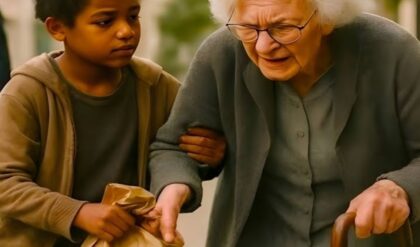
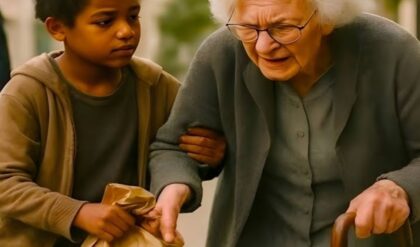
He was so… small. The man I remembered was a giant, a colossus of judgment and law. The man who climbed out of that car was frail, his clothes hanging off him. He leaned heavily on a cane, and the November air seemed to cut right through him.
He cleared his throat, his eyes scanning the gate, the flags, the armed guards. He looked at me, standing on the steps of my home. His eyes traveled over my uniform, the single star on my shoulder, the ribbons on my chest.
He swallowed. “General,” he said, his voice a dry rasp.
“Thank you for coming,” I replied. My voice was steady. It was the voice I used to brief senators.
That night, my house was full. I had gathered my life into one room. Walt, the old Gunny, was there, now in a wheelchair, holding court with a plate of cookies. The base chaplain, who had become one of my closest friends, was there. A few midshipmen I was mentoring, who had brought canned goods for the base food drive, were there. My neighbors, other officers, people who knew that small gestures matter.
This was my room full of witnesses.
We sat. We ate. My mother cried quietly, holding Emily’s hand. My brother stared at the floor.
Finally, my father looked up. His eyes met mine across the table.
“I have been a cruel man,” he said. The room went silent. “I thought I was protecting you. I thought it was my… my duty. I was wrong.”
Forgiveness was not a switch. It wasn’t a single moment. It was a practice. A slow, painful, awkward practice. We didn’t erase the past. We didn’t pretend the ledger was balanced.
But we set the table. We ate, we laughed. We told old stories. We named the fear and the silence. Emily, my beautiful, wise Emily, floated through the room with envelopes. “Truth first,” she whispered to me, quoting a professor. “Tenderness close behind.”
When they left, the sky was turning pink, and the road looked new. My father let go of something heavy at that gate.
In the weeks and months that followed, we practiced. The town watched cautiously. We met for coffee instead of at church. I sent casseroles, not sermons. I learned that small acts of logistics—a ride to a doctor’s appointment, a new prescription—were their own kind of ministry.
I set up a small fund for that storefront church, the one between the laundromat and the payday-loan store. The logistics I had learned in the Army, I now used for my community. Real power was standing for people.
Illness humbled my father in a way sermons never could. He started volunteering at the pantry pick-ups, learning that usefulness softens the heart. Emily grew competent, curious, and kind.
On my fiftieth birthday, my father asked if he could plant a magnolia tree in my yard. “For others to sit under,” he said. We dug the hole together, putting hope into the ground.
Years later, I stood in my uniform, watching that magnolia, now wide and dignified, throw shade across the yard. The ordinary noise of my house—dishes, laughter, voices—was my new hymn. My father stayed long enough to feel the repair. We planted another magnolia together, telling soft stories, half crying, half laughing.
I tell this story not to parade my hurt. I tell it because a daughter who was cast out built a life. And the man who sent her away had to stand before the woman she became.
Justice, I learned, wasn’t about punishment. It looked like systems that protect instead of punish. It looked like food shelves, and buddy-checks, and scholarships. It looked like chairs at a table for hard truths.
Don’t ever let a slammed door be the final scene. Show up. Set the plates. Bring the tea.
Twenty years after that night on the porch, my father stood at our gate again, this time for Emily’s college graduation party. Albert, ever-present, stepped out of the guardhouse.
“Are you here to see General Morgan?” Albert asked, his voice booming.
My father looked at Albert, then at me, standing on the porch, the door wide open, the house full of light and noise. He met my eyes. He met the room full of witnesses and the life I had rebuilt from the scrap wood of his judgment.
He smiled, a small, true smile. And he offered words that tasted like warm bread.
“I was wrong,” he said.
We didn’t erase the past. We just learned to set the plates with care.