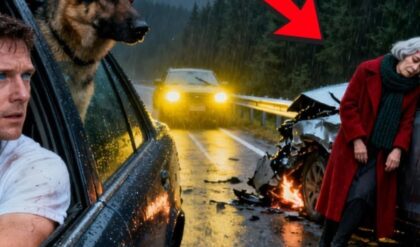
I’ve been invisible for eight months. That’s the truth of working in a house like Giovanni Moretti’s—you learn to move through rooms like air, present but unnoticed. My hands polish surfaces that gleam under chandeliers I could never afford, fold towels softer than anything I’ve ever slept on, and arrange flowers that cost more than my weekly groceries.
The mansion sprawls across three floors of Manhattan luxury, all marble and dark wood and windows that overlook a city I can barely afford to live in. Giovanni Moretti himself is a shadow I’ve learned to predict. I hear his footsteps on the stairs—measured, deliberate—and know to be elsewhere. I catch glimpses of him through doorways: dark hair perfectly styled, expensive suits that fit like they were born on him, and eyes the color of aged whiskey that never quite land on me.
He holds meetings in his study with men who speak in low voices and leave through side doors. I clean up after them, empty ashtrays that smell of Cuban cigars, collect forgotten glasses still wet with liquor. I don’t ask questions. That’s not my job. My job is to disappear. The only constant in this carefully ordered existence is Brittany.
My sister works in the kitchen, twenty-three years old with our mother’s easy laugh and none of my caution. She makes breakfasts that smell like comfort and dinners that look like art, and every evening when our shifts end, we ride the subway back to our cramped apartment in the Bronx together. Two bedrooms, thin walls, neighbors who fight at 3 a.m., but it’s ours. Well, rented. Barely afforded.
I work the extra shifts when they’re offered because I need every dollar. Because forty-seven thousand dollars in medical debt doesn’t disappear on its own. Because my mother died two years ago from cancer that ate through her body and our savings simultaneously, and the bills kept coming long after her funeral.
I signed payment plans I’ll be honoring into my thirties, accepted interest rates that should be criminal, and learned to survive on cheap coffee and cheaper hope. So I clean. I fold. I polish. I accept overtime without complaint. Thursday night, the grandfather clock in the main hall chimes ten times as I finish wiping down the banister.
My shoulders ache from scrubbing tile grout in the third-floor bathroom, and my lower back protests when I bend to collect my cleaning caddy. October in New York means darkness falls early, and through the tall windows, I watch rain begin to streak the glass. “You heading out?” Brittany appears from the kitchen, pulling on her jacket. She smells like rosemary and garlic from whatever she prepared for Giovanni’s dinner.
“Yeah. Long day.” She studies my face with the particular intensity only siblings can manage. “You look exhausted.” “I’m fine.” “You always say that.” She links her arm through mine as we walk toward the service entrance. “Movie night this weekend? I’ll make popcorn.” “If I’m not working.” “Lauren.” Her voice carries gentle reproach. “You can’t keep doing doubles forever.
” But I can. I have to. The next payment is due in two weeks, and I’m short by three hundred dollars. Outside, the rain has graduated from drizzle to downpour. We huddle under the small awning by the service door, and Brittany pulls out her phone to check the subway status. “Train’s running on time.
Ready to make a run for it?” Three blocks. That’s all it is. Three blocks from the Moretti mansion to the Christopher Street station. We’ve walked it hundreds of times, usually together, sometimes alone when our shifts don’t align.
The neighborhood is supposed to be safe—this is Giovanni’s territory, after all, and I’ve heard the whispers about what that means. Protection. Order. Rules enforced by men in dark suits. Tonight, Brittany got a text from her boyfriend before we left. Some emergency with his roommate that had her swearing under her breath and apologizing profusely. “Go,” I told her. “I’ll be fine.” “You sure?” “It’s three blocks.
” She kissed my cheek and ran toward the garage where she’d parked her ancient Honda. I watched her taillights disappear around the corner, then pulled my hood up against the rain and started walking. The street was quieter than usual. Most storefronts had already closed, their windows dark except for security lights that cast everything in shades of amber and shadow. My sneakers splashed through puddles, soaking through to my socks within half a block.
I kept my head down, focused on the familiar route, counting the shops I passed like prayer beads. The Italian restaurant. The dry cleaner. The pharmacy with the flickering neon sign. Two blocks down. One to go. The alley appeared on my left, narrow and dark between two buildings. I’d passed it a thousand times without thought. But tonight, two figures stepped out from the shadows, blocking the sidewalk ahead.
I stopped. Heart suddenly hammering against my ribs. “Evening,” one of them said. White guy, maybe thirty, with a shaved head and a jacket that looked too thin for the weather. His companion was taller, broader, silent. “Evening,” I managed, moving to step around them. The first man shifted, staying in my path.
“Where you headed in such a hurry?” “Home.” My voice came out steadier than I felt. “Excuse me.” “Hold on now.” He smiled, but it wasn’t friendly. “Just being neighborly. Making conversation.” The taller one moved behind me, cutting off retreat. My stomach dropped. “I don’t want trouble,” I said. “No trouble.” The first man held up his hands, palms out. “Just need your bag. And that phone in your pocket. Nice and easy.
” My mind raced through options. Scream—but who would hear over the rain? Run—but where? Fight—against two men twice my size? I pulled my crossbody bag over my head with shaking hands and held it out. He took it, rifled through quickly, pocketed my wallet. Then he looked at me expectantly. “Phone.” I reached into my jacket, fingers numb, and handed over my cell. My lifeline. My alarm clock. My connection to Brittany.
“Good girl.” He examined the phone, then his eyes landed on my shirt. My cleaning uniform, visible where my jacket hung open. Simple gray polo with the mansion’s discreet logo embroidered on the chest. “Wait a second.” He stepped closer, rain plastering his face. “You work at that house. The big one on the corner.
” Fear spiked cold through my veins. “No.” “Don’t lie.” He grabbed my collar, yanking me forward. “I seen that logo before. You work for the Italian, don’t you?” “I don’t know what you’re talking about.” “Bullshit.” He looked at his companion. “She works for Moretti.” The taller man’s expression changed. Something dark crossed his features.
“I’m just a cleaner,” I said desperately. “I don’t know anything. I just clean houses. Please.” “Just a cleaner.” The first man laughed, but it was ugly. “Well, just a cleaner, you’re gonna deliver a message for us.” The first punch came from nowhere, catching me across the cheekbone.
Pain exploded white-hot behind my eyes, and I staggered backward. Before I could recover, hands grabbed my arms, fingers digging in hard enough to bruise. I tried to scream, but a palm clamped over my mouth. “This is what happens,” the first man said, close to my ear, “when people think they own our streets. When they think their Italian boss can tell us what to do.” The second hit caught my ribs. Then another.
And another. I stopped counting after the fourth, stopped trying to fight, just curled inward and prayed for it to end. Someone grabbed my hair, yanked my head back, and I saw the first man’s fist coming toward my face before everything went black. I don’t know how long I was unconscious. Could have been seconds or minutes.
When awareness returned, I was lying on wet pavement, rain drumming against my back. Every breath felt like knives in my side. My left eye wouldn’t open properly, swollen and throbbing. The metallic taste of blood filled my mouth. They were gone. My bag, my phone, and my attackers—all vanished into the October night.
I pushed myself to sitting, biting back a sob as my ribs protested. My hands were scraped raw, my jeans torn at the knee. Through my one working eye, I could see the subway station ahead, its lights wavering through the rain. Get up. Move. Get home. I don’t remember the walk clearly. Just fragments.
Stumbling through the turnstile. A woman’s concerned face asking if I needed help—me shaking my head. The jarring motion of the train. Climbing the stairs to our apartment building felt like scaling a mountain. Our bathroom mirror told the story my body already knew. My left eye was swollen shut, purple spreading across the socket. My bottom lip was split and bleeding.
When I lifted my shirt, bruises were already forming along my ribs in shades of red and purple. My arms bore the clear imprint of fingers where I’d been grabbed. I turned on the shower, letting it run hot, and sat on the bathroom floor fully clothed while steam filled the space. Only then did I let myself cry, quiet and controlled so I wouldn’t wake Brittany. But she woke anyway.
Her bedroom door opened, footsteps approached, and then she was in the bathroom doorway, her face going pale. “Lauren. Oh my God, Lauren.” “I’m okay.” “You’re bleeding. We need to go to the hospital.” “No.” “Lauren—” “I can’t afford it.” My voice broke. “I can’t afford the ER visit, Britt. I can’t.” She crouched beside me, her hands hovering like she was afraid to touch me and cause more pain.
“What happened?” “Mugged. Two guys. They took everything.” “Did you call the police?” “No phone, remember?” I tried to smile, but my split lip made me wince. “It’s fine. I’ll file a report tomorrow.” Brittany’s expression said she didn’t believe any of this was fine, but she didn’t argue.
Instead, she helped me out of my wet clothes, steadied me as I showered, and bandaged the worst of the scrapes with supplies from our first aid kit. When I finally crawled into bed, she sat beside me in the dark. “I shouldn’t have left you alone,” she whispered. “Not your fault.
” But as I lay there, every part of my body screaming, I couldn’t stop replaying the moment the first man saw my uniform. The recognition in his eyes. The deliberate violence that followed. This wasn’t random. And somehow, that made it infinitely worse. Sleep came in fragments, broken by pain that pulsed through my ribs with every breath. When my alarm went off at six, I lay there staring at the ceiling, contemplating the impossible mathematics of missing work. I needed every shift.
Every dollar. The medical bills didn’t care if I’d been beaten half to death in an alley. Forty-seven thousand dollars. That number followed me like a shadow, constant and suffocating. Each month I chipped away at it—three hundred here, five hundred when I worked doubles—but the interest kept it alive, breathing, growing. Missing even one day meant falling further behind.
I dragged myself upright, biting back a groan as my ribs protested. The bathroom mirror showed me exactly what I’d be working with: my left eye had transformed into a grotesque palette of purple and black, swollen enough that I could barely see through the slit. The cut on my lip had scabbed over during the night. Bruises bloomed across my jaw and cheekbone like violent flowers.
Makeup became war paint. I layered concealer thick enough to pass for a mask, though it did little to hide the swelling. Foundation in three different shades to try to match what my skin used to look like. The eye was hopeless—no amount of product could disguise that damage. I settled for making the rest of my face look human and hoped people wouldn’t look too closely.
The long-sleeve shirt came out of necessity despite the October heat that had settled over the city. Gray charcoal, high-necked, covering every inch of damage I could hide. When I checked my reflection one final time, I looked like someone wearing a bad disguise of myself. Brittany was already in the kitchen when I emerged, and her face crumpled the moment she saw me.
“Don’t,” I said before she could start. “I’m going to work.” “Lauren, you can barely walk.” “I can walk fine.” A lie. Every step sent shocks through my left side where they’d kicked me. “And I need the money.” “One day won’t—” “Yes, it will.” I poured coffee into a travel mug, movements careful and deliberate. “Payment’s due in two weeks. I’m already short three hundred.
” She opened her mouth, closed it. We both knew the math. Both lived inside the same impossible budget. “At least let me drive you,” she said finally. I accepted because the subway stairs felt insurmountable this morning. The mansion looked exactly as it always did—beautiful, imposing, utterly indifferent to my suffering. Brittany dropped me at the service entrance with a look that said we’d be discussing this later, then drove around to the garage.
She’d be in the kitchen by now, starting prep for whatever elaborate breakfast Giovanni preferred on Fridays. I made it through the morning on autopilot. Dust the library. Vacuum the second-floor hallway. Change linens in the guest rooms. Each task required focus to complete without aggravating my injuries. I moved slowly, methodically, and avoided every reflective surface I passed.
Around noon, Brittany found me folding towels in the linen closet. “You look awful,” she said bluntly. “Thanks.” “I’m serious. Your face is twice its normal size.” “It’s fine.” She stepped closer, lowering her voice. “Did you at least file a police report?” “I will. After work.” Another lie.
What would I tell them? That I got mugged and the attackers mentioned my employer? That felt dangerous in ways I couldn’t articulate. “Lauren—” “I need to finish the third floor.” I picked up my caddy of cleaning supplies, using it as a shield. “Mr. Moretti has people coming this afternoon. Everything needs to be perfect.” Brittany’s expression suggested she had more to say, but she let me go.
I climbed the stairs slowly, grateful for the emptiness of the upper floors where no one would see me struggle. Giovanni’s study was last on my list. He typically spent afternoons in meetings downtown, leaving his private space empty until evening. I knocked twice out of habit, got no response, and let myself in.
The room smelled of leather and aged paper, with undertones of the whiskey he drank and the cigars he smoked on the terrace. His desk dominated the space—dark wood polished to a mirror shine, papers arranged in precise stacks. I’d learned his system over months of cleaning: never move the papers, just dust around them. Never touch the laptop.
The crystal decanter and glasses got hand-washed and replaced exactly where they’d been. I was wiping down the windowsill, back to the door, when I heard it. Footsteps. My heart jumped stupidly, rabbit-quick panic, before logic reasserted itself. Just another employee. The housekeeper. Franco checking if I needed anything.
But when I turned, Giovanni Moretti stood in the doorway. He’d removed his suit jacket, rolled his shirtsleeves to his elbows. Dark hair slightly disheveled like he’d been running his hands through it. And his eyes—those dark whiskey eyes I’d seen a hundred times from a distance—were fixed directly on me.
Actually seeing me. Not through me. “Sorry, Mr. Moretti.” My voice came out steadier than I felt. “I thought you were out this afternoon. I can come back—” “What happened to your face?” The question landed like a physical blow. Direct. Unavoidable. “I fell.” The lie I’d practiced. “Subway stairs. They get slippery when it rains.
” He didn’t respond. Didn’t move. Just stood there watching me with an intensity that made my skin prickle. Then he stepped into the room, closing the door behind him with a quiet click that felt far too intimate. “Look at me.” Not a request. Not quite an order.
Something in between that made me obey before I’d decided to. I lifted my face, let him see the full extent of the damage the makeup couldn’t hide. His expression didn’t change—still that careful neutrality I’d observed from afar—but something hardened in his jaw. He crossed the space between us in three measured steps, and suddenly he was close. Too close. Near enough that I could smell cedar and something darker, more expensive.
“Tell me again how you fell.” “The stairs were wet. I lost my footing.” “Which side did you fall on?” The question confused me. “What?” “Left or right. Which side hit the stairs.” “I—” My mind scrambled. “Left. I think.” “You think.” He circled slowly, like a predator examining prey, and I fought the urge to back away. “But you’re favoring your left side when you breathe.
Protecting it. So you fell on the left, hit your left eye, split your lip, and now your left ribs hurt.” Heat flooded my face. “Yes.” “That’s a very consistent fall.” He stopped in front of me again. “Show me your arms.” “Mr. Moretti—” “Show me.” My hands trembled as I set down the cleaning cloth. This was my employer.
I couldn’t refuse. Didn’t want to, for reasons I couldn’t examine too closely. I pushed up the right sleeve first—the arm that had taken less damage. Just some scrapes across the forearm. “The other one.” I hesitated. The left arm told a different story. But Giovanni waited with infinite patience, and eventually I pushed up that sleeve too.
The bruises were spectacular. Perfect finger-shaped marks circling my bicep where someone had grabbed me. Purple and yellow and angry red. Unmistakable. Giovanni stared at them for a long moment. When he finally spoke, his voice had dropped to something cold and deadly. “Who did this to you?” “I told you—” “Don’t.” The word cracked like a whip.
“Don’t lie to me again, Lauren. Those are not from a fall. Someone grabbed you. Held you. Where did this happen?” The use of my name shocked me into silence. I hadn’t known he knew my name. Eight months of invisibility, and he’d known it all along. “Three blocks from here.” The truth came out before I could stop it. “Thursday night. Walking to the subway.
” “What did they take?” “My bag. Phone. Wallet.” “And then?” I couldn’t answer. Couldn’t find words for the violence that had followed, the deliberate cruelty. “And then?” he repeated, softer but no less insistent. “They saw my uniform.” My voice cracked. “Asked if I worked for you. I said no, but they didn’t believe me. They said—” I stopped, swallowed. “They said it was a message.
” The silence that followed felt dangerous. Giovanni’s jaw tightened incrementally, the only visible sign of whatever was happening behind those dark eyes. Then he moved to his desk, pressed a button on the phone. “Franco. My office. Now.” “Mr. Moretti, please—” I started. “Sit down.” “I don’t want to cause trouble—” “Sit. Down.” Not angry. Just absolute. The voice of someone who expected obedience and received it.
I sat in one of the leather chairs facing his desk, feeling small and exposed. Giovanni remained standing, one hand braced on the desk, staring at nothing. Franco arrived within minutes—a man in his late thirties with silver threading his dark hair and eyes that missed nothing. He took one look at my face and went still.
“Three blocks from here,” Giovanni said without preamble. “Thursday night. Two men. They saw her uniform and decided to deliver a message.” Franco’s expression turned to stone. “Where exactly?” “Between the dry cleaner and the pharmacy,” I supplied quietly. “Around ten-fifteen.” “We have cameras in that area. I’ll pull the footage.” He glanced at me again, and there was something almost like sympathy in his eyes.
“Can you describe them?” I did. White guy, shaved head, thin jacket. Taller companion, broader, never spoke. Details I’d replayed in my mind all night. “Cole,” Franco said after a moment. “Sounds like Darren Cole. Works for the Albanians.” Giovanni’s hand curled into a fist on the desk. “Find him. Find them both. I want them here by midnight.
” “Consider it done.” Franco left as quickly as he’d arrived, and I was alone with Giovanni again. The silence stretched unbearably until I couldn’t stand it anymore. “This isn’t necessary,” I said. “I’m fine. It was just a mugging—” “It wasn’t a mugging.
” Giovanni finally looked at me, and there was something in his expression that made my breath catch. Not pity. Not even anger, exactly. “It was a challenge. An insult. They attacked you because you work for me, in my territory, on my street. That makes it personal.” “I’m just a maid.” “You work in my home.
” He moved around the desk, sat in the chair beside mine instead of behind the desk. Close. Equal. “You’ve been here eight months. I notice things, Lauren. How you organize books by author without being asked. How you never gossip with the other staff. How you take every overtime shift offered.” My throat tightened. “I need the money.” “I know. Medical bills for your mother.
” Of course he knew. He probably knew everything about everyone who worked for him. “So you understand,” he continued, voice dropping, “why I can’t let this go. If I allow someone to hurt one of my people without consequences, it shows weakness. And weakness in my world gets you killed.” The casual mention of killing should have terrified me.
Instead, I felt something else entirely. Something warm and dangerous that had no place in this situation. “What will you do to them?” I asked. “What needs to be done.” He stood, offered me his hand. “Come. You’re not cleaning anything else today. You’re going to rest in one of the guest rooms until this is handled.” I took his hand before I’d decided to.
His grip was firm, careful, and he pulled me to my feet with effortless strength. For a moment we stood too close, his hand still holding mine, and the air between us felt charged with something I didn’t understand. Then he released me and stepped back. “This way.” I followed him through corridors I’d cleaned a thousand times, but everything looked different now. I wasn’t invisible anymore.
Giovanni Moretti saw me. Knew my name. And for reasons I couldn’t fathom, that changed everything. The guest room Giovanni showed me to was larger than my bedroom at home. Cream walls, floor-to-ceiling windows overlooking the garden, furniture that looked like it belonged in a museum. I stood in the doorway, feeling profoundly out of place.
“Sit,” Giovanni said, gesturing to an upholstered chair by the window. “Franco will need time to pull the security footage. I want you resting until then.” “I should finish my work—” “That wasn’t a suggestion.” His tone allowed no argument. “You’re injured. You’ll rest.” He left before I could protest further, the door clicking shut with quiet finality.
I sank into the chair because my legs were shaking and my ribs screamed with every movement. Through the window, I watched shadows lengthen across the garden as afternoon shifted toward evening. Brittany appeared twenty minutes later, carrying a tray with tea and sandwiches I hadn’t asked for. She set it on the side table, then perched on the arm of my chair.
“Okay, what the hell is happening?” She kept her voice low. “Giovanni Moretti just personally escorted you upstairs. Franco’s running around looking like someone kicked his dog. And you’re sitting in the nicest guest room like you’re actually a guest instead of staff.” “He knows about the attack.
” “How?” “He saw my face. Asked questions. I couldn’t keep lying.” I picked up the teacup, more for something to do with my hands than from thirst. “Britt, they recognized my uniform. The men who attacked me. They knew I worked here.” Her face went pale. “That’s why Giovanni’s—” “Taking it personally. Yeah.” I sipped the tea.
Too hot, burning my already split lip, but I welcomed the distraction. “He said it’s an insult to him. That he can’t let it go unpunished.” Brittany was quiet for a moment, processing. Then, “I’ve worked here two years. Never seen him like this.” “Like what?” “Focused. Angry, but cold angry. The kind that’s more dangerous than yelling.
” She studied me with those too-knowing sister eyes. “He used your name.” “So?” “Lauren, he calls me ‘the cook.’ Everyone else is ‘staff.’ He knows our names—he knows everything—but he doesn’t use them. Distance, you know? But he used yours.” Before I could respond to that deeply uncomfortable observation, a knock came at the door. Franco entered, carrying a laptop and manila folder. His expression was grim.
“We have the footage,” he said without preamble. “Mr. Moretti wants you to confirm identification.” I followed him downstairs to Giovanni’s study, Brittany trailing behind us like a protective shadow. The room felt different now—charged with purpose instead of empty luxury.
Giovanni stood behind his desk, jacket discarded, sleeves rolled up, looking every inch the dangerous man I’d always suspected he was. Franco opened the laptop, angled the screen toward me. Grainy black-and-white footage showed a street corner I recognized. The timestamp read 10:14 p.m. Thursday. I watched myself walk into frame, hood up against the rain, head down. Then two figures emerged from the alley. My stomach twisted. Even in poor quality video, I recognized them.
“That’s them,” I said quietly. Franco paused the frame, zoomed in on the first man’s face. “You’re certain?” “Yes. He’s the one who grabbed me. Asked about my uniform.” Giovanni leaned forward, studying the frozen image with predatory focus. “Darren Cole. Small-time enforcer for the Albanian operation.
Works collections, intimidation.” He looked at Franco. “The other one?” “Viktor something. Croatian, I think. Muscle for hire.” Franco pulled photographs from the folder, spread them across the desk. “Cole’s been on our radar for months. He’s part of Krasniqi’s crew pushing into Lower Manhattan.” “Krasniqi.” Giovanni pronounced the name like a curse. “So this wasn’t random.
” “Territory play,” Franco confirmed. “They’re testing boundaries. Hitting your people to see if you’ll respond.” I listened to them discuss violence and territory and power plays like they were analyzing a chess match. The clinical detachment should have frightened me. Instead, I felt strangely removed, like I was watching a play instead of participating in my own life.
“What will you do?” The question escaped before I could stop it. Both men looked at me. Giovanni’s expression softened fractionally. “Find them. Bring them here. Make it clear that touching anyone under my protection has consequences.” “You don’t have to do this because of me.” My voice sounded small even to my own ears.
“I’m nobody. Just someone who cleans your house.” Giovanni circled the desk with deliberate slowness, each step measured and purposeful. He stopped directly in front of me, close enough that I had to tilt my head back to maintain eye contact. “You work in my home,” he said, voice low and intense. “You’ve been here eight months.
I’ve noticed how you fold the newspapers so the headlines face up. How you water the orchids in the library every Tuesday because you know they need consistent care. How you never complain, never ask for anything, just do your job with quiet competence.” Heat flooded my face.
“You noticed that?” “I notice everything in my world, Lauren. And you’re part of it, whether you realize it or not.” He glanced at Franco. “Assemble a team. Six men. Find Cole and bring him to me. The Croatian too if you can locate him.” “Done.” Franco closed the laptop. “What about the girl?” “She stays here tonight. Guest room on the second floor. Her sister too.
” “Wait—” I started. Giovanni held up a hand, silencing me. “This isn’t negotiable. Those men know you work here. They know what you look like. Until I’ve handled this situation, you’re not walking home alone through my streets.” “I can’t just stay here. I have a life. An apartment. Bills to pay.
” “Your bills will be there tomorrow.” His tone brooked no argument. “Tonight, you’re under my roof and my protection. Accept it.” The word protection hung in the air between us, weighted with implications I wasn’t ready to examine. But exhaustion and pain were catching up to me, dragging at my bones until standing felt like an insurmountable effort. “Fine,” I said. “One night.
” Giovanni’s expression shifted into something that might have been satisfaction. “Franco, make the arrangements. I want updates every hour.” Franco left, and I found myself alone with Giovanni again. He watched me with that unsettling intensity, like he was cataloging every micro-expression. “Why do you work so hard?” he asked suddenly. “The double shifts, the overtime. Most people do the minimum. You do everything.
” I debated lying, then decided he probably already knew anyway. “Medical debt. My mother died two years ago. Cancer. The bills didn’t stop with her.” Understanding flickered across his features. “How much?” “That’s not your concern.” “How much, Lauren?” The use of my name again.
Like he was trying it out, testing how it felt in his mouth. “Forty-seven thousand. Give or take.” He absorbed this information with a single nod. “And you’re paying it off on a housekeeper’s salary.” “I don’t have much choice.” “There’s always a choice.” He moved to the window, stared out at the darkening garden. “You could have declared bankruptcy. Walked away from the debt.
” “That’s not who I am.” “No.” He glanced back at me. “It’s not. You honor your obligations, even when they’re destroying you. That’s rare.” Before I could respond, Brittany appeared in the doorway, looking uncertain. “Sorry to interrupt.
The housekeeper said I should set up in the room next to Lauren’s?” “Yes.” Giovanni straightened. “Both of you will stay tonight. Tomorrow we’ll reassess the situation.” Brittany looked at me, eyebrows raised in silent question. I gave her a tiny nod, and she disappeared down the hallway. “I should go,” I said. “Let you work.” “One more thing.” Giovanni crossed to his desk, wrote something on a notepad, tore off the sheet and handed it to me.
A phone number in bold, precise handwriting. “My direct line. If anything happens—anything—you call me immediately.” “Nothing’s going to happen. Your house is practically a fortress.” “Nevertheless.” He closed my fingers around the paper. “Keep it with you.” His hand lingered on mine for half a second too long, warm and solid, before he released me and stepped back. The brief contact left my skin tingling.
“Thank you,” I managed. “Don’t thank me yet. The night isn’t over.” I left him there, standing in his study surrounded by evidence of the violence he was planning, and climbed the stairs to the guest room where Brittany waited. She took one look at my face and pulled me into a careful hug, mindful of my injuries. “This is insane,” she whispered.
“I know.” “He’s going after them. For you.” “I know.” “Lauren, he’s—” “I know, Britt. I know what he is. I know what he’s going to do.” I pulled back, met her worried gaze. “And I can’t bring myself to feel bad about it.” That admission hung between us, heavy with implications neither of us wanted to voice.
Brittany helped me out of my work clothes, gasped when she saw the full extent of the bruising across my ribs and back. She didn’t say anything, just grabbed pajamas from the dresser—silk, expensive, left by some previous guest—and helped me dress like I was made of glass. We sat together on the massive bed, and I told her everything.
The attack, Giovanni’s reaction, Franco’s investigation, the security footage. She listened without interruption, processing it all with the same pragmatic calm she brought to everything. “So what happens now?” she finally asked. I thought about Giovanni’s cold fury, Franco’s efficient violence, the carefully controlled power that ran through this house like electricity through wires. Thought about how I should be terrified but instead felt something closer to relief.
“Now,” I said, “we wait.” Through the window, night had fully fallen. Somewhere in the city, men with guns were hunting the people who’d hurt me. And I was lying in silk pajamas in a mansion, protected by someone who commanded armies with a whisper. The world had shifted on its axis in the span of a single afternoon, and I suspected it would never quite settle back into place.
Sleep refused to come. I lay in the unfamiliar bed, staring at shadows that danced across the ceiling, listening to Brittany’s steady breathing from the adjacent room. Every time I closed my eyes, I saw the footage again—grainy images of myself being cornered, attacked, left bleeding in the rain.
My ribs throbbed with each breath, a metronome of pain keeping time with my racing thoughts. Around two in the morning, I heard it. Voices, low and urgent, drifting up from somewhere below. Then the distinct sound of a heavy door closing. Not slamming. Controlled. Deliberate. I should have stayed in bed. Should have pulled the covers over my head and pretended I heard nothing.
Instead, I found myself padding barefoot across the plush carpet, easing the bedroom door open with careful silence. The hallway stretched before me, illuminated by subtle floor lighting that cast everything in shades of amber. The voices were coming from Giovanni’s study. My heart hammered as I crept down the stairs, each step measured and quiet. I’d cleaned these stairs dozens of times, knew which boards creaked, which sections of railing were loose.
Now that knowledge served a different purpose as I descended into the darkened first floor. Light spilled from beneath the study door, a golden line against polished hardwood. I approached it like approaching a wild animal—slow, cautious, barely breathing. The door stood slightly ajar, just wide enough to see inside if I positioned myself correctly.
What I saw made my blood turn to ice. Two men knelt in the center of the room, hands zip-tied behind their backs. I recognized them immediately despite the blood on their faces—the shaved head, the broader build of his companion. The men who’d attacked me.
Franco stood to one side, arms crossed, expression carved from granite. Two other men I didn’t recognize flanked the doorway, guns visible at their waists. And Giovanni sat in his leather chair, perfectly still, watching the kneeling men with the focused attention of a predator studying prey. “I didn’t know, Mr. Moretti.” The shaved man—Cole, Franco had called him—spoke rapidly, words tumbling over each other.
“I swear, we didn’t know she was yours. Krasniqi just said to send a message. Make some noise in your territory. We were supposed to rough up a few people, nothing serious—” “Nothing serious.” Giovanni’s voice was soft. Terrifyingly soft. “You put your hands on someone under my protection and call it nothing serious.
” “It was just supposed to be a warning. Show we could reach into your streets whenever we wanted.” Cole’s eyes darted between Giovanni and Franco, searching for mercy he wouldn’t find. “We weren’t supposed to really hurt anyone bad. Just scare them.” “Scare them.” Giovanni stood slowly, each movement precise and controlled.
He crossed to stand directly in front of Cole, looking down at the kneeling man. “Tell me something. When you saw her uniform, when you realized she worked in my home, what did you think would happen?” “I—we thought—” Cole stammered. “Krasniqi said you’d back down. That you were getting soft. That taking Brooklyn was making you weak, spreading you too thin—” “Krasniqi was wrong.” Giovanni crouched, bringing himself eye level with Cole.
“Do you know what she does here? She cleans. She folds towels. She arranges flowers. She’s twenty-seven years old, working two shifts to pay off her dead mother’s medical bills. And you beat her unconscious in the rain for politics.” The silence that followed was absolute. Even from my position by the door, I could feel the weight of it, heavy and suffocating.
Then Giovanni asked the question, and my breath caught in my throat. “Who did this to you?” His voice was barely above a whisper, but it carried more menace than any scream could have. Each word fell like a stone into still water, creating ripples of dread that spread through the room. “I did.” Cole’s voice broke. “I did it.
Viktor held her, but I hit her. I’m sorry, Mr. Moretti, I’m so sorry—” “You’re sorry.” Giovanni didn’t move, didn’t blink. “You’re sorry because you got caught. Because you’re kneeling here instead of sleeping peacefully in whatever hole you crawled out of. You’re sorry because you know what comes next.” He stood, turned his back on the kneeling men, and walked to his desk.
The casual dismissal was somehow more frightening than any display of rage would have been. “Franco.” Giovanni’s tone shifted to pure business. “Take them. Make it clean. I want Krasniqi to receive a message, but I don’t want bodies showing up in the harbor creating problems with the harbor police.
Understood?” “Understood.” Franco gestured to the other men, who moved forward to haul Cole and Viktor to their feet. “Wait—” Cole struggled against the hands gripping his arms. “Please, Mr. Moretti, I have a family—” “So did she.” Giovanni didn’t turn around. “Her mother died of cancer. Her sister works in my kitchen.
She has people who love her, people who depend on her, just like you claim to have. The difference is she never put her hands on anyone. She just tried to go home after working a double shift. Take them.” I retreated before I could see more, pressing myself against the wall around the corner, pulse pounding so hard I thought they’d hear it.
Footsteps approached, and I held perfectly still as Franco and his men led the prisoners past, moving toward what I assumed was a back exit. Cole was crying now, quiet desperate sobs that made my stomach twist despite everything. The study door clicked shut. I waited until the footsteps faded completely before creeping back upstairs, my legs shaking so badly I had to grip the railing for support.
Back in the guest room, I sat on the edge of the bed, hands trembling. I’d just watched Giovanni Moretti condemn two men to death. Calmly, efficiently, with less emotion than I’d use ordering coffee. And the worst part—the part that should have terrified me but instead left me feeling strangely hollow—was that I couldn’t bring myself to care.
They’d beaten me unconscious. Left me bleeding in an alley. And now they would pay for it. I should have felt guilt. Horror. Some sort of moral revulsion at being complicit in violence. Instead, I felt nothing but a cold sort of satisfaction. Hours passed.
I watched through the window as black SUVs pulled away from the house, headlights cutting through the pre-dawn darkness. Three vehicles, moving in formation, carrying men with guns and zip-tied prisoners to whatever fate Giovanni had ordained for them. I wondered if I’d just become an accessory to murder. Wondered if I cared. The sky was beginning to lighten when a soft knock came at my door.
I’d thrown on a robe over the borrowed pajamas, and when I opened the door, Giovanni stood there holding two cups of coffee. He looked tired—the first time I’d ever seen even a hint of weariness in his carefully controlled facade. “Did I wake you?” he asked. “I couldn’t sleep.” He nodded, unsurprised, and held out one of the cups.
I took it, our fingers brushing briefly in the exchange. The coffee was perfect—cream and sugar in exactly the proportions I preferred. Of course he knew. He knew everything. “Can I come in?” he asked. I stepped back, letting him enter. He moved to the chair by the window, the same one I’d been occupying for hours, and I perched on the edge of the bed.
“What happened to them?” The question emerged before I could second-guess asking it. Giovanni studied me over the rim of his coffee cup, dark eyes assessing. “They paid for their mistake.” “That’s not an answer.” “It’s the only one you need.” His voice was gentle but firm. “You don’t want details, Lauren. Trust me on this.
” “How do you know what I want?” “Because I’ve seen that look before. The one you’re wearing right now. The one that says you’re trying to figure out if you should feel guilty for not feeling guilty.” He set his cup on the side table. “Don’t. Those men made choices. They dealt in violence. They knew the risks.
” I sipped my coffee, letting the warmth seep into my hands, chase away some of the chill that had settled into my bones. “I should be afraid of you.” “Probably.” “I’m not.” “I know.” He leaned forward, elbows on his knees, and for a moment he looked less like a crime boss and more like just a man carrying heavy burdens. “How do you feel? Honestly.
” “My ribs hurt. My face hurts. Everything hurts.” I touched my swollen eye gingerly. “But safer than I’ve felt since Thursday night.” Satisfaction flickered across his features, there and gone. “Good. That’s what matters.” He stood, crossed the space between us in two strides. “Let me see.
” I tilted my face up, and his fingers brushed my jaw, turning my head to catch the early morning light streaming through the window. His touch was careful, professional almost, but there was something else underneath it. Something that made my skin tingle and my breath catch. “The swelling’s gone down a little,” he observed. “But you need a proper medical evaluation. Dr. Caruso is expecting us at nine.
” “I can’t afford—” “I wasn’t asking about your finances.” His thumb traced the edge of the bruise on my cheekbone with unexpected gentleness. “This happened because of me. Because you work in my house, on my street. That makes it my responsibility.” “That’s not how responsibility works.” “It is in my world.
” He withdrew his hand, and I immediately missed the warmth of it. “Get dressed. Wear something comfortable. We leave in an hour.” He moved toward the door, then paused, looking back at me with an expression I couldn’t quite read. “For what it’s worth,” he said quietly, “you’re not just a maid to me. You never were.” Then he was gone, leaving me alone with those words echoing in my head and coffee growing cold in my hands.
Through the window, full daylight was breaking over the city, painting everything in shades of gold and rose. Somewhere out there, two men who’d hurt me were facing consequences I couldn’t let myself imagine. And here I sat, in a mansion that should feel like a cage but instead felt like sanctuary, drinking coffee made exactly how I liked it by a man who commanded death with a whisper.
The world had shifted again overnight. And sitting there in borrowed silk pajamas, watching the sun rise over a city full of violence and beauty, I realized I’d shifted with it. Giovanni insisted we leave within the hour, and I didn’t have the energy to argue. Brittany helped me dress in jeans and a soft burgundy sweater she’d brought from our apartment, moving around me with careful efficiency while pointedly not mentioning the events of the previous night. We both knew what had happened. Neither of us wanted to say it aloud.
The SUV waiting outside was sleek and black, windows tinted dark enough to hide whoever sat inside. Giovanni held the back door open, and I climbed in, biting back a gasp as my ribs protested the movement. He slid in beside me—not across from me, not in the front with a driver, but right there in the back seat close enough that I could smell cedar and expensive cologne. “You don’t need to come,” I said as he closed the door.
“Just send me with Franco or—” “I’m coming.” Final. Absolute. He pulled the SUV into traffic with the easy confidence of someone who’d spent years navigating Manhattan streets. “Dr. Caruso is expecting both of us.” The drive should have been awkward. Instead, silence settled between us like something almost comfortable.
I watched the city slide past through tinted glass, tried not to think about how much a private medical visit would cost, how many months of payments I’d be adding to my already impossible debt. “Stop calculating,” Giovanni said without looking at me. “I wasn’t—” “You were. I can practically hear you doing math.” He glanced over briefly. “Whatever you’re worried about, don’t be. This isn’t your expense.
” “I can’t let you pay for—” “You’re not letting me do anything. I’m doing it because someone was attacked on my street, in my territory, wearing my household’s uniform. That makes it my responsibility.” His hands tightened fractionally on the steering wheel. “Besides, you work for me. Consider it worker’s compensation.” “That’s not how worker’s comp works.” “It’s how mine does.” The clinic occupied the second floor of an unremarkable building in Murray Hill.
No sign outside, no indication it was anything other than offices. Giovanni led me through a private entrance, up stairs I climbed slowly, each step a fresh reminder of Thursday night. Dr. Caruso was perhaps sixty, with silver hair and hands that looked like they belonged to a surgeon.
He examined my face with clinical detachment, palpating the swelling around my eye, checking my pupil responses. “No sign of orbital fracture,” he said, making notes on a tablet. “Significant soft tissue damage, but it’ll heal. How’s your vision?” “Blurry in the left eye. But it’s getting better.” “Good. Now the ribs.” He gestured to an exam table. “Shirt off. You can keep the bra on.
” I hesitated, acutely aware of Giovanni standing against the wall, watching. Dr. Caruso noticed my discomfort. “Mr. Moretti, perhaps—” “I’m staying.” Giovanni’s tone allowed no argument. But he turned to face the window, offering me that small privacy. I peeled off the sweater carefully, trying not to gasp when the movement pulled at damaged tissue.
The bruises had ripened overnight into spectacular shades of purple and yellow, spreading across my left side like some grotesque watercolor. Dr. Caruso’s professional mask slipped for just a moment. “Christ.” Then he was all business again, pressing carefully along my ribs. When he reached the sixth one, I couldn’t contain the sharp intake of breath.
“Easy,” he murmured. “Fractured, probably. Let’s get an X-ray to confirm.” The portable machine emerged from a side room, and for the next ten minutes I held various uncomfortable positions while trying not to cry from the pain. Giovanni had turned back around, and I felt his gaze on me like a physical weight. The X-ray confirmed it: my sixth rib on the left side had a clean break.
Not displaced, which Dr. Caruso explained meant it would heal without surgery, but it would take time. Six weeks minimum. He wrapped my torso in a compression bandage that made breathing easier, prescribed painkillers I knew I couldn’t afford and anti-inflammatories that would probably cost half my rent. “No heavy lifting,” he said, typing prescriptions into his tablet. “No strenuous exercise.
If the pain worsens or you develop difficulty breathing, call me immediately.” He glanced at Giovanni. “She needs rest. Real rest, not working-through-it rest.” “She’ll rest.” Giovanni accepted the prescriptions Dr. Caruso printed out. “I’ll make sure of it.” When Dr. Caruso went to press a button on the exam table, adjusting it with more force than necessary, I winced at the sudden jolt. Giovanni was across the room in three strides.
“Careful.” Not a request. Not quite a threat. Something in between that made Dr. Caruso pause and nod. “Of course. My apologies.” The payment happened while I was getting dressed, conducted in low voices I couldn’t quite hear.
By the time I emerged from behind the privacy screen, Giovanni was tucking his wallet away and Dr. Caruso was handing me a bag with prescriptions already filled. “You keep medications here?” I asked. “For special patients.” Dr. Caruso’s expression suggested he didn’t want to elaborate. “Take one of the white pills every six hours for pain.
The blue ones are anti-inflammatory, twice daily with food. Call if you need anything.” Back in the SUV, I stared at the prescription bag in my lap. “How much did that cost?” “Not your concern.” “Giovanni—” “Lauren.” He turned to face me fully, one hand draped over the steering wheel. “Let me ask you something.
If Brittany had been attacked the way you were, if she’d been beaten unconscious in my territory, would you want her worrying about medical bills?” “That’s different.” “How?” I opened my mouth, closed it. Couldn’t find an answer that didn’t sound hollow. “You’ve worked in my house for eight months,” he continued, voice softer now. “I know things about you. How you organize the library books by author even though no one asked you to. How you fold the newspapers so the headlines face up.
How you water the orchids every Tuesday because they need consistent care.” He paused. “How you never complain, never ask for anything, just show up and do your job with the kind of quiet competence most people wouldn’t notice.” “You noticed.” The words came out barely above a whisper. “He glanced my way once, a quiet admission: “I notice things, Lauren.” The drive back to the mansion passed in silence, but it felt different than before. Charged.
Like something unspoken was building between us, pressing against the confines of the car. When we arrived, Giovanni ordered me to rest for the remainder of the weekend. No work, no cleaning, just recovery. Brittany appeared with tea and soup, fussing over me like a mother hen until I reminded her I was the older sister. But even as I protested, warmth spread through my chest at her concern.
What surprised me was Giovanni. Throughout Saturday and Sunday, he materialized at odd intervals—always with some excuse, always brief, but present. He brought food when Brittany was busy in the kitchen. Checked that I’d taken my medication. Adjusted pillows when he caught me wincing.
Each interaction was careful, controlled, but underneath the careful control I sensed something else. Something that made my pulse quicken whenever he entered the room. Sunday evening, I found myself on the terrace. The same one I’d cleaned dozens of times, admiring the garden below while scrubbing furniture I’d never expected to actually sit on. Now I occupied one of the wrought-iron chairs, wrapped in a blanket against October chill, watching the sun set over the city.
Giovanni emerged from the house carrying two glasses and a cigar. He handed me one glass—tea, prepared exactly how I liked it—and settled into the chair beside mine. “How do you feel?” he asked, lighting the cigar with practiced ease. “Sore. But better.” I sipped the tea, let the warmth seep into my hands. “The medication helps.
” “Good.” He exhaled smoke that curled into the evening air, dissipating into twilight. “Dr. Caruso says you’ll heal completely. No permanent damage.” “Physically, anyway.” He turned to look at me, really look at me, dark eyes searching. “Are you afraid?” “Of what?” “Going back out there. Walking those streets again.” I considered the question seriously.
Was I afraid? Thursday night played on repeat in my mind—the rain, the alley, the hands grabbing me. But underneath the fear was something else. Something harder. “No,” I said finally. “I’m angry.” “Good. Anger is useful. Fear makes you weak. Anger makes you sharp.” We sat in comfortable silence, watching the sky turn from gold to purple to deep blue.
Finally, I asked the question that had been building since Friday. “Why did you take over your father’s business? You could have done anything. Been anything.” Giovanni was quiet so long I thought he wouldn’t answer. Then, “My father died when I was twenty-two. Heart attack, sudden and violent.
He left me an empire built over forty years and two hundred families who depended on us for work, protection, justice the law wouldn’t provide.” He studied the cigar, watching the ember glow. “I could have walked away. Sold everything, moved to Europe, lived off the money. But those families would have been absorbed by rivals or left to fend for themselves in a city that doesn’t forgive weakness.
” “So you chose responsibility over freedom.” “I chose honor over ease.” He glanced at me. “What about you? Why do you work so hard? The double shifts, the overtime. It’s more than just making ends meet.” The medical debt. The number that haunted me.
I took a breath, felt it pull at my wrapped ribs, and told him. About my mother’s cancer. The treatments that promised hope but delivered only more pain. The bills that arrived after her funeral like accusations. Forty-seven thousand dollars in debt that would follow me for years. Giovanni listened without interruption, without judgment. When I finished, he simply nodded.
“That kind of debt, it’s designed to be impossible,” he said. “They know most people will pay minimum amounts forever, feeding the interest machine. It’s legal extortion.” “Maybe. But it’s still mine to pay.” “Because you honor your obligations.” The way he said it, like it was a virtue instead of a burden, made my throat tight. Night had fully fallen now, stars emerging overhead despite the city lights.
Giovanni reached over and adjusted the blanket that had slipped from my shoulder, his fingers brushing my neck with unexpected gentleness. “You should rest,” he said. “Tomorrow we’ll discuss longer-term arrangements.” “Arrangements?” “You’re not going back to walking home alone at night. Not for a while.
” He stood, stubbing out the cigar. “We’ll figure something out that doesn’t make you feel caged.” He left me there on the terrace, the city spread out below like a glittering promise. And for the first time since Thursday night, I felt something other than pain or anger. I felt seen. Protected. Like maybe, impossibly, I mattered to someone who could move mountains with a word.
Monday morning arrived with news that rippled through the mansion like an earthquake. On Monday after lunch, Brittany cornered me by the break room. “Did you file the report?” she asked. I told her the truth—Franco’s men had already turned the attackers over to Giovanni. Walking into a precinct with his name on my bruises felt like painting a target on my back. HR logged an internal incident instead, and Rosa made me sign it.
It wasn’t justice, but it was safer—for now. I heard it first from the housekeeper, Rosa I needed to avoid that name. I heard it first from Rosa, the head housekeeper, who whispered to another staff member in the hallway outside Giovanni’s study. Three Albanian establishments hit over the weekend.
A gambling operation in Queens, a restaurant that fronted money laundering in Brooklyn, and a warehouse near the docks that everyone knew stored contraband. No one killed, but the message was unmistakable: Giovanni Moretti had responded to the attack on me with surgical precision. I returned to work despite Brittany’s protests and my body’s screaming objections.
The compression wrap around my ribs made breathing easier, but every deep inhale reminded me of Thursday night. Every time I turned too quickly, pain flared along my left side like lightning. Giovanni found me in the second-floor hallway, polishing a mirror I could barely reach without gasping. “What are you doing?” His voice was low, controlled, but I heard the displeasure underneath.
“My job.” “You’re supposed to be resting.” “I’ve rested all weekend. I need to work.” I kept my focus on the mirror, watching his reflection rather than turning to face him. “Bills don’t pay themselves.” He crossed the space between us in three strides, took the cleaning cloth from my hand, and set it aside. “No heavy lifting.
No reaching above your head. No bending that makes you wince like you’re being stabbed.” “I wasn’t—” “I watched you climb these stairs. You gripped the railing like it was the only thing keeping you upright.” His dark eyes searched my face. “You’re wearing the compression wrap?” “Yes.” “Taking the medication?” “Every six hours, just like Dr. Caruso said.
” “Good.” He retrieved the cloth, handed it back. “Light work only. If I catch you doing anything strenuous, I’m sending you home. Understood?” “Understood.” But he didn’t leave. Just stood there, studying me with that intensity that made my pulse quicken for reasons that had nothing to do with fear. “How’s the pain? On a scale of one to ten.
” “Four. Maybe five when I move wrong.” “That’s better than Saturday.” “It’s healing.” I gestured vaguely toward the stairs. “I should finish—” “Have you eaten today?” The question caught me off guard. “What?” “Breakfast. Did you eat anything?” “Coffee. I had coffee.” His expression suggested coffee didn’t count as food. “Come with me.
” He led me downstairs to the kitchen where Brittany was prepping vegetables for lunch. She looked up when we entered, eyebrows rising when she saw Giovanni personally escorting me. “Your sister needs to eat,” he told Brittany. “Make sure she does. Regularly. Not just coffee.” “Yes, sir,” Brittany said, fighting a smile. Giovanni left, and the moment the door swung shut, Brittany rounded on me.
“He personally checked if you ate breakfast?” “Apparently.” “Lauren, he’s never done that for anyone. Ever. In two years, I’ve never seen him ask a staff member about their meal schedule.” “He’s just making sure I recover properly. Because I got hurt in his territory.” “Keep telling yourself that.” She pushed a plate of pastries toward me. “Eat. Before he comes back and lectures us both.
” The week that followed established a new pattern I couldn’t quite make sense of. Giovanni appeared at odd moments—when I was dusting the library, organizing linens, watering the orchids I’d tended for months without him noticing. Each time, he’d pause. Ask how I felt. Adjust a pillow if he saw me sitting.
Bring coffee prepared exactly how I liked it, even though I’d never told him my preferences. Other staff members noticed. I caught curious glances, heard whispers that stopped when I entered rooms.
But no one said anything directly, and I tried to pretend the attention from one of Manhattan’s most dangerous men was completely normal and not at all making my heart race every time he walked into a room. Franco appeared Tuesday afternoon while I was folding towels in the linen closet, moving carefully to avoid pulling at my healing rib. “He’s different with you,” Franco said without preamble. I jumped, nearly dropping the towel. “I didn’t hear you come in.
” “That’s the idea.” He leaned against the doorframe, arms crossed. “I’ve known Giovanni since he was twenty-two. Watched him build this organization from the ground up after his father died. He doesn’t let people in. Doesn’t show weakness. Doesn’t care about the small details of anyone’s life unless it serves a strategic purpose.
” “What’s your point?” “My point is he knows how you take your coffee. He noticed when you changed the way you organize his books. He personally drove you to the doctor That night, I rewrapped the bandage exactly the way Dr. Caruso had shown me and set an alarm for the next dose; six weeks sounded like a lifetime, so I started by surviving the next twelve hours. and sat there while you got examined.
” Franco’s expression was unreadable. “That’s not strategy. That’s something else.” “He’s just being responsible. I got hurt because of his business.” “Sure. Keep believing that if it helps you sleep at night.” Franco pushed off the doorframe. “But when this gets complicated—and it will—remember I warned you.
” He left before I could respond, and I stood there holding towels and trying to ignore the way my pulse had quickened at his words. Thursday night, a week after the attack, I found myself alone in the library. Giovanni had asked me to organize some new acquisitions he’d received, and I’d been arranging them by author when the sun set and the house quieted around me.
My bruises had faded to yellowish shadows, barely visible unless you knew where to look. The swelling around my eye had disappeared entirely. But my rib still ached when I breathed too deeply, a constant reminder that I wasn’t quite healed. I was shelving a leather-bound collection of Italian poetry when I heard footsteps behind me. “You’re working late.” Giovanni’s voice, low and close.
I turned, found him standing just inside the doorway, jacket removed, shirtsleeves rolled to his elbows. The sight of him like that—slightly disheveled, guard partially lowered—did something to my insides that I absolutely shouldn’t have been feeling. “Finishing what you asked me to do,” I said, gesturing to the books. “These are beautiful editions. First printings, some of them.
” “My grandfather’s collection. He left them to me when he died.” Giovanni moved closer, examining the spines I’d arranged. “You organized them chronologically within each author.” “It seemed to make sense. Track the evolution of their work.” “Most people would have just done alphabetical.” “I’m not most people.” “No.” His eyes met mine, and the intensity in them made my breath catch. “You’re not.
” The silence stretched between us, charged with something I couldn’t name but felt everywhere. In the air. In the narrowing space between our bodies. In the way his gaze dropped briefly to my mouth before returning to my eyes. “I can’t stop thinking about you,” he said finally, voice rough. “Since that night. Since I saw what they did.
Since I realized you’ve been here for eight months and I’d been too blind to really see you.” My throat went dry. “Giovanni—” “Tell me you don’t feel it. Tell me I’m imagining this, and I’ll walk away. Leave you alone. But tell me honestly.” I should have lied. Should have protected both of us from whatever this was.
Instead, the truth came out in a whisper. “I can’t stop thinking about you either.” He closed the distance between us in one step, his hand coming up to cup my face with surprising gentleness. His thumb traced the faded shadow of the bruise on my cheekbone. “I’m not a good man, Lauren. I do terrible things to maintain power and protect what’s mine. You deserve better than what I can offer.
” “Maybe I don’t want better. Maybe I want this.” The kiss happened like inevitability. Soft at first, questioning, his lips against mine testing boundaries neither of us had acknowledged existed. When I didn’t pull away, when my hands came up to grip his shirt, it deepened.
His other hand found my waist, careful to avoid my injured ribs, and I tasted coffee and something darker, more dangerous. Heat flooded through me, erasing rational thought. This was Giovanni Moretti—crime boss, killer, the man who’d ordered deaths with the same ease most people ordered dinner.
And I was kissing him in his library while the city sprawled below us, oblivious to how my world had just tilted on its axis. His phone buzzed violently in his pocket. We broke apart, both breathing hard. He pulled out the device, read the screen, and cursed softly in Italian. “I have to go. Franco needs me.” But he hesitated, looking at me with an expression I’d never seen before. “This conversation isn’t over.
” “No,” I agreed. “It’s not.” He kissed me once more, quick and fierce, then was gone. I stood there for several minutes, fingers pressed to my lips, trying to process what had just happened. When I finally made it back to the guest room I’d been occupying, Brittany was waiting. She took one look at my face and knew. “You kissed him.” “He kissed me. I think. Maybe I kissed him. It was mutual kissing.
” “Oh my God.” She pulled me to sit on the bed. “Lauren, this is—” “Insane. I know.” “I was going to say dangerous. But insane works too.” She studied me carefully. “Are you okay with this? Because once you start something with a man like Giovanni, there’s no going back to being invisible.” I thought about his hands on my face. His voice admitting he couldn’t stop thinking about me.
The way he’d protected me without hesitation, without question, like my safety was worth starting a war over. “I don’t think I want to be invisible anymore,” I admitted. Brittany pulled me into a careful hug, mindful of my ribs. “Then hold on tight. Because this is going to change everything.” Through the window, I could see the city lights spreading toward the horizon.
Somewhere out there, Giovanni was handling whatever emergency Franco had called him for. Making decisions that would ripple through the criminal underworld. Maintaining power through calculated violence and careful strategy. And when he came back, we’d have to figure out what this thing between us meant. How a maid and a mafia boss could possibly navigate feelings that defied every logical boundary.
But for now, I sat with Brittany in comfortable silence, touching my lips where Giovanni’s kiss still burned, and let myself feel something other than pain or fear or exhaustion. I let myself feel wanted.
The days following that first kiss blurred into something I’d never experienced before—a secret carved out of stolen moments. Giovanni would find me in empty corridors, pull me into unused rooms, kiss me until my knees weakened and my carefully constructed boundaries dissolved. We talked in hushed voices after everyone else had gone home, conversations that stretched into early morning hours about everything and nothing.
His childhood in Naples before his family immigrated. My mother’s final months. The weight of inheriting empires neither of us had asked for. My rib still ached when I moved wrong, a constant reminder that I wasn’t fully healed. But the pain was fading, becoming background noise instead of the main event.
Three weeks had passed since the attack, and the bruises had disappeared entirely. Only the fractured rib remained, sensitive but improving. Brittany caught us one evening in the kitchen. She’d come back for something she’d forgotten, and found me pressed against the counter with Giovanni’s mouth on mine, his hands careful on my waist, avoiding the compression wrap I still wore. “Oh my God,” she breathed.
We broke apart. Giovanni didn’t look remotely embarrassed, just slightly inconvenienced by the interruption. I felt heat flood my face. “Britt—” “No, it’s fine. I just—” She looked between us, processing. “Okay. This is happening. This is actually happening.” “Are you upset?” I asked.
She studied Giovanni with the same critical eye she’d used to evaluate my boyfriends since we were teenagers. “Are you going to hurt her?” “No.” Simple. Absolute. “Are you going to get her killed because someone wants to hurt you through her?” “I’d burn this city to the ground first.” Brittany absorbed this, then nodded once. “Okay then. But Lauren, we’re talking about this later. Extensively.” She left, and Giovanni pulled me back against him, this time gentler.
“Your sister is terrifying,” he murmured against my hair. “She’s protective.” “So am I.” Franco cornered me two days later while I was organizing the study. “He’s different because of you. Lighter somehow. I’ve known him twelve years, and I’ve never seen him smile like he does when you walk into a room.” “Is that a problem?” “Depends.
Can you handle what comes with being his weakness?” Franco’s expression was serious. “Because that’s what you are now, Lauren. The thing people will use to hurt him. The leverage. The pressure point.” “I know what I’m getting into.” “Do you?” He didn’t sound convinced. “This world doesn’t do casual. There’s no halfway with someone like Giovanni. You’re either all in, or you walk away now before it’s too late.
” “I’m all in.” He studied me for a long moment, then nodded. “Good. He needs someone worth fighting for. Someone who reminds him he’s still human underneath all the rest.” Three weeks to the day after I’d been attacked, Giovanni told me to dress nicely for dinner. Not work clothes. Something that made a statement.
I borrowed a dress from Brittany—deep emerald that brought out my eyes, fitted but not uncomfortable with the compression wrap underneath. Giovanni appeared at my door wearing a suit that probably cost more than my car, his dark hair perfectly styled, and those whiskey eyes heating when they landed on me.
“Beautiful,” he said simply. The restaurant was elegant Italian, the kind with cloth napkins and wine lists thicker than novels. We were escorted to a private room in the back, and my stomach dropped when I saw who was already seated. A man in his fifties, heavy-set, with scars cutting through his left eyebrow and down his cheek. Two bodyguards flanked him, stone-faced and watchful. This had to be Krasniqi.
“Mr. Moretti.” The man stood, offering his hand. Giovanni shook it with the bare minimum of courtesy. “And this must be the young lady who caused all the trouble.” “Lauren,” Giovanni said, his hand finding the small of my back, “this is Arben Krasniqi. We’re here to establish new boundaries.
” Krasniqi’s eyes tracked over me with unsettling interest, like he was cataloging weaknesses. “Please, sit. I’ve taken the liberty of ordering wine.” The dinner was a masterclass in veiled threats disguised as polite conversation. Krasniqi offered compensation for the “unfortunate incident”—fifty thousand dollars, he said, as if that price tag could erase what his men had done. Giovanni’s refusal was ice-cold and absolute.
“I don’t want your money. I want your word. No member of your organization touches anyone connected to me. Not my staff, not my businesses, not the people who live in my territory. You overstep those boundaries again, and we stop pretending this is about diplomacy.” “That’s quite an ultimatum, Mr. Moretti.” “It’s not an ultimatum. It’s a statement of fact.
” Giovanni’s voice never rose, never wavered. “You wanted to test me. See if I’d gone soft. Consider the test concluded. Three of your operations shut down in one weekend. That was restraint. Push me again, and I’ll show you what happens when I stop being restrained.” Krasniqi’s jaw tightened, but he nodded. “Understood. Your territory remains yours. Your people remain untouched.” “Good.” Giovanni stood, helping me to my feet. “Then we have nothing more to discuss.
” In the car afterward, I finally released the breath I’d been holding. “That was terrifying.” “That was necessary.” Giovanni’s hand found mine, lacing our fingers together. “He needed to see you’re not just staff. He needed to understand what you mean to me.” “And what do I mean to you?” He looked at me then, something raw and unguarded in his expression. “Everything I shouldn’t want and can’t give up.
” Back at the mansion, reality settled in. Giovanni explained what Krasniqi’s interest meant—I was now a known weakness, a target anyone wanting to hurt him would identify. He wanted me to move into the mansion permanently. Accept bodyguards. Let him control every movement for my safety. “No.” The word came out harder than I intended. “I’m not becoming a prisoner, Giovanni. I won’t live in a gilded cage because your world is dangerous.
” “You think I’m trying to cage you?” Frustration bled into his voice. “I’m trying to keep you alive.” “By taking away my choices. By making every decision for me.” “By protecting what’s mine.” “I’m not property.” We stood in his study, tension crackling between us like lightning.
His hands curled into fists at his sides, jaw tight with the effort of controlling his temper. Finally, he exhaled. “Then what do you suggest? Because doing nothing isn’t an option.” We compromised. I kept the apartment with Brittany, maintained my independence, but accepted discreet security when I went out at night. A driver when I worked late. Parameters that made him feel I was protected without making me feel owned.
“I need you to understand something,” I said quietly. “I’m choosing this. Choosing you. But I need to choose it, not have it forced on me.” “I understand.” He crossed to me, cupped my face with both hands. “I’m not used to caring about anyone this much. It makes me irrational.” “You? Irrational?” I smiled despite everything. “Shocking.
” He kissed me then, deep and desperate, like he was trying to convince himself I was real and choosing to stay. When we broke apart, both breathing hard, his forehead rested against mine. “Stay with me tonight,” he said. “Not in the guest room. With me.” I nodded, unable to form words around the want constricting my throat. His bedroom was a revelation—sparse but elegant, dominated by an enormous bed with dark linens.
He undressed me slowly, carefully, mindful of the compression wrap I still wore. His fingers traced the fading shadows where bruises had been, the edge of the wrap protecting my healing rib. “Does it still hurt?” he asked. “Sometimes. When I breathe too deep or move wrong.” “Then we’ll be careful.” We were.
His hands mapped my body with reverence and restraint, learning what made me gasp, what made me arch into his touch. I traced the tattoos I’d glimpsed before—a raven across his shoulder blade, Italian script along his ribs, symbols I didn’t understand but felt the weight of. His scars told stories he whispered in the dark: a knife fight at nineteen, a bullet at twenty-three, burns from a warehouse fire at twenty-six. “You’ve survived so much,” I breathed.
“So have you.” He kissed the spot where my bruise had been, then lower, tracing the edge of my wrap. “You survived what should have broken you and came back stronger.” When he finally moved over me, positioning himself with careful attention to my injury, I felt completely seen. Completely known.
We moved together slowly, building heat that had nothing to do with rough passion and everything to do with connection. With choice. With two people who’d found each other in impossible circumstances and decided the risk was worth it. Afterward, wrapped in his arms with my head on his chest, listening to his heartbeat slow, I felt something I hadn’t felt since before my mother died. Safe. “I meant what I said,” Giovanni murmured into my hair. “I’d burn this city down to keep you safe.
” “I know.” I traced circles on his chest, feeling the steady rise and fall of his breathing. “That’s what scares me. And what makes me feel protected at the same time.” “Then we’ll figure it out together. Make rules that work for both of us. Build something that doesn’t require you to sacrifice who you are.
” Outside the windows, the city sprawled beneath us, glittering and dangerous and alive. Somewhere out there, Krasniqi was calculating his next move. Other enemies waited in shadows. The world Giovanni inhabited would always carry risk. But lying there in his bed, his hand gentle on my healing ribs, I realized I’d already made my choice. Not because he’d forced me. Not because I had no other options.
Because for the first time in years, I wanted something more than survival. I wanted this—complicated, dangerous, impossible as it was. And I was willing to fight for it. Six weeks. That’s how long it took for my body to remember what normal felt like. Dr. Caruso confirmed it on a Tuesday morning in early December, unwrapping the compression bandage I’d worn like a second skin and pressing carefully along my ribs.
“No tenderness?” he asked. “None.” “Deep breath.” I inhaled fully, felt my chest expand without the sharp reminder of fractured bone. “It doesn’t hurt.” “Good. You’re cleared for normal activity. No restrictions.” He made notes on his tablet. “The bone has healed completely. You got lucky—clean break, no complications.
” Lucky. I supposed that was one way to describe surviving an attack that should have killed me. Giovanni waited in the lobby, and when I emerged, his eyes scanned my face for signs of pain out of habit. “All clear,” I said. “Officially healed.” Relief crossed his features, there and gone in a heartbeat. “Then we celebrate tonight. Properly.
” Celebration came in the form of dinner at a quiet French restaurant where the staff knew not to disturb us and the wine list was older than I was. Giovanni ordered for both of us in flawless French, and I watched him across candlelight, still adjusting to this version of us—out in public, together, no longer hiding.
“I have something for you,” he said after dessert arrived. He slid an envelope across the table. Inside was a single document. Employment contract. Personal assistant to Giovanni Moretti. Salary that made my breath catch—triple what I’d been making, with benefits that included health insurance I could actually use.
“Giovanni, this is—” “Fair compensation for your work. You’ve been managing my schedule, organizing correspondence, handling things that would take me hours.” He sipped his wine. “You’ve earned it.” I stared at the numbers, doing rapid math. With this salary, I could pay off the medical debt in two years instead of ten.
Could afford an apartment that didn’t have mold in the bathroom. Could breathe. “There’s a signing bonus included in your first paycheck,” he added casually. “Should arrive next week.” I looked up sharply. “How much?” “Enough to handle any outstanding financial concerns.” The medical debt. He was talking about the medical debt. My throat tightened.
“You can’t just—” “I didn’t ask your permission. Consider it a Christmas bonus.” His expression dared me to argue. “You work for me. I take care of my people. That’s how this works.” I should have protested. Should have maintained some pride about handling my own obligations. Instead, I felt something crack open in my chest—relief so profound it almost hurt.
“Thank you,” I whispered. “Don’t thank me. Just keep doing what you’re doing. Keep being exactly who you are.” The following week, I discovered he’d been telling the truth. My paycheck included a bonus that covered every cent of the forty-seven thousand dollars I’d been drowning under for two years.
I stared at my bank account, at the zero balance where debt used to live, and cried in Brittany’s arms for twenty minutes straight. “He paid off your medical bills,” Brittany said, stating the obvious while I soaked her shoulder with tears. “Giovanni Moretti, crime boss, paid off your dead mother’s cancer debt.” “I know.” “That’s the most romantic thing I’ve ever heard and also completely insane.
” “I know that too.” Our relationship settled into a pattern that felt sustainable. I spent three nights a week at the mansion, four at the apartment with Brittany. Maintained my own space, my own life, while building something new with Giovanni that didn’t require me to disappear into his world completely.
He gave me access to his private spaces, his thoughts, his vulnerabilities. I gave him honesty, boundaries, and the kind of devotion that came from choosing him every day rather than being forced into compliance. The underworld noticed. Word spread that Giovanni Moretti had a woman—not a mistress, not a plaything, something else entirely. Someone he listened to.
Someone who influenced his decisions in ways that made rivals nervous and allies curious. Franco cornered me one afternoon in Giovanni’s study. “Krasniqi’s dead.” I looked up from the correspondence I’d been organizing. “What?” “Internal war. His nephew made a play for leadership. It got bloody. Krasniqi didn’t survive.” Franco leaned against the desk.
“His territory is up for grabs. We could expand into Queens, take everything he built.” “Does Giovanni know?” “He’s the first person I told. After you.” Giovanni appeared in the doorway moments later, and Franco repeated the news. I watched Giovanni process the information, saw the calculation happening behind his eyes. Territory meant power. Power meant security. It was how this world worked.
“No,” Giovanni said finally. Franco blinked. “No?” “We’re not expanding. Our current territory is stable, profitable, manageable. Taking Queens would stretch resources and create new enemies.” He glanced at me, something passing between us. “I’d rather have what I can protect than grasp for everything I might lose.
” After Franco left, I crossed to Giovanni. “That was because of me.” “That was because I’m tired of building empires at the expense of having a life.” He pulled me against him. “You made me realize I can choose differently. Choose sustainability over endless expansion. Choose what matters.” “And what matters?” “You. This. Keeping what I have instead of always wanting more.
” That evening, I had dinner with Brittany at our apartment. Takeout from the Thai place down the street, eaten directly from containers while we sat on our worn couch, the way we’d done a thousand times before everything changed. “So,” Brittany said, twirling noodles around her fork. “You’re really doing this. The mafia boss thing.” “The mafia boss thing,” I confirmed.
“Are you happy?” The question was simple but weighted with everything unsaid. Was I happy despite the danger? Despite the complications? Despite knowing I’d attached myself to someone whose world operated by different rules? “Yes,” I said. “Genuinely, surprisingly happy.
” “And you feel safe? Because Lauren, if you don’t feel safe—” “I feel safer than I have in years.” I set down my container, met her eyes. “I know it sounds crazy. I know what he is, what he does. But Britt, when I’m with him, I feel protected. Seen. Like I matter in a way I never have before.” She studied me for a long moment, then nodded. “Then I’m happy for you.
Worried, but happy.” She pulled me into a hug. “You deserve to be cared for the way you care for everyone else. Even if it comes from an unexpected source.” “Thank you. For supporting this. For not making me choose between you and him.” “You’re my sister. I support you even when you make questionable life choices involving dangerous criminals.” She squeezed tighter. “Just promise me you’ll be careful.
” “Always.” Two days later, Giovanni woke me before dawn. I’d been sleeping in his bed, wrapped in sheets that smelled like cedar and him, and his hand on my shoulder was gentle. “Come with me,” he said. I followed him through the quiet mansion, both of us barefoot, me still in his t-shirt that fell to mid-thigh.
He led me to the terrace—the same one where we’d sat weeks ago, where I’d been wrapped in blankets and healing. Now I stood beside him in the predawn cold, watching the sky lighten at the edges. “I want to show you something,” he said, gesturing toward the city spread below us. “This is what I see every morning.
Power, territory, an empire my grandfather started and my father built and I’ve spent twelve years maintaining.” “It’s beautiful.” “It’s a responsibility.” He turned to face me. “For years, that’s all it was. Duty. Obligation. The weight of two hundred families depending on decisions I made. Then you walked into my life wearing a gray work shirt with bruises you tried to hide, and suddenly the city looked different.
” My throat tightened. “Different how?” “Worth protecting for different reasons. Not just territory or power, but because it’s where you live. Where you walk. Where we built something impossible that somehow works.” The sun broke over the horizon, painting everything gold and rose. I touched my left side where the fracture had been, felt nothing but smooth ribs beneath my skin. Six weeks ago, every breath had hurt. Now I breathed easily, deeply, without fear.
“Do you ever regret it?” Giovanni asked quietly. “How we started? The violence, the complications?” I thought about Thursday night six weeks ago. The rain, the alley, the fear. Thought about waking up in this mansion, being seen for the first time in months. The kiss in the library. The way he’d protected me without asking for anything in return. “No,” I said honestly. “I wouldn’t change any of it. The attack brought me to you.
The violence made you notice me. Everything terrible led to this.” “That’s a dangerous way to think.” “Maybe. But it’s true.” I turned to face him fully. “We were built on danger, Giovanni. That’s our foundation. But we’re sustained by choice. By deciding every day that this—whatever this is—is worth the risk.
” He cupped my face with both hands, thumbs tracing my cheekbones where bruises used to be. Then he bent to kiss the spot on my left side where the sixth rib had been fractured. A promise made flesh—that he’d protect what was his, honor what we’d built, choose me as deliberately as I’d chosen him. “I love you,” he said against my skin. “I don’t say that lightly. But I need you to know.
” “I love you too.” The words came easily, naturally. “Even though you’re complicated and dangerous and you do terrible things to maintain power.” “Especially because of that?” “Maybe a little.” We stood together as the city woke beneath us, two people who’d found each other through impossible circumstances and built something that defied every logical boundary.
His world would always carry risk. Mine would always be complicated by association. But standing there in dawn light, his arms around me and the city sprawling below, I realized I’d stopped surviving and started living. The medical debt was gone. My body had healed. And I’d found something I never expected in a mansion I’d only meant to clean—a man who saw me completely and chose me anyway.
“Ready to face the day?” Giovanni asked. I leaned into him, felt his heart beating steady against my back. “With you? Always.”