The latest episode of the New Heights podcast was less a casual chat and more a dramatic exploration of the emotional extremes defining the NFL season. As the Kelce brothers navigated the dizzying highs of a clutch victory and the crushing lows of an unprecedented collapse, they delivered a raw, human look at professional sports, peppered with self-deprecating humor and an unexpected bombshell from one of the greatest athletes of all time.
The episode’s emotional anchor was the Kansas City Chiefs’ nail-biting 23-20 overtime win against the Indianapolis Colts—a game that served as a defining moment for the team and for Travis Kelce’s veteran leadership.
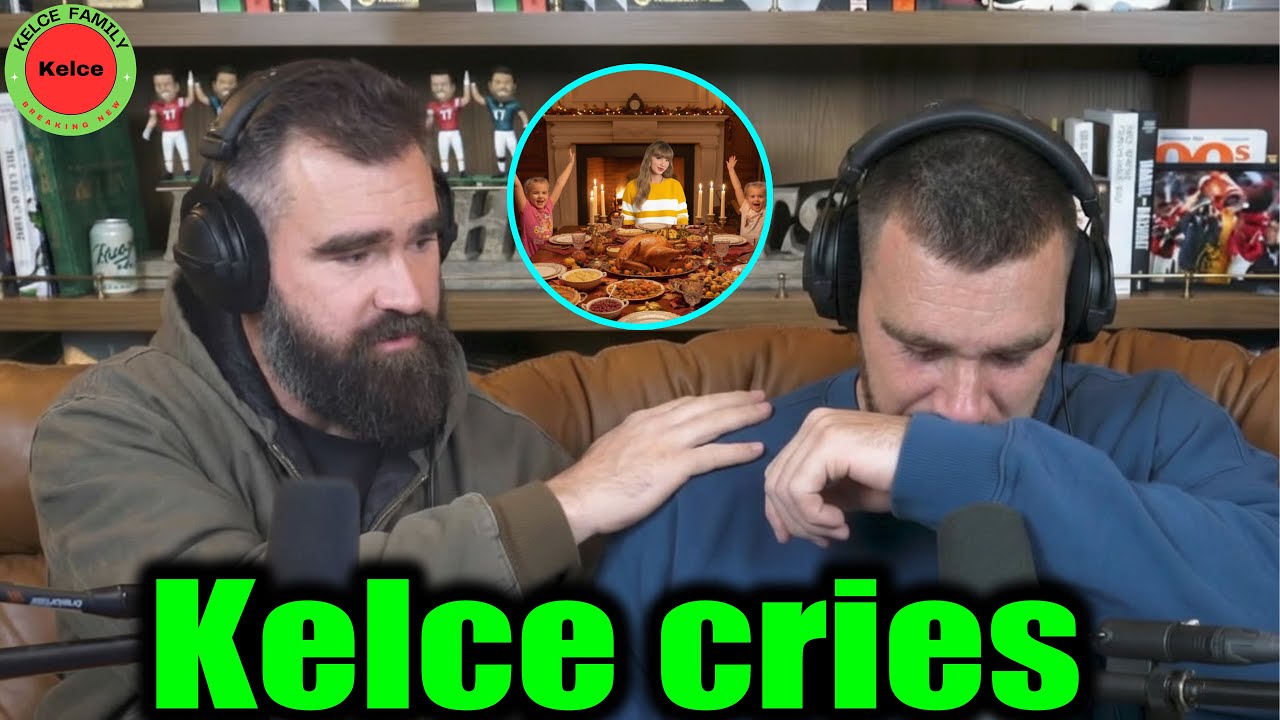
The Power of the Hug: How Travis Kelce Saved the Chiefs’ Season
For weeks, the Chiefs had struggled to close out close games, accumulating a frustrating series of narrow losses. As Travis noted, this victory was their first one-score game win of the season, a sign that the “classic Chiefs football” grit had finally returned. “We finally fought a close battle and came out victorious,” Travis said. “We always find a way… the defense came up huge.”
But the game’s true turning point wasn’t a spectacular catch or a defensive sack; it was a bear hug in the fourth quarter.
With the Chiefs trailing 20-9 and driving for a potentially game-tying score, running back Kareem Hunt—who had been having a phenomenal day—fumbled the ball in the red zone. The mistake was costly and visible, leading to a palpable sense of defeat. Hunt walked to the sideline, visibly “f***ing pissed at himself,” as Travis described.
It was at that critical juncture that Travis Kelce, the team’s unquestioned emotional leader, stepped in. The CBS broadcast captured the heartfelt moment: Travis walked up to the dejected Hunt, embraced him in a powerful bear hug, and delivered a fiery, yet supportive, message.
“You can see he was f***ing pissed and sometimes like I said you can get uncharacteristic when you get the emotions high like that,” Travis explained. “I had to just think positive and when I got the ball I was going to run pissed off, that’s a big angry dude when he’s running pissed off man. I want him on my team.”
The pep talk was nothing short of miraculous. Hunt finished the game with 104 rushing yards and responded by scoring a crucial touchdown that brought the Chiefs within three points. This moment of brotherly-in-arms encouragement catalyzed the team, which clawed its way back for the overtime win.
“The fing vibes in the locker room were epic man,” Travis recalled. “It was like, finally baby, we’re back! We’re back on track, let’s fing keep this thing going!” The win, driven by emotional leadership, stabilized a season that was starting to feel stale and reaffirmed Travis’s indispensable role beyond the box score.
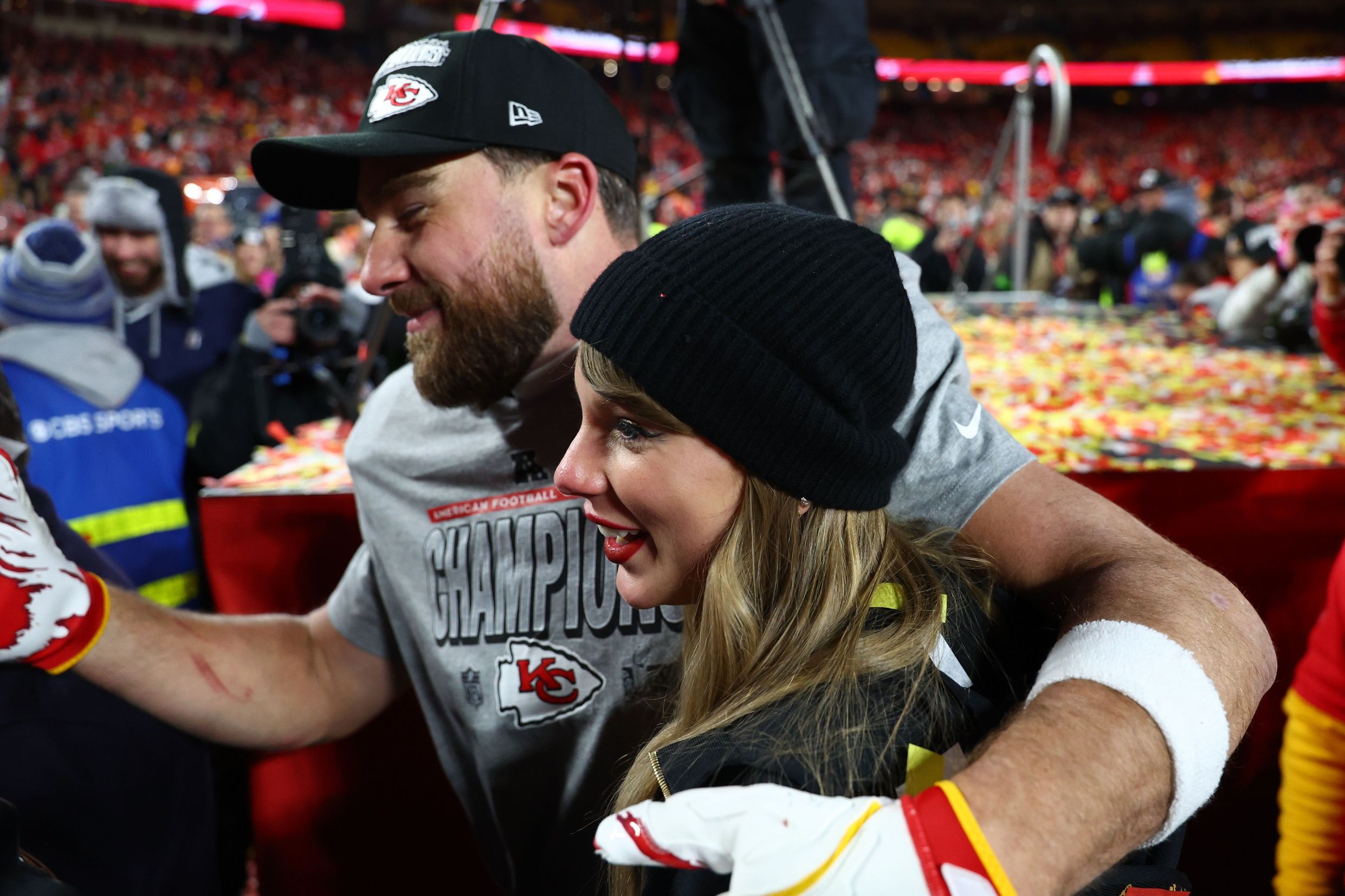
A 21-0 Collapse and the Retired Life Fast
While the Chiefs were celebrating a comeback, the Philadelphia Eagles were reeling from a historic collapse. Jason Kelce recounted the Eagles’ shocking 21-24 loss to the Cowboys after holding a seemingly insurmountable 21-0 lead—a lead the Eagles were 90-0 with in previous games.
Jason’s frustration was palpable and focused on the basics: execution, run-game deficiency, and crippling penalties. “You get up to a 21-point lead you can’t allow somebody to crawl back like that,” Jason stated. He pinned the blame on the offense for failing to maintain possession and seal the deal.
He acknowledged that the Cowboys’ defense, especially after adding Quinnon Williams to an already stout interior line, presented a formidable challenge. But he stressed that injuries and a lack of cohesion should not excuse the persistent issues.
“The thing that is really hurting this offense right now is the run game,” Jason noted. “It is not been clicking for the majority of the year.” He insisted the problems would be “solved if they can stop it with the penalty,” pointing to the lack of offensive line continuity as a major issue.
Against this backdrop of high-stakes football, Jason revealed a personal decision that perfectly illustrates the sometimes “stupid s***” that retired athletes get up to.
Leading up to Thanksgiving, Jason was 36 hours into a grueling 48-hour fast, a pact he made with former NFL player Marcus Spears. His reason was simple: guilt and weight creeping up after holiday indulgences. “I just feel bad about myself because I was at Disney World and ate a bunch of freaking egg rolls… and then I went to Wisconsin and shoved the prime rib and an ice cream drink down my face,” he confessed.
The absurdity of the situation—starving himself right before the holiday known for gluttony—was not lost on him. “This is what happens when you retire you fing do stupid s like this,” he quipped. His motivation? To “eat my face off on Thanksgiving,” hinting he “might eat a whole turkey by myself by that point.”
Thanksgiving Chaos and the ‘Black Kelce’ Bombshell
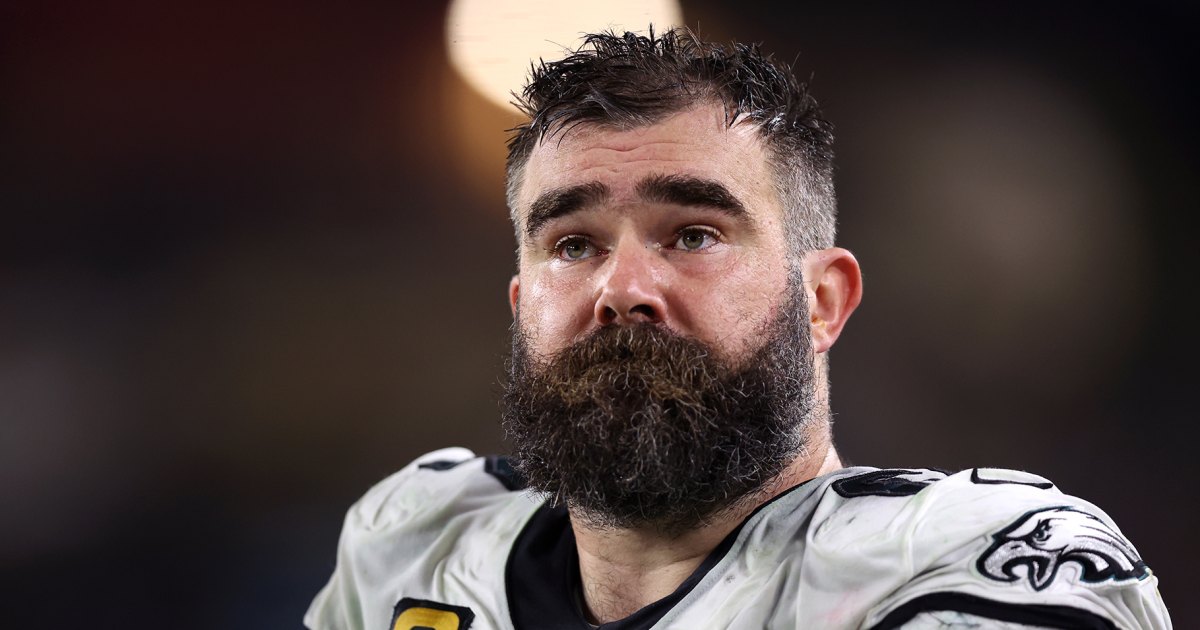
The conversation naturally moved to Thanksgiving plans, contrasting Travis’s on-field debut with Jason’s domestic chaos. Travis expressed excitement for his “first time ever playing on Thanksgiving,” calling it a long-anticipated item on his NFL bucket list.
Jason, meanwhile, is hosting, a situation he described with self-deprecating humor. He views himself as a “huge inconvenience” because, instead of helping his wife Kylie watch their four young children, he runs next door to fry a turkey with his father, Ed Kelce. “I’m just a huge inconvenience on Thanksgiving because Kylie and her mom are making everything… and instead of just like watching the kids I go next door and fry a turkey with my dad Ed so for an hour of the day I’m just completely useless and making an extra turkey that we don’t need,” he joked. The menu, a mix of tradition and ambition, may even feature a “turducken” this year.
But no discussion on the episode was more surprising or entertaining than the segment featuring NBA legend Shaquille O’Neal. The “Big Aristotle” dropped a series of stunning revelations that re-contextualized his entire career.
Shaq was asked what NBA player would transition well into football. His answer? “Me. They would call me the Black Kelce.”
He elaborated that he would have played tight end, not offensive line, and backed up the claim with an unbelievable backstory. “Football was my sport,” Shaq confessed. He played tight end and nose guard, bringing a level of physicality that was encouraged at the time: “I used to bring the pain.” His football career only ended when a junior-year knee injury sidelined him. His father, worried about the physical toll and recognizing an opportunity, showed Shaq a copy of John Kruk’s $15 million basketball contract. “I was like, sh*t, if this dude’s making 15 for three, my dream was to make 8 million for 10 years,” Shaq recalled.
His entire basketball career was thus framed by a “football pain experience,” a revelation that explains his legendary aggression. “I used my football pain experience when I was playing basketball like when I turned with the elbows up I’m trying to knock your teeth out your mouth,” he said. This aggression, he noted, is why he never felt the infamous “Hack-a-Shaq” fouls.
Shaq, who recently purchased the Reebok brand, also pitched the brothers on an unprecedented business venture: a “Kelce Klicks” shoe line. “I could walk you in personally. I got the key card. We get the football pumps going, baby,” he promised, showcasing his business savvy and the 60/30/10 rule he uses for social media and brand building.
The episode was a masterclass in modern sports media: a compelling blend of high-stakes sports analysis, intimate personal struggles, and surreal celebrity interactions. From a dramatic game-saving embrace to an improbable 48-hour fast and the stunning football history of a four-time NBA champion, the Kelce brothers confirmed that the human drama off the field is every bit as captivating as the plays made on it.