In the echo chamber of modern sports media, the “Greatest of All Time” (GOAT) debate often feels like a broken record. We recite statistics like scripture, compare accolades like trading cards, and argue over eras that are fundamentally incomparable. But every so often, a voice cuts through the noise with the weight of granite—a voice that hasn’t just watched the history of basketball, but has physically collided with it. That voice belongs to Shaquille O’Neal, and he has a message for the basketball world: The debate is over, and it isn’t close.
The four-time NBA champion and Hall of Famer has been on a tear recently, dismantling the arguments for LeBron James and Kevin Durant with a brutal honesty that only “The Diesel” can deliver. His argument doesn’t rely on advanced analytics or True Shooting percentages. Instead, Shaq points to a visceral, intangible element that no spreadsheet can capture: Fear.
The Fear Factor: Why MJ Stood Alone
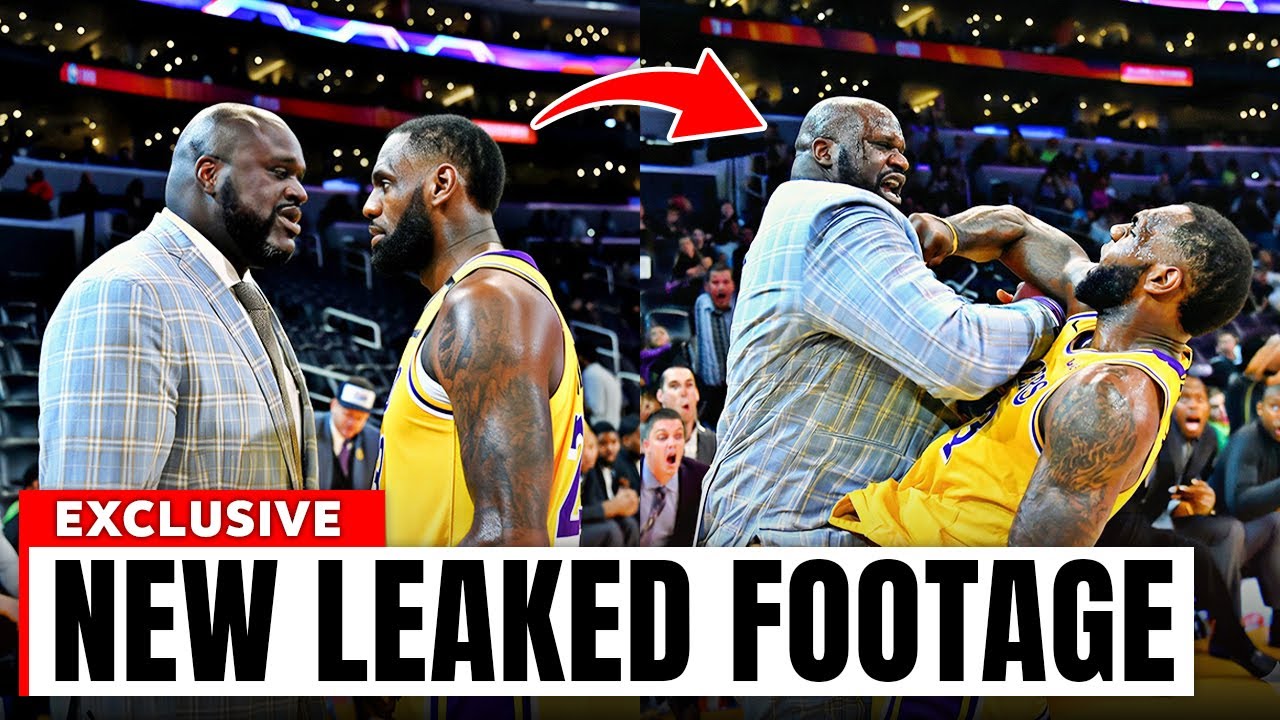
“I’ve heard players say, including myself, ‘I feared Mike.’ I’ve heard players in your generation say, ‘I feared Kobe.’ I never really heard any players say they fear LeBron.”
With those words, Shaq stripped the GOAT debate down to its primal core. Speaking on his podcast and various media appearances, O’Neal emphasized that Michael Jordan possessed an aura of intimidation that simply does not exist in today’s NBA. Shaq isn’t just engaging in “old head” nostalgia; he is citing his own lived trauma on the court. He openly admits that as a 7-foot-1, 300-pound behemoth—arguably the most physically dominant force the game has ever seen—he was “terrified” of Michael Jordan.
Think about the gravity of that admission. Shaq, a man who shattered backboards and tossed grown men around like ragdolls, looked across the court at a 6-foot-6 guard and felt genuine fear. He recalls a game in his rookie year, January 16, 1993, when the Chicago Bulls came to town. Jordan dropped 64 points. Shaq remembers the feeling of helplessness, the “psychological warfare” Jordan waged not just with his scoring, but with his presence.
Shaq contrasts this sharply with LeBron James. While he respects LeBron as a “nice guy” and undeniably one of the greatest to ever lace them up, he argues that opponents don’t look at LeBron and see a grim reaper. They see a competitor, sure, but not a deity who could ruin your career with a single glare. For Shaq, that psychological edge—the ability to defeat an opponent before the tip-off—is the dividing line between greatness and the GOAT.
The Bus Driver vs. The Bus Rider
If Shaq’s assessment of LeBron was a critique of his aura, his assessment of Kevin Durant was an assault on his legacy. In what has become one of the most controversial metaphors in recent sports history, Shaq designated Durant not as a “bus driver,” but as a “bus rider.”
“Kevin Durant is a great player, but he rode the bus.”
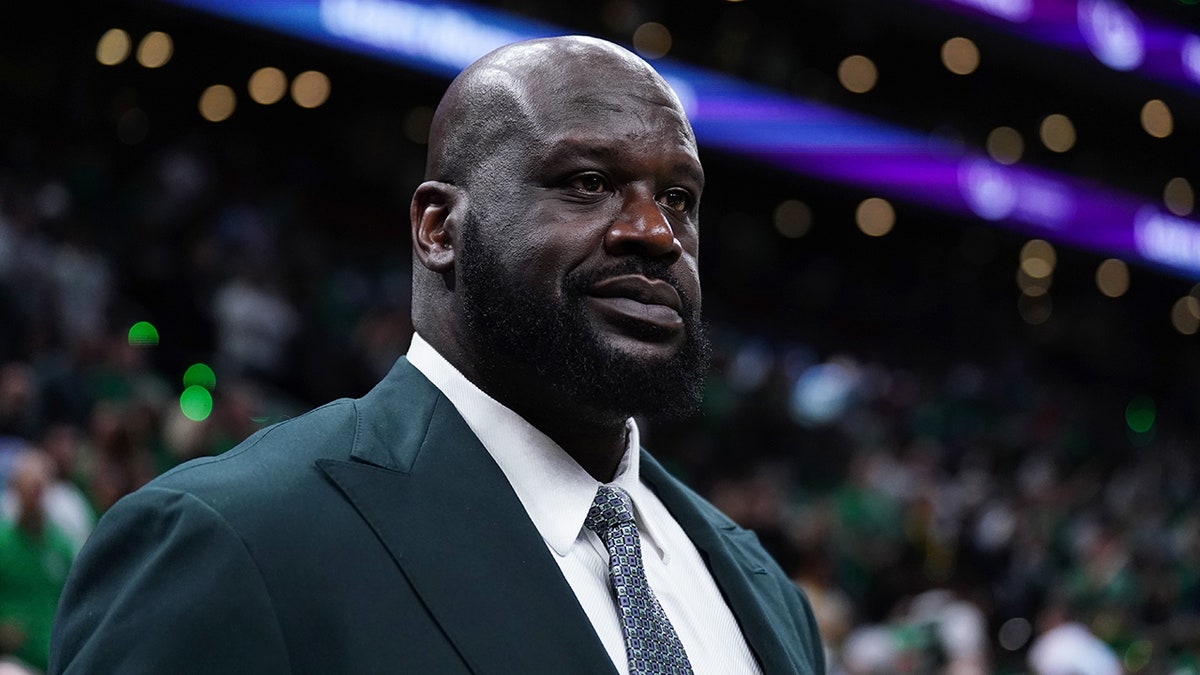
The context here is searing. Shaq argues that Durant’s two championships with the Golden State Warriors carry a massive asterisk. By joining a team that had already won 73 games—a team that already featured Stephen Curry, Klay Thompson, and Draymond Green—Durant chose the path of least resistance. He didn’t build the house; he just moved into the penthouse.
Shaq contrasts this with the arduous paths of Jordan, Hakeem Olajuwon, Tim Duncan, and yes, even LeBron James (in Cleveland and Miami). These players were the unquestioned “drivers” of their championship vehicles. The offense ran through them, the leadership burden fell on them, and the criticism for failure targeted them. Durant, in Shaq’s eyes, joined a vehicle that was already speeding toward the finish line. He was an “extraordinarily talented passenger,” but a passenger nonetheless.
This “Bus Driver” analogy strikes at the heart of the player empowerment era. It suggests that not all rings are created equal. In Shaq’s book, a ring won by joining a superteam is essentially costume jewelry compared to the diamond-encrusted hardware earned by dragging a franchise out of the mud.
LeBron’s Own Admission: Meeting God
Perhaps the most damning piece of evidence Shaq presents comes from the King himself. O’Neal loves to remind the younger generation that LeBron James grew up worshipping the ground Michael Jordan walked on.
The article digs up a telling quote from a teenage LeBron, who described his first meeting with Jordan as “like meeting God for the first time.” LeBron admitted to copying everything MJ did—from the wristbands to the red-and-black shoes, even down to wearing short shorts underneath his uniform just to be like Mike.
“I wanted to be Mike,” LeBron has said.

For Shaq, this is the checkmate. How can the imitator surpass the originator? When the challenger openly admits that the champion was his “deity,” the hierarchy is already established. Shaq notes that while LeBron has grown into his own legend, he spent his formative years chasing a ghost he admitted was perfect. LeBron once contrasted himself with Jordan by saying, “MJ wasn’t perfect… but he was never afraid to fail.” That slight hesitation, that acknowledgment of Jordan’s fearless mental state, is exactly what Shaq is talking about. Jordan’s willingness to take the shot, miss the shot, and not care about the fallout is the “killer instinct” that Shaq feels is missing from the modern game.
The Verdict of the “Old Guard”
Shaq’s relentless defense of Michael Jordan is more than just loyalty to his era; it’s a defense of a specific philosophy of basketball. It values conquest over collaboration. It values staying with one team and overcoming the “Bad Boys” Pistons over joining them.
The statistics are there if you want them—Jordan’s 6-0 Finals record, the 10 scoring titles, the Defensive Player of the Year awards. But Shaq doesn’t need the numbers. He needs you to understand the feeling. He wants you to know that when Michael Jordan walked onto the court, the air changed. The referees treated him differently. The fans screamed differently. The opponents—even the giants like Shaq—shrank a little bit.
In a world obsessed with efficiency ratings and longevity stats, Shaquille O’Neal is slamming his fist on the table for the “Eye Test.” He saw the fear. He felt the fear. And until he sees an opponent look at LeBron James or Kevin Durant with that same look of sheer, hopeless terror, the case is closed. Michael Jordan drives the bus. Everyone else is just fighting for a seat in the back.