The year is 2025, nearly three decades after Christopher Wallace, the lyrical titan known as The Notorious B.I.G., was gunned down in a precise, chilling act of violence on a Los Angeles street. For 28 years, his legacy has been a pillar of hip-hop culture, guided by the fierce, unwavering hand of his mother, Valletta Wallace. She was the architect who turned a modest $10 million inheritance into a $160 million financial juggernaut. But as the pages of Biggie’s story turn to this new chapter, the myth of his protected empire has collapsed into a maelstrom of greed, legal warfare, and revelations so dark they challenge everything the world thought it knew about his life, his death, and the people he trusted most.
The chaos began immediately following the passing of Valletta Wallace in February 2025. The retired preschool teacher, the “Mama Bear” who fought tooth and nail to preserve her son’s humanity, had been the shield. The moment that shield dropped, the vultures began to circle, revealing a meticulously planned power grab that had been waiting in the shadows for years.
The $200 Million Betrayal and the Perfume Line Allegations
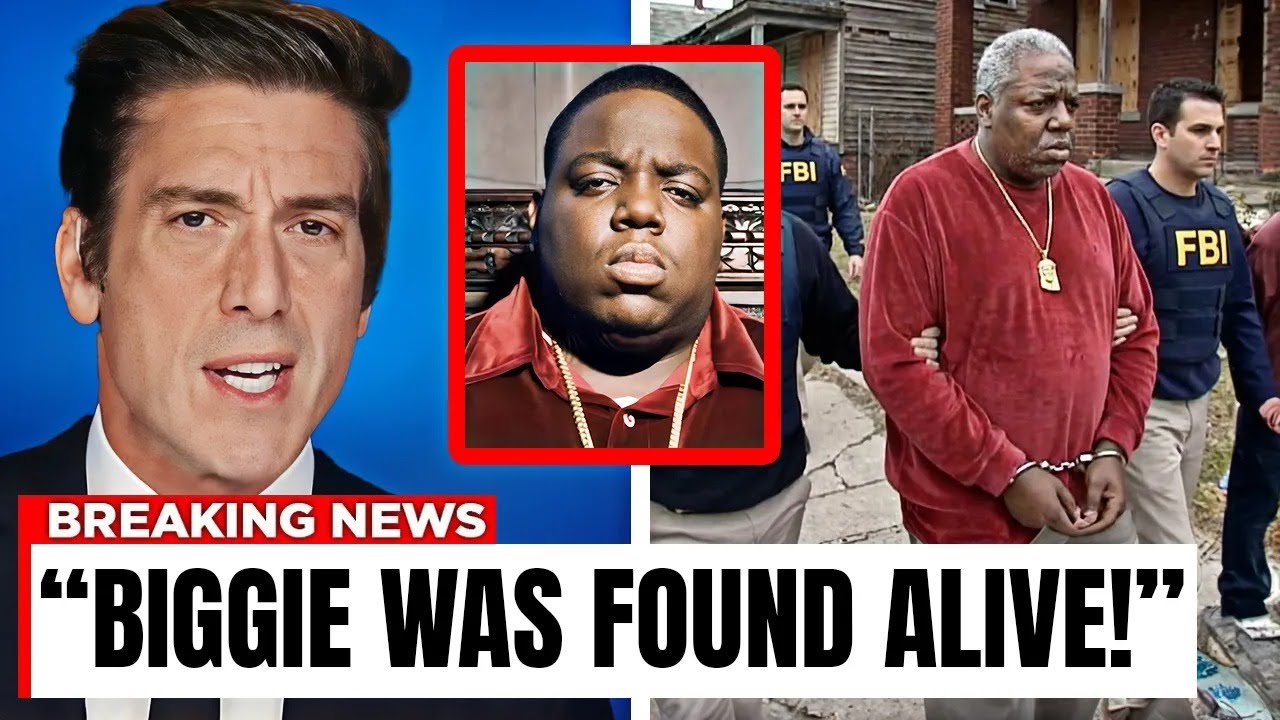
Days before Valletta crossed over at age 78, she gave her final blessing to a massive deal: a partnership with Primary Wave Music. This transaction, valued at approximately $200 million, saw the music company acquire a 50% stake in Biggie’s publishing rights, masters, and name, image, and likeness (NIL). It was positioned as the final, grand gesture to secure her grandson CJ Wallace’s future. Yet, the celebratory fanfare quickly turned into a gruesome legal spectacle.
Barely four months later, on July 2, 2025, a bombshell was detonated in New York Supreme Court. A sealed, 45-page lawsuit was filed by Valletta’s estate against none other than Faith Evans, Biggie’s widow and the mother of his son. The allegations were not merely about a simple family dispute over money; they painted a picture of calculated, straight-up betrayal and “egregious misconduct.”
The suit claimed that immediately after Valletta’s death, Faith Evans took sole, unauthorized control of Notorious B.I.G. LLC, the entity holding the catalogue rights. She allegedly bypassed all estate protocols, wrongfully withholding her 50% share of the Primary Wave proceeds—a figure potentially amounting to tens of millions of dollars. The complaint detailed how Evans rerouted funds through shell companies, locked Valletta’s trustees out of critical decision-making processes, and even attempted to dissolve the LLC to consolidate all power under her own name.
Perhaps the most jarring detail was the accusation that while Valletta was on her deathbed, Faith was allegedly negotiating side deals with Primary Wave, including NIL endorsements for a Faith-branded perfume line featuring Biggie’s face, all without the knowledge or consent of others with a stake in the estate. The image is stark: the man’s legacy was being commercialized for a personal fragrance line while his mother was fighting for his son’s future. This alleged move was a profound desecration, casting Faith Evans not as the grieving widow, but as a ruthless opportunist.
Valletta Wallace: The Architect of the Empire
To understand the depth of this betrayal, one must first appreciate the legacy of Valletta Wallace. When Biggie was murdered in 1997, his estate was valued at a relatively modest $10 million. For an artist who was just weeks away from releasing the magnum opus Life After Death and poised for global dominance, this was a small figure, especially amid the chaos of his unsolved murder.
Valletta, a retired preschool teacher, stepped into the role of executor with a ferocity only a mother could possess. Her commitment wasn’t just to stacking paper; it was to protecting her son’s soul. She established the Christopher Wallace Memorial Foundation in 1997, dedicated to providing scholarships—mirroring the philanthropic dreams found in Biggie’s own notebooks.
Over the next three decades, she proved herself a shrewd and adaptable businesswoman. She navigated complex licensing deals, fought unauthorized uses of Biggie’s image, and, crucially, understood the seismic shift of the 2010s streaming era. By adapting quickly, she ensured Biggie’s catalog generated steady, climbing royalties that swelled the estate’s value to a staggering estimated $160 million by 2024—a 16-fold increase. This monumental achievement made her the undisputed, iron-fisted guardian of the B.I.G. brand, which is precisely why her passing triggered such immediate and profound conflict.
The Ghost in the Machine: AI and the Cursed Tapes
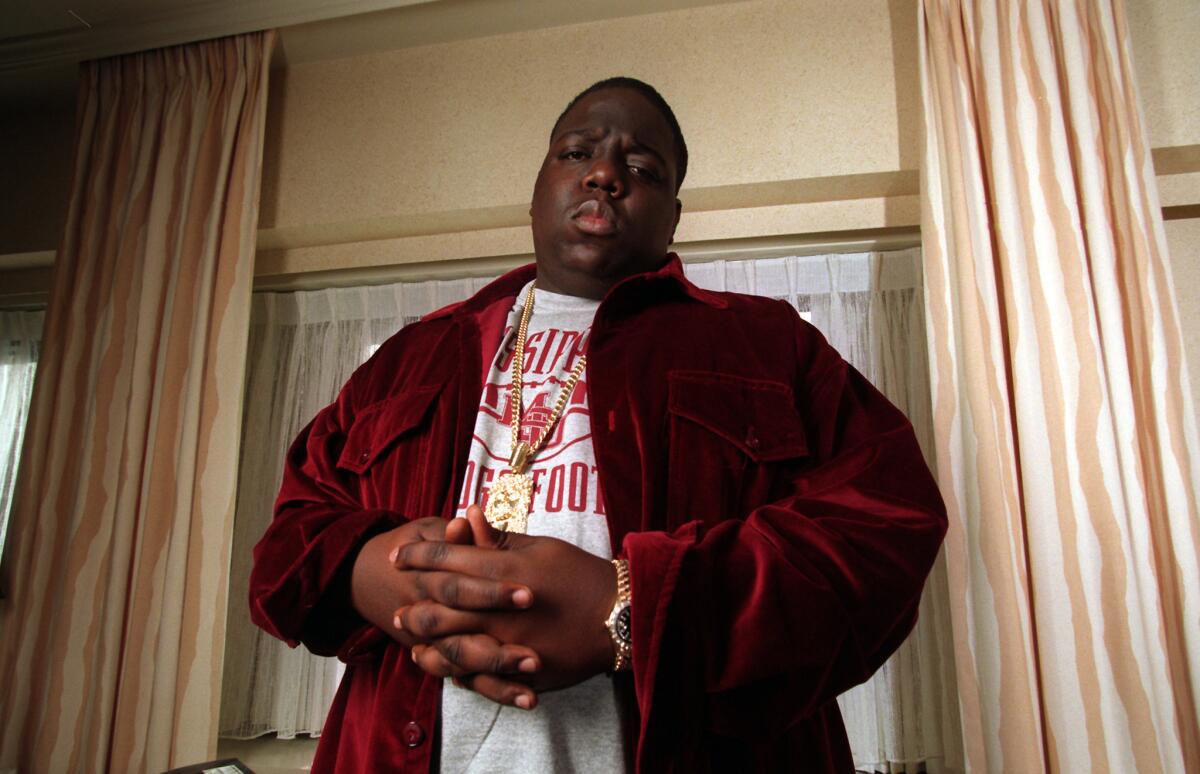
The financial warfare was soon overshadowed by a different, more chilling form of desecration: the technological resurrection of Biggie Smalls.
In March 2025, weeks after Valletta’s death, an audit of Biggie’s storage units in Tene, New Jersey, uncovered a treasure trove of relics. Among them were 47 unmarked reel-to-reel tapes. These included “LA ’96 sessions,” “Brooklyn freestyles 3,” and, most cryptically, a tape labeled in Biggie’s own handwriting: “for faith don’t release.” The estate has not disclosed the contents of this tape, but its very existence suggests that Biggie knew, even in 1996, that his archive would become a battleground for profit.
The discoveries also included a pristine, 2-inch master of the original, 28-song Life After Death tracklist, which was four songs longer than the album that eventually dropped. This unearthed material—featuring lost cuts and collabs—soon began to leak, prompting the estate, now under the Primary Wave banner, to greenlight “selective releases.”
But here is where the story veers into the truly dystopian. When the flagship track, “Hustle and Dreams,” surfaced, critics immediately noted a horrifying detail: the presence of subtle autotune and, more sinisterly, AI-generated adlibs used to fill gaps in the original recording.
They are literally using artificial intelligence to create new Biggie Smalls content, putting words in a dead man’s mouth.
While Biggie’s son, CJ Wallace, attempted to defend the move by saying “Dad’s bars are timeless, but tech lets us hear him in rooms he never entered,” the question remains: is this honoring the man, or are we witnessing the creation of a digital puppet, a ghost in the machine performing for our entertainment long after the human voice has been silenced? The commercial transformation continued through the summer of 2025, with trap remixes and even a failed attempt to get a “Hypnotize” emote into the game Fortnite. Biggie’s art had become a corporate playground.
The Diddy Reckoning and the Eerie Coincidence
The climax of this 2025 unraveling is its direct and chilling link to Sean “Diddy” Combs. The timing, which seems straight out of a script, cannot be ignored.
After Homeland Security raids and numerous public allegations, Diddy was arrested in September 2024. By July 2, 2025, the music mogul was convicted on four prostitution-related federal counts and sentenced to 52 months in prison.
The significance of the date is paramount: July 2, 2025, was the exact same day that Faith Evans was sued by Valletta’s estate for allegedly stealing from Biggie’s legacy.
Coincidence? Maybe. But when one connects the dots—the web of relationships between Bad Boy Records, Primary Wave, Faith Evans, and the estate—coincidence begins to look a whole lot like coordination.
The younger Wallace, CJ, publicly cut ties with Diddy in June 2025, declaring that his “father’s light isn’t dimmed by shadows” and donating Bad Boy profits to anti-trafficking causes. His actions made a clear statement: he understood the depth of the corruption surrounding his father’s old business associates and wanted no part of that toxic energy.
Yet, this distance immediately forced the world to confront the decades-old question: What role did Puff really play on March 9, 1997?
The Original Sin: Gene Deal’s Chilling Testimony
The financial and moral collapse of 2025 has revived the most sinister claims surrounding Biggie’s death. Bodyguard Gene Deal, who served Diddy that fateful night, described a pattern of behavior that suggests a horrifying setup.
In the days leading up to the murder, Deal received multiple, credible warnings about threats against the Bad Boy entourage. When he approached Diddy, the response was one of dismissiveness and irritation. “Yo Puff, I got some intel bro… people going to come and try to kill us.” Diddy’s response, as recounted by Deal, was an appalling ultimatum: “Jean, I don’t want to hear that… Jean, you ain’t got to go if you don’t want to go.” This was an artist’s employer prioritizing his own convenience over a credible death threat.
The night of the murder itself was defined by a calculated dismantling of security. Deal testified that of the 23 people who came into the Petersen Museum with the entourage, only 11 left in the convoy. Twelve people had already left for Steve Stoute’s crib, splitting up the security detail at the most vulnerable moment.
The most chilling detail involves a mysterious figure who appeared just before the shooting: a man from the Nation of Islam in a blue suit and bow tie. This man approached the cars, made direct, silent eye contact with Gene Deal, and walked away. Minutes later, the shots were fired. This was not a random act of street violence; this was surgical precision, suggesting a hit that required deep, insider information.
Furthermore, Deal was ordered by another security member to get into a different car just before the shooting, effectively removing him from his position protecting Biggie’s vehicle. When Deal protested, he was threatened with termination from Bad Boy Records, prioritizing a job over the artist’s immediate safety in a moment of known danger.
Untangling the Web: Corruption and Desecration
The connections continue to multiply and darken. In July 2025, anonymous John Doe lawsuits against Diddy revealed allegations so grotesque they defy belief, including the alleged desecration of a vintage Biggie Smalls t-shirt in an act of rage and psychological dominance. If true, this was not just exploitation; it was the ultimate, foul disrespect for Biggie’s memory.
But the final, deepest chamber of this dark saga points to a terrifying level of official corruption. CJ Wallace’s own efforts, revealed in a September Vanity Fair profile, led to the isotopic analysis of the Gecko ammunition used to kill his father. The source? An LAPD evidence locker breach in 1996.
The bullets that killed Biggie allegedly came from the same LAPD that was embroiled in the Rampart scandal, whose officers were known to have shadowy connections to Death Row Records. This revelation implicates corrupt police officers, record label executives, and a complex web of financial motivations that the system, as many have argued, is simply not built to expose.
As Diddy awaits his appeal and Faith Evans battles Valletta’s estate, and as an AI-generated version of Biggie’s voice floods the global airwaves, the question remains: are we honoring the man, or are we just profiting off his death? The truth, now laid bare in the 2025 fallout, suggests that the ultimate betrayal of The Notorious B.I.G. did not happen on the night of his murder, but in the calculated actions of those who claimed to love him in the years that followed. The puzzle pieces are finally on the table, but the question of who buried the truth—and why—continues to haunt the unfinished story of the King of New York.