For over three decades, the name Will Smith was synonymous with cinematic gold. He was the global hero, the undefeated box office king whose dazzling smile and effortless charisma guaranteed blockbuster success, generating more than $10 billion in global revenue. He was the embodiment of the American dream, a talented rapper who seamlessly transitioned into an actor capable of saving the Earth from aliens one moment, and stirring the soul as an iconic figure like Muhammad Ali the next. The world saw an impenetrable legend; what it did not see was the man frantically sprinting away from a single, shattering moment of his childhood.
The tragedy of Will Smith is not a story of a star losing his footing due to ambition; it is a profound narrative of a human being whose entire life—his triumphs, his failures, his marriage, and his ultimate public breakdown—was governed by an invisible, unhealed scar. In just three seconds of impulsive, uncontrollable rage at the 2022 Academy Awards, Will Smith destroyed the meticulously crafted fortress of his legacy, turning his greatest night of personal achievement into a global spectacle of shame. The slap, loud enough to silence a stadium, was not just a reaction to a bad joke; it was the sound of a nine-year-old boy’s trauma exploding into the face of a global audience. At 57, as Will Smith fights for a career comeback forged in silence and resilience, the question remains whether the world can forgive a man who has not yet fully forgiven himself.
The Invisible Scar: Childhood Trauma and the Birth of the Fresh Prince
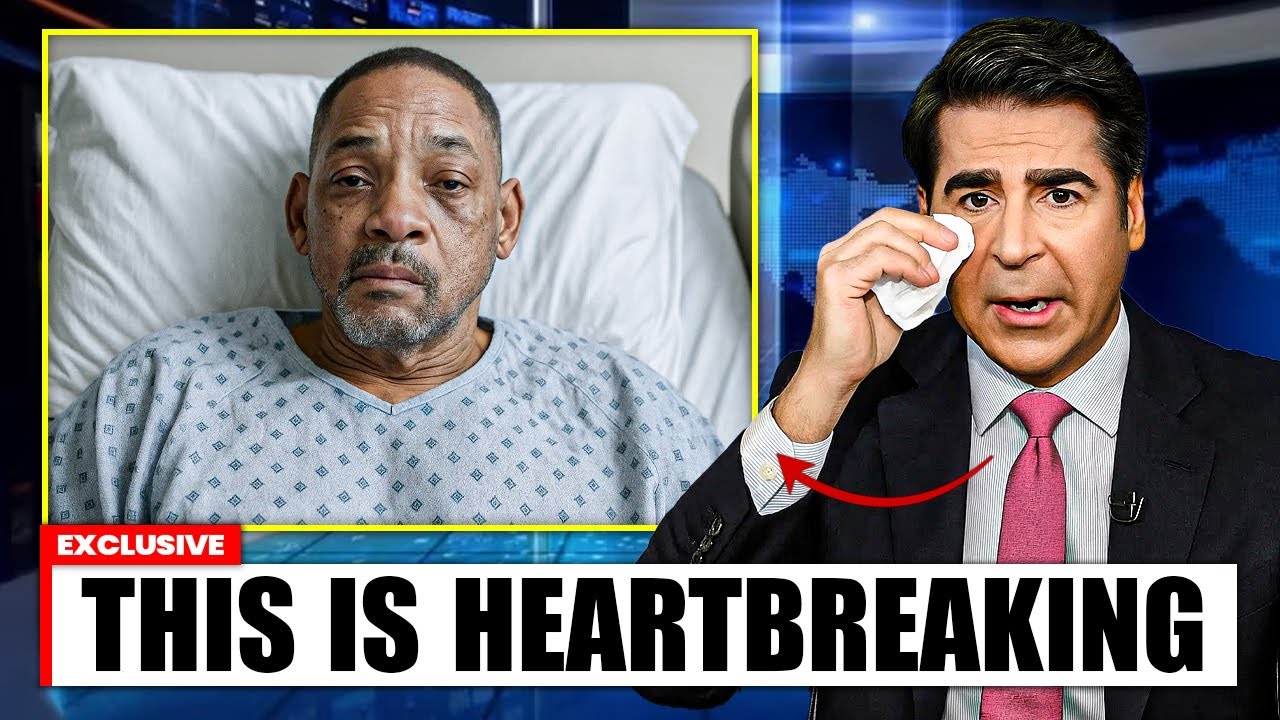
Willard Carroll Smith Jr.’s legendary pursuit of perfection was rooted not in confidence, but in profound fear. His early life in Philadelphia appeared stable, a middle-class veneer that concealed a brutal storm. The domestic tension came to a head on a fateful night when Will was only nine years old. He witnessed his father, Willard Smith Sr., a man he idolized, strike his mother, Caroline Bright, causing her to collapse. Young Will froze, unable to move, unable to intervene, a moment of powerlessness that would define his life’s mission.
Years later, in a wrenching admission, Smith confessed the immense guilt he carried: “I always felt like a coward for watching my father hit my mother and doing nothing.” In that instant, two lifelong forces were born: an unbreakable silent vow that he would never allow a loved one to be hurt on his watch, and an insatiable need for external validation to prove that he was not, in fact, the powerless boy on the floor.
He quickly learned that laughter was the only currency capable of buying brief moments of peace and deflecting his father’s anger. Thus, the charming, smiling, utterly safe public persona that the world would come to call “The Fresh Prince” was created—a highly effective mask for survival. His success, therefore, was not driven by the pure joy of performance, but by a frantic, fear-fueled ambition to build walls of money, fame, and influence high enough to protect his family from any threat, perceived or real. His future accomplishments, from Grammys to Oscars, would all be weighed against the scale of that single night’s trauma. As he stated, “Everything I do, every victory I have is to protect my mother.”
The Two-Million-Dollar Abyss: Fame’s First Betrayal
Will Smith entered the entertainment industry with the same infectious energy that defined his childhood persona. Partnering with DJ Jazzy Jeff, “The Fresh Prince” introduced a humorous, clean style of hip-hop that was an anomaly in the late 1980s. They became national stars, winning the first-ever Grammy in the rap category in 1989 for “Parents Just Don’t Understand.” The spotlight, however, failed to warm the cold silence from the hardcore rap community who dismissed him as “too soft” or “too commercial.” Even at his peak, Will felt profoundly alone and insecure.
The success that arrived too early became a dangerous temptation. Before he turned 21, Smith had earned over $2 million, a sum that bought him instant security and unchecked indulgence. He spent lavishly, purchasing multiple cars and surrounding himself with an entourage, motivated by the deep-seated insecurity that if he didn’t look successful, he was merely “a clown with one hit.”
The party came to an abrupt end. Smith had failed to pay his taxes for two years, accumulating a crippling $2.8 million debt to the IRS. In a brutal financial reckoning, the government seized most of his income, forcing him to sell off designer clothes, return the cars, and watch his friends disappear. The once untouchable prince was stunned, admitting, “I fell straight from the top to the bottom.” This devastating fall taught him the most bitter lesson of his life: talent can open doors, but only discipline and financial responsibility can prevent them from slamming shut. The glamorous, carefree mask had cracked, revealing the panicked insecurity underneath.
The Untouchable King: Hollywood’s Golden Age and the Pressure to be Perfect
Fate, however, threw Will Smith a lifeline in the form of Quincy Jones, who famously orchestrated a quick audition for the young, indebted rapper at a party. The result was The Fresh Prince of Bel-Air, which premiered in 1990 and ran for six seasons. The role—a street kid from Philly living in a Bel-Air mansion—was a perfect, self-referential mirror of his journey. The sitcom rescued his finances and launched him into cinematic orbit.
The era of the “Box Office King” began in the mid-1990s. With Bad Boys (1995), followed by the global phenomenon Independence Day (1996), Smith became the hero who could save Earth while cracking a joke. He broke the invisible racial barriers of Hollywood, proving that a Black actor could headline and carry a massive global blockbuster. Men in Black (1997) cemented his status, a guarantee of fun, excitement, and success.
Smith’s commercial dominance was staggering: he set a historic record with eight consecutive films crossing $100 million domestically.
Yet, the true ascent came when he chose to sacrifice the easy glory of the blockbuster for the painful work of an artist.
- The Transformation: For Ali (2001), he underwent a grueling transformation—six hours of boxing a day, 35 pounds of muscle gained—earning his first Oscar nomination.
- The Heartbreak: In The Pursuit of Happyness (2006), his performance as a homeless father, Chris Gardner, was so raw because his tears fell onto the face of his real son, Jaden Smith. It was memory turned into devastating art, earning him his second Oscar nomination.
But the unyielding pressure to maintain this level of perfection began to show. His attempt to mold his children into cinematic partners resulted in the box office disaster of After Earth (2013), an effort that subjected his son, Jaden, to immense public scrutiny. Compliments became fewer, doubts grew louder. The humorous, friendly guy had morphed into a star who was seen as strong but overly controlling and impatient—a warning sign that the performance was starting to exhaust the man behind the mask.
The Open Wounds: Marriage, Entanglement, and the Unraveling
If professional success was the impenetrable fortress Will built, his family was the sanctuary he promised himself he would protect. His first marriage to Sheree Zampino ended in divorce in 1995, a profound failure that deeply wounded him, especially regarding his distant relationship with his son, Trey.
His second marriage to Jada Pinkett Smith, whom he married in 1997, was supposed to be the perfect, enduring alliance. They were Hollywood’s black royalty, a picture of power and stability. However, the price of fame and Jada’s deeply guarded need for autonomy clashed relentlessly with Will’s need for security—a need rooted in his childhood vow.
The cracks became public fissures. The couple quietly separated in 2016, living in separate homes, trying to sustain a marriage that was effectively on life support. The true, painful spectacle came in 2020 on Jada’s own Red Table Talk. In a now-infamous episode, Jada publicly confessed to having an “entanglement”—a romantic relationship with musician August Alsina—during their separation.
Will Smith sat beside her, wearing a smile that could not conceal the visible pain in his eyes. The world watched in real-time as the image of the invincible hero was stripped bare. He was publicly mocked and labeled, while his children, Jaden and Willow, grew up under a spotlight that illuminated every crack in their parents’ foundation. Will later admitted that their philosophy of “absolute honesty without cushioning” had cut his heart to the core. This public humiliation, where the world saw him as a “loser” in his own marriage, added a final layer of psychological pressure to a life already on the brink.
Three Seconds of Destruction: The Oscars Slap and the Decade-Long Ban
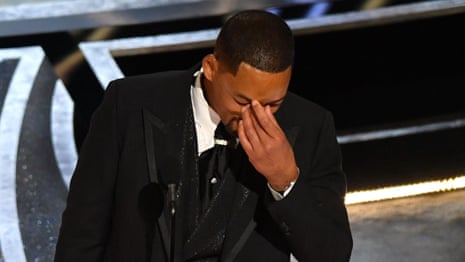
The stage was set for redemption. In 2021, Will Smith poured his soul into King Richard, a role that reflected his own identity as a flawed father fighting fiercely to protect his daughters. The performance was lauded, the narrative of his comeback was complete, and on the night of March 27, 2022, he received his first Academy Award for Best Actor. It should have been his coronation—the moment the legend was immortalized.
But that glory lasted less than one hour.
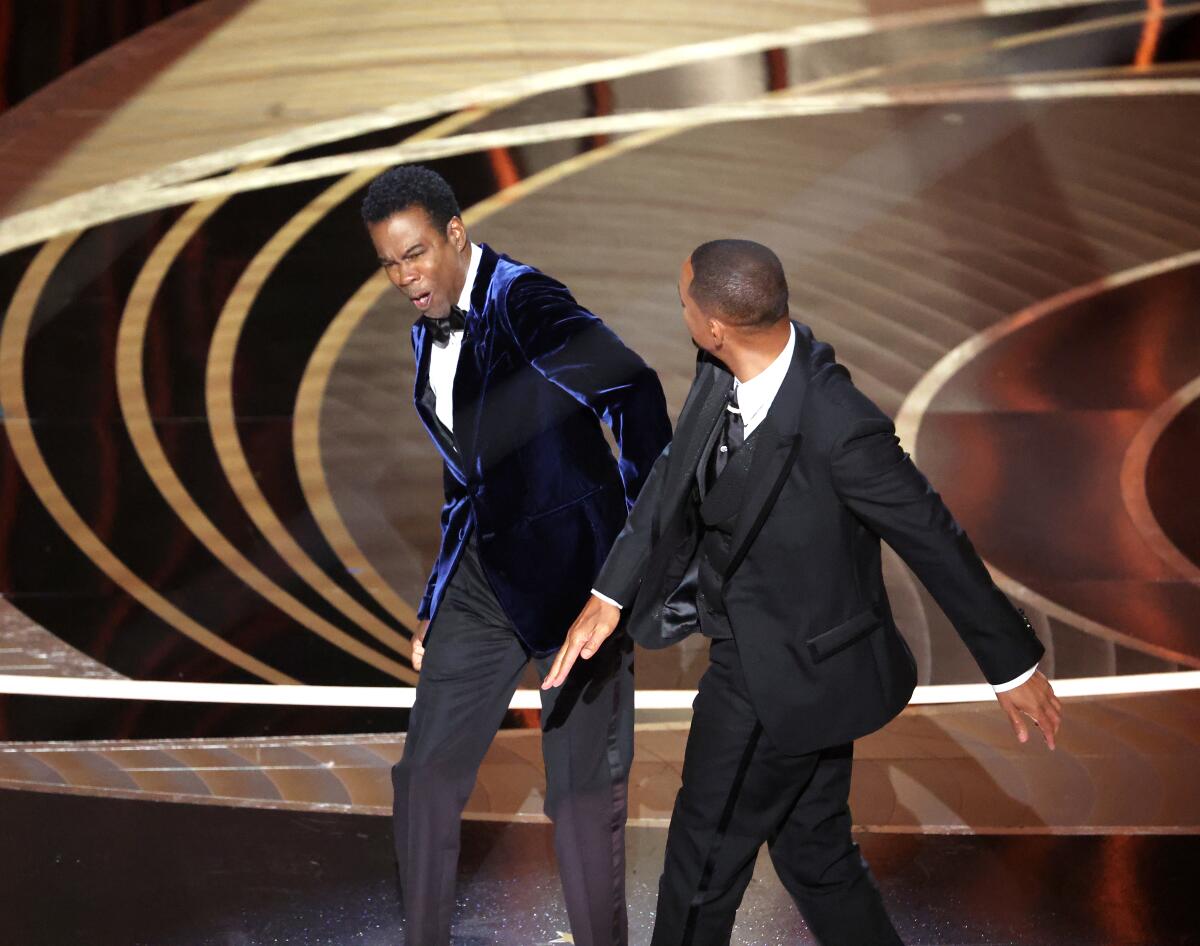
The explosion came when Chris Rock delivered a tone-deaf joke about Jada Pinkett Smith’s shaved head, a result of her alopecia. In a flash, Will Smith went from his seat to the stage, delivering a slap that was heard across the globe.
That violent, impulsive action was the catastrophic manifestation of the nine-year-old boy’s unfulfilled vow. When Jada was verbally attacked, Will, stripped of his protective persona by years of marital turmoil and public mockery, felt the resurgence of the “coward” from his childhood. He had sworn to himself he would never again be powerless to protect a loved one. The slap was the culmination of three decades of suppressed guilt, a desperate, misdirected attempt to keep a promise made to his terrified younger self.
The consequences were swift, immediate, and devastatingly proportional to his global standing:
- Hero to Villain: Hollywood’s golden boy instantly became a pariah, a symbol of uncontrollable rage and violence.
- Career Freeze: Hundreds of millions of dollars worth of projects were immediately put on hold or canceled.
- The Ultimate Punishment: Will Smith was banned from all Academy events, including the Oscars ceremony, for ten full years.
The world no longer saw the gold statue in his hand; they only saw the violence. The armor had not only failed to protect his family, but its destruction had nearly destroyed the man himself.
The Warrior’s Path: Loss, Healing, and the Battle for the Soul
Following the slap, the world expected Will Smith to disappear into the vast, protective walls of his Calabasas estate. Instead, he embarked on a quiet, yet profoundly public, journey of psychological healing.
This phase began years before the Oscars with the devastating loss of his father, Willard Carroll Smith Sr., to terminal cancer in 2016. In the final months, Will had the chance to sit by his father’s hospital bed and finally speak the words of love, trauma, and forgiveness that had been buried for decades. Forgiveness, he realized, was the key to unlocking the past, allowing him to stop fighting the memory.
The realization that his own body could betray him soon followed. A routine colonoscopy in 2019 revealed precancerous polyps. The surgery was successful, but the fear lingered: Will I die of cancer like my father? The star who had once seemed invincible now feared time and frailty.
This fear spurred a raw period of public vulnerability. His YouTube series, Best Shape of My Life, was marketed as a fitness journey but was, in truth, an emotional exorcism. In front of the camera, the hero crumbled, vomiting during exhausting workouts and sobbing as he admitted, “Sometimes I don’t want to do this anymore.” The forced smile was gone, replaced by the exposed emptiness of a man struggling to save himself.
His 2021 memoir, Will, served as his written confession—a tear-soaked narrative detailing the night his father hit his mother, the pressure to be perfect, the wrong turns in his career, and the deep fissures in his marriage. He did not write to brag; he wrote to breathe, finally taking off the heavy armor he had worn for so long that he forgot he could bleed. The healing required was not physical; it was a surrender to honesty, a painful acknowledgment that the body cannot thrive if the mind is not at peace.
The Undying Legend: A Comeback Forged in Shame
Hollywood had pronounced his career over, but Will Smith possesses a quiet, relentless quality that refuses to surrender. He understands that the only path to redemption is not through excuses, but through action.
He initially returned with Emancipation (2022), a heavy, soul-pouring role about an enslaved man fighting for freedom. While lauded by critics, its release immediately following the slap meant that the world was too preoccupied with judgment to recognize the art. His career was like a lamp locked in a dark closet—still shining, but dimmed by circumstance.
His true return to power was not on the dramatic stage, but the commercial one. The 2024 release of Bad Boys 4 proved the legend was not over, earning over $400 million globally and reaffirming his status as the Box Office King. Audiences began to see him differently: not as a man defined by a single mistake, but as an enduring figure attempting to make things right.
This career revival was accompanied by a return to the music that launched him. His 2025 album, Based on a True Story, and the song Beautiful Scars, served as his most profound public confession. It was a musical narrative of the scars that have defined his life, no longer an exaggerated performance, but an honest, barefoot step onto the stage with his pain laid bare.
Today, Will Smith’s colossal net worth, estimated between $350 and $400 million, and his massive Calabasas estate, feel less like a boast and more like a defensive wall built around a life that has been violently shaken. He trains every morning like a warrior rising from the abyss and lives with discipline, not to look good, but to live longer for the people he still desperately needs to protect. He and Jada, although separated since 2016, still appear together, bound not by labels of husband and wife, but by a complex, scarred alliance—two wounded souls who have learned to love each other in a way only they can truly understand.
Will Smith’s legacy will not be defined by the $100 million milestones or the gold statues. It will be defined by the single scar he carries, the mark of the trauma that drove him to the absolute pinnacle of global fame and then ripped it all down in a single, painful moment. The question for the world, and for Will Smith himself, is not whether the king can return to his throne, but whether the man can finally, fully, come home to himself. The fight is not over; for a star whose entire life has been a flight from fear, the long, slow climb toward self-forgiveness has just begun.