The image is unsettling, a profound juxtaposition of the frivolous and the fatal: a 22-year-old woman, calmly touching up her makeup, adjusting her hair, and smiling, while sitting in a Florida courtroom on trial for her role in a cold-blooded, premeditated murder. This woman is Alicia Andrews, the sole female among five suspects charged in the brutal ambush of Jacksonville rapper Charles “Julio Fulio” Jones, and her behavior throughout the proceedings—dubbed everything from chilling to deeply callous—has sent a shockwave through the legal community and social media alike.
The high-profile trial unfolding in Tampa, Florida, is not just about a rapper’s violent death; it is a complex, tragic narrative that explores the devastating intersection of digital-age gang violence, young love gone wrong, and the moral question of culpability when an accomplice merely provides the ‘eyes and ears’ for an execution. As Andrews stands accused of serving as the spotter who tracked Fulio to his death, observers are grappling with a singular, disturbing question: Does her unsettling composure—her smile, her seemingly unbothered demeanor—reflect the arrogance of a cold-blooded conspirator, or the profound, disassociative denial of a naive victim caught in a web of violence she never understood?
The Courtroom Shockwave: A Smile in the Face of a Life Sentence
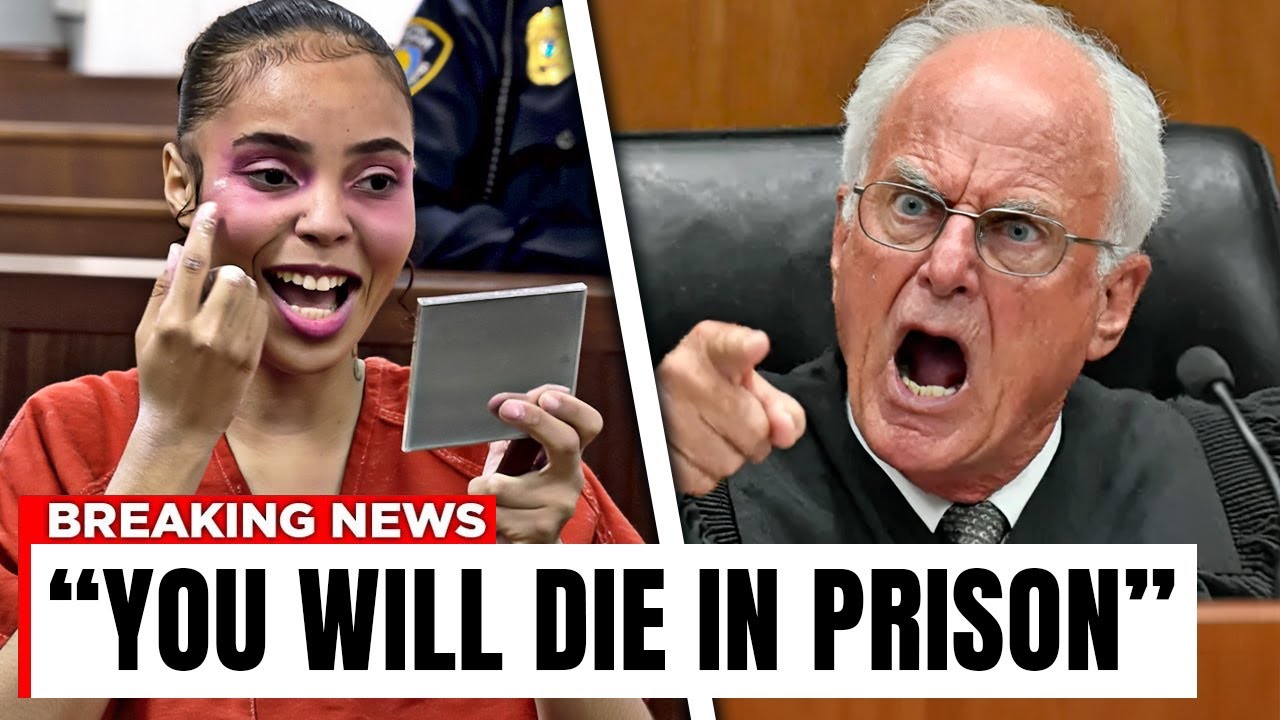
From the moment the trial began on October 22, 2025, in Hillsboro County Courthouse, Alicia Andrews’ conduct became the center of public attention, often overshadowing the complex legal arguments. Multiple reports and social media accounts described her light-hearted mood, which appeared more suited to a social gathering than a capital murder trial. However, the most stunning moments involved her application of cosmetics. Accounts detail Andrews applying lipstick and makeup, sometimes with the quiet assistance of her attorney, while seated at the defense table.
For the public and the supporters of Julio Fulio, this behavior was a monumental display of disrespect. The image of a defendant primping herself while facing a life sentence was instantly interpreted as arrogance, a belief that she was above the consequences of her actions. Yet, the emotional nadir occurred when prosecutors displayed graphic photographic evidence. Andrews reportedly smirked as the state’s attorney presented a photo of Fulio desperately trying to seek cover in the back seat of his vehicle during the deadly hail of gunfire. This reaction, noted in court and widely circulated, crossed a critical line for many, transforming the question of appropriateness into one of active callousness towards the victim’s final, terrified moments.
This courtroom theater directly contrasts with the gravity of the charges: premeditated first-degree murder with a firearm and conspiracy to commit the same. If convicted, her entire life, every dream and future prospect, would be confined to a prison cell for decades. The defense, however, suggests an alternative explanation, which aligns with their core narrative: if she genuinely believes she had no knowledge of the murder plot—if she was merely a manipulated participant—then perhaps her smiles and composure are not a sign of guilt, but a form of psychological defense, a retreat into denial, or the confidence of a person who truly believes they are innocent.
The Ambush: A Hellish Onslaught Born of a Decade-Long Feud
To understand Alicia Andrews’ alleged role, one must first grasp the context of the crime—a brutal, calculated ambush rooted in one of the most documented and deadly rap-related gang rivalries in modern American history.
Julio Fulio, 26, was a central figure in the decade-long feud between his Jacksonville-based Sixblock KTA crew and the rival ATK (Ace’s Top Killers) and 1200 gangs. This was no casual street beef; it was an escalating cycle of violence that played out publicly in drill rap lyrics, social media taunts, and numerous homicides on both sides. The conflict was infamously chronicled by Yungin Ace’s viral track, “Who I Smoke,” which repurposed a gentle piano ballad into a mocking celebration of dead KTA members, and Fulio’s retaliatory response, “When I See You,” filmed while dancing on his rivals’ graves. The violence became a terrifying feedback loop, with each funeral serving as a justification for the next act of revenge.
Fulio had survived multiple attempts on his life, enduring bullet wounds in Houston and Jacksonville. His luck finally ran out in the early morning hours of June 23, 2024, in a Tampa hotel parking lot, where he had traveled to celebrate his 26th birthday, perhaps believing the distance would offer safety.

The murder was not a spontaneous act, but a meticulously planned execution. Surveillance footage and witness accounts describe a precisely coordinated “hellish onslaught” that occurred at 4:42 a.m. Multiple masked shooters emerged from a vehicle and fired modified AR-style rifles. The level of preparation was demonstrated by the use of brass catchers—devices attached to the rifles to collect spent casings, effectively minimizing ballistic evidence left at the scene. The attackers created a deadly vortex of crossfire around Fulio’s Dodge Charger. Though the attack lasted mere seconds, the volume of fire was devastating. Fulio was pronounced dead at the scene, the tragic culmination of years of escalating gang warfare.
The Digital Trail: Spotter or Scapegoat?
This brings the focus back to Alicia Andrews, who had no documented gang affiliations and no prior personal beef with Julio Fulio. Her alleged involvement was driven entirely by her association with her on-again, off-again boyfriend, Isaiah Chance Jr., a member of the rival ATK gang who is also charged in the murder.
The prosecution’s narrative is direct and damning: Andrews was a willing, integral participant. Assistant State Attorney Scott Harmon told the jury that Andrews served as the essential “spotter,” traveling from Jacksonville to Tampa with the group and tracking Jones’s movements throughout the night—from an Airbnb pool party that was shut down by police, to various clubs, and finally to the Home Two Suites hotel. They allege that she used her cell phone to provide real-time location intelligence to the shooters, enabling them to position themselves for the perfect kill shot. The evidence hinges on cell phone records, tower data, and surveillance footage that place her at every relevant location. Crucially, the prosecution argues that she later lied to police to cover up her knowing participation.
The defense, led by attorney Life Malcolm, tells a story of tragic manipulation. Their narrative paints Andrews not as a calculating accomplice, but as a naïve, abused victim. They argue she viewed the Tampa trip as a simple romantic reconciliation with her controlling boyfriend and had absolutely no knowledge of or intent to participate in a murder plot. Malcolm emphasized that she was not dressed like the masked shooters, had no direct links to weapons, and was merely an innocent caught in a controlling relationship.
However, a devastating pre-trial ruling struck a crippling blow to the defense strategy. The court denied the defense’s attempt to introduce evidence of domestic violence in Andrew’s relationship with Chance to support a duress claim, as Florida law prohibits such defenses in capital murder cases. This means the jury will not hear the full extent of the alleged coercion, forcing the defense to argue the more difficult position that Andrews had zero knowledge of a plot, despite being present at every stage of the coordination.
The Road to Justice
Alicia Andrews is the first of the five suspects—including Chance Jr., Shawn Gathright, Rashad Murphy, and Davian Murphy (the latter of whom is facing the death penalty)—to stand trial. Her proceedings are serving as a critical test run for the prosecution’s case, the outcome of which will likely influence the trials and potential plea negotiations for the remaining defendants scheduled for spring 2026.
Testimony in the trial’s initial days included witnesses who were in Fulio’s car during the shooting. Vandia Norris, Fulio’s cousin, was shot in the arm and shoulder while driving away and broke down in tears when shown photos of his injuries in court. His testimony, along with others, helped establish the chilling reality of the ambush and the long-standing gang context that motivated the attack. Police officers confirmed that the crime scene analysis supported the premeditated nature of the hit, noting the presence of pistol casings but a noticeable lack of rifle casings—a finding consistent with the use of brass catchers.

The visual evidence is potentially devastating: hotel surveillance cameras and a nearby Tesla’s Sentry Mode recording captured the raw, brutal reality of the shooters taking position. Paired with the digital trail the prosecution intends to present—text messages, phone calls, and location pings that allegedly demonstrate coordination—the case against Andrews is formidable.
The jury is now faced with a moral and legal dilemma of staggering proportions. They must determine whether Alicia Andrews, the young woman who fixed her makeup while listening to the details of a capital crime, was a calculated and essential cog in a murder machine, or a tragic, non-gang affiliated casualty whose love for an abusive man turned her into a scapegoat for a decade’s worth of gang retribution. Her ultimate fate will hinge on this distinction, but regardless of the verdict, the image of her chilling composure in the face of a life sentence will remain a profoundly disturbing footnote in the violent saga of modern drill rap and gang warfare.