n a geopolitical maneuver designed to project unparalleled strength and reset the terms of global engagement, President Trump unleashed a diplomatic shockwave by ordering the immediate resumption of U.S. nuclear weapons testing. The directive, issued via Truth Social just hours before a pivotal, high-stakes meeting with Chinese President Xi Jinping, signals a definitive end to decades of American restraint and heralds a return to a strategic doctrine of aggressive deterrence. The action fundamentally altered the atmosphere of the most critical summit in years, confirming the President’s hard-nosed approach to international relations where military might and economic leverage are inextricably linked.
The order to the “Department of War” (a historical and rhetorical nod to the nation’s most serious defense posture) to begin testing “immediately” was not a casual statement. It was a calculated response to the observed and accelerating nuclear expansion by adversaries, specifically Russia and Communist China. The President’s rationale was stark: while the U.S. currently possesses the world’s largest nuclear arsenal, Russia is second, and China, “a distant third,” is rapidly expanding and is projected to catch up within five years. This unilateral commitment to expansion and testing by rivals left the U.S. “no choice” but to abandon its own moratorium.
The urgency, as detailed by Senator Tom Cotton, reflects a sentiment last seen during the height of the Cold War. Cotton drew a parallel to President Ronald Reagan, noting that both leaders regretted the necessity of nuclear weapons but recognized the imperative to maintain superiority. “As long as adversaries like communist Russia back in the day and today Russia and communist China have nuclear weapons and they’re rapidly expanding their arsenal and they’re testing their weapons, the United States can’t afford to unilaterally disarm,” Cotton argued. The goal is simple: ensure the U.S. nuclear arsenal is “second to none” and that American power “won’t be overmatched by the combined forces of Russia and China.” This is deterrence at its most muscular, confirming to allies and adversaries alike that the U.S. is prepared to pay the price of admission for global peace through unmatched strategic capability.
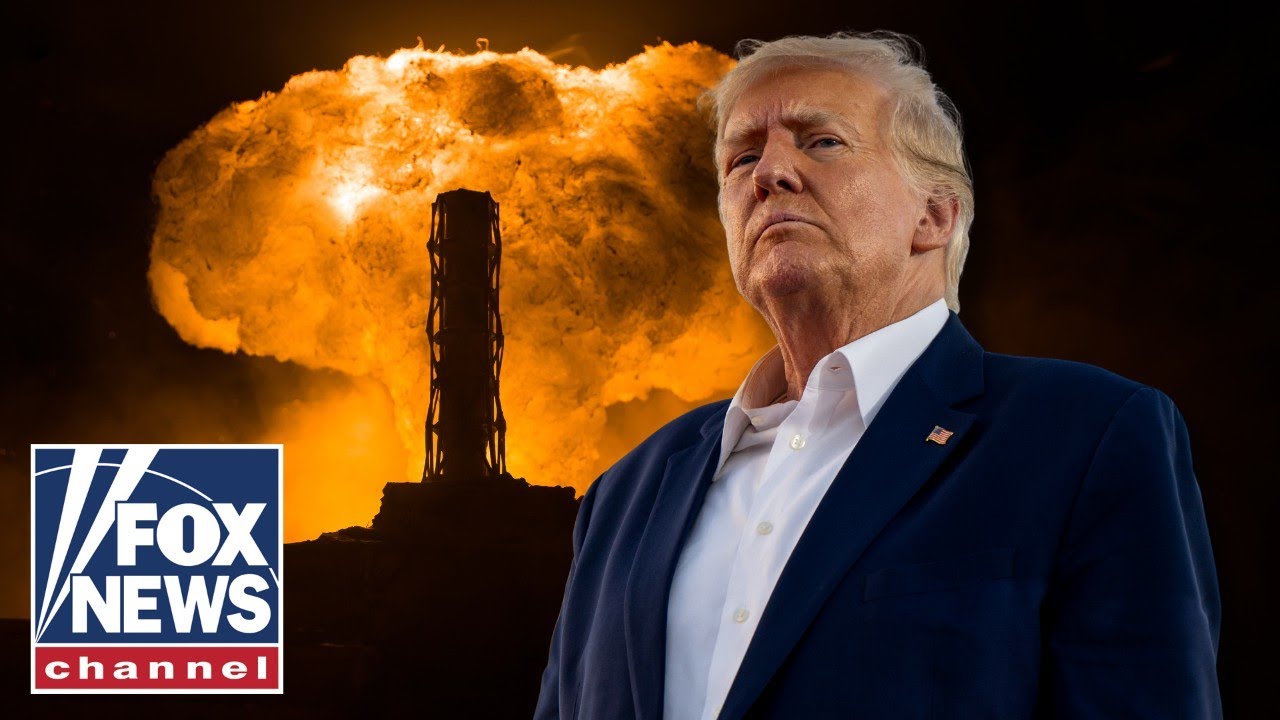
High-Stakes Diplomacy Under a Mushroom Cloud
The nuclear testing announcement served as the strategic overture to the highly anticipated sit-down between President Trump and President Xi. The environment was charged, with the motorcade carrying the Chinese delegation—a stark reminder of the gravity of the moment—arriving under intense scrutiny. The agenda for the summit was comprehensive, addressing a complex web of economic, military, and national security threats.
The list of topics laid bare the long-simmering resentments and dependencies between the two world powers. On the table were the importation of American agriculture (specifically rice and soybeans, a critical issue for farmers), tariffs, the flow of fentanyl into the U.S., issues involving Taiwan, and, most critically, the growing strategic leverage China holds over the United States. This convergence of trade and security underscores the administration’s belief that every economic relationship is, at its core, a national security relationship.
The President’s delegation arrived with a mandate to be “cleareyed and hard-nosed” in defense of America’s interests, recognizing that while a successful outcome is desired, “nothing is settled until everything is settled.” The preparation for this summit was marked by aggressive, pre-emptive strategic maneuvers designed to maximize the U.S. negotiating position.
The Strategic Leverage Triangle: Rare Earths, TikTok, and Russia
The success of the summit hinged on three key areas where the U.S. had managed to develop or reclaim significant leverage over Beijing, challenging China’s long-standing dominance in critical global supply chains.
1. The Rare Earths Counterstrike
One of China’s most powerful forms of leverage is its near-monopoly on rare earth elements—a suite of minerals absolutely vital for modern manufacturing, from magnets used in auto parts to sophisticated components in U.S. military equipment and high-tech defense systems. For decades, the U.S. “ignored China’s growing leverage” in this critical area, creating a national security dependency.
In a crucial strategic win just prior to the summit, the U.S. solidified a major rare earth deal with Australia, Japan, and South Korea. This alliance was a direct counterstrike to Chinese dominance, opening up new avenues for the U.S. to import the finished components from friendly allied nations. This move was described as giving the President a “great gust of wind” in his sails, forcing China to the table at a moment when their economic stranglehold was being actively challenged. By eliminating dependence on Beijing for these essential materials, the U.S. is committing to shoring up vulnerable supply chains and securing its manufacturing and defense independence.
2. The Algorithm as a Weapon: The TikTok Question
Another central issue was the Chinese-owned social media platform, TikTok. The concern is rooted in the fear that the app, through its Chinese parent company ByteDance, is a potential tool for communist Chinese propaganda and data theft here in America. Congress had previously passed a law aimed not at banning TikTok, but at forcing it to break its ties to the communist regime.
The critical question in the negotiation became the control of the algorithm. If the algorithm remains in the hands of ByteDance, which is “ultimately answerable to the communist Chinese regime in Beijing,” it remains a clear and present danger. The U.S. negotiating objective is to ensure that control of the algorithm rests with new American owners and engineers. If this is achieved, the platform becomes “just another social media app like Facebook or Instagram,” but failure to secure this control means a continuation of Chinese influence over American data and public discourse.
3. China’s Concession on Russian Oil
In an unexpected, yet telling, concession leading up to the summit, the Chinese delegation announced a commitment to reduce their import of Russian oil. This was hailed as a “big concession,” as Russian oil is considered the “lifeblood of their economy” and the primary fuel source for Russia’s ongoing war machine. By agreeing to reduce this critical lifeline, Beijing signaled a willingness to detach itself—at least partially—from Moscow’s aggressive actions, demonstrating a measurable shift in the geopolitical balance just hours before discussions began.
Trust, But Verify: The New Rules of Engagement
The overarching philosophy guiding the U.S. approach to the summit and to global security is a cautious, but demanding, realism. As one Senator noted, when sitting down with a communist leader like Xi Jinping, the governing principle must be “trust, but verify,” a standard set by Ronald Reagan. The U.S. recognizes that it still possesses immense leverage, primarily through its massive consumer market and its technological superiority, both of which China desperately needs access to.
The dual-pronged strategy—announcing an immediate, aggressive return to nuclear testing while simultaneously engaging in complex, hard-nosed economic diplomacy—sends an unmistakable message. It is a commitment to eliminating the “leverage” that China has developed over the decades, whether through economic war against American industries or strategic control over critical materials. The ultimate goal is to ensure that the U.S. can secure its supply chains, protect its data, and defend its way of life, independent of any foreign power. The summit, framed by the shadow of a new nuclear era, is the crucible in which the success of this strategy will be tested.