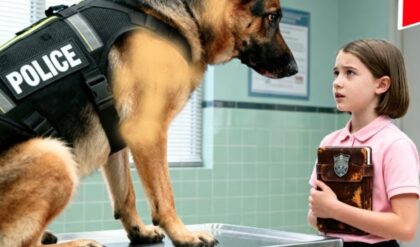
What do you do when the quietest German Shepherd puppy in the shelter is the one screaming the loudest for help? On a freezing afternoon just outside New York City, I found a 5-month-old black and tan German Shepherd puppy curled in the back of a snowdusted kennel. So shut down by fear he wouldn’t bark, wouldn’t eat, and looked like he was trying to disappear.
The shelter sits on the edge of Yonkers, where the plowed snow turns gray and tired along the curb. My breath hung in the air as I walked past the rows of chainlink runs. The sound of barking bouncing off concrete like it always does. Every kennel had a voice in it, some desperate, some hopeful, some just bored and loud.
All except the last row, all the way in the back, where the air felt heavier for no good reason I could name. His kennel was there, half in shadow, as if the building itself was trying to tuck him away. Someone had taped a bright red sign to the gate in thick black marker. Extreme fear, do not handle.
I’ve been volunteering here for years, and they tend to send the hard cases my way. The wild ones, the snappers, the dogs who come in like a storm. I understand them. They’re noisy because they still believe someone might hear them. But this little guy wasn’t noisy. He lay in a tight ball against the back wall, eyes barely visible, every muscle in his body trying to fold in on itself.
I dropped to one knee a few feet from the gate, turning my shoulder to him instead of staring straight on. I slid a soft treat under the bottom edge of the kennel door, then eased my hand back and waited. Around us, metal bowls clanged. Other dogs threw themselves at their doors, voices echoing off cinder block. He didn’t move.
Not a paw, not an ear, not a whisker. The treat sat there on the cold concrete like it didn’t exist. I don’t know how long I stayed like that, breathing slow, talking less and less until I just went quiet with him. The afternoon light drained out of the narrow windows, turning the corridor dim and blue. Finally, the staff started calling out that they were closing up, and my knees reminded me I’m not 20 anymore.
I pushed myself to my feet, brushed the wet from my jeans, and started down the row. Halfway to the door. Something made me stop and look back. The treat was exactly where I’d left it. So was he. But now, in that dark corner, two deep brown eyes were wide open and locked straight onto me, like he was the one deciding whether I was worth the risk tomorrow.
What scares you more in a shelter like ours? the dog that throws himself at the gate or the kennel where you can’t even hear breathing. I’ve been walking these concrete aisles outside New York City for a lot of years now. Long enough that they send me the ones other people label unadoptable. The biters, the shutdowns, the dogs with warning signs in red marker.
But that 5-month-old black and tan German Shepherd puppy in the back row was different. He didn’t growl. He didn’t lunge. He just folded himself into the corner like he was hoping the world would forget he’d ever been here. So the next day, I did the only thing I know how to do with dogs like that. I didn’t go in.
I just sat down on the cold floor outside his kennel, leaned my shoulder against the cinder block, and let the noise of the other runs wash past us. Sometimes I read out loud from whatever book I had stuffed in my coat pocket. Sometimes I just breathed and counted my breaths to keep from talking too much. Every now and then, a curious nose from another kennel would press against the chain link, then lose interest and wander off. But this puppy never moved.
The only thing that changed was his eyes. Whenever I shifted, whenever I started to stand, those dark eyes tracked me like a spotlight. He wouldn’t come to the gate, wouldn’t touch the treat, but he wouldn’t let me out of his sight either. The staff filled in the blanks they had on his intake form. cruelty case.
Days on a chain behind an apartment building, snow piling up around an overturned trash can he used as shelter. Neighbors heard a young German Shepherd puppy crying through the night and did nothing until someone finally called it in. By the time animal control got there, his voice was gone. Maybe that’s why the sign on his kennel shouted for him now.
That evening, when the barking started to die down and the light went that gray blue color again, I tried something I’ve done with more scared dogs than I can count, I took off an old work glove, the one that smells like kibble and bleach, and a 100 different nervous licks, and laid it just inside the kennel door. You’d be surprised what a scrap of worn out leather can do when words and food don’t work.
You might ask me, “Why a glove? Why that kind of trick?” I can’t really explain it. Some things you only learn by sitting on cold floors for years. I stood up, told him quietly I’d be back, and walked away. The next morning, when I came around that last corner, thetreat was still untouched, but the glove was gone from the threshold, pulled deeper into the kennel, resting right against his paws.
And later, I’ll tell you how that little stolen glove ended up turning everything I thought I knew on its head. You don’t name a dog you’re going to lose. That’s what I kept telling myself. The morning after the glove went missing from the from the doorway, I walked straight to his kennel before I hung up my coat. There it was.
That old bee pulled right up against his paws like he dragged my hand in as far as the metal would allow. He still wouldn’t come to the front, but he’d brought a piece of me to the back. And in this place, that counts as movement. I sank down closer than I had before, my hip almost brushing the gate, turning my body sideways so I wasn’t staring him down.
I slid a fresh bowl of water under the door, slow and quiet, then a single piece of kibble in my fingers through the chain link. I kept my eyes on the concrete, not on his face, and just talked in that low, nothing special voice I use when the world has already shouted too much at a dog. told him what the weather was doing, which German shepherds had gone home last week, how the snow plows made the whole street smell like wet metal.
At first, all I saw was the same tremor running along his shoulders. That tiny shake he couldn’t control. The kind of shake that doesn’t come from cold, but from memory. I’ve seen it in too many shepherds with red tags on their runs. Dogs moved from one place to another until there’s nowhere left to move them.
transfers, behavior centers, the quiet room at the back no one lists on the website. You tell yourself you’re tough enough to handle it because this is the work. This is for them. But the truth is, it scrapes something out of you every single time. And I am very, very tired of what people do to our four-legged friends and then expect us to fix overnight.
My fingers rested against the wire. Kibble pinched between them, not pushing, just waiting. He watched my hand for a long time, eyes wide and dark, chest barely moving. Then, so slowly I almost missed it. He stretched his neck forward. A damp, cold nose brushed against my knuckles. He flinched, but he didn’t pull away. His breath hit the inside of my wrist, warm and shaky, and I felt that tiny point of contact like a wire straight into my chest.
“Okay,” I heard myself whisper more to the floor than to him. “If we’re doing this, you get a name.” The word was in my mouth before I had time to workshop it. Marlo. Maybe because it sounded quiet and steady, like someone who watches from the edges and only speaks when it counts. Maybe because it felt soft where everything else in his life had been hard.
I don’t know. It just fit him. Sitting there in the dark, brave enough to touch my hand and not brave enough to move his feet. Later that afternoon, one of the staff caught me as I was filling out his chart. She slid a behavior report across the counter, her finger tapping the last line.
30 days for documented progress, it said. After that, transfer to another center. We can’t do more for him here. They’d printed it neat and calm, like it was just another form. All I heard was a clock starting to tick over the head of a 5-month-old puppy who had finally let himself be called by a name. Marlo didn’t trust words.
Lucky for him, I’d run out of them years ago. A couple of days after I saw that 30-day note on his file, I asked staff to unlock his kennel so I could sit inside with him. No leashes, no reaching, no training plans on clipboards. Just me and a 5-month old German Shepherd puppy who thought the world was something you survived by disappearing.
I stepped in slow, turned my back to him, and slid down the wall until I was sitting on the cold floor, my shoulders against the gate. I didn’t look over at him. I didn’t say his name. I just took a breath in and counted out loud. Soft enough that my voice barely cleared my own chest. 1 2 3. Then I let it out the same way. In and out.
We’re still here. Behind me, I could hear the tiny scrape of his nails when the metal bowls clanged in the hallway. Every time someone dropped a dish a little too hard, his whole body went tight. When a chain rattled on a truck outside, he froze so completely the air around him felt solid. You learn to feel that when you spend enough time with scared shepherds.
You feel the moment their muscles turn to stone. So I stayed soft on purpose. Same blue blanket folded in the same corner. Same phrase when I opened the door each day. Nothing fancy. Just, “Hey buddy, it’s me.” Same time right after morning meds when the building was as quiet as it ever gets.
I put his food down and didn’t ask anything from him. just breathed, counted, let my spine press into the gate so he could choose how close was safe. The first time he ate with me in there, I almost missed it. No rush to the bowl, no normal puppy shove. Just a faint shift of weight, then thesoftest crunch from behind my shoulder, like he was trying not to let the sound give him away.
He only ate while I was breathing slow and steady. If I shifted too fast, the crunching stopped. So, I learned to move like he did, careful and quiet, like sudden things might break us both. At the end of one long shift, when the snow outside had turned to a dirty slush and the lights in the corridor buzzed low, I set a plastic crate in front of his kennel, door propped open, same blanket inside, my glove tucked into the corner, a little doorway to a bigger world he’d never seen.
I rested my hand on the top, felt my own heart going faster than I wanted, and leaned close to the bars. tomorrow,” I whispered. Mostly for him, but a little for me, too. We try the real world, and I had no idea if he’d ever choose to step through that door before his 30 days ran out. The first time I opened his kennel, I was more afraid than he was.
Next morning, I did everything exactly the same, same time, same soft, “Hey, buddy, it’s me.” as I walked up. Same blue blanket, same old glove tucked into the corner. I unlocked the latch, pushed the gate just wide enough, and then sat down inside, my back against the wall, not facing him. I clipped the leash to his collar without pulling, just letting the line rest loose on the floor like a piece of forgotten rope.
He didn’t move, didn’t whine, didn’t growl, didn’t do anything at all. He just watched that open doorway like it was a test he hadn’t studied for. I could hear the other German Shepherds down the row raising their usual racket, paws on metal, voices echoing, and all I did was breathe and wait. One step. It was so small I almost thought I imagined it.
The shift of his weight toward the hall, then another, and I felt the leash slide over my leg as he crept past me, body low, tail tucked so tight it almost disappeared. When a big male shepherd in the next kennel exploded at his door as we walked by, Marlo slipped behind my back like I was a wall he could hide inside. I didn’t turn around.
I just let him stay there until the hallway settled. In the quiet little meet and greet room, away from the echo and the cold. I sat on the floor again and held out one small treat in my open hand. For a long time, he just stared at it. Then that black and tan nose came forward, shaking, and he took it straight from my palm.
No flinch, no snatch, just a careful, desperate little bite like he was afraid the moment itself might vanish. We almost lost it a few minutes later. A new volunteer, rushing like people do, shoved the door open without knocking. The sound hit that small room like a gunshot. Marlo spun, scrambled back, and let out a raw, low growl that came from somewhere way older than 5 months. The door closed again.
The room went quiet, but the damage was already done. Out in the hall, I watched a staff member pick up his file and underline one word in red ink, reactivity. And standing there looking at that single line, I could feel his 30 days spilling faster through my fingers like sand I couldn’t hold on to. The worst thing you can do to a scared dog is rush him.
The second worst is give up. Somewhere along the line, people decided healing is supposed to be quick. Like, you walk through one bad night and by morning you’re fine again. But if someone did to you what was done to this 5-month-old German Shepherd puppy, would you really be fine in 30 days? I don’t think so.
The red ink on his file didn’t change how I moved with him. Next visits looked almost the same from the outside. Same kennel, same blanket, same quiet greeting. But I asked staff for one small rulebending favor. There’s a little enclosed yard behind the building, cinder block walls, and a strip of sky where the city noise dies down under the sound of snow hitting concrete.
Technically, fearful dogs are are supposed to work in the main runs first. Technically, I’ve never been very good at living only by the rules. We eased him out there one slow step at a time. No other dogs, no echo, just a light drift of snowflakes and the soft chuff of his breath. At first, Marlo stayed plastered to the wall like even this tiny piece of outside was too much.
His eyes tracked every movement of my boots, every shift of my shoulders. I crouched a few feet away, not facing him, fingers idly tracing circles in the slush. It happened in a heartbeat. One awkward, clumsy little move that changed everything. He stretched his front legs out, dropped his chest low, rump still in the air, an unsteady, brokenl looking playbow, then froze like he couldn’t believe what his own body had just done.
He straightened up fast, ears flattening, as if he was waiting to be punished for even thinking about playing. I didn’t clap or cheer or make a fuss. I just let a breath out and said, “There you go, kid. There you go.” Like we’d both remembered something we weren’t sure we were allowed to have anymore. Watching him, I couldn’t shakean old feeling from a different life.
There was a time when I was the one everybody passed around. Families, houses, case files with my name on them, notes that said, “Too much energy, too intense, too difficult.” I know what it is to see adults whispering outside a door and feel your whole future hanging on conversations you can’t hear. Maybe that’s why I’m stubborn with dogs like him.
Maybe I see too much of that kid in a black and tan coat. People started coming through the shelter asking for a puppy. They’d look straight past the older dogs and say, “Do you have any German Shepherd puppies? Something young we can shape?” I’d hear that word and my stomach would not. Staff would glance at Marlo’s run and I’d step in faster than I should.
Not him, I’d say quietly. Not yet. He’s still working things out. Truth was, I was terrified. One more rushed meet and greet, one more family turning away from that shutdown stare would break what little little trust he’d built. One afternoon, as I was wiping my boots off by the back door, our director watched me steer another family toward a different pup.
She didn’t raise her voice, didn’t scold. She just said almost gently, “You’re not just protecting him. You know, you might be hiding him.” Then she walked away and I was left standing there in the smell of wet dog and snow wondering if she was right and what that would mean for Marlo’s ticking clock. One day I realized Marlo wasn’t just watching the door anymore.
He was watching me. It was a small thing, the kind you’d miss if you didn’t live your life in hallways that smell like bleach and wet fur. I was standing in the corridor, staring at a stack of files. Red underlines, scribbled notes, no progress, transferred out. My brain had gone someplace dark I know too well. That place where you start counting losses instead of wins.
The barking around me blurred into one long sound. Then something cold and careful touched the back of my hand. I looked down and there he was. Marlo, that same black and tan German Shepherd puppy who used to fold himself into the corner, standing close enough that his whiskers brushed my skin. He wasn’t asking for food.
He wasn’t trying to go outside. He just pressed his nose against my fingers once, like he was checking to see if I was still all there. When I let out a breath I didn’t know I was holding, his shoulders dropped a little, too. Not long after that, they brought in another broken shepherd. About a year old, ribs showing, eyes wild.
He hit the back of his kennel over and over, throwing himself at the gate until his paws were raw, barking at ghosts only he could see. The kind of dog that makes new volunteers step back and whisper, “That one scares me.” I had Marlo in the small room next door when the new dog came in. The walls didn’t keep out the sound of that panic.
Marlo went still, ears twitching, head tilted toward the noise. Before I could say a word, he walked over to the shared wall, lay down with his side pressed along the bottom of the gate, and stretched himself out like a long, quiet shadow. Then he just breathed, slow, steady, like we’d practiced in that kennel for weeks. On the other side, the year old shepherd slammed the metal one more time, then another, and then slowly the banging stopped.
I heard claws scrape then settle. A heavier body slid down the wall, mirroring Marlo’s shape almost perfectly. Two dogs, strangers, lying back to back with cinder block between them, breathing in the same slow rhythm. No commands, no fancy training. Just one scared dog borrowing calm from another who barely had any to spare.
A staff member walked by, peeked in, and I saw their face soften. “Maybe Marlo could help with the new intakes,” they said quietly. “They seemed to copy him. I looked at that 5-month-old pup, stretched out like a little anchor on the floor, and my chest tightened in a way I couldn’t name. Was I asking too much from a dog who was still stitching himself back together? Was I really helping him? Or was I turning him into the same quiet, overresponsible thing I’d spent my whole life trying not to be? And for the first time, the question
hit me hard enough to sting. Am I turning him into me? The day everything almost fell apart didn’t start with barking. It started with sirens. A noraster had rolled in over yoners pushing snow sideways past the shelter windows. I was cleaning bowls when the first ambulance screamed by.
Then another, then police cruisers, lights strobing red and and blue through the frosted glass. The sound bounced off the concrete and metal sharper than any kennel noise. You could feel every German Shepherd in the building catch that fear like static. One by one, the runs erupted. Dogs leapt at their gates, nails scraping, bodies slamming, high-pitched panic ricocheting off the walls.
An old shepherd down the row lost his footing on the wet floor, crashed hard into the corner, and came up limping, eyes white around the edges.The air changed in a way you can’t mistake when you’ve been in this work long enough. Not just wet dog and disinfectant anymore. Fear, adrenaline, that metallic edge that tells you this could go bad fast.
Marlo froze in his kennel when the first siren hit. No bark, no growl, just that stone still body I’d seen too many times when metal clanged or chains rattled outside. Then slowly he stood and walked to the gate on his own. He pressed his nose to the latch and let out the softest whine. Barely a sound at all, but it cut through the chaos like someone saying my name.
I stepped in with him, closed the gate behind me, and slid down the wall to the floor. He tucked himself into my side, head under my arm, chest moving fast against my ribs. I matched my breathing to his, the way we’d practiced in quieter moments, [snorts] in and out, slow and steady. While we sat there, I realized the noise in the hallway was starting to shift.
Dogs who had been hurling themselves at doors now stood with their faces pressed to the bars, watching his kennel. A couple lay down. Even the old limping dog eased himself onto his blanket, eyes locked in our direction, panting, slowing just a little. Marlo wasn’t doing anything dramatic. He was just leaning into me, holding on.
And somehow the rest of them were taking their cues from that one scared German Shepherd puppy. Our director came down the aisle, checking on the injured dog, talking to staff in low, firm tones. Then she stopped outside Marlo’s run and took in the scene. One puppy glued to my side, a row of dogs breathing easier with their noses turned our way.
Maybe he shouldn’t just be another case, she said quietly. Maybe Marlo could be a helper dog, a kind of quiet companion for the tough shepherds. They’re already copying him. On the surface, it sounded like a promotion, proof he mattered. But as I looked up at her through the bars, all I could think was, “A week ago, you were ready to ship him off, and now you found a use for him.
” And behind that thought was another heavier one I didn’t want to touch. If we turned him into the shelter’s little hero, would he ever get to have an ordinary home of his own? The day they called him broken was the day he saved me. They came in on a Saturday, the kind of young family shelters love to see.
Two kids, puffy jackets, tired parents with hopeful smiles. They walked straight up to the front desk and asked the question I hear more than any other. Do you have a German Shepherd puppy? Something confident, playful, good with kids. Staff glanced toward the back, toward the runs where the hard cases live. I knew that look.
Before I could steer them anywhere else, someone had already said, “We’ve got one that might fit, and I found myself clipping a leash to Marlo’s collar.” He’d been doing better, walking outside, eating next to me, even giving little half-hearted tail wags. For a second, I let myself believe maybe he was ready. The minute we stepped into the meet and greet room, I saw it go sideways.
One of the adults shrugged off a bright shiny coat, that slick fabric that rustles like a trash bag. Marlo’s whole body went still. His eyes went flat. He turned his head away from them, away from the kids, away from the treats held out in open hands. No growl, no bark, just a complete shutdown like someone had flipped his off switch.
I could feel the tension humming through the leash straight into my hand. They tried for a while. Soft voices, clapped hands, little whistles. He wouldn’t look at them, wouldn’t take food. He just watched the wall. Finally, the dad exhaled, trying to make it sound like no big deal, and said the words I’d heard too many times. He’s just broken.
They thanked us, took a brochure, and walked out into the snow with their kids still talking about a fun dog to play with. I put Marlo back in his kennel and stayed late that night breaking down boxes of donated food in the storage room so I didn’t have to think about that word broken. Like he came off some line wrong and there was a factory somewhere that would take him back.
By the time I finally leashed him up to leave, the parking lot lights had turned the snow to a dull yellow glow. The backst steps were iced over, a thin mean layer you can’t see until you’re already on it. I opened the door, stepped out with Marlo at my side, and my boot went out from under me so fast the world tipped. There was nothing to grab, no rail, just open air, and a hard drop toward the asphalt.
What happened next is all in pieces, the snap of the leash going tight, the sudden sideways pull on my arm, teeth catching fabric at my sleeve, not hard enough to break skin, hard enough to hold. Marlo planted all four feet and leaned back with everything he had. That little five-month-old body braced like an anchor at the top of the stairs.
I stopped halfway down, heart hammering, tailbone burning, one arm stretched up toward him. For a second, we just stared at each other, both of uspanting clouds into the cold air. He crept down one step, then another, and pressed his head against my chest like he wasn’t sure who had scared who worse. sitting there on that frozen stare with his breath shaking against my coat.
It hit me in a way nothing else had. All this time, I’d been so sure I was the one rescuing this broken puppy. But in that moment, it was painfully clear he was the one who just kept me from falling. Maybe the point was never to fix Marlo. Maybe the point was to let him be who he already was. After that night on the stairs, something in my head shifted.
I stopped talking about him like he might someday turn into a normal family dog. He wasn’t the fetch in the park type, the loud, goofy German Shepherd puppy people think they want for their kids. He was the one who held the line when things got too loud, too bright, too much. So when people asked about him, I started telling the truth.
He’s a quiet guardian. I’d say he sits with the scared ones first. The staff picked up on it. One of them snapped a photo of him lying pressed against the kennel of that year old shepherd. Both of them breathing slow and put it up on the shelter’s page with a caption about our shelter ambassador. Not a mascot, not a pity case, a working heart in a black and tan coat.
From there, it was like watching a film roll by. A new rescued puppy trembling in the intake run, too scared to touch a bowl. Marlo padding over, stretching out along the bars. the pup’s shaking easing as he matched that steady rhythm. An older female who wouldn’t let anyone near her finally lowering her head, eyes half closed, because Marlo had fallen asleep outside her gate, and for once, the world felt safe enough to copy him.
When the adoption counselor slid a stack of forms across the desk, my chest tightened. She’d already filled in one line. Adopter Caleb, we talked about a different kind of agreement. Marlo would live with me, but he’d still come back here most days on duty as a second volunteer with four paws instead of two hands.
It felt less like taking him away and more like making his job official. A few mornings later, I opened my car door in the parking lot, clipped on his leash, and expected to have to coax him inside. Instead, Marlo hopped down, shook off the cold, and pulled me straight toward the shelter entrance. tail carried high, steps sure and steady.
And right then, watching him choose that door without hesitation, I realized he wasn’t just tolerating this place anymore. He was walking into the life he decided was his. Home, it turns out, isn’t just four walls. Sometimes it’s a place you choose to go back to. After the paperwork was signed and his collar had my phone number on it, life didn’t suddenly become a movie ending.
We just slipped into a new routine. Every morning, Marlo would eat his breakfast, watch me pull on my boots, and then trot to the door like a co-orker waiting for a ride. We drove the same road to the shelter outside New York City. And every day, he chose to walk through those doors like it was his job.
Inside, you could see the difference in the others long before you saw it in me. We had a female shepherd who’d stopped eating when her family left her here. Bowl after bowl went untouched. One afternoon, I brought Marlo to her run, sat down, and let him lie quietly along the gate. He didn’t even look at her food. He just breathed.
A few minutes later, she crept forward, eyes on him, and finally took a bite, then another. She’d only eat if he was there, like his calm made the world safe enough to swallow again. Another dog, a big male who’d never stepped past his threshold, watched Marlo walk by day after day. One morning, I unclipped Marlo’s leash and let him wander.
He paused at that kennel, glanced back at me, and then turned down the hall. I heard claws behind us and looked over my shoulder. That big dog was edging out of his run for the first time, following Marlo’s tail like it was a guide rope. At home, the shifts were softer, but just as real. The fridge door stopped making him flinch.
Thunder became something he listened to, not something he panicked over. He learned how to sleep on his back with all four paws in the air, the way only dogs who finally trust they’re safe will do. Most nights he’d end up with his head on my chest, letting out one long sigh before we both drifted off. Around the shelter, I started calling him the quiet hero no one sees on the adoption posters.
No banner with his name, no big glossy photo on the front page, just this steady presence in a black and tan coat walking the aisles, laying his body down next to the ones who still thought the world was out to get them. If you walked in on a good day, you’d see him stretched out right in the middle of the kennels, front paws crossed, eyes half closed. on both sides.
Shepherds that used to spin and scream now resting on their blankets, chests rising and falling in time with his the whole roombreathing easier because one unadoptable puppy decided to stay. And if one unadoptable dog can do this much, imagine what all the others could do if we just gave them time. Marlo was never the problem.
Uh our timelines were. We were the ones with 30-day limits and red pens and words like unadoptable stamped on his life. All he ever did was tell the truth with his body. That he’d been hurt, that he was scared, that he needed more time than a form allowed. My name is Caleb, and I’ve spent a lot of years in those hallways.
But I have never met a dog more quietly determined to keep trying than that black and tan German Shepherd puppy they once wrote off as a lost cause. He taught me something I should have already known. The dogs that look the most broken are often the ones who feel the most, who notice the most, who carry everybody else’s fear on their own shoulders.
Give them a chance, give them consistency, give them room to breathe, and they turn out to be the ones holding the whole room together. That’s what Marlo does now. One soft nose, one steady breath, one scared shepherd at a time. So, if you ever walk into a shelter and see a dog sitting in the back, eyes dull, labeled unadoptable, I’m asking you not to believe that word.
Behind it, there is always a story and a wound and a heart that learned to protect itself the only way it could. They are not defective. They are not trash to be thrown away and replaced with something easier. They are waiting for someone stubborn enough, patient enough to sit on the cold floor and say, “I’m not going anywhere.
” This little guy’s journey from abandonment to rehabilitation shows how important nonprofit rescue groups really are. They’re the ones who fight for the dogs that don’t photograph well. The quiet ones, the shaking ones, the ones like Marlo who just need time. Caring for a rescued puppy is more than love. It’s responsibility. It’s pet care.
It’s showing up on the days when it feels like nothing is changing and trusting that somewhere deep in that trembling body, something is. If Marlo’s story stayed with you, thank you for staying with us, too. Thank you for watching, for feeling this with us here at Brave Paws. Share his story. Talk about dogs like him.
Support your local shelters and rescue groups because every view, every comment, every share puts one more scared dog in front of the person who might be there. someone. You might be the reason the next Marlo gets his chance to choose a different ending. Join our Brave Paws family. Be their voice. Be their hope.