Stephen Curry’s Shocking Truth: “We’re Not Yet a Good Team,” as He Reveals Grueling 6-Hour Rehab and the Contagious Spirit Saving the Season
The lights of the press conference room shine brightly, but the atmosphere around Stephen Curry carries a heavier, more introspective weight than usual. After an absence due to injury, the Golden State Warriors star is on the cusp of returning to the court, and while he confirms his status as “feeling great” and “pretty optimistic” about playing tomorrow, his conversation with the press moves quickly past simple injury updates and into a candid, high-stakes assessment of his own painful journey and the fragile state of his team. Curry is not just talking about basketball; he is talking about pain, mental fortitude, and the brutal process of building a winning identity from scratch—a process that is “not yet” complete.
The Monotonous Reality: 6-Hour Solitude
Curry’s injury—a combination of a contusion and a muscle strain to the VMO (the muscle at the bottom of the quad)—was far more debilitating than fans may have realized. While reporters noted seeing him with a slight limp, Curry revealed the injury’s toughest aspect was the total loss of his leg’s full range of motion, which only returned a few days before his press appearance.
This setback initiated a grueling and isolated recovery ritual, far removed from the excitement of the NBA road trip. Describing his rehab, Curry used a word that encapsulated the draining experience: “monotonous.”
“A lot of, you know, long days. I always talk about rehab, it’s monotonous,” Curry explained. “It’s especially when the team is away… you got to have some really good playlists going for the four to six hours you’re in here, um, by yourself.”
Four to six hours. Alone. Day after day. For a player whose game is defined by joy and electric crowds, this forced solitude, focused solely on strengthening and regaining motion, speaks volumes about the sacrifice required to return from a painful muscle strain. The final hurdle, he notes, isn’t about the pain but about transitioning from solo work to the “live action” of the NBA floor—getting “some bumps, some competition out there” to remind himself of the game’s blistering speed. It is a necessary shock to the system before he can truly be integrated back into the lineup.
The Silver Lining: A New Team Identity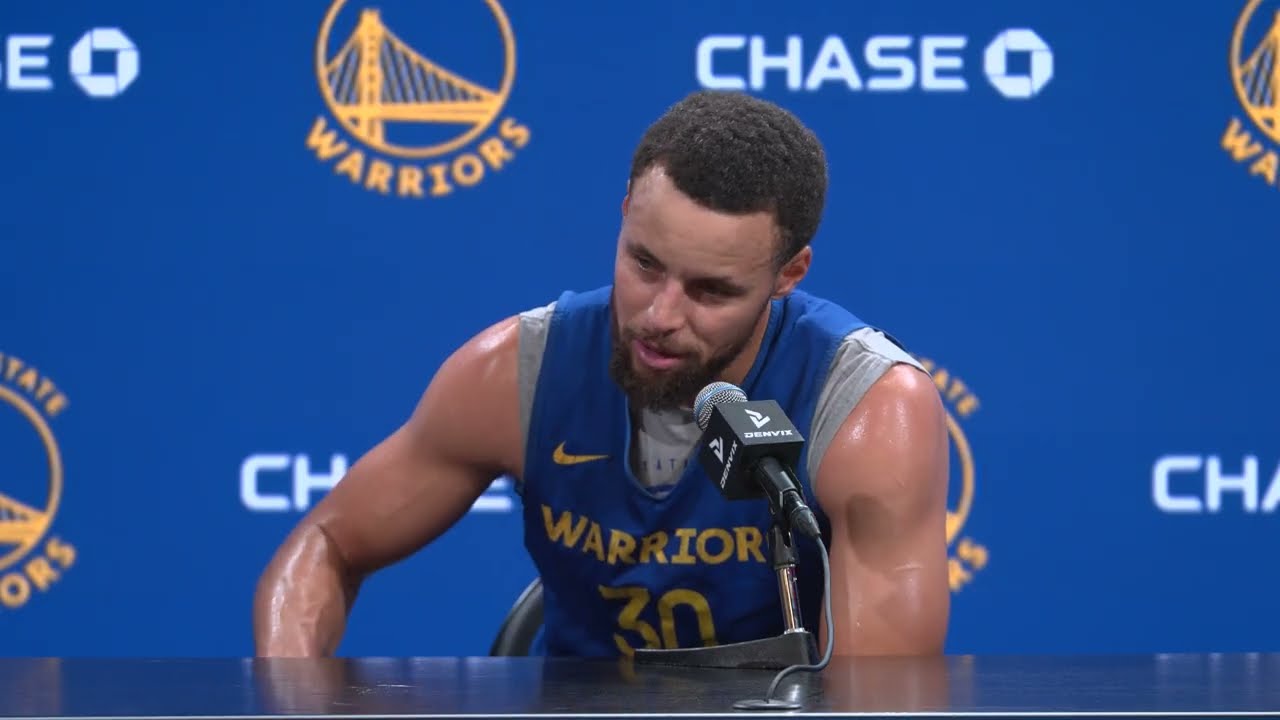
If there is a silver lining to Curry’s absence, it is the opportunity it afforded the rest of the roster to forge a new identity. The Warriors “took care of business on the trip,” and Curry’s observations from the sidelines were revealing. He saw a team that simplified its game, embracing what he called “just playing good basketball, making simple plays, getting organized offensively.”
He highlighted key shifts: better ball movement, players attacking closeouts, taking advantage of spacing, and, crucially, playing with confidence. The turning point was the tough loss in Philadelphia, followed by two critical bounce-back wins against Cleveland and Chicago. This sequence, Curry noted, was mentally significant. “That speaks volumes to, I guess, mentally where we are and how long can you sustain it,” he asserted. The team learned how to execute with a clear, shared idea—a contagious feeling that is paramount for success over the 82-game grind.
The Contagious Juice: Pat Spencer and De’Anthony Melton
Curry was effusive in his praise for the players who stepped up, particularly Pat Spencer and De’Anthony Melton, citing their “contagious” competitive spirit.
Spencer, who adapted “pretty much overnight” to a playmaker role, drew high compliments. “Amazing to watch… he just has a presence about him that he just knows the game,” Curry said. The key to Spencer’s impact, according to the superstar, is his “120% of confidence every time he’s out there.” Curry even joked that the two were “competing for like craziest celebrations,” highlighting the authentic, joyful emotion that Spencer brings to the court—a genuine energy that lifts the entire locker room.
Melton’s return, similarly, offered a powerful narrative of perseverance. Curry lauded him as a player who “understands what this level is all about” and makes the game “very simple,” excelling as a shooter, playmaker, and disruptive defender. Most impactfully, Curry noted Melton’s journey back, mentioning he was “in the gym every day for, you know, a whole year trying to get back.” Seeing Melton’s success now, after his lengthy rehab, offered a powerful, motivating “payoff” to the entire organization.
The State of the Franchise: Brutal Honesty
Despite the positive developments and the individual high points, Curry’s assessment of the team’s overall status was startlingly direct. When asked about finding a consistent rhythm, he did not mince words.
“I’m going to be completely honest with you… Nobody’s happy with our record, nobody’s feeling like, you know, we’re a day away from being the best team in the league. But we also know like the journey ahead is is right there for us,” he stated.
Curry’s transparency is a rare, powerful move for a franchise leader. He explicitly stated the goal: “Our job is to just stay in the moment and enjoy the challenge of trying to become a good team because we’re not yet.” The challenge, he stresses, is for the deep roster to figure out how to put their collective talent together “on a night-to-night basis.” This tough-love honesty acts as a motivational mandate, grounding the team’s expectations while reaffirming their potential.
The Young Player Paradox: The Kuminga Challenge
This theme of consistency and identity became sharper when Curry addressed the development of young players, specifically Jonathan Kuminga, in light of comments by Coach Steve Kerr. Kerr’s challenge to the youth is to “figure out who they are,” and Curry broke down the inherent difficulty of that journey.
For a young player, the role can change “on the fly,” forcing constant adaptation. The battle, Curry says, is balancing who the player thinks they are with what the team needs them to do to win.
On Kuminga, the word “consistency” is the crux of the issue. Curry emphasized that the hardest part for Kuminga is maintaining his spirit when minutes or opportunities fluctuate. “Not losing your spirit, you know, that’s been JK’s challenge as as a young player is things change so quickly,” Curry said. In the face of media scrutiny and “declarations about what or who he is as a player,” the worst outcome is for Kuminga to check out.
“If you’ve checked out or if you you’re still not, you know, engaged in the learning process then you might miss your moment on the back end,” he warned. Curry framed the situation as a “partnership” where the team has a responsibility to support a “great dude” and talented player, while Kuminga must meet them halfway through dedicated effort and resilience.
Organized Chaos and the Way Forward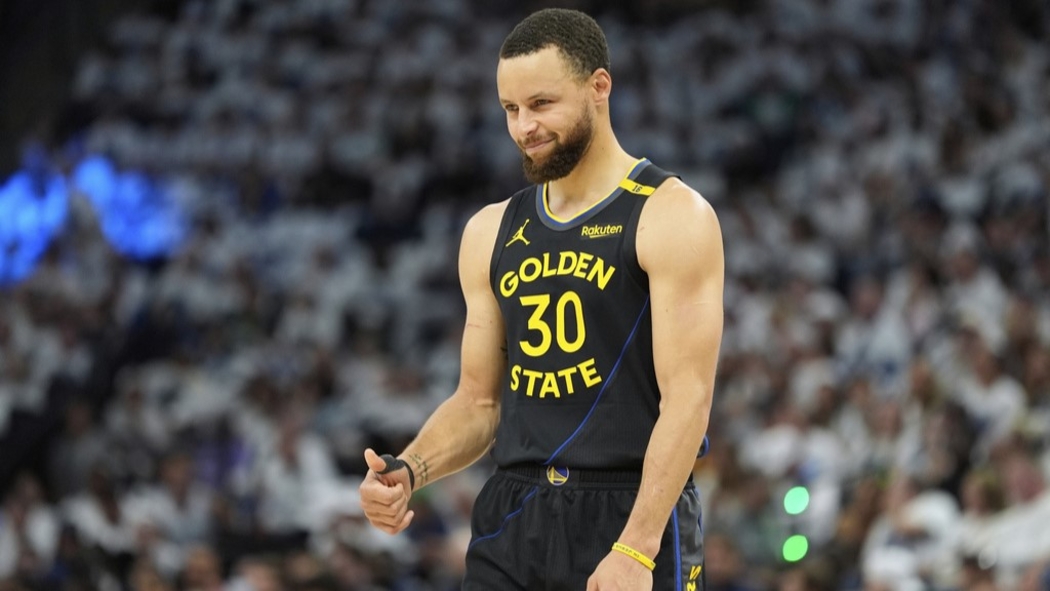
Curry’s return, therefore, is not simply about replacing the rhythm the team found without him; it’s about integrating his unique brand of play—which has been described as “organized chaos”—into the newly established framework.
Curry accepts the label, describing his style as playing fast, on or off the ball, where “the play starts once I get off of it” by creating tension and drawing attention (gravity). The “organized” element is key: the chaos operates within specific patterns and reads, ensuring the ball ultimately “finds the open guy.” It is an adjustment for new players, but the system, when executed with confidence, creates an unpredictable and highly effective offense.
As Stephen Curry steps back onto the court, he brings with him not just the gravity of a superstar, but the sobering clarity of a leader who understands the reality of the season. His return is a catalyst, but the work—the long, monotonous hours of rehab, the brutal honesty about the team’s flaws, and the constant battle for the young core to find their footing—is the foundation of what he hopes will be a successful journey. The Warriors are not a good team yet, but with their leader back and a renewed “competitive spirit,” the challenge to become one begins tomorrow.