The world of hip-hop thrives on authenticity, lyrical prowess, and an unshakeable swagger. Yet, standing in direct contradiction to these unwritten rules is the curious case of Dax. Born Daniel Nwosu Jr., the Canadian rapper has been relentlessly branded as the “corniest” artist in the game, a figure mocked by streamers, savaged by fellow artists, and largely ignored by the critical consensus of his peers. Social media, which can be brutal in its unanimity, seems to agree: Dax is cringey.
And yet, despite being the perennial punchline, Dax has not just survived—he has ascended. With certified Billboard hit records, a loyal following that counts its allegiance in the millions of subscribers, and his own sold-out headlining tours crisscrossing the United States and Canada, he has quietly become what can only be described as a sleeping industry giant. This astonishing paradox—the man most hated for his style is also one of the most commercially successful independent artists of his generation—begs a single, compelling question: How did a rapper so despised for his supposed corniness find such immense, undeniable success, and how long can such a reputation sustain a platinum-plated career?
The Poet, The Janitor, and The Algorithm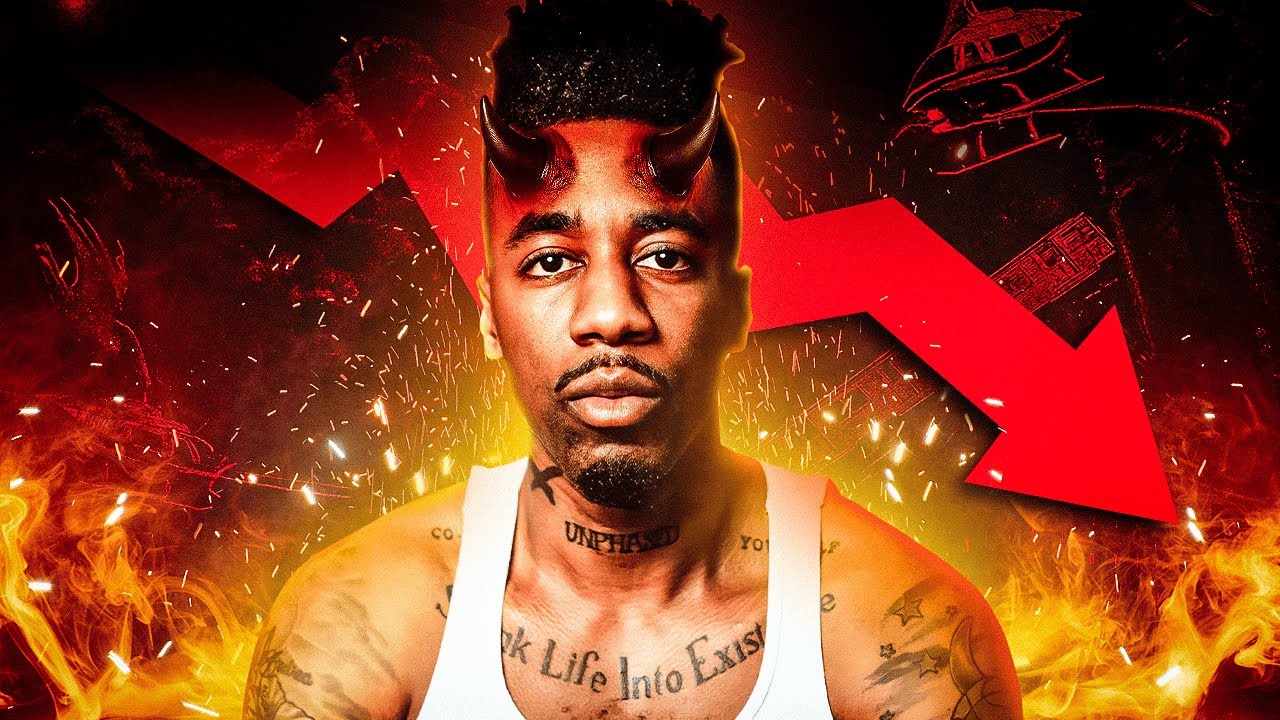
Dax’s journey to viral stardom began far away from the glitz of the studio, in the quiet, monotonous hours of a night job. Before he was crafting viral raps, he was an ambitious Division I and Division II basketball player with dreams of going pro. While attending college in Wichita, Kansas, he took a job as an overnight janitor. It was in the lonely corridors of this university, wielding a mop and bucket, that Dax discovered a hidden talent for crafting words.
As he later reflected, the janitorial role was a strange stroke of luck, offering him unsupervised solitude. He could speed through his duties and sneak off to the janitor’s closet to work on his true passion: writing poetry. The ambition to master social media was clear from the start. Realizing that poetry alone wouldn’t pay the bills, Dax plotted a path to maximize views by co-opting the cultural zeitgeist. This meant creating spoken word remixes of chart-topping songs, flipping the lyrics of popular tracks like Drake’s “One Dance” into motivational bars and positive affirmations—a style that certainly earned him early listeners, but also laid the foundation for the “preachy” and “corny” labels that would later define his career.
His true breakthrough came in 2017, a moment that perfectly encapsulates his career’s opportunistic genius. When Danielle Bregoli, better known as Bhad Bhabie, went viral with her “Cash Me Outside” catchphrase, Dax was ready. He quickly remixed the cultural phenomenon into a song, transforming a Dr. Phil-spawned meme into a multi-million-view success. The “substitute teacher” vibe he brought to the track was unmistakable, but the track’s success gave him the crucial boost needed to transition from remixing others’ work to releasing original material. In 2018, his original song, “She Cheated Again,” became another massive viral hit, proving that he could, indeed, draw an audience without relying on the success of another artist. Yet, even as fans praised his storytelling, a strong current of public opinion found his persona “cringey” and “inauthentic,” cementing his polarizing status.
The Beef That Saved His Career
The criticism against Dax escalated from mere internet mockery to full-blown industry beef, placing him in direct confrontation with two of the biggest names in the online rap sphere: KSI and Tory Lanez. These clashes, which resulted in deeply public humiliation, ironically became the supercharge his career desperately needed.
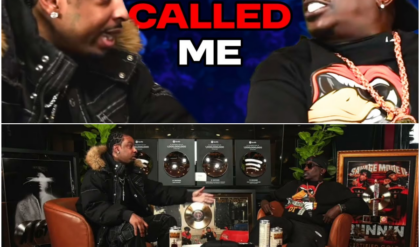
The first volley came from British rapper and YouTube star KSI, who publicly dismissed Dax in an interview, calling him “a poor man’s Hopsin, and Hopsin is a poor man’s Eminem.” It was an insult designed to delegitimize his entire artistic lineage, branding him a third-rate copy of a third-rate copy. Dax fired back with a diss track, but KSI doubled down, challenging him to a boxing match in London and releasing a series of videos that brutally clowned Dax’s content. The boxing match never materialized, leaving Dax to shoulder the weight of the mockery.
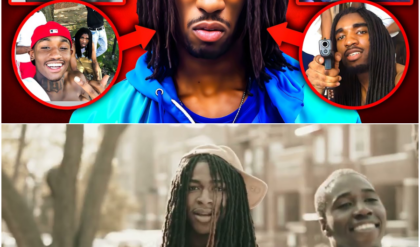
But the true nadir of his public standing came almost simultaneously during a friendly competition among rappers sparked by Tory Lanez’s boast that he was “the best rapper alive.” Dax, hoping to jump into the fray, released a diss track titled, “I’m Not Joyner Or Don Q.” While his track was technically skilled, it drew little respect from Lanez. Instead of a lyrical response, the outcome was physical and brutally public. Video footage surfaced of Dax being chased, confronted, and pressed by Tory Lanez and his entourage through a street in Los Angeles, culminating in Dax being forced to apologize on camera. “Say sorry, my bad for sorry G,” Lanez demanded, subjecting Dax to a humiliating, career-defining moment that was broadcast to the world.
The Algorithm’s Masterstroke
In the conventional world of hip-hop, being publicly forced to apologize and ducking a boxing match should have been career suicide. It only reinforced the accusations of inauthenticity and corny behavior. Yet, the opposite occurred. While his credibility took a hit, his subscriber count exploded. In 2019, he had a few hundred thousand subscribers; by 2022, he had soared to over 5 million.
The consistent, brutal clowning and mockery did not bury Dax; they supercharged the algorithm. KSI, and countless other content creators, were inadvertently “reaction farming” Dax’s videos, creating massive awareness for his music even among those who hated him. Every insult became a new data point, every mocking video a free promotional push. It was a bizarre, brilliant, and accidental exploitation of the digital age: Dax’s career was fueled not by love or respect, but by the irresistible impulse of the internet to ridicule.
Moreover, while the detractors focused on the cringe, Dax was quietly building a formidable, devoted fanbase with tracks that spoke to deeper, more emotional themes. His 2019 song, “Dear God,” struck a profound chord, racking up over 76 million views on YouTube. This success proved that Dax had mastered the art of viral marketing while simultaneously creating music focused on sincere inner dialogue. Even his most ridiculed moments, like using a bottle of Frank’s Red Hot sauce as a microphone in an open verse challenge, only opened the floodgates for more viral mockery, yet somehow continued to drive attention and views. He was getting clowned, but he was winning the numbers game.
The Country Pivot: Desperation or Dynasty?
Despite his success, Dax seemed to realize that the hip-hop world would forever keep him at arm’s length. His lyrical-miracle style and try-hard persona were too difficult to reconcile with the genre’s demands for rugged authenticity. In a move that shocked the industry, Dax began to pivot his sound entirely, chasing validation from a completely different demographic.
This strategic shift began with collaborations, notably teaming up with fellow controversial Canadian rapper Tom MacDonald, who has cultivated a significant, often right-wing fan base. However, the true game-changer was his 2022 release, “Dear Alcohol.” The track, where he addresses alcoholism and sobriety, leaned heavily into a country-rap aesthetic, complete with a major personal rebrand.
The results were immediate and staggering. “Dear Alcohol” currently sits on over 150 million views on YouTube and has achieved platinum status. After years of being a “YouTube rapper” with zero industry clout, Dax had an undeniable, mainstream breakthrough. His country success continued in 2023 when his collaboration with country star Darius Rucker on “To Be a Man” hit number one on the Billboard’s Country Digital Song Sales chart, and earned him a nomination for breakthrough artist of the year at the 2023 Canadian Country Music Awards.
This pivot, which has allowed him to launch his own successful headlining tour in 2025, has been his most lucrative chapter yet. After being chased out of hip-hop, he found acceptance, and staggering commercial success, in country music.
The Final Verdict on Authenticity
Dax’s journey—from janitor to publicly humiliated rapper to platinum-selling country star—is a masterclass in exploiting the digital attention economy. He took the “corny” label, an accusation meant to destroy him, and flipped it into a brand that was irresistible to the algorithm.
Yet, his success leaves a lingering, cynical taste. While he now stands on top of Billboard charts, his pivot to country music, a genre recently trend-chased by other big names like Post Malone and Beyoncé, feels less like a genuine artistic rebirth and more like a calculated, opportunistic move. Was it a necessity after realizing he could never escape the hip-hop gatekeepers, or was it a desperate attempt to stay relevant by any means necessary?
The final verdict on Dax remains complex. He is a testament to the fact that in the 21st-century music industry, attention, even negative attention, is the ultimate currency. He is the Corny King who proved that being universally mocked can, if played correctly, be the fastest route to a platinum plaque. The only question that remains is whether his newly adopted country persona has the staying power to outrun the “corny” reputation that followed him out of the rap game, or if his ultimate downfall will simply be the cynical desperation of a trend-chaser exposed.