The Robots’ Reckoning: How Daft Punk Turned Criticism, Controversy, and Sci-Fi Obsession into a Three-Decade Electronic Music Dynasty
The French duo Daft Punk, comprised of Thomas Bangalter and Guy-Manuel de Homem-Christo, was a living paradox: a global music phenomenon built on anonymity, a legacy cemented by an aggressive devotion to the machine, and an entire identity formed from a single, scathing piece of criticism. Their 30-year career reshaped electronic music, seamlessly blending pop, disco, rock, and the abstract futurism of science fiction, culminating in an unceremonious, yet perfectly symbolic, self-destruction.
From “Thrash” to Triumph: The Origin Story
The genesis of Daft Punk lies in failure. Before they were robots, they were part of a punk rock trio called Darlin’. Following their first release in 1993, a journalist for Melody Maker famously dismissed their music as “dafted punky thrash.” Instead of retreating, Bangalter and de Homem-Christo embraced the insult, transforming the critical jab into the legendary name Daft Punk.
Their early sound, rooted in techno and house, quickly gained traction with debut singles like “The New Way” and the breakthrough hit “Da Funk” (1995). Their 1997 debut album, Homework, was hailed as one of the best EDM albums of all time, featuring their iconic minimalist track “Around the World,” a song famous for repeating the phrase a total of 144 times.
The Myth of the Machine: The Iconic Helmets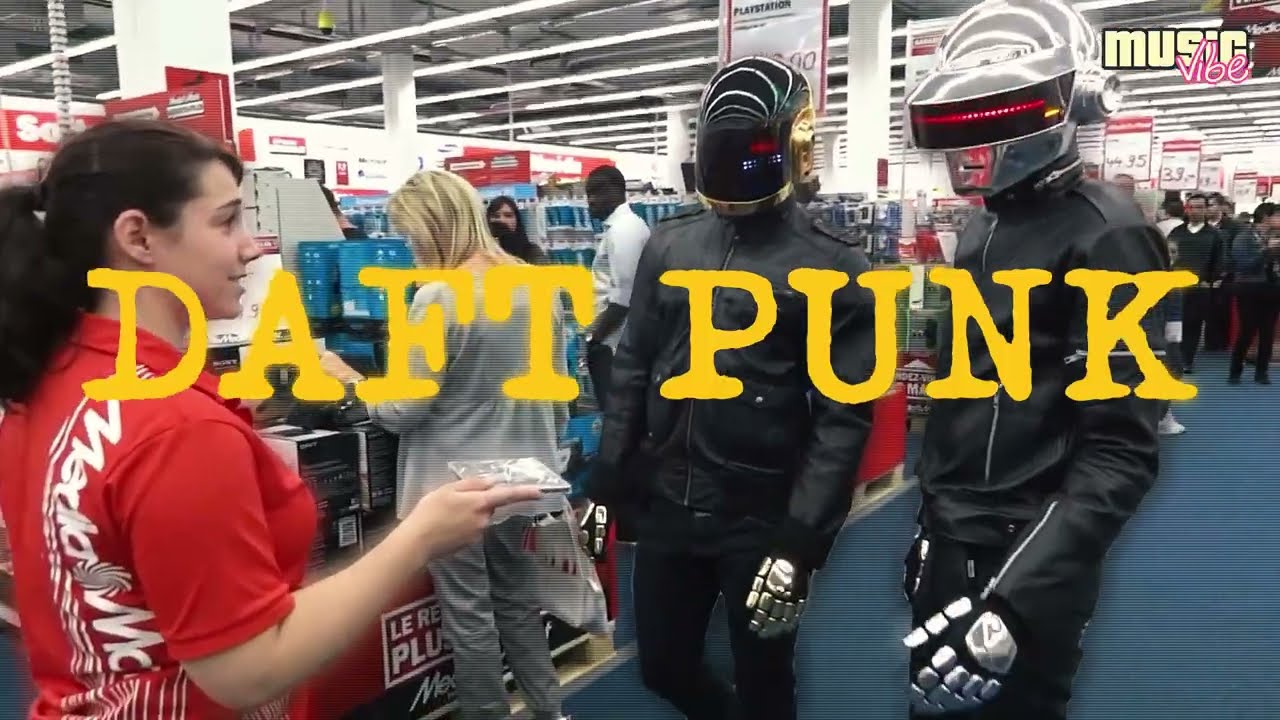
Following the success of Homework, the musicians decided to completely hide their faces from the public. According to their mythology, their transformation into robots occurred on September 9, 1999, when their sampler supposedly “blew up” from a mysterious virus, and they woke up as futuristic characters.
This transformation wasn’t a random stunt; it was a deliberate artistic statement. They traded primitive cloth masks for custom, chrome-plated helmets with built-in LED displays, aiming to keep the music—not their personal lives or celebrity personas—as the center of attention. Their aesthetic was heavily influenced by a shared love of striking visuals and sci-fi cinema, drawing inspiration from films like The Day the Earth Stood Still, the androids of Star Wars, and the theatricality of artists like Kraftwerk and David Bowie’s Ziggy Stardust.
The Sample Controversy and the Discovery Era
Daft Punk built much of their catalog on sampling, a practice that defined their sound but often led to accusations of “lazy plagiarizing.” Tracks like “Robot Rock” were almost entirely built from a 1980 sample of Breakwater’s “Release the Beast.” Even the global hit “One More Time” sampled Eddie Johns’ “More Spell on You.”
This style reached its creative peak with the 2001 album Discovery, a nostalgic transition to a more melodic sound reminiscent of 1970s and 1980s disco and pop. To visualize this new era, the duo introduced a unique project: a full-length anime movie called Interstella 5555. This feature-length visual accompaniment to the album, created in collaboration with their childhood hero, legendary Japanese animator Leiji Matsumoto, fully cemented the duo’s ambition to blend music with cinema and fiction.
Outside of Daft Punk, Thomas Bangalter was involved in two legendary, single-hit projects: Stardust, which created the epic “Music Sounds Better With You” (1998), and a duo called Together. In a twist of fate, a sample of Steve Winwood’s “Valerie” used by Together became the foundation for the massive European hit “Call on Me.” Despite the Ministry of Sound label pushing for an official release, the duo refused, leaving Eric Prydz to take the initiative and release his version, for which Daft Punk received no credit.
The Coachella Comeback and Global Hip-Hop Influence
After the critical failure and low sales of their minimalistic 2005 album, Human After All, and its accompanying philosophical film, Electroma, Daft Punk needed a shock to the system. That shock came in the form of a now-legendary performance at Coachella in 2006.
Performing on a massive, LED-illuminated pyramid stage, the Alive Tour did more than just relaunch their career; it gave EDM a new life in the United States and proved their immense influence. This tour earned them their first Grammy for the concert album Alive.
Their influence spread into the hip-hop world when Kanye West, looking for a stadium anthem, heavily sampled their track “Harder Better Faster Stronger” for his 2007 hit “Stronger.” The track soared up the charts, earning Kanye a Grammy and leading to a historic joint performance at the ceremony—the first time Daft Punk publicly shared a stage with a hip-hop artist, starting an era of collaboration.
The Grand Finale
In 2013, the duo paid tribute to the retro sounds they loved with Random Access Memories. The album, which included worldwide hits like “Get Lucky” and “Lose Yourself to Dance” (with Pharrell Williams), was a critical and commercial smash, sweeping the Grammys and winning Album of the Year. They later collaborated with The Weeknd, co-authoring and producing two of his biggest hits: “Starboy” and “I Feel It Coming.”
Then, without warning, the three-decade journey ended. In February 2021, Daft Punk announced their retirement by posting an eight-minute music video called “Epilogue.” The clip showed one of the robots activating a timer on his back, walking into the desert, and symbolically exploding. It was a final, artistic act of self-destruction—a symbolic closing of a chapter that redefined the boundary between music, myth, and machine.