The Scars of Stardom: Amandla Stenberg’s Unbreakable Will in the Face of Two Racist Firestorms and a Star Wars Betrayal
In the vast, often unforgiving landscape of modern Hollywood, few careers embody the intersection of art, activism, and identity with the raw power of Amandla Stenberg. Her name, which means “power” in both Isixhosa and Zulu, has proven to be a prophecy. Since her breakout role at age 14, Stenberg has consistently challenged the industry, using her platform not merely for personal fame but as a weapon for cultural critique and representation. Her journey is not a simple ascent to stardom; it is a profound masterclass in resilience, defined by surviving not one, but two devastating waves of racist vitriol—the first as a child in The Hunger Games, and the second as an adult leading a major Star Wars series—and emerging from both with her principles fiercely intact.
Born in Los Angeles in 1998 to Karen Brailesford, an African-American spiritual counselor, and Tom Stenberg, who is Danish, Amandla’s heritage is one of deep connection and complexity, including Greenlandic Inuit ancestry through her paternal grandmother. This intersectional foundation prepared her for a life lived across different worlds, navigating the complexities of race, identity, and culture.
Her initial trajectory was typical for a young talent, starting with modeling at age four and quickly progressing to commercials for major brands like Disney and Kmart. However, Stenberg was never a typical child star. At just 12 years old, she stood on a national stage at the Martin Luther King Jr. Memorial Dedication Ceremony in Washington D.C., delivering a powerful speech honoring the women of the Civil Rights Movement. While her peers worried about schoolwork, Stenberg was already speaking truth to power, displaying a gravitas and awareness far beyond her years. This early political grounding was the precursor to the fearless advocate she would become.
The Racist Firestorm of District 11
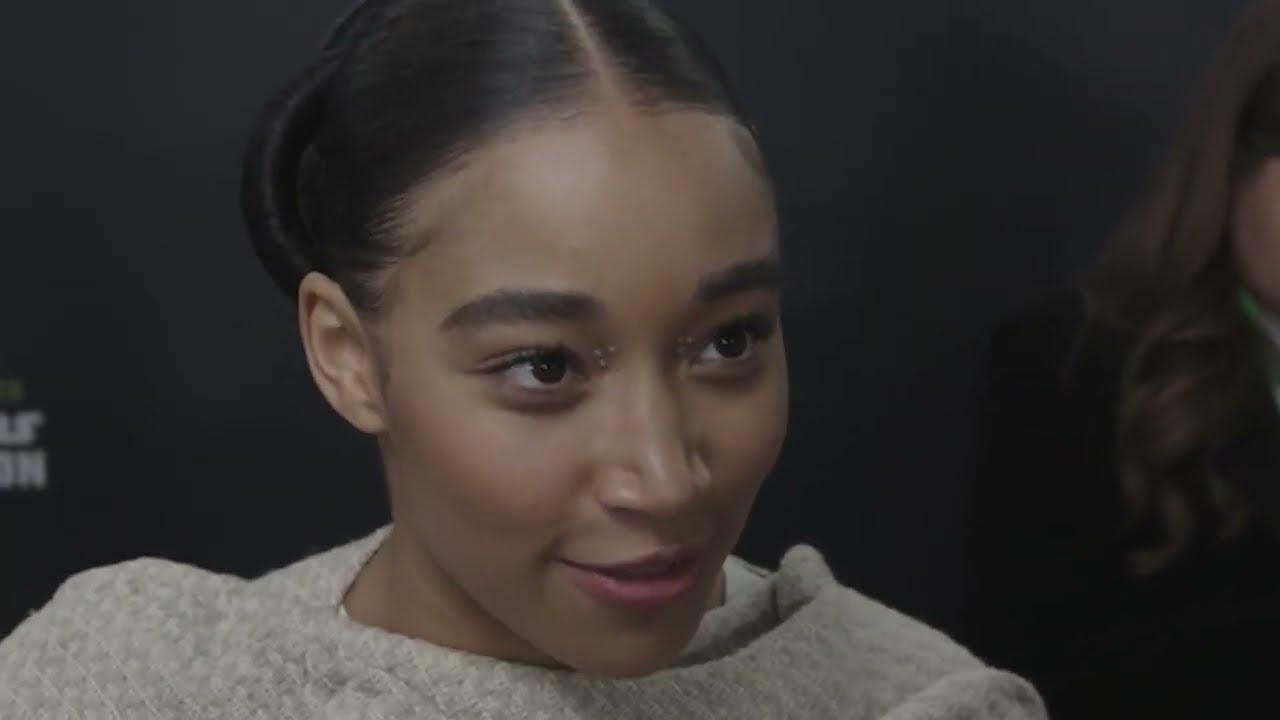
In 2012, Stenberg landed the role that would change her life forever: Rue in the cinematic adaptation of Suzanne Collins’s best-selling novel, The Hunger Games. The film was a global phenomenon, and Rue, the young tribute from District 11 who forms a heart-wrenching bond with protagonist Katniss Everdeen, was a critical part of its emotional core.
The success of the film was immediately followed by a shocking and vile display of racism on social media. Despite the book clearly describing Rue as having dark skin, a vocal segment of the “fans” exploded with outrage, shock, and disgust that a Black girl was playing the character. The racist tweets Stenberg received were unforgivable, a brutal introduction to the toxic side of fame and fandom for a 14-year-old. This experience left a permanent scar, but it also crystallized her mission. She watched, she learned, and she developed a hyper-awareness of the systemic issues surrounding the representation of Black girls on screen.
It was during this time that she formed a bond with her co-star, Jennifer Lawrence. Years later, Stenberg would reflect on Lawrence’s supportive presence, sharing a humorous, grounded detail that spoke volumes about the bond they formed on set: Lawrence taught her how to “pee in the woods.” This practical, normalizing gesture from a massive star showed Stenberg a way to navigate the surreal demands of the industry.
Don’t Cash Crop My Cornrows: The Activist is Forged
The wounds from The Hunger Games propelled Stenberg into a new role: that of a cultural critic. By 2015, the young actress was not just taking roles, but shaping conversations. She created a video that would go viral and become a touchstone of the cultural appropriation debate: “Don’t cash crop my cornrows.” The video was a direct, unapologetic call-out of figures like Kylie Jenner for adopting traditional African-American hairstyles and culture without acknowledging their significance or using their immense power to address the discrimination Black Americans faced for wearing the same styles.
The impact was immediate and profound. Stenberg was recognized not just as a talented actress, but as an intellectual powerhouse and an essential voice in the discourse on race and culture. She was named Feminist of the Year by the Ms. Foundation for Women in 2015, and Time magazine included her on its list of most influential teens. She was no longer just a figure in a franchise; she was a leader. This activism solidified her refusal to be siloed, a refusal she cemented by co-writing the comic book series Naobi: She is Life, creating the representation she found lacking in her own youth by featuring a Black elven warrior princess as the protagonist, authored and drawn by Black women.
Integrity and Identity: Choosing Principle Over Paycheck
Stenberg’s principled approach extended to her career choices. In one of the most surprising revelations of her young career, she auditioned for the role of Shuri in Black Panther, but ultimately walked away. She explained that she felt Letitia Wright was the perfect fit and refused to push for a role that wasn’t meant for her. This level of self-awareness and generosity, to step back from a Marvel blockbuster for the sake of integrity and the art, is extraordinary at any age.
This pragmatic self-possession also defined her academic life. After being accepted to NYU’s Tisch School of the Arts on a full scholarship, she deferred once, then twice, before finally dropping out. Her reasoning, shared with characteristic wit: why pay to go to film school when she was “getting paid to go to film school” by landing major roles?
This pragmatism was soon validated by one of the most critically important roles of her career: Star Carter in the 2018 film The Hate U Give, based on the Black Lives Matter-themed novel by Angie Thomas. The role required Stenberg to embody the difficult reality of code-switching—the act of adjusting one’s language, appearance, and behavior to fit different cultural contexts. Her explanation of the phenomenon, drawn from her own lived experience watching her mother transition between a stern, domestic voice and a professional, “hello” voice on the phone, resonated deeply because it was visceral and real. The film was a critical darling, and Stenberg’s “incandescent performance” earned her multiple awards and nominations.
It was during the press tour for The Hate U Give that Stenberg made a comment that would become another viral firestorm. In an interview with Trevor Noah, she stated that one of the film’s goals was to make “white people cry.” Though she meant it as a way to foster emotional impact and empathetic change, the comment was twisted by critics. Stenberg, however, refused to back down, eventually referencing the quote in her 2024 song “Discourse,” a powerful act of reclaiming and owning her truth.
Simultaneously, Stenberg was fearlessly exploring her own identity in the public sphere. She came out as bisexual, later clarifying her comfort with the term pansexual, and eventually identified as non-binary, using both she/her and they/them pronouns. In 2018, she came out as gay, refusing to let Hollywood’s confines limit her self-definition.
The Acolyte and the Betrayal

In 2021, Stenberg secured a role that marked the pinnacle of her mainstream career: the lead in the Star Wars series The Acolyte, playing twin characters. The challenge was immense, requiring her to create separate binders for each twin to manage the mental gymnastics of switching between roles.
Yet, this moment of triumph was met with a repeat of history, amplified by the toxicity of modern social media. Star Wars fans, or at least a highly vocal and hateful subset, launched an unprecedented campaign of racist and misogynistic harassment, review bombing, and death threats before the show even premiered. Stenberg was facing the Hunger Games backlash all over again, but on a much larger, darker scale.
Amidst the chaos, a sacred moment provided a brief respite. Disney executives, recognizing her lifelong love of music and Star Wars, presented her with an astonishing gift: legendary composer John Williams had arranged a solo violin version of the main theme, “Binary Sunset,” specifically for her to play. Playing the piece on her grandfather’s violin, feeling the force of her family history and the musical legacy of the franchise converge, was a profound, tear-inducing moment of validation.
The joy was cut short. Following its premiere in 2024, The Acolyte was canceled after one season. Stenberg refused to let the narrative be sanitized, sharing via Instagram stories that the cancellation was no shock to her, directly citing the “hyperconservative bigotry and vitriol prejudice hatred” the show received. She called out the hate, refusing to pretend that politics and prejudice did not impact art.
The Bravest Thing
In the end, Stenberg’s most powerful trait is her resilience, often rooted in private vulnerabilities she has bravely chosen to share. In a 2018 op-ed, she publicly revealed that she had experienced two separate incidents of sexual assault, an act of staggering vulnerability that provided solace and courage to others. She also shared the deeply personal, hereditary condition that causes her kneecaps to slide out of place, relating a humorous but excruciating story of it happening at a powerful Time’s Up meeting in front of Hollywood legends. She simply smacked it back in place and joked, “All right, let’s party, back to the patriarchy.”
But when asked to name the bravest thing she had ever done, Stenberg didn’t cite a red carpet or an interview. She recalled pushing through the immense personal responsibility she carried as a teenager, living on her own, working, and taking care of family members while finishing high school. Before the red carpets and magazine covers, there was a girl simply fighting to survive.
From speaking truth at the MLK Memorial at age 12 to leading a Star Wars saga at 25, Amandla Stenberg’s career is a testament to walking in one’s truth and refusing to let anyone “make you feel smaller.” She continues to fight, create, and inspire, using her power to shape a more inclusive, truthful, and ultimately, more courageous world.