The Spiritual Warrior’s War: Buju Banton’s Unbroken Battle Against Poverty, Empire, and Political Corruption
The name Buju Banton, born Mark Anthony Myrie, conjures a seismic force in global music. He is a paradox: a reggae superstar who outsold Bob Marley in his prime, yet insists he is merely a “servant of the music.” He is a lyrical titan who built an empire from the absolute depths of poverty, yet saw that empire dismantled by a US federal prison sentence on charges he claims were “trumped-up.” He returned home to the largest concert in Jamaican history, only to immediately pick a fight with one of the most powerful politicians in his country, igniting a public firestorm over allegedly stolen hurricane relief aid.
Buju Banton’s life is not a trajectory of smooth success; it is a chronicle of constant, unrelenting battle. It is a story that reveals the terrifying price of being an uncompromised conscious voice in a world built on silence and compromise. The unsettling revelations surrounding his ten-year incarceration and his recent, very public confrontation with Jamaica’s Minister of National Security, Daryl Vaz, serve as a stark reminder: Buju Banton’s mission is not merely to entertain, but to fight for the very soul of his nation—a fight that has put him in the crosshairs of power at every level.
From Mango Tree to Music Monarch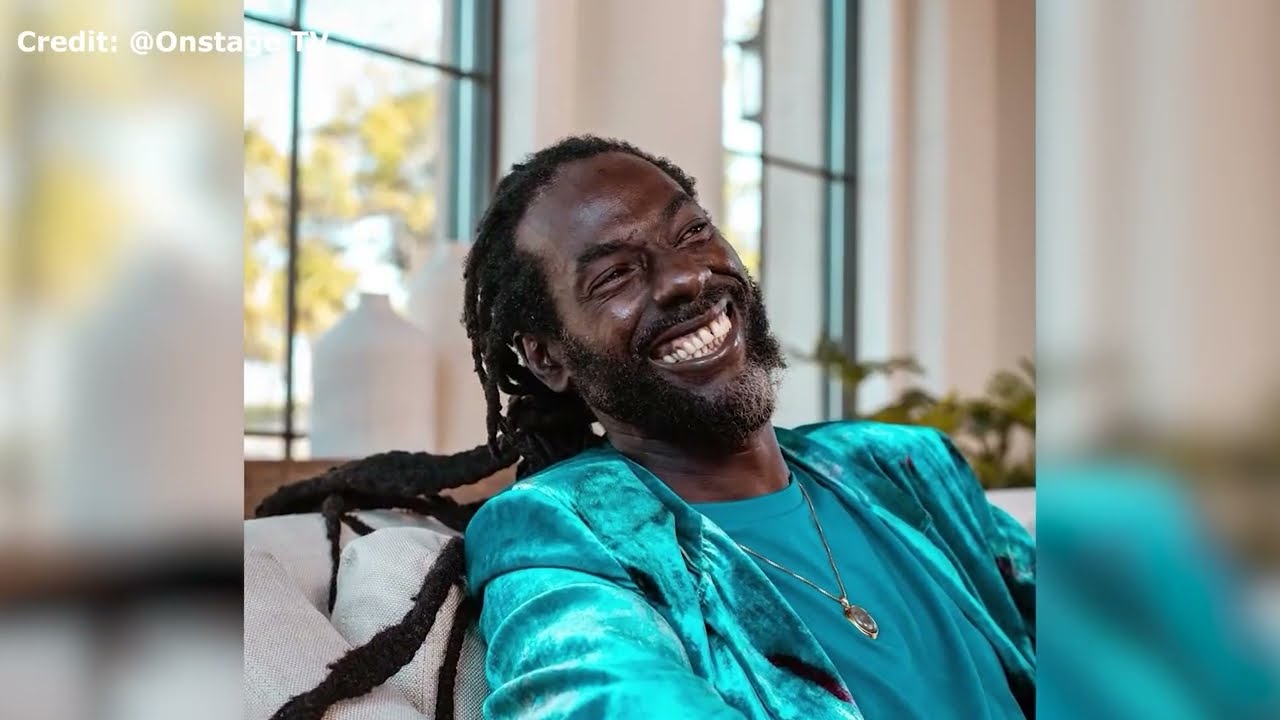
Mark Anthony Myrie entered the world on July 15, 1973, in Kingston, Jamaica, into circumstances defined by hardship. His childhood was spent in a one-room blue-board house, a life so entrenched in poverty that by age seven he was selling cigarettes for his mother just to help the family survive. This brutal, early education in struggle laid the foundation for the raw, authentic voice that would eventually define a generation of music.
The trajectory of his life changed irrevocably at the age of 14, in a moment that has since become folklore. While climbing a mango tree, the young “troublemaker” was spotted by none other than Shaba Ranks, one of the biggest dancehall stars of the time. Shaba, recognizing the fire in the boy, took him under his wing. At 16, under his now-famous nickname, Gargamel (a mischievous villain from the Smurfs cartoon, a moniker Buju reluctantly embraced), he recorded his first song, “The Ruler.”
By the early 1990s, Buju was a powerhouse, dominating the airwaves with hardcore dancehall hits like “Driver.” He broke Bob Marley’s record for the most number-one singles in a single year, an almost unthinkable achievement in reggae history. Yet, success did not soften him; it hardened his commitment to conscious music.
The year 1995 marked his spiritual and lyrical turning point with the album ’Til Shiloh. He realized that dancehall music was veering too close to “gangster culture,” steering young men toward self-destruction and prison. ’Til Shiloh was his powerful, uncompromising statement against this tide. It was a call for the music to return to its spiritual essence, to “elicit spiritual essence” and “uplift not destroy.” The album went gold, a testament to the fact that his fans, and the culture, yearned for the potency of his message. To this day, despite his colossal impact, Buju Banton refuses the title of “King,” declaring, with characteristic humility, “I am a servant of the music.”
The Decade of Silence: The US Prison Setup
The most defining and devastating chapter of Buju Banton’s life began on December 10, 2009. He was arrested in Miami in a federal drug sting operation, accused of conspiring to buy cocaine from an undercover DEA agent. The allegations stunned the world, but Buju Banton’s response was immediate and fierce: he claimed he was targeted, set up by the US government because of his conscious music and his power to influence masses.
This was not simply the claim of a desperate man. A 2006 Wikileaks report, which surfaced later, lent chilling weight to his allegations, suggesting that the US government had a vested interest in “neutralizing” figures like Buju Banton—a reggae star whose political and social lyrics were deemed a threat to the established order. As he himself put it, he was sent to prison on “trumped-up charges with faulty… corrupt judge, corrupt prosecutor, corrupt agent, corrupt drug dealer.”
In March 2011, following a mistrial and retrial, Buju was convicted and sentenced to ten years in US federal prison. It was a crushing blow, an enforced decade of silence designed to remove his potent voice from the global conversation. But Buju Banton, a lifelong spiritual warrior, turned the physical confinement into mental and spiritual discipline. He worked out multiple times a day. He devoured books, reading Victor Frankl’s Man’s Search for Meaning and the Bible. He studied the speeches of Haile Selassie. Crucially, he mentally projected himself back onto the stage, seeing himself free, with his family, at universities talking to children. This mental fortitude, this unwavering faith, became his true defiance. In a powerful display of spiritual strength, he stated that he chose to forgive his oppressors, recognizing that they knew exactly what they were doing and yet still refusing to allow their actions to define his heart.
The Long Walk to Freedom and the Price of Homecoming
On December 7, 2018, Buju Banton walked out of US federal custody and flew home. The scene at the airport was nothing short of a national catharsis. Thousands of people mobbed the airport, overwhelmed to welcome their hero back. He was shocked, tired, but happy to see the masses embracing him.
The climax of his triumphant return came on March 16, 2019, with the “Long Walk to Freedom” concert at Jamaica’s National Stadium. It was a monumental event: 90,000 people packed the stadium to capacity, setting an all-time record for a reggae and dancehall artist in Jamaica. It was pure magic, a moment of profound unity and vindication for the artist and his people, proving that even a decade in prison could not silence the Gargamel.
However, the personal toll of his incarceration was immense and private. Buju is a father to multiple children, whose identities he guards closely from the public eye. He revealed that his ten years in prison put a significant “dent” in the relationships with his children. His current focus on his music and mission is also a quiet, deliberate mission to heal those personal wounds, rebuilding the relationships that the systems of oppression sought to sever.
The New War: Confronting Corruption at Home
Having survived the battle against a US federal system, Buju Banton returned home only to immediately step into a new, intensely political fight against his own government. The event that triggered this confrontation was the devastation wrought by Hurricane Melissa in late 2025.
Buju Banton immediately leveraged his resources and influence to organize relief efforts through his Buju Banton Foundation, shipping barrels of life-saving supplies and necessities back to the island. But when the aid arrived, the spiritual warrior’s commitment to truth led him to make a shocking, public accusation.
He posted a furious video on social media, alleging that items were stolen from the relief barrels. The implication was clear: corruption had struck at the most vulnerable moment, diverting aid meant for hurricane victims. The accusation was not vague; he directly called out the Minister of National Security, Daryl Vaz, for allegedly being involved in the scandal.
The confrontation instantly sparked a massive public controversy, forcing the Minister to respond. Daryl Vaz clapped back immediately and fiercely, providing customs receipts and manifests that stated the shipments left the airport intact, fully wrapped, with seals unbroken. Furthermore, Vaz pointed out that some of the items Buju claimed were missing were never listed on the official manifests his team provided. Vaz attacked Buju’s “dirty reprobate mentality,” accusing the star of politicizing the issue.
The sheer velocity of the counter-argument, backed by official documentation, forced Buju Banton to quietly delete his posts. The public debate, however, raged on, exposing deep-seated public anxieties about government transparency and aid corruption in Jamaica. While Buju Banton’s initial accusation was retracted, the underlying question about the integrity of the distribution process became impossible to ignore, demonstrating that Buju Banton’s role now extends far beyond music—he is a self-appointed, albeit flawed, spiritual and social watchdog.
An Unbreakable Mission
As of late 2025, Buju Banton, now 51 years old, continues his relentless mission. His estimated net worth of $2 million, built through decades of touring, music, and business ventures despite losing a decade of earning power to prison, is a modest reflection of his enduring influence.
He is currently focused on new music, working on a 100% Dance Hall album, hard-hitting tracks aimed at the ladies and the “rude boys.” With the release of his contemporary, Vybz Kartel, after 13 years of incarceration, Buju Banton sees a new moment for the dancehall movement to rise again. He is also scheduled to perform at major international events like Essence Fest 2025.
Buju Banton’s life is a master lesson in resilience. He is the boy called out of a mango tree who broke a global record; the artist allegedly targeted by a superpower government; the spiritual figure who spent ten years in the dark to emerge stronger; and the patriot who risked his reputation to battle corruption in his homeland. From “Driver” to ‘Til Shiloh, to surviving prison, to confronting the Minister of National Security—Buju Banton refuses to bow. He is not just a reggae and dancehall legend; he is a spiritual warrior and the Gargamel who remains, defiantly and fiercely, an uncompromised servant of the people.