The Weight of Silence: An Empty Coffin, A Brother’s Paranoia, and the Unsolved Murder That Haunts Hip-Hop
The night of November 30, 1995, in Hollis, Queens, was marked by the sickening finality of a drive-by shooting. Walker, a member of the group Live Squad, known universally as Stretch, crashed his van after being shot at least three times. He was just three blocks from his home. He didn’t make it. But the tragedy was compounded by a detail so chilling it became one of the darkest footnotes in hip-hop history: Stretch was murdered exactly one year to the day—almost to the minute—after his close friend and legendary collaborator, Tupac Shakur, was ambushed and shot at Quad Studios in Manhattan.
This symmetry of violence was immediately interpreted not as coincidence, but as fate—or worse, as calculated retaliation. Yet, the most profound moment of betrayal was still to come. When Stretch’s family gathered to mourn, the industry he had helped define was conspicuously absent. His funeral was virtually empty, a shocking void where the biggest names in music should have been. The silence spoke volumes, cementing a tragic narrative where Stretch, a beloved creative force, was permanently deemed “too hot to touch,” his legacy stained by the single, devastating accusation that he had set up Tupac.
This is the story of a brotherhood that collapsed under the weight of paranoia, the unwritten street code that was broken, and the high cost of being caught in the middle of hip-hop’s deadliest conflict.
The Architecture of a Bond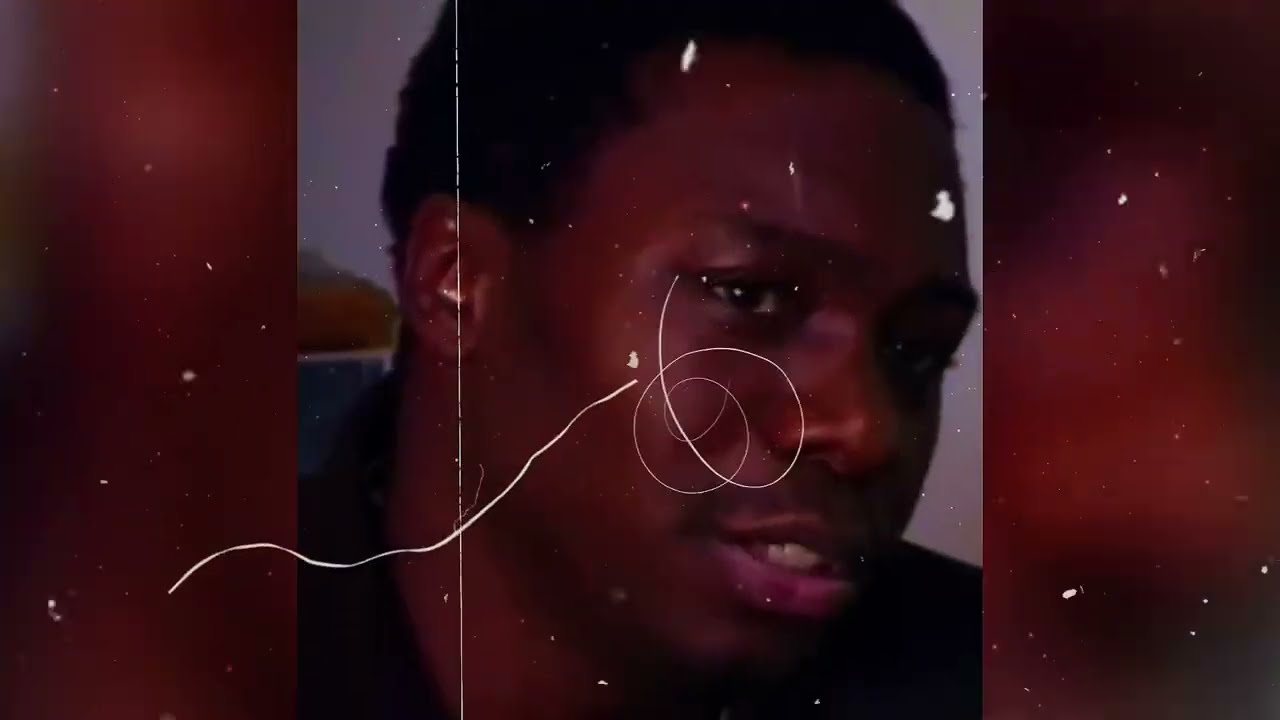
To comprehend the depth of this fracture, one must first recognize the strength of the alliance between Stretch and Tupac. They weren’t merely collaborators; they were brothers in and out of the studio, two creative forces who clicked instantly upon meeting in the early 1990s. Stretch, a 6’8″ towering figure with a deep, raspy voice, was a rapper and producer with his group Live Squad. His influence on Pac’s early career cannot be overstated.
Stretch was instrumental in defining the sound of Pac’s early, more conscious albums. He co-produced and rapped on tracks for Pac’s debut album, 2Pacalypse Now, and played a significant role in his second album, Strictly for My N.I.G.G.A.Z. Together, they crafted tracks that resonated with raw, street-level energy. Their bond transcended the recording booth; Stretch provided a sense of loyalty and street credibility that Pac desperately craved. When Pac’s trailer was robbed while he was filming Juice, Stretch didn’t hesitate—he tracked down the thieves, handling the situation himself. This was genuine, unconditional loyalty.
However, the foundation of this brotherhood was cracked, then shattered, on the night of November 30, 1994.
The Seeds of Suspicion
The ambush at Quad Studios changed the hip-hop landscape forever, transforming a rivalry into a war and turning a friendship into a nightmare of suspicion. Pac had been lured to Quad to record a session for Little Shawn, an artist managed by Jimmy Henchman, a notorious figure in New York’s underworld with deep street ties. Pac, already sensing something was off, reluctantly showed up.
The shooting itself, which saw Pac take five bullets, was chaotic, but one detail was starkly clear to Pac: Stretch, the largest and most intimidating man in the room, was the only one untouched. In a later interview with Vibe magazine, Pac broke down his harrowing thought process: “I’m thinking Stretch is going to fight. He was towering over those [gunmen]… if they come to rob you, they always hit the big first. But they didn’t touch Stretch. They came straight to me.”
For Pac, recovering in a hospital bed with PTSD, this was an agonizing riddle. Why did the attackers ignore the giant and go straight for him? The paranoia was magnified by Stretch’s associations with men like Haitian Jack and, most damningly, Jimmy Henchman.
But it was a specific interaction while Pac was in the hospital that sealed the theory of betrayal in Pac’s mind. Stretch visited Pac to deliver a message from Henchman. The chilling words, as Pac recalled, were: “Jimmy Henchman said you don’t want to go to war because you don’t got your money right.” For Pac, this was not a message of reconciliation, but a clear, audacious declaration of power and involvement delivered by the one person he was supposed to trust. “How do a friend bring this message to a friend?” Pac lamented, cementing his belief that his homeboy had, at the very least, helped line him up.
The Public Execution of a Friendship
The suspicion soon turned into public abandonment. When Pac recorded his post-prison masterpiece, the multi-platinum All Eyez on Me, Stretch’s name was completely missing. Not a single contribution made the final cut—a deliberate, loud, and unmistakable declaration that their friendship was over.
Stretch was understandably devastated and confused. In his own Vibe interview, he addressed Pac’s accusations with a mixture of hurt and grounded realism. He couldn’t believe Pac would air their personal dispute for the world to see, feeling Pac had violated the “street code” that dictated private beef stays private. He also provided a sober defense of his actions that night. Responding to Pac’s disappointment that he didn’t fight back, Stretch clapped back, “I ain’t got no gun. What the f*** am I supposed to do? I might be towering over him, but I ain’t tying over no slugs.” It was an indictment of Pac’s emotionally charged expectation versus the reality of unarmed survival.
Further complicating the matter, Pac felt abandoned while in jail, claiming Stretch “never wrote me, never got at me,” and, most painfully, was “hanging out going to shows with Biggie right after this.” However, people close to Stretch, like Ed Lover (who co-hosted Yo! MTV Raps and was co-godfather to Stretch’s daughter), pushed back hard, noting that as a convicted felon, Stretch often lacked the proper identification needed to visit Pac in prison. Pac, in his trauma and anger, failed to see the logistical reasons behind the perceived slight.
This public back-and-forth—the broken code, the missed visits, and the perceived betrayal—created a permanent rift. The friendship was already dead long before the bullets flew again.
The Anniversary and the Unclaimed Body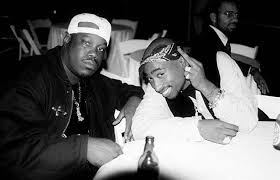
When Stretch was gunned down on November 30, 1995, the industry froze. The one-year anniversary of the Quad shooting was a horrific, almost cinematic detail, suggesting immediate retaliation. Former Death Row head of security, Reggie Wright Jr., later hinted at the possibility of a revenge hit connected to Tupac’s circle, though no solid evidence ever emerged to confirm this.
But the most searing detail was the deafening silence from the very people Stretch had helped, befriended, and defended. The funeral was empty. Neither Tupac nor any major rapper from either coast attended.
-
Tupac: The man who had called Stretch his brother, whose daughter Stretch was the godfather to, remained cold and distant, having closed that chapter completely due to his unwavering belief in the setup.
-
Biggie/East Coast: Rapper associated with the East Coast scene and Biggie’s circle also stayed away. Showing up could have been interpreted as siding with a man publicly accused of betraying Tupac, a dangerous political position in the rapidly escalating war.
The industry collectively decided Stretch’s name was toxic, a liability in the East Coast/West Coast conflict. Ed Lover, heartbroken, later confronted Pac about the absence. “Did Tupac go to Stretch’s funeral? No,” Ed Lover stated, feeling that no matter what happened at Quad, Pac owed Stretch’s family, and his own goddaughter, the dignity of showing respect. The silence was a profound abandonment, a final, public shame that denied Stretch a proper farewell.
The Vindication of a Victim
Over the years, the narrative surrounding the Quad shooting has shifted, offering a measure of posthumous vindication for Stretch.
In a 2005 Vibe interview, the alleged mastermind, Jimmy Henchman, finally spoke, delivering a statement that confirmed the entire set-up was personal and calculated, not a random robbery. Henchman claimed he told Pac, “Nobody came to rob you. They came to discipline you.” This statement, along with Henchman’s subsequent life sentence for drug trafficking, murder-for-hire, and other serious charges, established him as a true street boss with the motive and means to orchestrate the ambush.
While Henchman’s confession solidified the fact that Tupac was lured to Quad, it did not confirm Stretch’s involvement as a knowing participant. Instead, it positioned Stretch as a collateral victim, a friend caught between his brother (Pac) and a powerful, dangerous mob-connected associate (Henchman). Stretch, in his innocence or ignorance of the deeper plot, delivered a message that made him look guilty, a fatal misstep that cost him his friendship, his reputation, and ultimately, his life.
Stretch Walker’s story is the most poignant casualty of the East Coast/West Coast beef. He was a talented producer and rapper, a true force in early 90s hip-hop, who, through a tragic mix of bad luck, the politics of association, and a dear friend’s crushing paranoia, was stripped of his dignity in death. He remains an unsolved murder, a name unjustly smeared, and a haunting reminder of the high human price paid in the turf war that ultimately consumed Tupac himself, barely a year after Stretch’s own life was brutally cut short. The ghost of Quad Studios, it seems, collected two lives on the same date, a year apart, leaving only whispers, rumors, and the lingering shame of an empty funeral.