I still remember the day those two tiny brothers entered my life. The weakest sound on that Denver parking lot came from a cardboard box. I was locking my car outside a discount supermarket when a thin cry cut through the rattle of carts and traffic and hooked into my chest. Then it came again, softer, more desperate, and I knew it belonged to something that believed the world should be kind.
It was the sound a German Shepherd puppy makes when everything around it is wrong. The box leaned against a concrete pillar by the cart return. Bottom soaked from old snow. Store logo bright on the side like it was more trash. Top flaps folded almost shut as if somebody had done their best. My hands shook as I pulled them apart and the smell rushed out. Wet cardboard, sour milk, fear.
inside, pressed together like they were trying to be one body were two pups no bigger than my hands. One squirmed blindly toward the light, nose searching, mouth opening and closing on the empty air. A rescued puppy arguing with whatever had put him there.
The other lay underneath, limp and heavy, his chest moving so shallowly I had to hold my own breath to see it. There was no blanket, no towel, nothing but a crumpled receipt stuck to the wall of the box. Anger hit so fast my eyes burned. You don’t leave weak old puppies on wet cardboard and call it kindness, or press two beating hearts into a box and walk away.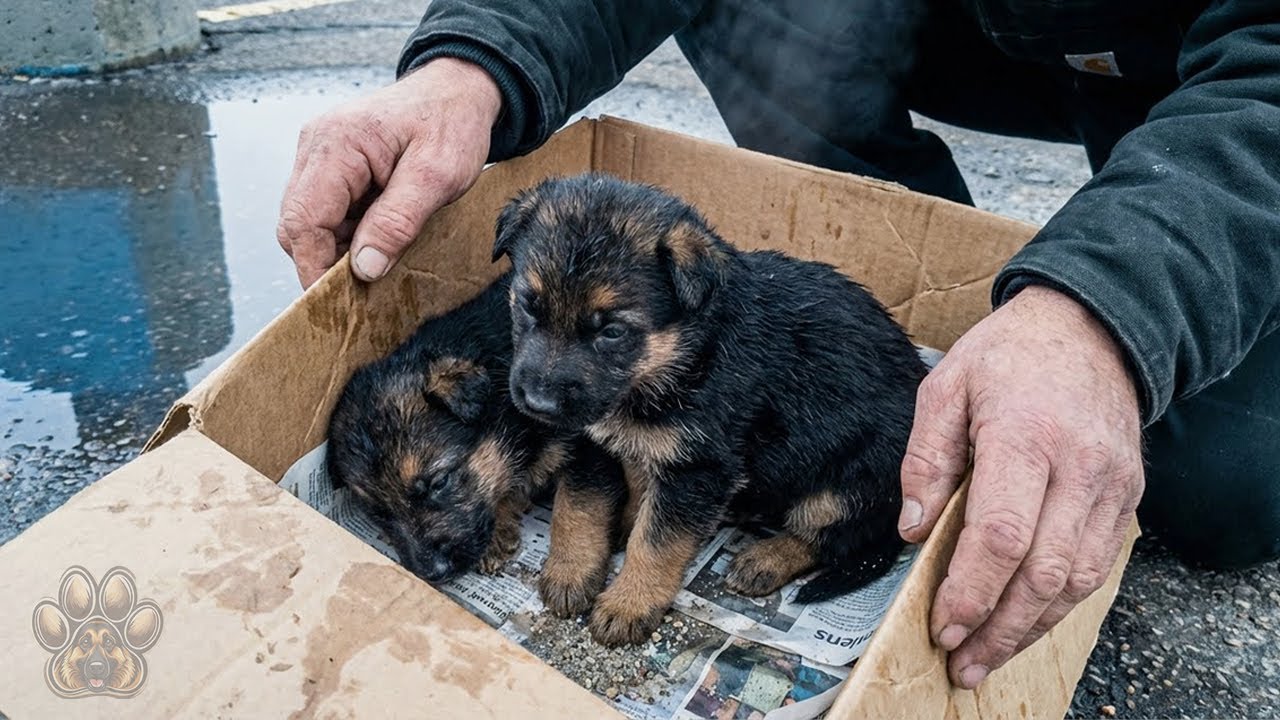
The stronger one clawed over his brother when I slid my hands under the box, whole body trembling with effort, while the weaker one only shifted because gravity made him. They were frighteningly light when I lifted them, as if the box was mostly air and apology. And I pictured our couch at home, a soft blanket, a quiet room. Then I saw the heat lamps in the back room of the shelter where my wife works.
The place I trusted with starts this fragile. Home could wait. If these two had any chance at all, the next place this box was going wasn’t my house. It was straight to that little shelter across town with both of them still pressed together inside. One of them was fighting. The other was just breathing, if you could even call it that.
The box sat on the passenger seat, wedged up close to the heater vents, cardboard sides trembling every time I hit a crack in the Denver road. The stronger German Shepherd puppy kept scrambling, dragging himself over his brother, tiny claws scratching at the soggy bottom, like he was trying to pull both of them out of this mess by himself.
Underneath him, the smaller body barely reacted, chest fluttering, not really crying, more like leaking air. I put one hand on the box to steady it and thumbed my phone on with the other. My wife picked up on the first ring. Tell me what you’ve got, she said. Two, I answered. Tiny, eyes barely open. Cold.
Someone left them in a box outside the store. Touch their paws, she said. Are they cool or warm? Cool, I said. Not ice, but wrong. Okay, don’t feed them anything. Not even water. Just get them here. Straight here. Keep the car warm. Keep them level. and if one stops moving, you call me back while you’re still driving.
” Her voice went into that calm, clipped mode I’d heard with bottle babies before. Mine didn’t want to follow. At the next light, I lifted the flap and looked again. The stronger pup had sprawled himself all the way over the smaller one now, nose pressed into his neck, whole little body shaking every time the car bounced. He wasn’t just lying there. He was covering him.
Every bump, every turn, he shifted, trying to be some kind of living seat belt for a brother who could barely hang on. I caught myself thinking the words strong one and weakest one. And it tasted bad, like I just swallowed the same excuse the person who left them used.
Somebody had already stood over a litter and decided who was worth the effort, who got a couch, and who got a box. Traffic moved too slowly. The heater roared. My fingers cramped on the steering wheel. Then, halfway between the supermarket and the shelter, the little body on the bottom went still. No twitch, no flutter, nothing.
Before I could even curse, the pup on top jerked his head up and let out a sharp, broken yelp that sliced right through me. I pressed harder on the gas and aimed the car at the only place I could imagine them both still breathing. We didn’t take them home. We had no right to do that before we gave them a chance to live.
The shelter door banged behind me and the smell hit first. Disinfectant, old blankets, the soft background chorus of dogs who knew this place better than I did. My wife was already waiting in the tiny treatment room, gloves on, thermometer, and a little digital scale laid out like we were about to work on something fragile and holy.
I set the cardboard box on the metal table and peeled the flaps back, and those two German Shepherd puppy brothers went from parking lot trash to patience in 3 seconds flat. She lifted the stronger one first, cupping him like he was made of soap bubbles, her thumb resting along his spine. “Cold,” she muttered, pressing tiny paws against the inside of her wrist.
Then she reached for the smaller body underneath, and I watched her face shift in that way. That means the numbers are not going to be good. His skin felt cooler, belly a little too loose, breath moving like it was afraid to commit. We checked temperature before anything else. She read the numbers off low, lips tight, then reached for folded towels that had been warming in the dryer.
No bottle, no food, not yet, just warmth. They went onto a soft, warm sheet half wrapped in flannel d uh with hot water bottles tucked around the edges and a heat lamp humming above them like a small artificial sun. The stronger pup immediately pushed himself toward his brother, nose bumping along the fabric until he found that familiar shape.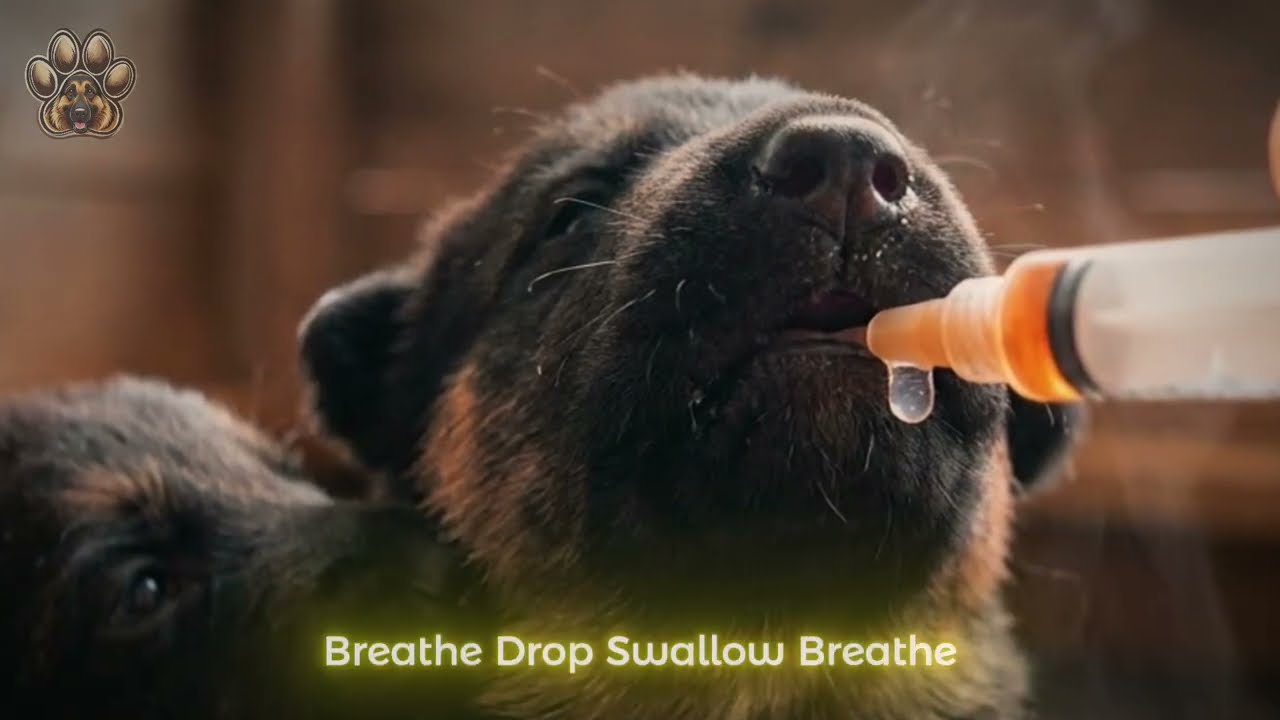
He draped himself over the smaller one again, front leg thrown across his ribs as if the whole parking lot thing had just followed them inside. And I swear, the second their bodies touched, the weaker chest started to move with a little more rhythm. His sides still fluttered, but there was a pattern now, like his lungs had remembered what they were supposed to do.
We tried just once to separate them, so each had their own perfect warm corner. Two neat little nests, two little patients under the lamp. The moment we did, a fine tremor ran through the smaller pup’s body, that tiny jaw starting to chatter without a sound. The stronger one protested with a thin cry, twisting, clawing his way back across the sheet until he landed half on top of his brother again.
Both of them finally settling. I watched the rise and fall of that fragile chest and felt my shoulders kn up between my ears. My wife glanced at the numbers on the thermometer again and then at me. If he makes it through tonight,” she said quietly, eyes still on the little one’s face, that alone is a win.
And standing there under that humming lamp, looking at those two shapes pressed together on the warm sheet, I knew this night was going to be the longest one I’d had in years. We named them before we ever fed them. Under the warm lamp, after the numbers finally crawled into the safe range, those two German Shepherd puppy brothers lay tucked into their little nest like they’d been poured there.
My wife moved around the room on autopilot, pulling the puppy milk replacer from the shelf. Not cow’s milk, not some kitchen experiment, just the one thing that even had a chance of pretending to be their mother. She mixed the formula in a tiny cup, stirring until there were no clumps, then warmed it in a mug of hot water.
No microwave, no guessing. She dripped a little onto the inside of her wrist, nodding when it felt just barely warmer than her skin. “Remember,” she said quietly, eyes on the smaller pup. “We never feed a cold baby. Warm first, then food.” They were both dozing when we leaned over them, their sides rising together in a fragile little rhythm.
I don’t know why I said it out loud, but it came out before I could stop it. The big one. He’s kin, I murmured. The way he’s been covering his brother. My wife’s eyes softened. Kin, she repeated. Then this one needs a name, too. I looked at the smaller body, the almost invisible movement of his chest, the way his ear twitched against Qin’s nose.
Saul, I said, like a little son that forgot how to burn. Qin and Saul. Two names in a place that saw too many numbers. We fed Kin first. She held him in one hand, head slightly up, body straight, bottle angled so he wouldn’t swallow air. He latched with a surprising fierceness. Tiny paws pressing against the bottle. A brave pup determined to argue with the universe.
Milk bubbled at the corners of his mouth. So she eased back, letting him swallow, letting his breathing stay steady. Then came soul. He didn’t reach for the nipple. His mouth opened, closed, missed. My wife switched to a small syringe. No needle, just a soft tip. Death slipping a single drop into the corner of his mouth, waiting for the swallow before giving another.
My heart was loud enough to count each one. Drop. Swallow. Breathe. Drop. Swallow. Breathe. Minutes stretched. Somewhere around the 10th drop, his tiny belly gave the smallest, rounder rise. Saul let out a faint, satisfied sigh, more exhaled than sound, and I felt something unclench in my chest.
It wasn’t much, but sitting there under that tired lamp, watching Kin press closer while Soul’s stomach gently shifted, it felt like we just made it through their very first battle. That night, there were only three sounds in that room. The alarm, his tiny cry, and my own heart. We pushed two chairs together beside their crate in the back of the shelter. The kind of setup you make when you know you’re not really going to sleep.
The lamp hummed, the air was warm and dry, and kin soul lay pressed so tight together they looked like one small breathing knot of fur. I set my phone to go off every 2 and 1/2 hours. Feed warm, clean, repeat. That’s how you fight something called fading puppy syndrome. When all you’ve really got is a bottle, some towels, and stubbornness.
Every time the alarm chirped, I drag myself up, hands already moving on autopilot. Check their warmth with the inside of my wrist. Move the hot water bottles a little closer. Lift one German Shepherd puppy at a time into my palm. Careful head support, body straight, not too flat so they wouldn’t breathe milk. Kin always woke first.
He’d latch on like the world was ending in 5 minutes, and the bottle was his last argument against it. Little pause pushing, throat working. Once his belly was full, but not tight, I’d lay him back beside Saul and reach for the smaller body. Feeding Saul was slower, syringe to the corner of his mouth, dropped by careful drop. Each swallow was a small decision he had to make. Afterward, I’d take the warm, damp cloth, and rub gently over their bellies and under their tails is the way a mother would, waiting for their bodies to remember what to do so they wouldn’t get sick just because they couldn’t go
on their own yet. Somewhere around 3 in the morning, the alarm went off and I actually thought about ignoring it. Just five more minutes. That’s all I wanted. Before I could reach for the phone, Kin let out a sharp, anxious squeak, like he’d read my mind and was not impressed. By dawn, my hands were shaking from too much coffee and too little sleep.
I leaned in to check them one more time, expecting the same still bundled shapes. And that’s when I saw it. Soul’s tiny back leg kicked just once in his sleep. A clumsy little running motion like he was dreaming about going somewhere he hadn’t even seen yet.
In that moment, watching that weakest pup practice running in his dreams, I knew that if anyone tried to call him the weakest again, I wasn’t going to be able to swallow it. The scariest word in those days wasn’t death. The scariest word was no gain. On the third morning, my wife walked into the back room with a cup of coffee in one hand and a tiny digital scale in the other. Like that thing was more important than sleep. And honestly, it was.
Kin and Soul were still tucked under their lamp. Two German Shepherd puppy brothers pressed together in a sleepy knot, completely unaware that a few grams on a screen were about to decide how hard our hearts beat. We did Kin first. She scooped him up in both hands, set him gently in the little plastic tray, and waited for the numbers to settle.
He gave a half awake protest squeak, more offended by the interruption than anything else. The display blinked, then settled a few grams higher than yesterday. “Good boy,” she murmured, writing it down in a neat little column. “Then came Saul. Even lifting him felt different. He was warmer now, less fragile, but my hands still moved slower around him.
” She set him on the scale, and we both watched like it was some kind of sacred ceremony. The numbers climbed, then hesitated, then added just a sliver more. “It’s not much,” she said, exhaling. “But it’s not down. A rescued puppy his age just needs to not lose. We take a little more over nothing every time.
” We had a whole world built on that scrap of paper by then. Two rows of names, 10 empty squares, waiting for morning weigh-ins. My life wasn’t running on a calendar anymore. It was ruled by a chart made for two puppies that didn’t even know their own names yet. Later that day, Saul scared us again. During one feeding, he barely latched at all, mouth slipping off the syringe tip, tongue slow.
I felt panic creeping up my throat, but my wife tapped my wrist and shook her head. “Not like that,” she said softly. “We don’t force formula into a limp pup. That’s how you drown them instead of save them. warm him, wake him, and if he still won’t take it, we call the vet. So, we warmed him.
We tucked him closer to kin, rubbed his chest, let his brother’s body, heat, and soft breathing do their part. When we finally tried again, drop by drop, Soul took it, slow and clumsy, but he took it. Every weak swallow, he managed, Kin answered with a little comment, squeak, like he was keeping score for us.
And somehow listening to that tiny voice mark every small victory, I knew the coming night was going to be brutal. But at least we wouldn’t be fighting it alone. I realized we’d been given our own medical device and it weighed just over a pound and answered to the name kin. We had the gear you expect in a shelter back room. Heat lamp, warm bedding, hot water bottles wrapped in towels so they wouldn’t burn tiny bellies.
All of that mattered, but nothing nothing settled Saul like having having his brother’s body pressed right up against his side. Every time we tried to do it by the book, it turned into a negotiation. Two perfect little nests, one for each German Shepherd puppy, equal distance from the lamp, temperature just right.
We’d lay kin in one, soul in the other, and for about 30 seconds, it looked like a training manual photo. Then Kin would wake up. He’d sniff, blink with those still cloudy eyes, and realize his brother wasn’t touching him. A tiny frown would crease the space between his ears. Or maybe I’m just giving him too much credit.
And then he’d start that slow, stubborn crawl over the towel across the warm sheet, dragging his whole little body until he could flop half on top of Saul again like a furry heating pad that refused to be unplugged. We stopped fighting it. We kept the nest warm. We watched the lamp height. We checked their ears and paws with the back of our hands. But we let Kin do his job, too. There’s a kind of help only a heartbeat the same size can give.
The more time I spent in that room, the more I started trusting Kin’s sounds. My phone alarm could go off, and I’d still hesitate just for a second. But if Kin let out that sharp, questioning squeak, I moved. It wasn’t random noise anymore. It was, “Check him. He’s cold. He’s hungry.” all wrapped up in one high little note.
During one late feeding, I held Soul in my palm, syringe in hand, watching his throat work slowly as each drop went in. Kin lay right up against my wrist, his body warm against my skin, nose pressed under Soul’s chin like he was supervising. When Soul paused too long between swallows, Qin gave a quick, anxious chirp, and sure enough, the next drop took a little more encouragement.
And then something small changed. After we settled them back into their corner, bellies full and bodies warm, Saul shifted, not just the loose wiggle of a fed pup, he turned his head, nose nudging clumsily across the blanket until it bumped into Kin’s fur.
He paused there like he was checking, like he wasn’t looking for the bottle anymore. He was looking for his brother. Watching that, feeling my chest go tight in a way I didn’t say out loud, a question slid in and refused to leave. What would happen to both of them if one day somebody tried to split this little system in half? The crisis didn’t arrive with a scream. It arrived with silence after feeding. By then, we had a routine.
Kin would drain his bottle like a tiny champion, belly rounding softly, a brave pup satisfied with his work. Saul would take his careful drops, pause, swallow, blink those cloudy eyes, then sag into that boneless, warm sleep that meant his little body was doing something with what we’d given him. But that afternoon, something was off.
Saul finished his tiny portion and just stayed still. Not the heavy, relaxed stillness of a full German Shepherd puppy. A quieter, almost checked out kind of still. His belly made a small, unhappy gurgle under my fingers. And when my wife did the little routine with the warm cloth afterward, what came out was softer and looser than it should have been. With big puppies, people shrug that stuff off. Change the food.
Wait a day. Hope it passes. With babies this small, it’s not background noise. It’s a message in bold red letters. My wife didn’t wait. She had the vet on the phone in minutes. Voice low and focused. Saul cradled in one hand while kin paced that tiny nest in clumsy circles, whining.
Less volume, more often, she repeated after a moment. Maybe a little dilute for a while. And bring him up so they can look at him. The exam room felt too big with something that’s small on the table. They checked his gums, his hydration, his temperature. Listen to that fragile chest. No drama, no rushing crash cart, just steady business-like care.
A little subcutaneous fluid under his skin. A small adjustment to the feeding plan. Instructions spoken the way you talk when every word has to fit into a tired brain. Kin lost his mind. He was on the towel beside soul. Claws digging in high. frantic cries ripping out every time someone lifted his brother’s paw or pressed a stethoscope to his ribs.
When the tech tried to slide him a few inches away, he scrambled right back, planting his body over Soul’s shoulders like a noisy shield. He didn’t calm down until they finally laid soul back against him. Two shaking hearts pressed together on a piece of clinic laundry. Back under their lamp, we tried the new plan.
Smaller feeds, more often, formula thinned just a touch. Saul mouthed at the syringe and for a second I felt that old wave of fear. Then he latched a little better than before. Tongue moving with a hint more intention. One drop. Swallow. Another drop. Another swallow. The knot in my chest loosened half an inch. Not all the way.
Just enough to breathe again and know this fight wasn’t over. But for the moment at least, we were still in it with him. He lifted his head first. Not kin. Him. A few days had passed since that quiet scare, the kind that doesn’t make a scene, but stays in your bones anyway. We walked into the shelter’s back room, expecting the usual, kin bouncing in his clumsy, loud way.
Soul tucked into the curve of his brother like a smaller shadow. But this time, when the lamp flicked on, Soul blinked, stretched his neck, and pushed his tiny head up off the blanket all on his own. I froze. My wife froze. Even Kin paused mid- wiggle like he sensed the universe shifting. Breakfast told the same story.
Kin drank as if he had a personal vendetta against empty bottles. But Saul Saul latched, not the slow, hesitant latch we’d been grateful for. A real one, determined, steady, like he had finally decided he belonged here. His stool had firmed up overnight, and the scale our little oracle gave us the biggest gift it could.
Actual honest to goodness gain. Not grams borrowed from luck. Grams earned. And then the eyes, just slits at first. two tiny crescents of cloudy blue peeking through. He’d turned toward the sound of kin squeaks now, the way a newborn learns the voice of the one who kept him warm. I found myself explaining it out loud.
Maybe for the room, maybe for myself. A healthy newborn doesn’t cry because he’s weak, I said quietly. He sleeps, he digests, he stays warm, he saves energy for growing. Saul, for the first time, was doing exactly that. Qin, of course, remained Qin. Loud, busy, dramatic, a brave pup, crashing through every moment like it was a personal mission. But even he seemed to notice the shift.
When Saul started making his first uncoordinated attempts to crawl, belly scraping the towel, legs slipping, head bobbing, kin scooted backward to give him room. Not much room, just enough. I watched them with this strange ache behind my ribs.
If someone walked in cold without knowing any of the nights or alarms or drops of formula, I don’t think they could have pointed to either one and said, “That’s the weakest.” The label didn’t stick anymore. It didn’t fit. He had outgrown it somewhere between the quiet terrors and the tiny victories. Later that evening, after their final feed, both pups drifted towards sleep in their shared nest.
Kin curled first, nose tucked beneath Soul’s chin, the way he’d always done. But then something unexpected happened. Soul lifted one tiny paw, wobbly, slow, and rested it across Kin’s back. A mirror of all those nights Kin had covered him.
A gesture so small it barely moved the blanket and somehow big enough to undo me completely. 3 weeks after that parking lot box, they gave us our first real chaos. By then, their world had gotten bigger than a crate and a heat lamp. We moved them into a little puppy pen in the corner of the shelter room.
soft pads on the floor, a low dish with soaked starter foods swirled with formula, two ridiculous squeaky toys that were almost bigger than each German Shepherd puppy trying to conquer them. Kin took the promotion personally. The second his paws hit the new space, he marched straight to the food dish, stuck his whole face in, and came up looking like a tiny sticky monster.
Then he tried to kiss everyone within range. me, my wife, the vette, sitting on the floor with her back against the wall, laughing quietly like she hadn’t been up all night with bottle babies yesterday. Saul was slower, but not in the way that used to terrify me.
He hung back by the side of the pen at first, like nose working overtime, taking it all in. The smells, the sounds, his brother’s bad decisions. Kin barreled into a toy, toppled over, and popped back up like a drunk little windup dog. And something in Saul just clicked. He pushed off from the wall.
One step, another, a stumble, and then he was going, uneven and determined, chasing the tail that wasn’t quite his yet, but would be. They turned that tiny pen into their own private party. Little paws sliding on the pads, noses buried in the same spot of mush. Both of them managing to step in the dish and then track their artwork across the floor.
It was messy and loud and absolutely perfect. At one point, while Kin was busy trying to climb into the lap of anyone who would hold still long enough, Soul did something I didn’t expect. He left his brother just for a moment. He waddled across the pen, eyes finally open and bright, and headed straight toward me.
He bumped his nose against my hand, gave one small testing lick, and then curled his body around my fingers like that had been the plan all along. Everyone in the room went quiet for a second. All those nights of alarms, all those wet cloths and numbers and careful feeds, all of it had turned into this.
Two lopsided living sparks crashing into everything and everyone they could reach. Later, when the lights went down and the room emptied, we laid fresh blankets and watched them settle. Kin spun in three small circles, then found Saul and pressed himself right up against him, nose tucked under his brother’s chin like always. Saul’s side, that deep, contented little sound that only comes from the very bottom of a safe chest.
And I caught myself thinking, not for the first time, that whatever future waited for these two, it was going to feel wrong if it didn’t come with one shared front door. The first person who wanted to take them home showed up 2 days later. The problem was, I wanted to take them home, too. Word travels fast when you say the phrase purebred German Shepherd puppy out loud in Denver.
Phones started ringing. Messages popped up on the shelter’s page. People stopped by just to look, leaning over the edge of the puppy pen with that bright, hopeful expression that has nothing to do with with 3:00 a.m. feedings or warm washcloths and everything to do with cute Christmas card photos.
I’ll take the bigger one, one man said casual like he was pointing at a chair in a showroom. he’d make a good guard dog. My wife smiled politely the way she does when she’s already made her decision. They’re not ready yet, she told him. And when they are, they’re not inventory. They’re babies who’ve already been left once.
We heard a lot of versions of the same thing. One puppy for a kid, one for a backyard, one for projects, always one, never both. At night, when the shelter finally quieted down, we’d sit on overturned buckets between the kennels, the hum of fans, and the soft breathing of dogs filling the gaps in our conversation. “Two puppies,” I’d say, staring at the pen where kin and soul were tangled up in sleep. “We already have old dogs.
We work full-time. We don’t exactly have space spilling out of the walls.” My wife would nod, tired smile in place. Vet bills, training, time. It’s not nothing. But then one of us would say the thing neither of us like to touch. Could you watch someone walk out with just one of them? I couldn’t. I’d seen Kin scream the room awake when Saul went too quiet.
I’d watched Saul once barely more than a breath drag himself across a blanket to find the exact spot where his brother’s ribs rose and fell. The idea of cutting that in half felt wrong in a way my body understood before my brain did. So, we didn’t decide. Not yet. On paper, they were still shelter puppies, waiting for the right application, the right home, the right check mark in a file.
Off the record, though, I was already starting to think of them as the two pieces of a family I just hadn’t admitted we were building. A month after that parking lot, I could still hear that first cry in my head. By then, the two little strangers from the cardboard box were no one’s idea of weak. Kin and soul were barreling around their pen like they own the place.
Teeth sunk into toys, paws too big for their bodies, practicing all those mini shepherd moves you either find hilarious or terrifying, depending on what’s in their mouths. They shredded puppy pads like it was a team sport. They pounced on each other, rolled, tumbled, got up, and did it again. Two small storms with matching tails.
If you walked in on that scene without knowing the backstory, you’d never guess that not so long ago, one of those pups couldn’t even lift his own head, you wouldn’t think about thermometers or scales or the way a tiny body feels when it’s too cold in your hands. That’s the part I keep circling back to. People love the idea of a puppy. Soft ears, big eyes, little paws skittering on the kitchen floor.
But a newborn like Saul, he couldn’t even pee without help when we first met him. He couldn’t regulate his own temperature. He couldn’t eat on his own or cry loud enough for the world to hear. He needed hands and heat and patience and a clock that would go off every few hours whether we liked it or not. That’s what responsibility really looks like with something this small.
It’s not just the walk around the block and the cute photos. It’s the formula measured right. The warm cloth after every feeding, the vet visits, the quiet decisions in the middle of the night when you’re too tired to stand, but you stand anyway because two beating hearts are counting on you. And here’s the thing, most people can’t do that part.
Not because they’re bad, because life is hard and nights are long and not everyone is built for alarms and bottle feeds. That’s why these little shelters, these nonprofit rescue groups, matter more than they will ever look like they do from the outside. They’re the ones taking the calls.
They’re the ones answering the door when somebody shows up with a box instead of instead of a plan. They’re the ones turning too small to live into loud enough to ruin your clean floors. So, if you’re watching this and you’re not ready for the truest version of this work, for the towels and the charts and the way your heart gets stitched to something that fits in your palm, don’t start a litter.
Don’t grab a puppy on impulse. Support your local shelter. Volunteer if you can. Adopt a dog who’s already been through the hard part and just needs a stable place to land. Anything is better than sealing a box and walking away. As for kin and soul, on paper, they’re still available. Still just two pups on a list waiting for the right home.
My wife and I are still thinking, still running numbers, still pretending we haven’t already made up our minds. But if I’m being honest with you, that decision happened the night a stronger brother screamed the room awake for a weaker one, and a tiny paw reached out to rest on his back in return. The paperwork will catch up. It always does. Join our Brave Paws family.
Be their voice. Be their hope.