Lana was gone, the echo of her footsteps fading on the gravel path. I was left alone on the dock, the permission slip held loosely in my left hand.
Naval Base. SEAL Team Ceremony.
The words on the cheap mimeograph paper felt heavy, like lead weights. The salt and diesel smell of the West Haven shipyard, usually a comfort, soured in my lungs. It mixed with another memory, a phantom scent of copper and cordite.
Damas.
I closed my eyes. Just for a second. The clang of a hammer on steel from across the water became the sharp crack of small arms fire. The cry of a seagull became a human scream.
Get it together, Merick.
I folded the paper with sharp, precise creases and shoved it into the back pocket of my jeans. I turned back to the Kalahan’s fishing boat. The hull needed sanding, then fiberglass, then two coats of sealant before the tide turned.
Work was my anchor. It was the only thing that kept the ghosts at bay.
For seven years, this shipyard had been my fortress. I’d arrived in West Haven with a one-year-old daughter, a duffel bag, and enough cash to rent this failing boatyard. I rebuilt it, plank by plank, just as I was trying to rebuild myself. My hands, scarred and calloused, were proof of the work. They were good hands. They fixed things. They didn’t break them anymore.
The town left me alone, for the most part. They saw me as the quiet, reliable boat guy. “Thorn,” I’d introduced myself. A name I’d picked for its simplicity, its strength. It wasn’t my name. Not the one I was born with. Not the one I had… before.
The locals had their theories. “He’s military, you can tell by the way he stands,” they’d whisper at the diner. “Ran from something,” others would counter. “Maybe a wife.”
They were half-right. I was military. And I had run.
I avoided the VFW. I didn’t go to the Memorial Day parades. When Commander Adler, a retired Navy man who ran the local hardware store, came down the street, I’d find a sudden, urgent need to inspect a cleat on the far side of a trawler. It wasn’t him I was avoiding. It was the questions. The knowing look. The shared past I wanted to stay buried.
My only real contact, outside of work and Lana, was Adressia Collins.
I saw her later that afternoon. The school meeting. I’d seen the flyer for it taped to the high school door when I went to pick up Lana—a mandatory parent meeting about budget cuts. I usually avoided those, too, but Lana’s request for the field trip gnawed at me.
I slipped into the back of the gymnasium, arms crossed, finding a spot against the wall. The air was stale with the smell of floor wax and anxious parents.
Principal Finch, a nervous man whose bowtie seemed to be attacking him, clicked through a grim slideshow. “The district is facing a massive shortfall,” he explained. “I’m afraid the arts program is taking the worst of it. The orchestra and band… they need $10,000 by the end of the semester, or we lose them.”
A murmur of outrage went through the crowd.
“However!” Finch brightened, adjusting his glasses. “We have a potential partnership. The Naval Base has invited our orchestra to perform at a ceremony next week. They’re honoring the SEAL teams.”
My stomach tightened. I focused on a crack in the gymnasium floor.
“Several high-ranking officers will be in attendance, including Admiral Riker Blackwood.”
The name hit me like a physical blow. I didn’t flinch—my body had been trained not to—but the air in my lungs turned to ice. Blackwood. The architect of Damas. The man whose voice on a secure line had given the order that shattered my life.
“If we make a good impression,” Finch continued, oblivious, “we could secure funding well beyond our needs.”
From her seat with the orchestra kids, Lana found my eyes. I gave her no reaction. I was a stone wall.
When the meeting broke, parents swarmed Finch. I made for the exit, a familiar urge to fade into the background taking over.
“Mr. Merick.”
I turned. Adressia Collins. She was balancing a stack of sheet music. She’d volunteered to help direct the orchestra when the budget cuts started.
“Mrs. Collins,” I nodded.
“Lana’s solo is coming along beautifully,” she said, falling into step with me as I moved toward the parking lot. “Her mother taught her well.”
My face softened, just a fraction. “Sarah loved that cello. She started Lana on it when she was barely big enough to hold it.”
“The base ceremony… it could be a good opportunity. Get Lana heard by people who could help with scholarships.”
“She mentioned she wanted me to chaperone,” I said, my tone carefully neutral.
Adressia stopped, forcing me to turn and face her. “Are you going to?”
“Not good with crowds.”
“You’re not good with military functions,” she corrected gently. “There’s a difference.”
I held her gaze. “What makes you say that?”
“I watch things,” she said, her eyes kind but unyielding. “Like the way you identify every ship in the harbor by silhouette alone. The way you scan a room before you enter it. The way you always, always position yourself with your back to a wall.”
“Habits,” I said, waving it off.
“Trained habits,” she countered. “My brother did three tours before he came home. He has the same ones.”
I started walking again, faster this time. “I have work waiting.”
“She needs you there, Thorn!” Adressia called after me. “Whatever ghosts you’re carrying, you don’t have to carry them alone.”
I didn’t turn around, but her words struck home. Ghosts. She had no idea.
That night, the house was silent except for the hum of the refrigerator and the distant foghorn. Lana was asleep. I stood in my bedroom, staring at the top shelf of my closet.
After a long minute, I pulled over a chair, climbed up, and reached into the dark. My fingers brushed against the cold metal. I pulled it down.
A simple, dark gray metal box. Dusted. Unmarked. I hadn’t opened it in seven years.
I set it on the bed and just looked at it, my heart hammering a slow, heavy rhythm against my ribs. It felt volatile, like an unexploded ordnance.
A floorboard creaked in the hall—Lana turning in her sleep. In one fluid motion, I had the box back on the shelf, the chair moved, and myself back in the hallway, listening. Silence.
I went to bed, but sleep wouldn’t come. I lay on my back, hands behind my head, staring at the ceiling.
Blackwood.
His face was as clear in my mind as it was ten years ago. Smug, ambitious, clean. A politician in a white uniform. He’d been in a command center in Qatar, thousands of miles away, sipping coffee while we were moving through the dusty alleys of Damas.
When sleep finally took me, it wasn’t peace. It was a freefall.
The flash is white-hot, deafening. The world dissolves. Then the screaming starts. Riley. God, that’s Riley screaming. I’m moving. I don’t remember giving the order. My body just knows. “Krimer, Donovan, on me! Cover!” The air is thick with brick dust and the smell of ozone. I find Riley. He’s… he’s gone. Half of him is gone. My brother. My friend. Radio crackles in my ear. It’s Blackwood. His voice is tinny, annoyed. “Iron Ghost, this is Overlord. Abort. I repeat, abort the mission. E.Z. is compromised.” I key the mic. My voice is calm. It doesn’t sound like mine. “Negative, Overlord. We have… complications.” I’m in the sub-basement. The RPG hit the floor above us. The intel was bad. This whole thing is a trap. And in the corner, huddled behind a rusted water heater, are the hostages. Four of them. A father, and three small children. “Sergeant,” the father whispers in Arabic, “Please, they will kill us.” Blackwood’s voice again, sharp, furious. “I am giving you a direct order, Sergeant. Abort now! That is an order!” I look at the children. Their eyes are huge, black in the darkness, utterly terrified. I look at Riley’s body. At Krimer, bleeding from the leg. I cut the feed to Overlord. I turn to my men. “We’re getting them out. The E.Z. is hot. We find another way.”
I woke up before the alarm, drenched in sweat, my heart trying to punch its way out of my chest. I sat on the edge of the bed for a full ten minutes, using the breathing techniques they’d drilled into us. Four in. Hold for four. Six out.
The sun was just beginning to tint the horizon gray. The decision was made.
Lana found me in the kitchen. I was making pancakes, a rare event that made her stop dead in the doorway.
“Everything… okay?” she asked, cautious.
“Yeah.” I slid a plate toward her. “Eat. We’re going to be late.”
“Late for what?”
“School. I need to talk to Principal Finch about chaperoning that trip.”
Her face lit up with a smile so bright it almost hurt to look at. It was her mother’s smile. “You’re coming?”
I just nodded, turning back to the stove.
“What made you change your mind?”
I paused, spatula in hand. The real answer was a nightmare of blood and a name I hadn’t spoken in years. But I gave her the only truth that mattered.
“You did.”
The afternoon before the trip, I gathered the orchestra students. The familiar nerves of a pre-mission brief settled over me. My voice, usually quiet, took on an edge I hadn’t used in years.
“You will have your photo ID at the checkpoint,” I stated. The teenagers, normally restless, went still. “You will follow any and all directives from uniformed personnel immediately and without question. Stay with your group. This is a secure facility. Wandering off will get you detained.”
A boy raised his hand. “My dad says they have the new Virginia-class subs there. We gonna see ’em?”
“No,” I replied flatly. “The ceremony is in Hangar 4. You won’t be anywhere near the subs.”
The students exchanged glances. “How do you know which hangar?” another kid asked.
I’d caught my slip. “It was in the information packet.”
“Mine just said ‘Naval Base,'” the kid muttered.
A girl up front, one of Lana’s friends, asked the question directly. “Mr. Merick… were you in the military?”
The room went silent. All eyes on me. I held their gaze, my face a mask. “We are discussing tomorrow’s field trip. Your bus leaves at 0800. Do not be late.”
The dismissal was so absolute that they just nodded and started packing their instruments. Only Lana watched me, her expression thoughtful, unreadable.
As the kids filed out, Adressia approached. “That was quite a briefing, Sergeant.”
I looked at her sharply. “Pardon?”
“Just an observation,” she said mildly. “You’ve got the tone down perfectly.”
“I’ve been on the base before,” I deflected. “Just want the kids to be prepared.”
“You seem tense about tomorrow.”
“I don’t like crowds.”
“The ceremony is honoring SEAL Team Six and associated units,” she said, watching my face. “Admiral Blackwood is presenting commendations for something called ‘Operation Nightshade’ and acknowledging the 10th anniversary of the ‘Damas Extraction.'”
If she expected a reaction, she didn’t get one. I’d spent a decade perfecting this mask. “Lana will do fine,” I said, picking up my keys. “Her solo is ready.”
“Thorn,” Adressia said, her voice soft. “Whatever you’re carrying, it doesn’t have to be alone.”
I met her eyes. “Some things are only meant to be carried alone.”
“And some ghosts follow us for a reason,” she repeated, her words from the parking lot. “Maybe it’s time to find out why.”
That night, I opened the box again.
This time, I took everything out. A single photograph, the faces in it deliberately blurred by time and water. A neatly folded American flag, the kind they give you when they send your brother home. And a coin.
It was heavy, strange. Not standard issue. I’d taken it from the father in Damas. He’d pressed it into my hand. “For my children,” he’d said. “God bless you.”
I closed my fist around it, the metal cold against my skin.
The next morning, I dressed. Dark jeans. A clean, button-down blue shirt. My old, worn leather jacket. It was armor. Comfortable. Anonymous. Nothing that would stand out.
I touched the scar at the base of my neck, just visible above the collar. It was faded, white, and shaped exactly like the Trident insignia that would be all over Admiral Blackwood’s ceremony today.
I looked at my reflection. A 43-year-old boat repairman with tired eyes.
“One day,” I whispered to the man in the mirror. “Just get through one day.”
The checkpoint guard, a young Marine, was all business until he scanned my ID. His eyes flicked from the plastic card to my face, back to the card. A flicker of… something… in his eyes. Confusion? He held the ID a half-second too long before his training kicked in. He handed it back, his face blank. “Proceed, sir.”
Inside the base, my feet knew where to go. I hadn’t been here in over a decade, but the layout was burned into my memory.
“This way,” I said, guiding the students toward Hangar 4, not even glancing at the signs. Lana walked beside me, silent, watching me.
The hangar was massive, transformed. Rows of chairs faced a stage draped in Navy blue. Men in dress whites and civilians in their Sunday best mingled. Along one wall, display boards showed sanitized photos of operations. I didn’t look at them.
I positioned myself and Lana at the back, near an exit. Standard procedure. My eyes did their work without me thinking about it. Scanning. Assessing. A man with a bulky bag. A woman who seemed too nervous. Two active-duty SEALs who kept glancing in my direction, a strange curiosity on their faces. I was just a chaperone in a worn jacket. I was no one. I was invisible.
That’s how I wanted it.
Then he walked on stage.
Admiral Riker Blackwood. He was older, grayer, but his posture was the same. The arrogant tilt of his chin. The chest full of ribbons, many of which I knew had been earned in a command center, not in the field.
“Distinguished guests, honored veterans,” his voice boomed, full of practiced confidence. “Today, we recognize the extraordinary courage of our Naval Special Warfare operators.”
The crowd clapped. I remained perfectly still.
“I have had the privilege,” Blackwood said, “of commanding some of the most classified missions in recent history.”
He began to detail operations, his voice smooth and proud. My jaw began to ache.
“Operation King Fisher,” he announced. “Resulted in the elimination of three high-value targets. The team infiltrated by sea and completed the objective with zero civilian casualties.”
A lie. I squeezed my right hand, opening and closing it. I’d read the after-action report. He’d forgotten to mention the family in the next building that was hit by shrapnel.
“Operation Black Anville. The team recovered critical intelligence, preventing an attack. They performed a HALO insertion at 30,000 feet in weather that would have grounded most aircraft.”
Another lie. He’d left out the part where two men from ST-4 died testing that exact insertion method a week earlier because he’d pushed the timeline. A muscle in my jaw jumped.
In the second row, a lean, sharp officer in his forties—a Commander—noticed. His eyes flicked from Blackwood to me, then back. He saw my reaction. His attention was now split.
“And perhaps most significantly,” Blackwood’s voice turned solemn. “We commemorate the 10th anniversary of the Damas Extraction. Many details remain classified, but I can tell you: hard decisions were made under my command. We saved American lives while upholding the highest traditions of the Naval service.”
My hand trembled. I clamped it to my leg. The highest traditions. He was taking credit. For Riley. For Donovan. For Krimer. For the blood I’d washed off my own hands.
The Commander, Sable, leaned toward another officer, murmuring something, nodding discreetly in my direction. The other officer studied me, then typed something into his phone.
The ceremony moved to the reception. Lana unpacked her cello, her face a mask of focus.
“Your solo is third,” Adressia reminded her. “Breathe.”
Lana nodded, her fingers moving silently over the strings.
When the orchestra began, the hangar quieted. They were good. When Lana’s solo began—a haunting, aching rendition of Barber’s Adagio for Strings—the room went utterly still. She played with all of her mother’s soul.
Blackwood, mingling by the refreshment table, paused, listening.
After the applause, he made his way over. “Impressive performance,” he said, directing it at Lana. “The cello solo was particularly moving.”
“Thank you, sir,” Lana replied.
“You have a gift. Our music program is being cut,” she explained, blunt and honest. “That’s why we’re here.”
“A shame,” Blackwood said, his eyes scanning. They landed on me as I stepped closer to my daughter. “Are you the musical director?”
“Her father,” I said.
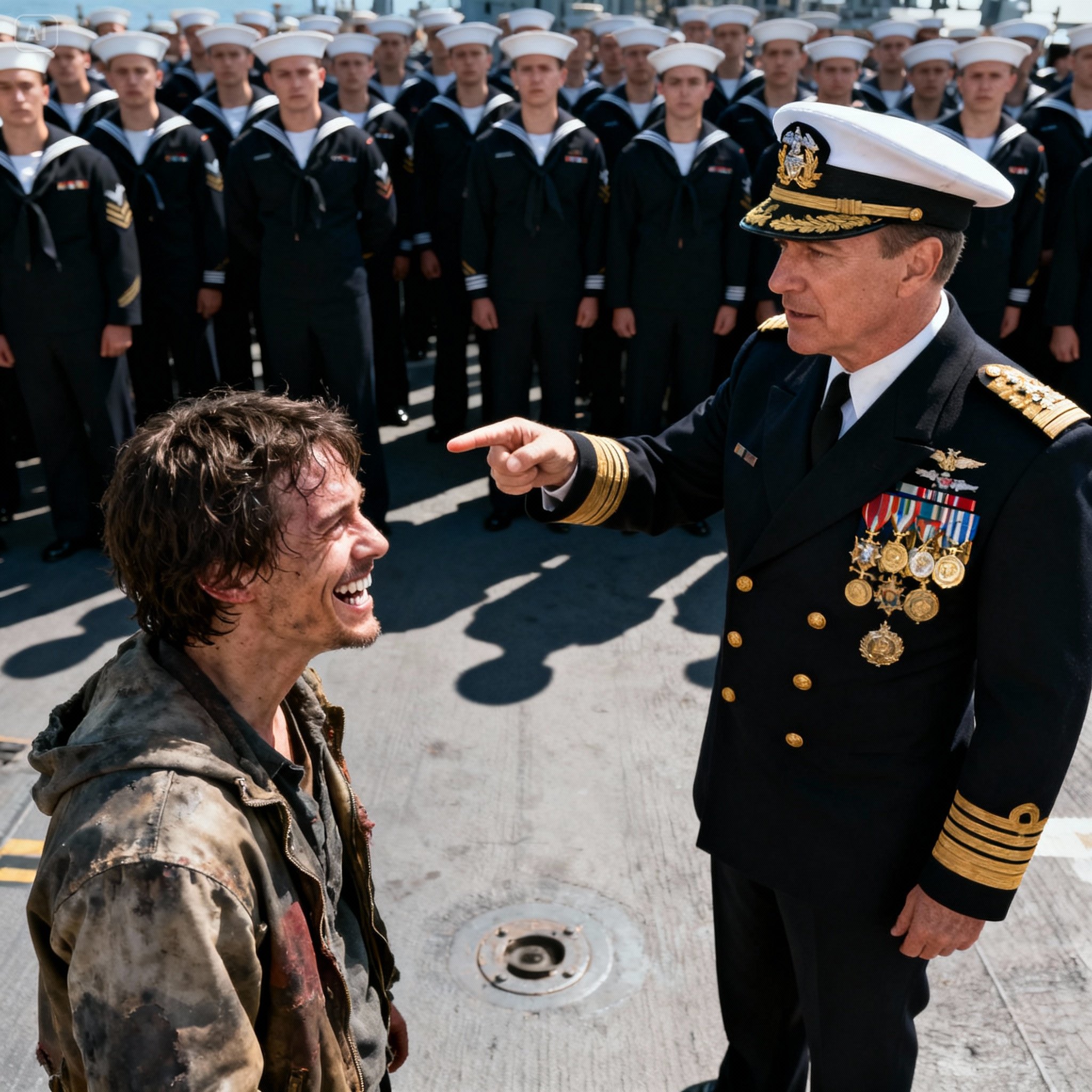
Blackwood sized me up. The way a commander does. “You stand like a military man. Did you serve?”
“A lifetime ago.”
Something in his demeanor changed. The polite interest hardened. “Yet you wear no service identifiers. No hat. No unit pin.”
“Don’t need one.”
A small crowd, sensing the tension, began to drift closer. Blackwood’s voice carried. “Most men are proud to display their service. Especially at a military function.”
“Pride takes different forms.”
Blackwood’s smile remained, but his eyes went cold. “Which unit, if I may ask? It matters. Just… professional curiosity.”
I said nothing. Lana looked between us, confused by the sudden hostility.
Commander Sable had moved closer, positioning himself just within earshot.
“Deployments?” Blackwood pushed.
“A few.”
“Strange,” Blackwood said, his voice a little louder now, playing to the crowd. “Most veterans I know are happy to discuss their service. Particularly at an event honoring the sacrifices of our… special operators.”
He was fishing. A senior officer baiting a man he assumed was a nobody. An older veteran nearby muttered, “Something’s not right here.”
Blackwood, sensing the audience, spread his hands. “We have a mystery man here. Perhaps he can share his special operations expertise.”
A few people chuckled uneasily. Lana’s face flushed with embarrassment.
“I’d wager… Motorpool,” Blackwood suggested, his voice dripping with false cordiality. “Maybe… the galley?”
More laughter.
I stood immobile. My face was granite. Commander Sable took a half-step forward, as if to intervene, but stopped.
“Come on,” Blackwood smirked, enjoying the show. “What’s your callsign, hero?” He grinned at the crowd’s reaction. “Or didn’t they give you one?”
The hangar held its breath. Lana looked mortified, her hand finding my arm, trying to pull me away.
I stood perfectly still. For ten seconds, I said nothing. I saw Riley’s face. I saw the children. I felt the weight of the man who died on my back.
Then, my eyes moved, locking with Blackwood’s.
“You know, Admiral,” I said, my voice quiet but cutting through the silence. “Damas wasn’t quite like you described it.”
The laughter died. Instantly.
Blackwood’s smile froze. “And what would you know about a classified operation?” he asked, a defensive edge in his tone.
My answer came slow. Measured. “I know the exact sound a Russian RPG makes when it hits three clicks away. I know the taste of blood and sand mixed with fear. I know what it means to carry a brother’s body twenty klicks through hostile territory.”
A heavy, absolute silence fell. Commander Sable’s gaze was now locked on me, his expression no longer curious, but complex.
Blackwood’s face had hardened. “Who are you?”
When I didn’t answer, he pressed again, his voice sharp. “I asked you a simple question, soldier. What was your callsign?”
I looked at Lana, a silent apology in my eyes. Then I turned back to the Admiral. And with quiet precision, I spoke the two words that had been buried for ten years.
“Iron Ghost.”
In the profound silence that followed, an older SEAL near the front whispered, “Holy hell. He’s real.”
The entire hangar went still.
Blackwood’s face drained of color. He looked like he was going to be sick. He took an involuntary step back, his command, his composure, completely shattered.
Across the room, every veteran—active, retired, scarred—snapped to attention. Not for the Admiral. For me.
The civilians were confused, but they felt the shift. The earth had just cracked open.
“Iron Ghost,” someone whispered. “Damas… the operator who went missing…”
Lana was staring at me, seeing a stranger.
Commander Sable moved forward slowly, his eyes boring into me. “That’s impossible.”
“Iron Ghost is a ghost,” Blackwood finally managed to say, his voice strained. “That was the arrangement.”
“Finished,” I said. My tone, flat.
“Damas,” Sable said softly. “The hostage extraction that went wrong.”
“Dad?” Lana’s voice was small. “What is going on?”
“If you are who you claim,” Blackwood started, trying to regain his authority.
“October 17th,” I interrupted, my voice devoid of emotion. “The safe house was compromised. You ordered the team to abort from your command post in Qatar.”
The precision of the date, the location, landed like a punch.
“But you didn’t abort,” Sable stated.
“Four hostages,” I said. “Three children. We stayed.”
“That was not your order!” Blackwood’s face was turning red.
“No,” I agreed calmly. “It wasn’t. Three of my teammates died that night. The official record says they died because I disobeyed orders.”
“But that’s not what happened,” Sable said, his voice low.
“The intel was bad,” I said, my eyes finding Blackwood’s. “The extraction zone was an ambush. Someone leaked our position.”
The implication hung in the air. Every eye in the hangar moved to Admiral Blackwood.
“The choice was simple,” I continued. “Follow orders and leave four civilians to be executed, or try the impossible.”
“You have no proof!” Blackwood said, his voice desperate.
I slowly reached into my pocket. Not for a weapon. I pulled out the coin. I tossed it in the air, a short, heavy flip.
“Damascus Coin. Given to me by the father of those children after we got them out.”
I threw it to Sable. He caught it, examining it closely. “It matches the description in the classified debrief.”
“After the extraction,” I said, my eyes finding Lana’s, “I was offered a choice. Disappear with an honorable discharge, buried so deep no one would ever find it, or face a court-martial for insubordination.” I held my daughter’s gaze.
“I had a one-year-old daughter who had just lost her mother. I chose to disappear.”
Understanding, confusion, and pain washed over Lana’s face.
“His accusations are outrageous!” Blackwood stammered.
“Are they?” An older, three-star Admiral stepped forward
“They seem consistent with concerns that have been raised about Damas for years.”
Sable nodded. “Sir, I served with men who were there. Their accounts never matched the official record.”
“I didn’t come here for this,” I said firmly, looking from Sable to Lana. “I came for my daughter. But I will not stand here and listen to you take credit for the sacrifice of better men.”
“You disappeared for a reason, Merick!” Blackwood shouted, using the name from my ID. “Maybe you should have stayed gone!”
Before I could answer, Commander Sable snapped to attention. He raised his hand in a sharp, formal salute. Directed at me.
One by one, other service members followed. SEALs. Marines. Old veterans. Young sailors. Silently, they acknowledged the man they had heard whispers about, the man Blackwood had mocked.
Blackwood was surrounded, trapped by protocol, by the honor of the men he commanded. He was forced to salute the man in the worn jacket. Reluctantly, his hand rose.
I returned the salute, my form perfect, precise. Then I dropped my hand and turned to Lana.
“I’m sorry you had to find out like this.”
Sable stepped up, handing back the coin.
“Your team saved those kids. History should know that.”
I took it. “History isn’t my concern.” I nodded toward Lana. “She is.”
The crowd parted for us. Senior officers were now surrounding Blackwood, their faces grim, escorting him toward a private room. As we walked, veterans stepped aside, some nodding, some offering a quiet, “Thank you.”
Sable caught us at the exit. “The record can be fixed now, Sergeant.”
“My team deserves peace,” I said. “Most of them found it the hard way.”
“And you?”
I looked at Lana, who was still trying to process everything. “I’m working on it.”
The drive back to West Haven was silent. Finally, as we pulled onto our street, Lana spoke.
“Were you ever going to tell me?”
“I don’t know,” I answered honestly. “I wanted to protect you from that part of my life.”
“Those men today… they looked at you like you were a legend.”
“People build legends to make sense of things they don’t understand,” I said.
“I’m just a man who made choices.”
“Iron Ghost. That was really you?”
I nodded. “A lifetime ago. And Mom… she knew?”
“She knew everything,” I said softly. “She was the strongest person I ever met.”
We pulled into the driveway. Adressia was waiting on the porch.
“Figured you two might want a friendly face.”
“You knew,” I said. It wasn’t a question.
“I suspected,” she admitted. “My brother served. He told me about a ‘ghost’ who carried him two klicks through the desert with two broken legs.”
“Your brother was at Damas?” Lana asked.
Adressia nodded. “He never knew the man’s real name. Just said he moved like a shadow and refused to leave anyone behind.”
Inside, I made coffee. The simple routine felt alien.
“What happens now?” Lana asked.
“We keep going,” I said. “Nothing’s really changed.”
“Dad,” she said, “everything’s changed.”
My phone rang. I never get calls. “Merick.” I listened.
“I understand. I appreciate the courtesy call.” I hung up.
“Commander Sable,” I said. “Blackwood is claiming I made threats. They’re re-opening the Damas file for a full review.”
“Is that good or bad?” Lana asked.
“Depends on who’s reviewing,” I said.
“Sable says he’s pushing for an independent investigation.”
Later that night, long after Adressia left, Lana and I sat at the kitchen table.
“I have so many questions,” she said.
“Ask. I’m done hiding.”
“The scar on your neck. It’s the same shape as Blackwood’s pin.”
“Unit identifier,” I confirmed. “Mine was… removed… when I disappeared. And our last name. Merick. Is it even real?”
“It was your mother’s maiden name. My birth name was classified when I left.”
“The men who died… Riley, Donovan, Krimer… were they your friends?”
“Brothers,” I corrected gently.
“Closer than blood.”
“What was Mom like? When you were… part of that life?”
My expression softened.
“Brilliant. Fearless. She was an intel analyst. The best I ever worked with. She could see patterns no one else could.”
We talked for hours. I told her about the training, the brotherhood, the missions she’d only heard whispers of. I told her about her mother’s light. I didn’t tell her the parts that still woke me up at night. Some burdens aren’t meant to be shared.
The next Monday, I was back at the shipyard. Three black SUVs pulled into the lot. Commander Sable got out, flanked by two men in suits.
“Mr. Merick.”
“Agent Cavano, NCIS. And Special Investigator Duran, Inspector General’s office.”
“What can I do for you?”
“We’re conducting a preliminary investigation into Operation Damas,” Cavano said.
“Your statements raised questions.”
“I stated facts as I lived them.”
“That’s why we’re here,” Sable said.
“To establish what really happened.”
For two hours, I answered their questions. The intel. The compromised house. The order. The ambush.
“Your account suggests,” Duran said, “the casualties occurred because the E.Z. was compromised, not because of your decision to proceed.”
“Correct. We were ambushed. Someone knew exactly where we’d be. The leak came from command.”
“Proof?”
“The bodies of my men,” I said, my voice cold.
“The enemy’s movements. They weren’t searching. They were waiting.”
Just as they were leaving, Lana arrived.
“They’re investigating Damas,” I explained. “Trying to fix the record.”
“Was it worth it?” she asked after they left.
“Three good men died. Their families were told it was my fault. If the truth gives them peace… yeah. It was worth it.”
That night, Adressia called.
“Turn on the news.”
“…Admiral Riker Blackwood has been placed on administrative leave,” the anchor was saying, “pending an investigation into misconduct… sources state the inquiry was triggered by revelations from a former special operator involved in a controversial hostage rescue in Damas ten years ago.”
“It’s because of you,” Lana said.
“I was just the catalyst.”
The doorbell rang. I looked through the peephole and froze. Three men. Their posture, unmistakable. One with a prosthetic leg.
“Ghosts,” I whispered.
“From Damas.”
I opened the door. Sable was with them.
“Can we come in?”
The man with the prosthetic stepped forward.
“Long time, Ghost. Or… Weston. They told me you didn’t make it.”
“Almost didn’t. By the time I left Walter Reed, you were gone.”
The third man nodded. “Archer. I was Riley’s replacement.”
“This is my daughter, Lana,” I said.
“The investigation was fast-tracked,” Sable explained.
“Blackwood’s finished. We found you.”
“The story was wrong,” Weston said. “Riley, Donovan, Krimer… they deserved better.”
Archer held up a folded flag. “Riley’s family wanted you to have this.”
“Why now?”
“Because the truth matters,” Weston said.
“And the investigation found proof. Blackwood knew the E.Z. was compromised before you ever reached it. He knew it was an ambush and ordered you in anyway.”
The revelation sucked the air from the room.
“Why?” I asked, my voice dangerously quiet.
“He was building a case for expanded operations,” Sable said.
“A successful extraction would help. A catastrophic failure… would prove the need for more resources. He was covered either way.”
“The hostages?”
“Safe and sound,” Archer assured me. “The father is an engineering professor in Canada. The oldest son just started med school.”
Something in my chest finally unknotted.
“There’s going to be a ceremony,” Sable said.
“Pentagon. SECNAV will be there. The records are being corrected. The men will get their proper recognition.”
“Will you come?” Weston asked.
“For Riley. For all of us.”
“Dad,” Lana said softly.
“I think you should go.”
“When?”
The night before we left, I found Lana packing her cello. “You don’t need that,” I said.
“I thought… I’d play something. For the men who didn’t come home. Mom taught me music says things words can’t.”
The ceremony was in a private hall at the Pentagon. The Secretary of the Navy spoke first.
“Today, we correct the record. We honor courage that went unrecognized for too long.”
He detailed the manipulated intel, the compromised plan, the truth buried to protect a career.
“Three men gave their lives. Today, their records are corrected.”
Their families accepted posthumous Navy Crosses.
Then Sable stepped up. “We also recognize Senior Chief Thomas Everett. Known as ‘Iron Ghost.’ A man who made the hardest choice a commander can face.”
I stood, my old name settling around me, and walked forward.
“The record is corrected, Senior Chief,” the Secretary said, handing me the Navy Cross.
“Thank you, sir,” I said.
“But the real honor belongs to those who didn’t come home.”
After, Lana played. The Adagio for Strings. The room was filled with loss, and memory, and honor.
When it was over, a woman approached me.
“Thomas? I’m Jennifer. Seth Riley’s widow. I’ve waited ten years to thank you.”
“I couldn’t bring him home,” I said, my voice thick.
“But you tried,” she wept.
“And now we know the truth.”
One by one, the other families came. They had lived a decade believing their sons, husbands, and fathers died because of a bad call. Now they knew they had died heroes.
Days later, back at the high school, Principal Finch announced a new, permanent endowment for the arts program. Commander Sable presented the check.
“In honor of unrecognized sacrifice,” he said.
Lana sat watching me at the back of the room. The weight was gone.
That night, I was working late at the shipyard. Lana came, setting up her cello in the corner. She began to play. A simple, quiet melody.
“Your mother loved that one,” I said.
“I know. She’d be proud of you. Of us.”
The bell on the shop door rang. I looked up. Sable. Weston. Archer. And with them, a family. Middle Eastern. A man, a woman, three children, now young adults.
“They deserved to meet you,” Sable said.
The oldest, a young man now, stepped forward.
“You saved our lives. My father never forgot. He said you were the bravest man he ever knew.” He held out his hand. In his palm was another Damascus Coin, a twin to my own.
“He wanted you to have this,” the young man said.
“So you would know. We didn’t just survive. We lived. Because of you.”
I took the coin, my hand shaking.
“Please,” I said, my voice thick.
“Come in.”
As the family entered the workshop, Lana’s music swelled, filling the space with the sounds of hope and healing. I stood in the doorway, caught between my past and my present, and understood. Some ghosts don’t haunt us. They guide us home.
The young man listened to the music.
“Beautiful. My sister… she plays the cello now. She’s at Juilliard.”
I looked at Lana, at the family from Damas, at my brothers-in-arms. For the first time in ten years, the weight I carried… it wasn’t gone. It would never be gone. But it was shared.
“Thank you,” I said to all of them.
“For remembering.”
Outside, the sun set over West Haven, but inside the workshop, surrounded by the people who mattered, Thomas Everett—Iron Ghost—was finally at peace.