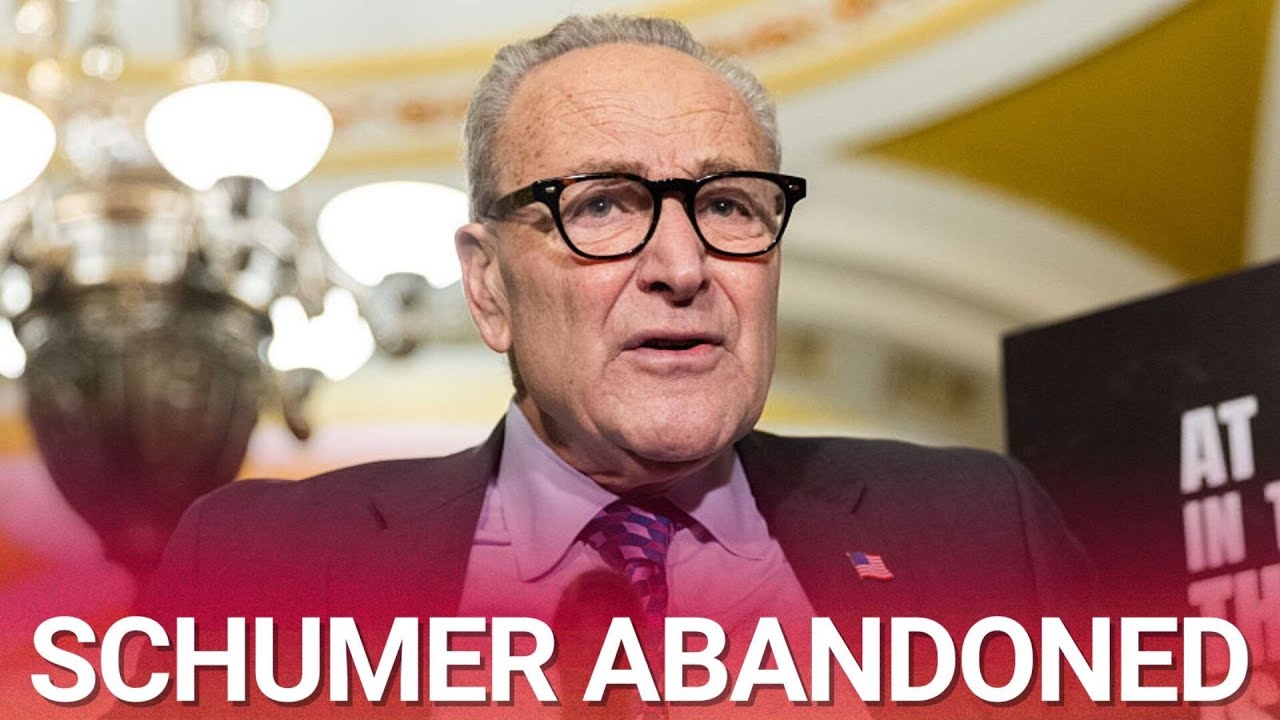
The prolonged government shutdown, now dragging well into its second month, has transcended a simple policy disagreement to become a profound crisis of political ethics and governance. What was initially framed as a deadlock over standard budgetary issues has been exposed as a calculated act of “hostage-taking,” orchestrated by Democrat leadership, specifically Senate Majority Leader Chuck Schumer and House Minority Leader Hakeem Jeffries, with the explicit goal of inflicting economic pain on the American populace to secure a sweeping, hyper-partisan legislative wish list.
The depth of this political cynicism has triggered a savage and unprecedented turn against the leadership, not just from the opposition, but from prominent voices within the Democratic Party itself. As the shutdown extends, pushing hundreds of thousands of federal workers and critical programs to the brink, the raw truth of the leadership’s motivations has boiled over, creating a fissure that threatens to fracture the party’s unity.
The Internal Revolt: Democrats Denounce the “Choice”
The first cracks in the Democratic wall appeared with the highly public and impassioned dissent of outspoken Democrat Senator John Fetterman. Fetterman, urging his party to “reflect, regroup, and reopen the government,” delivered a powerful rebuke to his own leadership, calling the ongoing shutdown a morally bankrupt strategic “choice.” He emphasized the simple reality that the prolonged closure harms millions of Americans and questioned the very notion of political “leverage” when the cost is borne by working families. The shutdown, he tweeted, is a “choice,” and the priority must be to “pay our workers” in a clear demonstration of “principle over political party.”
This internal dissent was mirrored by prominent voices in the media, a field typically sympathetic to the Democratic cause. Even CNN’s Jake Tapper challenged Senate Democrats directly, pointing out that their refusal to vote to open the government was a deliberate decision, putting crucial programs like SNAP (food stamps) funding at severe risk. When a sitting Senator was confronted on a national news broadcast about whether using the livelihoods of unpaid TSA workers was the “right way” to achieve political ends, the CNBC host labeled the tactic “extortion,” highlighting the moral crisis the party’s strategy has created. The use of federal workers’ paychecks as political collateral, forcing them to work without compensation, has been widely condemned as an unconscionable act, and the pressure from within the party’s ranks to abandon this ruthless tactic is mounting.
The Unhinged Hostage List and the True Cost of Leverage
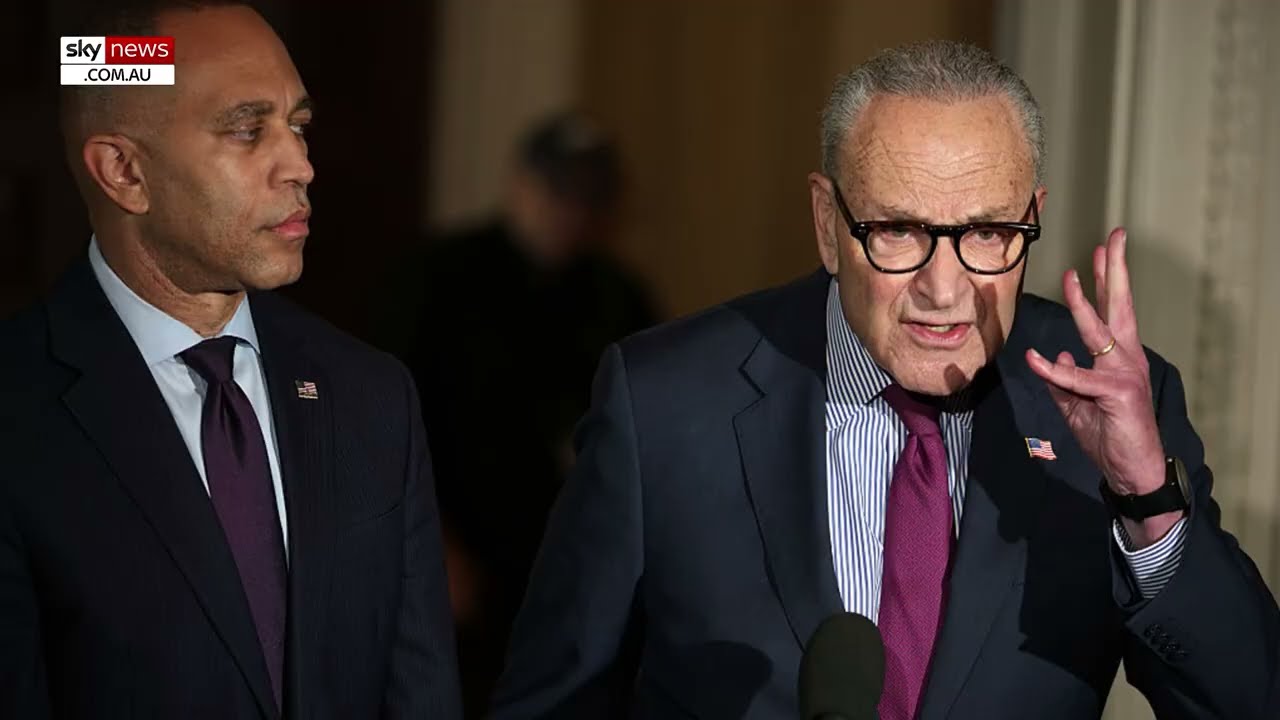
The reason for the Democrats’ intractable position was laid bare through the exposure of Senate Majority Leader Schumer’s expansive list of demands—a list critics have rightly dubbed a “hostage list.” This collection of funding requests goes far beyond standard appropriations, totaling a breathtaking $1.5 trillion in new, entirely unrelated spending, effectively leveraging the entire machinery of the U.S. government to force through a radical progressive agenda.
The items on this controversial list reveal the extreme priorities of the party’s leadership. Chief among them are highly divisive measures, including demands to eliminate all verification requirements for undocumented immigrants to receive taxpayer-funded healthcare benefits. To fund this, Schumer’s demands include gutting a significant $50 billion fund originally earmarked for rural hospitals, redirecting crucial support away from vulnerable American communities to fund benefits for non-citizens—a move seen by many as a clear betrayal of working-class voters.
Beyond domestic policy, the list includes a shocking array of international cultural projects. Among the non-negotiable demands are multi-million dollar allocations for global LGBTQIA+ awareness campaigns, “LGBTQI+ democracy grants” in regions like the Balkans, and millions more for “feminist democratic principles projects” in Africa. These demands, which have no direct connection to the essential function of the government or the needs of federal workers, confirmed the opposition’s charge that the shutdown is not a negotiation, but a highly cynical act of blackmail aimed at extracting policy victories that could never pass on their own merit.
The Confession: Intentional Pain as a Political Weapon
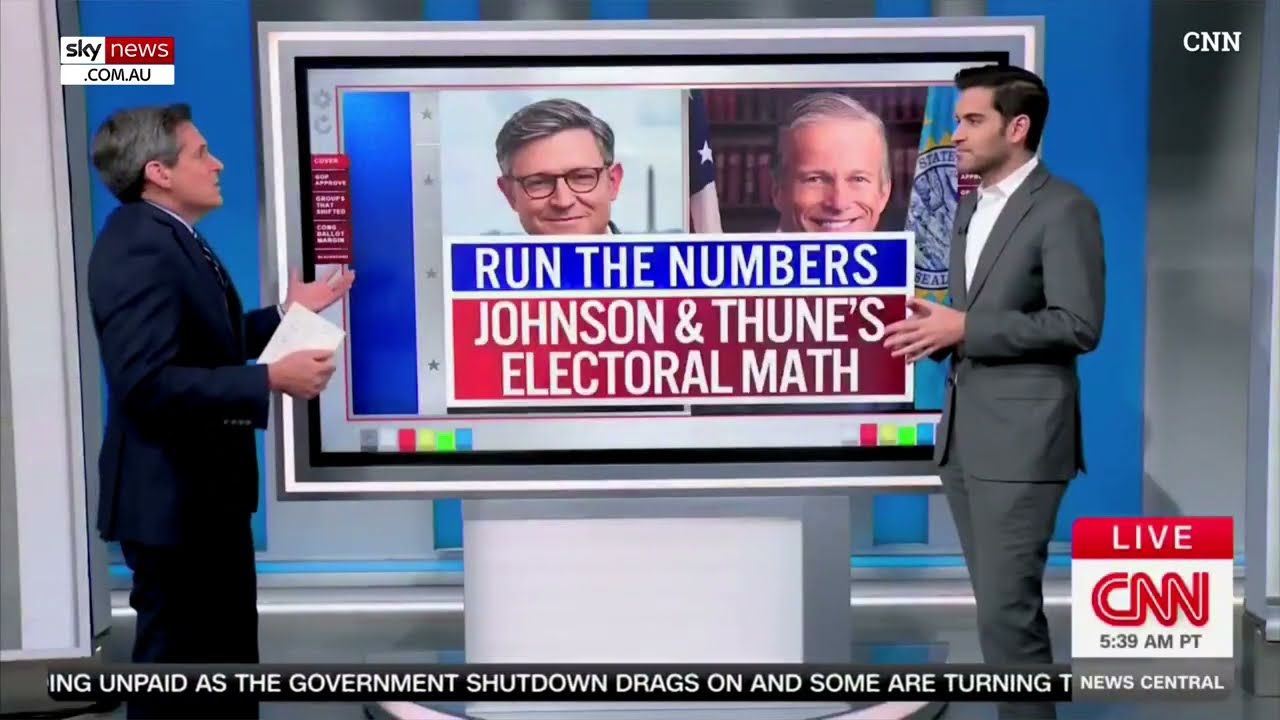
The true depth of the leadership’s cynical calculation was confirmed by the stunning admission that the pain being inflicted on the American people is not an unfortunate side-effect of the shutdown, but the primary political goal. House Speaker Mike Johnson exposed multiple high-ranking Democrat leaders for “saying the quiet parts out loud.”
The confession is damning: Senator Schumer allegedly boasted that “every day of the shutdown gets better for us,” meaning his party. Furthermore, the second-highest-ranking Democrat in the House reportedly admitted the underlying calculus, stating, “Yeah we we understand it’s going to cause pain but that’s the only really the only time we have leverage.” This is an explicit, verifiable admission that the party is acting intentionally and that they want people to hurt to increase their political leverage. This strategy, which treats the livelihoods of federal workers as mere pawns in a high-stakes political game, has been universally condemned as the absolute antithesis of responsible governance.
The Backlash: Unions and Voters Reject the Strategy

The immediate real-world consequences of this cynical strategy are most acutely felt by the federal workers. One federal employee shared a harrowing account of the “real” pressure of having to work six days a week, ten hours a day, for weeks on end, without a paycheck. The financial strain is a “distraction” that permeates every aspect of life, forcing families to make agonizing choices, prioritizing which bills can be paid and what necessities must be cut. This reality, of public servants being forced to stand in line at food banks after missing multiple paychecks, has finally broken the political alliance between Democrats and organized labor.
In a dramatic shift, the largest union representing hundreds of thousands of federal workers issued a forceful call to action, essentially turning against the Democratic Party to demand the government reopen. Their statement was crystal clear: their members are not looking for “partisan spin,” but for “wages that they earned.” This revolt from a traditionally supportive base signals that the leadership’s strategy has crossed a moral line that even their most steadfast allies could not abide.
Compounding the Democrats’ strategic failure, the political calculus behind the leverage play has completely backfired. Despite predictions that the Republicans—who control the House and Senate—would bear the political cost, CNN polling figures revealed the exact opposite. The polling showed that the government shutdown has actually helped the Republican brand, with the party’s net approval ratings in Congress rising by several points since the pre-shutdown period. This development has emboldened Republican leaders, including Senator John Thune and House Speaker Mike Johnson, who are no longer incentivized to concede to what they view as extreme and “unhinged” demands.
The Republican response, spearheaded by leaders like JD Vance, has remained firm: they will not allow the Democrats to “take the people’s government hostage” and demand “everything that you want.” They view the shutdown not as a defeat, but as a necessary stand against a party willing to sacrifice the nation’s stability for a maximalist agenda. Furthermore, the political pressure has forced the GOP to find legislative solutions to mitigate the Democrats’ strategy, with Vance confirming that a solution has been found to ensure military workers will receive their pay, chipping away at the Democrats’ manufactured political leverage.
The 30-day shutdown is no longer a political skirmish; it is a profound lesson in the danger of ideological overreach and cynical political tactics. The exposed truth—that key political leaders chose to inflict pain on American workers to secure a radical agenda—has not only fractured their own party but has fundamentally altered the political dynamics of the nation, leaving the Democratic leadership isolated and exposed in an unprecedented act of political extremism.