The first time it happened, Michael thought it was just coincidence. His daughter, barely 10 months old, sat in her crib one quiet evening and broke into the widest smile he had ever seen. Yet, she wasn’t looking at him or her mother or even at her toys. Her eyes were fixed on the blank wall beside her bed.
At first, it was almost funny, even endearing. But then it kept happening. Every night, at the same time, she would stare at that same spot and beam with joy, as if someone stood there making her laugh. Michael tried to brush it off, telling himself, “Babies see things differently. Or maybe it was just the flicker of a shadow.” Still, each evening he found himself leaning against the doorway, heart tightening with curiosity and unease, watching his daughter’s smile at nothing.
He didn’t want to admit it, but the sight unsettled him. His wife teased him for being paranoid, but deep down he felt something he couldn’t explain. What was it about that wall that captured his daughter’s attention? And why, no matter how many times he waved or made silly faces, did she always seem to prefer whatever or whoever was there? Michael and his wife Clare had lived in the house for nearly 2 years.
It was small, modest, tucked at the end of a quiet suburban street. The kind of home that held creaky floors and walls that carried whispers of history, but also the promise of a growing family. Their daughter Emily was their world. She was curious, tender, and unusually quiet for her age. While other babies fussed for attention, Emily seemed content just watching the world.
That was why the smiles had caught Michael so offguard. The house itself had its charms. The living room filled with golden light each morning. Spilling through the lace curtains Clare had inherited from her grandmother. The kitchen smelled of coffee and toast most mornings. The kind of ordinary comfort that made Michael grateful for his simple life.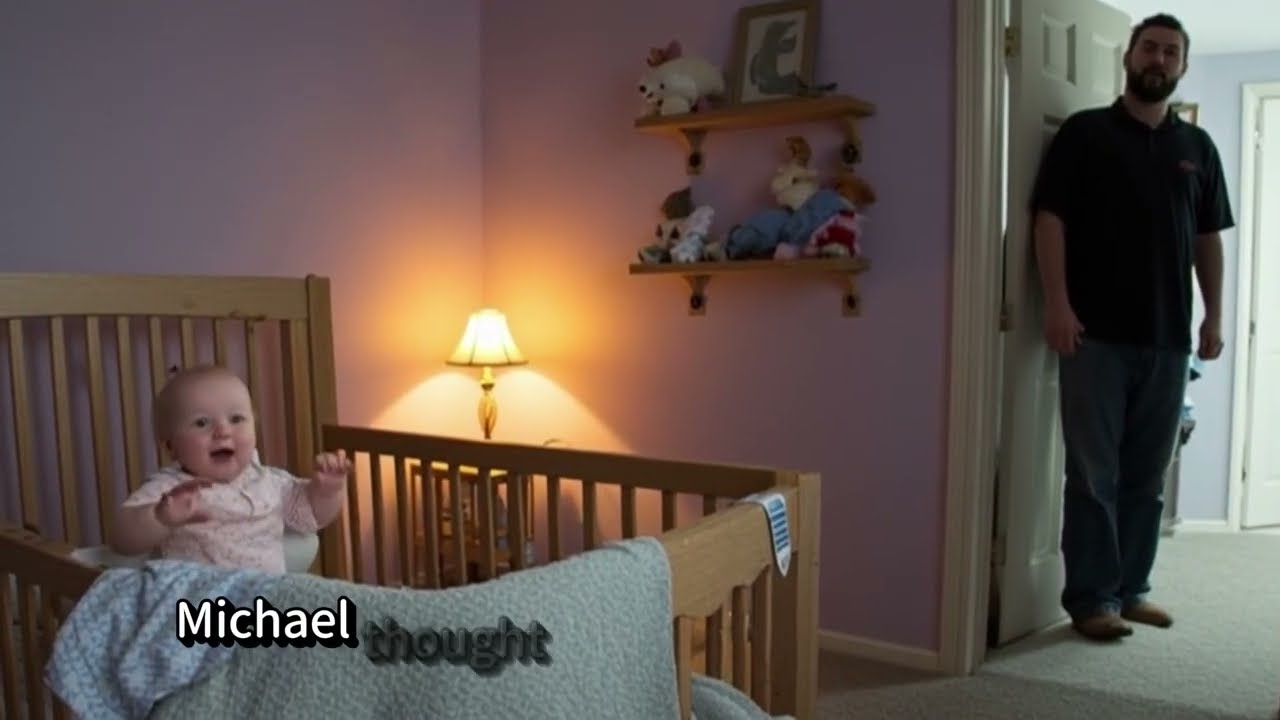
But the nursery of the room where Emily spent most of her time felt different. It was painted in soft lavender with plush animals lining the shelves. A mobile dangled above her crib, spinning gently with the hum of the ceiling fan. Everything about it should have felt peaceful. Yet Michael couldn’t shake the feeling that the room had its own presence, something beyond what they had built within it.
Each night after work, Michael would peek into the nursery just to watch Emily before bed. More often than not, she would already be gazing at that same spot on the wall. He noticed her tiny body stiffened with excitement, arms flailing as if she were reaching out to someone invisible. Then came the smile, the kind that stretched across her face with a radiance that seemed too big for her little body.
Sometimes she even giggled that sweet bubbling laugh that should have warmed his heart. But instead it left him with an ache in his chest. He told himself it was normal. Babies had imaginations. Maybe she was responding to the shifting light or the sound of the tree branches scratching against the window. Still, he couldn’t help but test it.
He tried blocking the light, pulling the curtains closed, even rearranging the crib. Nothing changed. Emily’s eyes always found that same spot on the wall. One night, while rocking her to sleep, Michael whispered softly, “What do you see, sweetheart?” His voice trembled, half hoping for an answer he knew wouldn’t come.
Emily’s gaze flicked to him for a moment, then back to the wall, followed by that bright knowing smile. It was as though she had let him in on a secret, but refused to share it. Clare noticed, too. But her approach was gentler, less haunted. “She’s probably seeing angels,” she joked one evening, folding laundry at the foot of the bed.
Michael tried to laugh with her, but something about the way Emily’s eyes tracked the emptiness unsettled him too much to take comfort in the thought. He wasn’t religious, yet he found himself whispering prayers under his breath just in case. Weeks passed and the pattern only grew stronger. Emily would anticipate the moment, almost as if she knew when it was coming.
She would crawl across her crib, pull herself up, and stand against the bars, waiting. Michael watched her tiny fingers clutch the wood, her eyes wide with wonder as though a loved one stood just beyond reach. The strangeness snorded at him. Nights became longer, sleep harder to come by. He would lie awake, listening for sounds in the nursery, for any hint of explanation that might put his mind at ease.
The house that once felt safe now carried an edge. The creeks in the floorboards seemed louder, the shadows deeper. Michael tried not to let Clare see how much it weighed on him, but he knew she noticed. He had begun checking the nursery two, three, even four times a night. Like a man haunted not by what he had seen, but by what he feared he might, Michael began to question himself.
Was he losing his grip? Was this simply fatherhood reshaping his mind intoparanoia? He remembered how his own father had been stoic, steady, never rattled. Michael wanted to be that kind of man. Yet here he was, unnerved by the smile of his baby. It embarrassed him, though he never said it aloud.
Each morning, he would sit at the breakfast table, coffee cooling in his hands, replaying the night before. Clare would chatter about errands, about the bills, about small things that made up their life. But his thoughts always returned to that wall. He felt guilty, like he was drifting away from the very life he had longed for.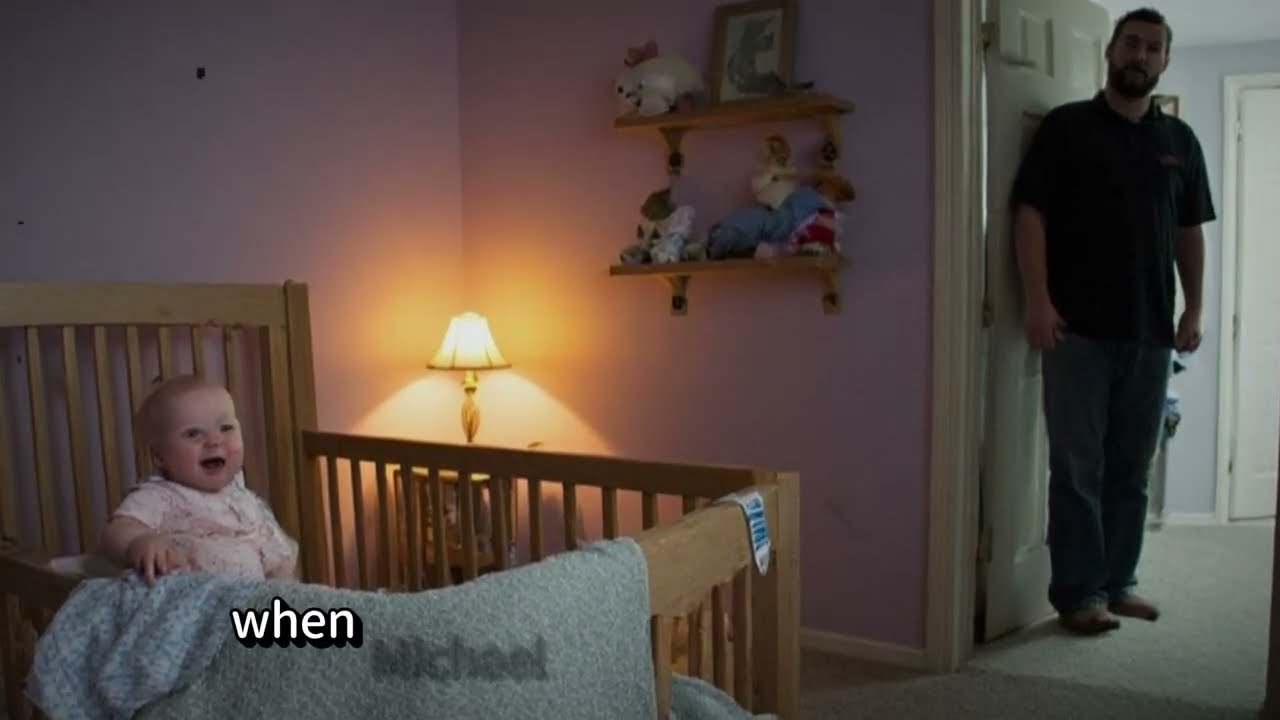
A good home, a loving wife, a healthy daughter. He should have been grateful, and he was. But the mystery gnored at the edges of his peace. The real conflict came when he realized how much he feared the answer. If Emily was responding to something harmless, like light or imagination, then fine. But what if it was more? What if the house carried secrets they hadn’t uncovered? He found himself caught between wanting to know the truth and wanting desperately to leave it alone.
At night, when the silence deepened, he sometimes imagined a figure standing there where Emily’s eyes locked. He didn’t picture anything monstrous. No horror movie demons, but something softer. the silhouette of someone who belonged and yet didn’t. The idea made his stomach twist. He hated himself for thinking it, but he couldn’t stop.
Worse still, Emily’s affection for the unseen presence made him jealous. The thought crept in uninvited. What if his daughter found more joy in that wall than in her own father? He shook it off each time, ashamed. But the feeling lingered, eating away at him like a slow rot. He wanted her laughter to belong to him, to Clare, to their family, not to some phantom he couldn’t even see.
One night, while Michael worked late, Clare was the one who put Emily to bed. When Michael finally returned home, tired and irritable, he noticed Clare sitting silently at the kitchen table, pale. “What’s wrong?” he asked. She hesitated, then whispered, “I saw it, too.” She explained that as Emily stood smiling at the wall, Clare followed her gaze, and for the briefest moment, she swore she saw a flicker-l like a shadow moving, though nothing in the room had shifted.
Clare insisted it was probably her imagination, but her trembling hands told Michael she wasn’t as certain as she wanted to be. For Michael, this changed everything. He wasn’t alone anymore. Someone else had witnessed a strangeness. Relief washed over him, followed swiftly by dread.
If Clare had seen something, too, then it wasn’t just in his head. Whatever haunted that nursery was real or at least real enough to rattle them both. That night, Michael made a decision. He could no longer sit by watching Emily smile at shadows. He needed to know the truth, even if it scared him, even if it shattered the fragile piece of their home.
He had to uncover why his baby kept smiling at the wall. The next evening, Michael prepared differently. He dimmed the lights, settled quietly in the rocking chair in the corner of the nursery, and waited. Emily, as expected, grew restless around the same hour. She stood, her small hands gripping the crib, and her eyes found the wall.
Then came the smile, brighter than ever, her laughter bubbling into the quiet. Michael’s breath caught. He forced himself not to move, not to blink. And then in that silence, something happened. The air shifted almost as if the room had sighed. He felt the hairs on his arms rise. For a heartbeat, he thought he saw a movement a blur against the wall, faint like someone passing just out of sight.
Emily clapped her hands in delight. A mix of emotions tore through him. Fear, awe, confusion, and strangest of all relief. He wasn’t insane, but now the mystery was undeniable. His daughter wasn’t smiling at nothing. She was smiling at something he couldn’t understand. He whispered her name, his voice breaking.
Emily turned toward him briefly, her eyes sparkling with joy, then quickly looked back at the wall as if drawn by a force greater than him. Michael’s chest achd with the realization. Whatever this was, it had his daughter’s heart. Determined, Michael spent the following days digging. He asked neighbors about the house’s history, searched old records at the library, even found faded photographs of previous owners.
That’s when he discovered the truth. The house had once belonged to an elderly woman named Margaret, who had lived there nearly her entire life. Neighbors remembered her fondly as kind, always handing out sweets to children. She had no children of her own, but she adored the little ones who lived nearby. When she passed, the house was sold, and slowly her memory faded from the street.
Michael pieced it together. Emily’s wall was the very place Margaret’s rocking chair once sat. She had spent her evenings there, gazing out the window, knitting, humming lullabies to visiting children. Michael felt a chill as the image took shape in his mind.
Could itbe that some echo of Margaret remained, drawn to the innocence of his daughter? The revelation didn’t erase his fear, but it softened it. This wasn’t some sinister presence. It was a fragment of love left behind. A woman who had once found joy in children’s laughter and now seemed to find it again in Emily. One night, Michael sat by Emily’s crib, watching as she lit up once more at the wall.
But this time, instead of fighting the feeling, he let himself breathe. He imagined Margaret there, smiling gently, a grandmotherly figure watching over his daughter. Tears filled his eyes, not from fear, but from the strange, aching beauty of it. Emily laughed, clapping her hands, and Michael’s chest broke open with emotion.
For weeks, he had battled the unknown, but now he saw it differently. His daughter wasn’t in danger. She was cherished. He whispered softly, “Thank you.” Unsure if anyone or anything could hear him. In that moment, relief washed over him. The fear dissolved, replaced by gratitude. His daughter’s joy wasn’t something to dread.
It was a gift, however mysterious, and he would treasure it with her. For the first time in weeks, he smiled at the wall to dot. From that day on, Michael no longer fought the mystery. He accepted it, embraced it. Even Emily’s nightly smiles became a comfort, a reminder that love leaves traces stronger than walls or time. Sometimes late at night, he would sit in the nursery beside her, watching her beam at that empty space, and he too would feel a quiet peace.
Life moved on as it always does. Bills, errands, and long work days returned to the forefront. But the wall remained a silent reminder of something greater. Connection beyond the visible affection that lingers even when we think it’s gone. If you’ve ever felt a presence or seen your child smile at what you cannot see. Maybe it’s not something to fear.
Maybe it’s a sign that love once given never truly disappears. So hold your loved ones close. Cherish the laughter, the small smiles, even the mysteries you can’t explain. Because sometimes the unseen isn’t meant to haunt us. It’s meant to remind us that we are never truly alone.