In the modern landscape of professional sports media, few things are as guarded as the established narrative, especially when it comes to the greatest-of-all-time (GOAT) debate in basketball. For years, the conversation has been steered by metrics, longevity, and rings, carefully constructing a platform that attempts to crown one modern legend as the undisputed champion. But recently, that fragile structure was hit by a massive, unavoidable wrecking ball, delivered not by a disgruntled fan or a hot-take artist, but by an actual NBA champion who lived through the eras: Andre Iguodala.
Iguodala, appearing on a popular podcast, stepped over an unspoken line in the sand—a line that protects the modern basketball consensus. His words were simple yet devastating: Michael Jordan and Kobe Bryant occupy a tier of their own because they were, simply put, “flawless”.
The immediate, palpable panic from his co-host, JJ Redick, as Iguodala uttered that single, powerful word, was more telling than any statistic. It was a clear, real-time exposure of the underlying tension in modern hoops discourse. When Iguodala called MJ and Kobe flawless, he didn’t just rank them; he implied that every other player, including the one currently pushed hardest for the GOAT title—LeBron James—possesses genuine, exploitable flaws. The ensuing scramble to change the subject, shifting the debate from raw skill to championships, longevity, and “every advance stat he can dig up”, perfectly illustrated the media’s fear of confronting a reality that threatens their entire established narrative.
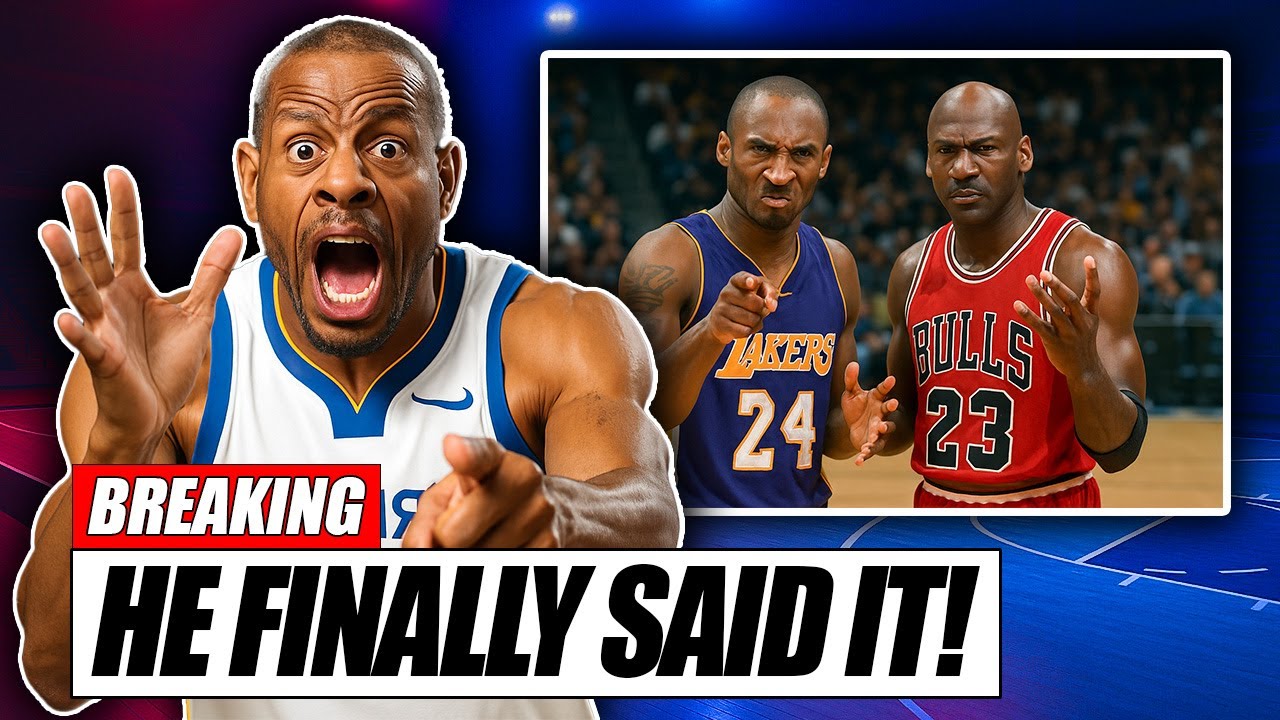
This wasn’t a casual chat; it was a veteran dropping real intelligence gleaned from years of high-stakes, defensive warfare. Iguodala built his entire career on solving elite scorers. His job wasn’t to admire; it was to dissect, find the crack, and shut it down. When he speaks about flaws, he is not offering a fan’s opinion from a couch; he is delivering a tactical report from the NBA front lines. And his report is clear: Kobe and Jordan presented a defensive puzzle with no solution, while others—even the greatest—offered a blueprint for attack.
The Anatomy of ‘Flawless’ Skill
To understand why Iguodala’s point caused such an earthquake, one must move past the abstract concept of perfection and focus on its tangible meaning in a defensive scheme. Flawless, in this context, does not mean winning every game or hitting every shot. It means pure, offensive completeness.
When a professional defender studies your film for hours, they are hunting for a weakness, something to target that a coach can build a game plan around. For Michael Jordan, that vulnerability simply did not exist. What was the plan? There wasn’t one. You couldn’t stop him; you could only hope to slow him down. He could post you up, face you up, bury the mid-range jumper, slice to the rim, and close games without blinking. He had no soft spots that defenders could hunt.
Kobe Bryant operated from the same tactical handbook, a master technician whose footwork looked “built in a lab”. Teams spent years hunting for a crack in his game and never found one. His mindset never broke, and his offensive arsenal was so complete that sending a double team simply guaranteed he would find a new, equally devastating way to score or reset. The mid-range, the post, the clutch free throws—everything was automatic pressure killers.
These two masters forced defenses to concede: they were going to score, and the only hope was to prevent everyone else from doing the same.

The Uncomfortable Truth About the Modern Legend
Then we arrive at the third figure in the debate, LeBron James. LeBron is an all-time great, a transcendent force who has earned his place in the top tier of NBA history. But Iguodala’s truth-telling reveals the nuance that the media often smooths over: for all his greatness, LeBron has “real obvious gaps” in his game that people refuse to speak on.
The primary, most damning flaw, is the one that is hardest to ignore because it is uncontested: free throw shooting. Iguodala notes that LeBron’s free throw shooting stays unpredictable. This isn’t an opinion; it’s an undeniable, documented fact.
| Player | Career Free Throw Percentage |
| Kobe Bryant | 83.7% |
| Michael Jordan | 83.5% |
| LeBron James | 73.5% |
That ten percentage point gap in a key, uncontested shot is massive in tight moments. As the article correctly states, “If you can’t be elite at that, you’re not flawless, simple as that”. A free throw is a clean look with nobody in your face; it is the ultimate measure of repeatable, pressure-proof skill. The defensive blueprint against prime LeBron, known for two decades, was always the same: load the paint, force him into jumpers, and, most importantly, hope he gets shaky at the free throw line in the fourth. That blueprint exists because of a recognized, exploitable weakness.
Furthermore, his handle, while solid, “is not in that elite category”, and he has been seen losing the ball in massive moments. His outside shooting is respected, but it is not feared in the way MJ’s or Kobe’s was. Defenders are worried about his drives and laser passes, not his jumper.
Finally, the most compelling point is the mental difference in clutch moments. LeBron has famously “passed up shots that Kobe and MJ would have taken instantly without a second thought”. This isn’t necessarily a failure, as his decision to pass to a teammate for a more efficient shot can be lauded as “smart basketball.” But as Iguodala points out, it also shows “even he knows his shot making isn’t at the level where he can just force the issue the way Kobe and MJ did”. Kobe and Jordan lived for that pressure; they called for the ball and wanted the moment. That difference in mentality and self-reliance is the final measure of being truly flawless.
The Media’s Panic: Protecting the Narrative
The reason this conversation turned into a “war” the moment Iguodala spoke is that for the last decade, media outlets and analysts have invested heavily in one singular storyline: crowning LeBron as the undisputed GOAT. Analysts built entire careers around promoting it. Admitting LeBron has real flaws doesn’t just lower his ranking; it makes their entire narrative “shake like it’s about to fall apart”.
JJ Redick’s reaction on the podcast embodies this protective instinct. He wasn’t just riding for LeBron; he was protecting an entire style of judging basketball that leans on advanced metrics and statistical efficiency over the evidence of one’s own eyes. To the analytics crowd, LeBron’s efficiency, longevity, and assist numbers make him the obvious choice. But Iguodala, the man who stepped on the hard wood, judges greatness by a simpler metric: “Can I find a weakness in your game?”.

When LeBron supporters enter this debate, they instantly sprint to rings, finals runs, and scoring records. They always switch the topic; it’s never centered on pure, raw, one-on-one skill. They focus on resume stuff. This tendency alone tells you everything: if LeBron’s individual skill set was truly flawless, that would be the first, most powerful argument they’d deploy. But it isn’t.
This fundamental divide—the eye test versus the stat sheet—is why the debate gets chaotic. One side values the art, the skill, the craft, and the pure mental fire of the game; the other side leans on efficiency, wins, and trophies. Only one side, however, is willing to admit when a player actually has weaknesses.
Iguodala’s contribution is a refusal to participate in the polite, self-serving consensus that has dominated basketball coverage. He didn’t care who got offended. He shared what he truly believed from real experience on the court, armed with the defensive knowledge of where the gaps truly lie. He exposed a media complex that has become so invested in protecting a favorite that they have lost the ability to discuss the game honestly.
His line is clear: Kobe and MJ on one side—the unassailable, complete offensive machines—and everybody else on the other. You can argue about where that line should be, but at least he had the backbone to draw it. And the loud reaction his honesty generated is the ultimate proof that the truth, when finally spoken out loud, always hits the nerve of the established, protected narrative. This is more than a ranking debate; it’s a necessary challenge to how we talk about sports, demanding that fans and analysts alike prioritize the uncomfortable truth of skill over the comforting safety of manufactured consensus.