The Dallas rap scene is no stranger to intensity, but the feud that engulfed Melvin Noble, known to the world as MO3, and his rivals, most notably Yella Beezy and Trap Boy Freddy, stands as a devastating monument to the blurring of lines between artistic performance and mortal street war. This was a conflict that played out in music videos, on social media live streams, and in increasingly brazen acts of real-world violence, ultimately culminating in a shocking, public execution that gripped the nation.
On November 11, 2020, MO3’s life was tragically cut short on the I-35 highway in Dallas. It was a broad-daylight ambush, captured by dashcam, that saw the rapper shot nine times as he attempted a desperate sprint down the active interstate. This wasn’t a random incident; it was the final, devastating act in a multi-year saga of escalating antagonism that demonstrated the horrifying cost when rap beef is allowed to bleed into the streets.
The Genesis of a Lethal Rivalry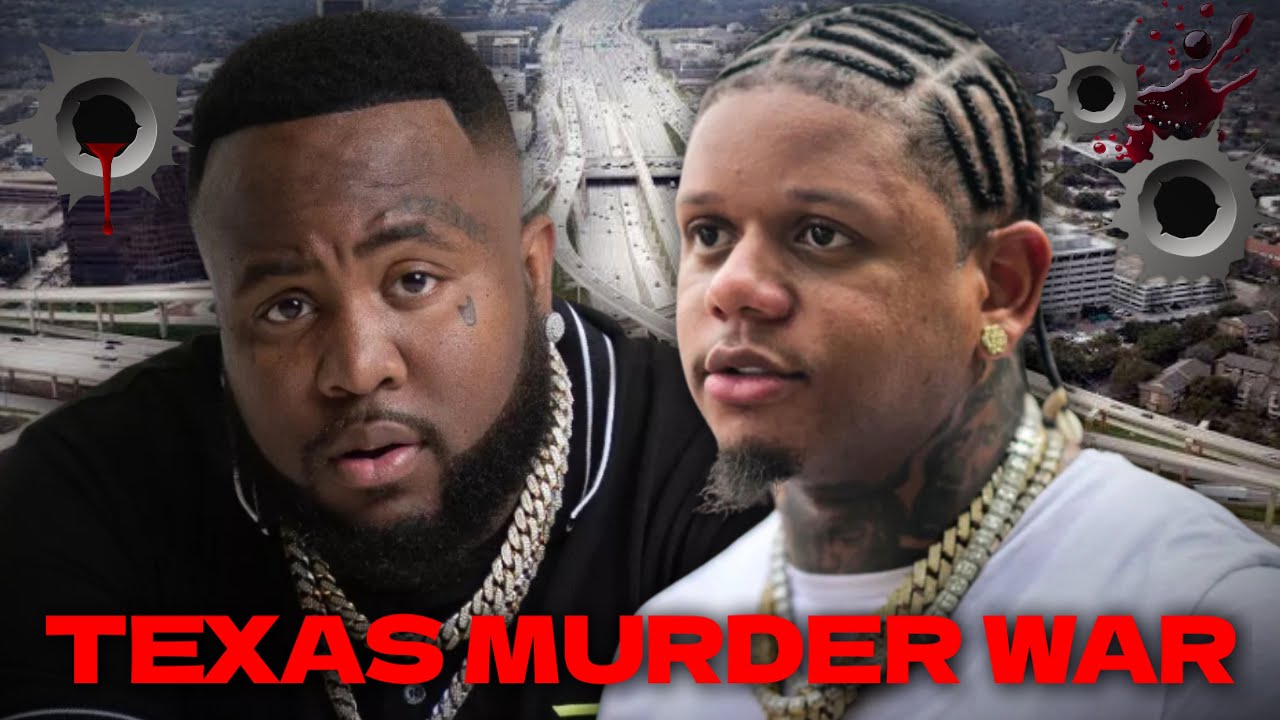
The tension between MO3 and Yella Beezy had roots that ran deep into the competitive fabric of the Dallas hip-hop world. Beezy, recovering from his own 2018 tollway shooting, used his comeback track “Back at It Again” to cryptically reference the incident and issue a chilling promise of retaliation: “body for body my dudes are some demons, we tit for tat leave you busted and bleeding.” This assertion of lethal intent set a terrifying precedent for the violence that would follow.
On the other side, MO3 was leaning into the role of a villain, introducing his destructive alter ego “Osama 3 Laden” and proudly flaunting an iced-out Osama pistol chain. His adoption of such a provocative moniker, nicknamed after one of the most hated terrorists in American history, signaled a mindset unconcerned with playing nice. For MO3, the persona, the image, and the conflict were all intertwined, setting the stage for inevitable confrontation.
The rivalry came to a head in July 2019 over a simple professional matter: a concert booking. Allegedly, a promoter attempted to book both MO3 and Yella Beezy to perform at the Unruly Citizens Festival. When MO3 arrived, he was arrested and escorted away by police. He quickly took to Instagram Live, alleging that Beezy’s team had interfered, claiming they did not feel safe with him at the venue. Yella Beezy and his crew, however, dismissed the entire incident as a “publicity stunt” by MO3, asserting that he was never booked in the first place and was merely desperate for attention, a claim they used to taunt him over his inability to secure lucrative bookings like Beezy himself.
MO3 was livid, going live to refute the claims, eventually producing evidence of his promotion and even playing a recorded call that appeared to confirm he was on the show until a “rapper and his management felt like it was a bad idea,” allegedly due to safety concerns. This episode was crucial: it moved the dispute from general beef to a specific, public, and documented conflict, establishing the narrative that MO3’s very presence was a threat to his rivals.
When the Violence Spreads
The verbal jabs and diss tracks (“Let Me Find Out,” “219”) soon proved insufficient for the deepening animosity. The feud entered a new, disturbing phase when the targets shifted from the rappers themselves to those around them. MO3’s manager, Brandon Rainwater, a non-street affiliate who had reportedly graduated high school and gone to college, found himself squarely in the crosshairs.
The first physical assault on Rainwater occurred at the 2019 Dallas State Fair, where Trap Boy Freddy allegedly cornered him, leading to a mass brawl. Freddy later bragged about connecting with his “big rings.” But the violence escalated dramatically in January 2020 at the V Live nightclub. Surveillance footage, later deemed too brutal to widely share, showed Rainwater being chased out of the club’s gates by Yella Beezy and his entourage. He was tackled, punched, and kicked on the ground by a group of at least five people, dragged into a busy intersection, and nearly struck by moving traffic. The beating was so severe that Rainwater was left with a dislocated hip and later filed a $1 million lawsuit against Yella Beezy.
MO3 reacted with fury and disappointment, lambasting his rivals on Instagram Live. He argued that they gained “no points” for attacking a civilian, a professional club promoter who was not “street.” The video, however, did not deter Yella Beezy, who was seen on camera running back to the club and yelling that he had beaten Rainwater up all by himself, a claim later contradicted by the surveillance footage showing the group jumping. This willingness to physically target a non-combatant, coupled with the brazen celebration of the act, demonstrated that the rivals were no longer interested in the pretense of a “fair fight.”
The Final, Fatal Escalation
The war continued to rage through 2020. The obsession with status and wealth became a clear driver, with Yella Beezy boasting about his seven-figure jewelry collection and his consistent $70,000 weekly earnings from shows. MO3 felt compelled to respond, publicly spending $90,000 on a watch and chain in a desperate attempt to prove he was equally untouchable and successful.
In September 2020, the violence reached a terrifying pitch at the V Live nightclub in Houston. A Twerk Wars party devolved into a gunfight when a rapper—later suggested to be MO3—was targeted upon arrival. Police reported a massive exchange of fire between the suspects and the rapper’s entourage, with two unarmed club employees being struck. MO3 later went on to claim that Trap Boy Freddy had also been shot in the encounter but was “capping” by claiming he broke his leg in a car wreck. While MO3 survived this attempt, it was a clear signal that the conflict had moved into a fully lethal phase, where the first sighting could be the last.
The Ambush on I-35
A mere six weeks after the Houston shootout, the final, fatal encounter occurred. Around noon on November 11, 2020, MO3 was driving on the I-35 highway when he noticed a black Chevrolet Camaro following him. He understood immediately what was happening. In a desperate move, he slammed on his brakes and swerved right, stopping his vehicle.
Dashcam footage captured the terrifying sequence: MO3 exited his car and walked toward the passenger door, seemingly trying to retrieve a weapon from the glovebox. But before he could arm himself, the master gunman from the Camaro leaped out, armed with an assault rifle, and approached his vehicle at speed. MO3 abandoned his car and ran, sprinting south onto the active freeway in a frantic dash for his life. He did not make it. He was shot nine times and left for dead on the highway, his body lying amidst speeding traffic as the assassins fled.
The aftermath was a horrific spectacle. Civilian footage, deemed too shocking for media broadcast, showed attempts to administer CPR to the dying rapper. Local news helicopters quickly confirmed the brazen nature of the murder, a broad-daylight assassination on a major interstate.
The Sickening Aftermath and Retaliation
The response from MO3’s rivals was immediate and chillingly devoid of sympathy. Just moments after the murder, Trap Boy Freddy posted to social media, complaining about being stuck in the traffic jam caused by the incident and announcing that it was “bottle popping time” to celebrate. Yella Beezy went live on Instagram, maintaining an ambiguous silence as comments accusing him flooded the stream. The open mockery of the dead rapper, who was now a lifeless body on a cold highway, highlighted the sheer malice of the long-standing feud.
The fallout was immediate and devastating to the Dallas community. Police Chief Renee Hall later confirmed that the murder of MO3 had set off a massive wave of retaliatory violence. Within a 48-hour period following the assassination, reports suggested that eight people had died in a series of related shootings, showcasing how deeply the street war had infected the city. Even MO3’s collaborator and mentor, the Louisiana rapper Boosie Badazz, was shot in the leg while attending a vigil for his friend in Dallas, a stark reminder that association was now enough to make one a target.
Justice and Lingering Questions
Dallas police, aided by cell phone data and witness tips, eventually made arrests. Kiwi Dontrell White, an aspiring 22-year-old rapper, was the first suspect charged. His social media posts—including one two days before the murder with the caption “He put a bag on him now I’m up,” accompanied by a large pile of cash and a rifle similar to the murder weapon—were deemed incriminating. Later, a second suspect, Devon Maurice Brown, was charged, with reports suggesting he was motivated by a dispute over a woman MO3 was visiting, and phone records linking him to White.
Most disturbingly, images circulated that showed the accused killer, Kiwi Dontrell White, posing with Yella Beezy, suggesting an apparent connection to MO3’s biggest rival. While Yella Beezy denied any knowledge of the crime and White denied any connection to Beezy in a jailhouse interview, the suspicion lingered. Further fueling the animosity, Trap Boy Freddy dropped a tasteless diss track, “Laugh Now,” months after MO3’s death, rapping out the side of an SUV on the same road MO3 was killed on, mocking the way he died and explicitly stating that the “diss songs are what got people killed.”
The story of MO3’s life and death is a devastating commentary on the dangers of a music industry where authenticity often translates to fatal jeopardy. The tragic journey from an argument over a concert booking to a multi-year war of ego, money, and power, and finally to a broad-daylight execution, serves as a grim warning. For Melvin Noble, the distinction between the street and the mic vanished completely, leaving behind a legacy of music haunted by the sound of bullets and a community forever scarred by the sight of a promising career cut short on the cold asphalt of I-35.