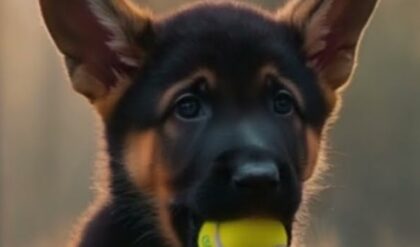
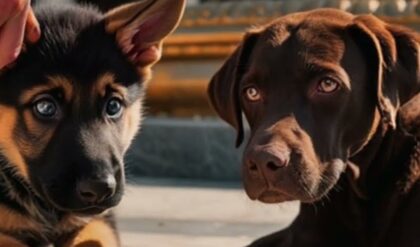
She didn’t cry. She didn’t move. She just sat there next to the suitcase. I was walking past the back entrance of the Santa Monica Pier where the breeze carried that soft scent of ocean and sugar from the boardwalk. It was around 10:00 a.m. Sun high. Tourists still quiet. And there she was, a German Shepherd puppy, maybe 5 months old.
Her coat was black and tan, but dull from dirt. One back leg looked twisted. She was tied to an old bench with a red leash at sitting perfectly still beside a small, worn out pink suitcase covered in faded unicorn stickers. The note taped to the leash said, “She’s broken. I can’t fix her. You try.” I stared at her.
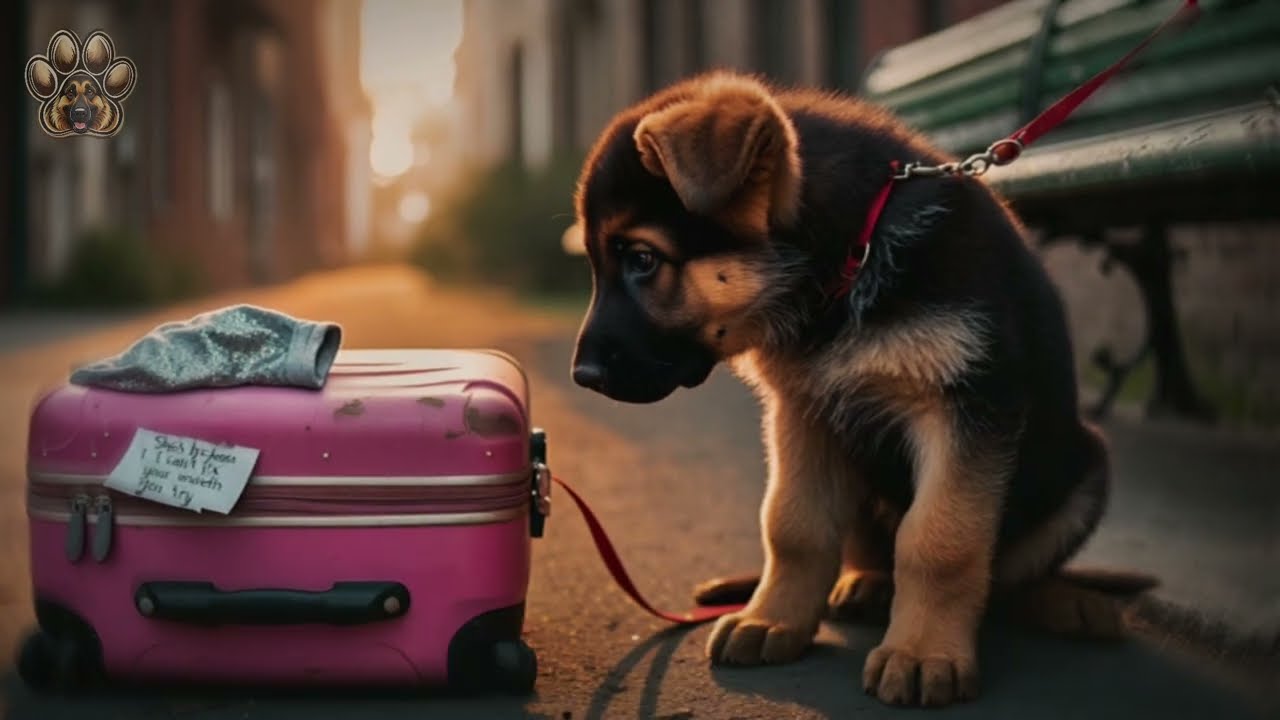
No barking, no wagging, just two wide, glassy eyes watching the alley like she was waiting for someone to come back. I crouched down slowly. Hey, what’s your name?” I whispered. No reaction. I looked around. No one. Just waves and wind and this ghost of a puppy who had already given up. I opened the suitcase. A child’s t-shirt, a small collar, a crushed juice box.
Someone once cared, or at least tried to, but that was gone now. I called the shelter and said I’d be bringing in a young German Shepherd puppy. My name is Marcus. I’ve worked in dog rescue in LA for years. I’ve seen a lot. But I wasn’t ready for this silence. this absence. When I picked her up, she didn’t resist. Didn’t lean in either.
Just hung in my arms like, “Wait.” Her eyes never left the street. In the car, I spoke softly to her. “You’re not broken. Just waiting, right?” At the shelter in Santa Monica, the team met us at the intake room. I gave them the note, the suitcase. They looked at each other like they didn’t want to say out loud what we were all thinking.
She stood still as they examined her. No chip, mild malnutrition, bruising on her hind leg, not fresh, but healing poorly. She didn’t flinch, just kept turning her head toward the open window. Waiting. I filled out the intake form, hands trembling more than I’d like to admit. Name? I wrote Bella. It felt like it fit. As I stepped out, I looked back.
She was staring straight through that glass door. Not at me, not at the staff, but toward the alley she came from. Her eyes didn’t blink. She didn’t look scared. She looked faithful. I’ve seen loyalty in dogs. But this this wasn’t loyalty. This was grief. The kind that doesn’t cry. It just waits.
I wanted to tell her that whoever left her wasn’t coming back. But I couldn’t because part of me didn’t believe it yet either. How long had she been sitting there? And who could look into those eyes and walk away? The second day, she still hadn’t eaten. Bella lay curled in the back corner of her kennel at the Santa Monica shelter, head resting on her front paws, eyes open, wide open, watching, watching.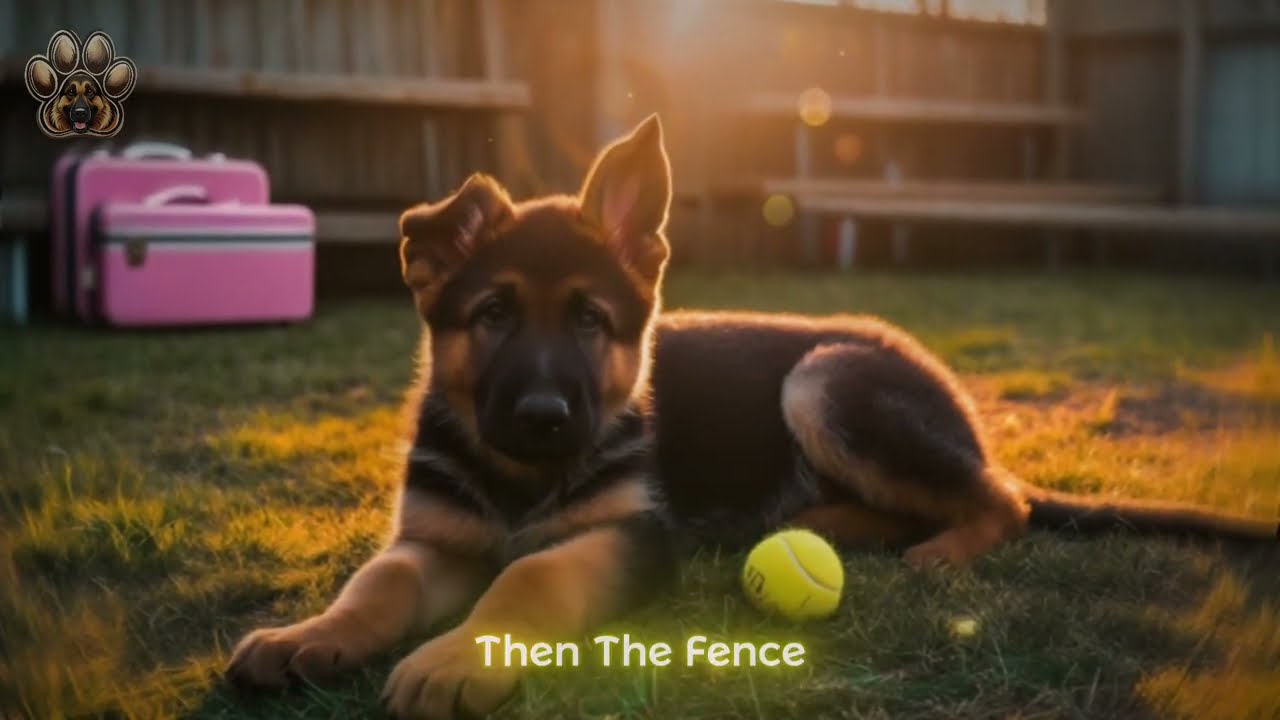
I stood there with a bowl of soft chicken and rice, something we give pups with sensitive stomachs. She didn’t move, just stared past me through the small window as if the sound of the ocean might bring someone back. “She’s dissociating,” Mara, one of the texts said gently. “Dogs can do that when they shut down.
They stop responding like they’re not even here. But she was here. I could feel her presence like static in the air. Silent, tense, waiting. I sat cross-legged on the floor of her kennel, keeping the food beside me. I know you’re not ready, I said. I just want to be here. She didn’t turn her head, but her ear twitched once.
That was something. I took out the contents of her suitcase again. the tiny purple t-shirt with glitter on the collar, a juice box with a straw still tucked in, a plastic dog brush unused. Everything looked like it belonged to a little girl, and everything looked abandoned, just like her. Later that afternoon, I slipped outside for a breath of air.
I needed to clear my head, but couldn’t. My mind kept looping around one question. Who ties a puppy to a bench like trash and leaves a suitcase like it’s some kind of parting gift? Bella hadn’t barked once, not during intake, not during checkups, not even at the other dogs. Total silence, but not the scared kind.
It was the kind of silence that came after something after something had already broken. I came back in and found her in the exact same position. But when I opened the kennel, she didn’t recoil. She didn’t greet me either. Just let me sit. An hour passed. I read reports, sent a couple texts, said nothing. Then something changed.
She moved. Not much, just her nose. Slowly, she turned it toward the food bowl near my leg. I held my breath. She leaned in, sniffed once, then pulled back. Progress. I looked at her and whispered, “You’re not invisible, Bella. I see you, and I’m not going anywhere.” That night, before closing, I stood at the door and watched her one last time.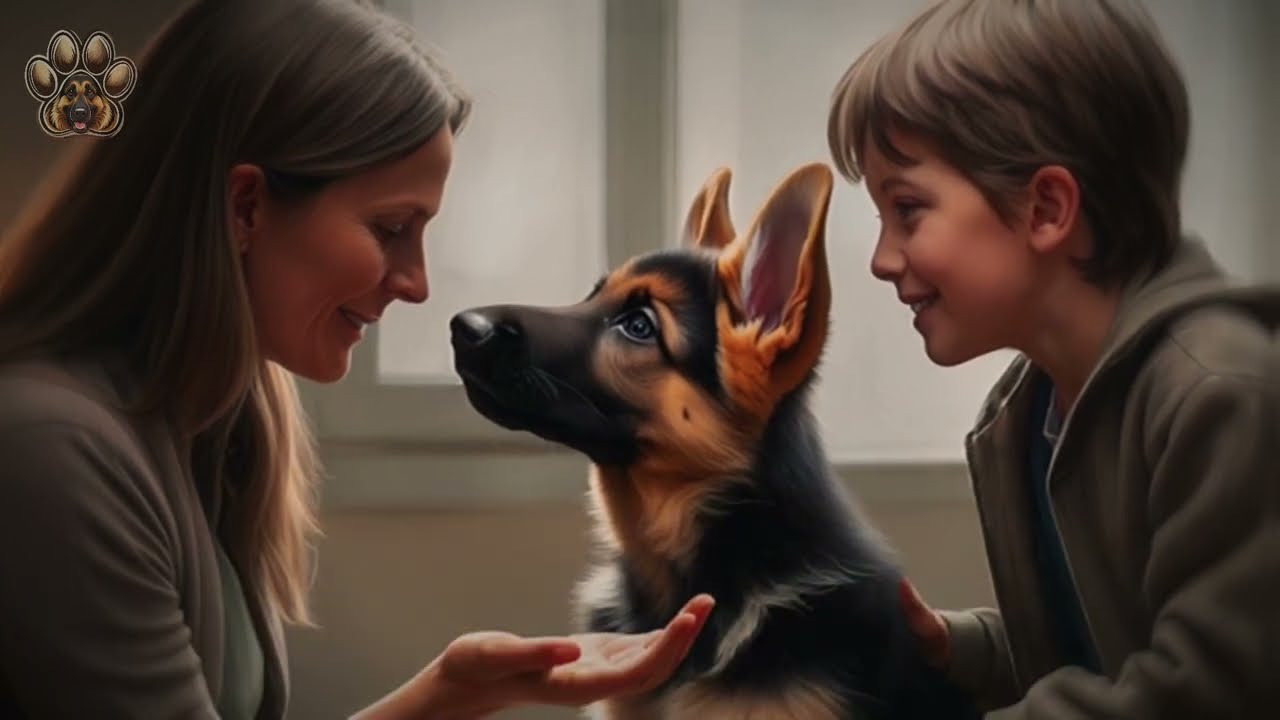
She was still cur curled up, but this time, she wasn’t watching the window. She was watching me. Not trust, not yet, but recognition. It’s a start. and maybe she wanted it to be. By the third morning, Bella had moved her bedding. It wasn’t much, just a crumpled blanket dragged two feet closer to the door of her kennel. But it meant something.
She wasn’t hiding in the corner anymore. She was inching toward the world. When I walked in with the same bowl of warm rice and chicken, her eyes met mine. Still guarded, still silent, but they met. “Morning, Bella,” I said softly. “Missed you yesterday.” She blinked once. I knelt down and slid the bowl inside.
This time, she didn’t wait until I left. She stood slow and stiff, her back leg trembling slightly. She limped toward the food, sniffed, and began to eat. It was queerful, mechanical, but she was eating. Mara passed by and froze. “She’s eating with you still here?” I nodded. First time. She smiled like someone witnessing a miracle. And maybe we were.
Later, while cleaning kennels, I heard a soft rustle behind me. I turned and there she was, not in the corner, not behind her bed. She was standing at the door of her kennel, watching me. I walked over slowly. “What are you doing, huh? Keeping tabs on me?” She didn’t back away. I reached out, palm up. She stared at it.
Then, gently, she leaned forward, just enough to let her nose graze my fingers. That touch was electric, fragile, and fleeting, but real. I spent lunch sitting by her kennel. No words, just presence. I read a book and let the quiet fill the space. At one point, she let out a breath, a deep, shaky exhale like someone finally releasing tension held far too long.
It was the first sound I’d heard from her. That evening, I opened the suitcase again. Not for me, for her. I placed the glittery shirt at the front of her kennel beside her blanket. Something about it felt necessary, a bridge between the past and whatever came next. Bella walked over to it that night. She sniffed it once, then curled around it like it was a sibling she missed.
I stood in the doorway long after the shelter closed, watching her sleep, her paw draped over the soft cotton like a memory she wasn’t ready to let go of. I knew then she wasn’t just waiting. She was remembering and maybe hoping. The next morning, I found her sitting upright, not curled, not withdrawn, just sitting, eyes open, ears tilted slightly forward as I approached with the food bowl.
Her gaze followed me all the way to the kennel door. No fear, no panic, curiosity. Good morning, Bella, I said gently. Sleep okay? She didn’t answer obviously, but when I opened the door and placed the bowl down, she walked toward me, limping, careful, but she walked. And then she did something I hadn’t expected. She looked up and wagged her tail just once, a slow, uncertain sway.
But to me, it was thunderous. A German Shepherd puppy like Bella isn’t meant to be invisible. They’re born to connect, to protect, to belong. And for the first time, she looked like she wanted to be seen again. I took a chance and stepped into the kennel with her. No sudden moves. I sat cross-legged and waited.
She approached me slowly, one paw dragging slightly until she was close enough to sniff my shoe. “Do you want to go outside?” I asked, reaching for her leash. She didn’t flinch. It was our first walk. We didn’t go far, just to the side yard behind the shelter where a little stretch of grass caught the morning sun. It was empty, quiet.
I sat on the low wooden bench while Bella explored cautiously, nose low, steps uneven. She sniffed a leaf. Then the fence. Then she looked at me, her ears perked, and she took a step closer. I tapped the bench beside me. You can come up here if you want. She didn’t. Not yet. But she sat down right in front of me, close, eyes searching.
And for the first time, I saw her without the weight, without the suitcase or the leash or the silence. She was just a puppy. And in that moment, she was mine, even if only in spirit. When we returned inside, she walked into her kennel on her own. No coaxing, no fear. That afternoon, I opened her file and wrote, “Behavioral note, fourth day.
Eye contact, tail wag, responded to voice, walked on leash, accepted proximity, name recognition, Bella confirmed. Then I added a line that wasn’t protocol. She is choosing to come back to us. That night, after lights out, I walked back down the kennel row one more time. I paused outside her door. She was awake, watching.
And when I whispered, “Good night, Bella.” She rested her head on her paws and her tail tapped twice. By the fifth day, people started noticing her. Not staff. We’d all been watching Bella like she was a sunrise we didn’t want to scare away. I mean, visitors, couples, families, a few parents with kids in tow, scanning kennels for the right dog. But Bella wasn’t flashy.
She wasn’t bouncing off the walls like the terrier mix in kennel 4. She didn’t bark for attention like the shepherd lab pup down the hall. She just sat there, ears forward, calm and steady, with eyes that looked like they’d already lived a whole lifetime. A young boy stopped outside her kennel around noon.
Maybe eight or nine years old, curly hair and a Batman hoodie. He crouched down and whispered something through the bars. I couldn’t hear what, but Bella tilted her head, then stood shaky but steady and walked right up to him. His mother tugged his sleeve. No, honey. She looks sick. She’s not, he said. She’s just sad.
The mom forced a laugh. We’re not taking home a project, sweetheart. Let’s go. They left. Bella sat back down, eyes locked on the spot where the boy had crouched. She didn’t whimper, but her shoulders sank just slightly like a balloon letting out the smallest breath of air. I clenched my fists in my pockets.
I wanted to shout after that woman. She’s not a project. She’s a survivor. But I didn’t. Later, I took Bella out back again. The sun was soft, sky just beginning to shift into golden hour. I brought a worn tennis ball just in case. She sniffed it, pawed it, then sat down. I sat beside her on the grass. “You don’t have to play,” I said.
“You don’t have to do anything you’re not ready for.” She turned and rested her chin on my knee, and I froze. That tiny trusting gesture cracked something open in me. A place I thought I’d closed for good. I remembered Buck, my old German Shepherd. I remembered the way he used to do this exact thing, forehead against my leg, as if to say, “I’m here. I trust you.
” Bella stayed there for minutes, still and warm. When I looked up, Marlo was watching from the door with tears in her eyes. She picked you, she mouthed. But that wasn’t the plan. I wasn’t supposed to keep her. The shelter had rules, and I already knew Bella needed more than I could give her.
Still, in that moment, she wasn’t just a rescued puppy. She was a heart learning how to beat again. And I wasn’t sure mine could let go. It happened just after lights out. I was locking the last door in the kennel wing when I heard the sound. Soft quick pause against tile and then the distinct creek of the back door swinging open.
Bella was gone, my chest locked. For a second, I froze, heart in my throat. Then instinct took over. I bolted through the hallway, flashlight in one hand, keys jangling. The door hadn’t latched completely. Someone must have missed it. She’d pushed it open just enough to slip out into the night. She wouldn’t go far, I told myself.
She can barely run. But I already knew where she was heading. I grabbed my truck keys and drove toward the beach, tires screeching against the quiet streets of Santa Monica. It was close, less than a mile, but each second stretched like wire. The wind was picking up. Ocean mist rolled through the alleyways.
When I pulled up near the backside of the pier, the spot where I’d first found her, my headlights caught something in the dark. There she was, sitting perfectly still. Same bench, same leash still clipped to her collar, dragging behind her. Same pink suitcase now kept in our shelter supply room. But I could almost see it there beside her.
She didn’t flinch as I approached. Didn’t look at me, just faced the empty alley, staring down its length like a soldier at post. I sat down beside her. For a long minute, we said nothing. Then I whispered, “You really thought they’d come back, didn’t you?” She blinked slowly. You ran. Not to escape us, but to return to them. My throat tightened.
I looked out at the ocean. The way it shimmerred under street lamps felt too beautiful for what this moment was. They don’t deserve you, Bella, I said, barely holding the edge in my voice. But I do. That’s when it happened. She leaned into me, pressed her shoulder to my leg. No hesitation, not a touch of memory, a decision.
I looped the leash around my wrist and stood. Let’s go home, girl. She followed, limping, slow, but steady. Back at the shelter, I spread a blanket on the floor beside her kennel and lay there, one hand resting near her paw. She didn’t sleep in the back corner that night. She curled up against my side, and somewhere between midnight and morning, she let out a soft sound, a low, content sigh.
Not fear, not sadness, peace. She’d gone back to the place she’d been left. And then she chose to come back to me. The next morning, Bella met me at the kennel door. Not waiting in the corner, not curled up like she used to be. She was standing wobbly, sure, but proud. And when I stepped inside, she wagged her tail slow and steady.
“You’re something else,” I whispered, clipping on her leash. We walked outside like we did every morning now. But this time, she took the lead. Nose to the ground, ears alert, eyes scanning the breeze, like she was finally seeing the world, not searching for ghosts in it. She sniffed every blade of grass, every tree, every bench.
The wind tuzzled her ears, and she didn’t flinch. She looked alive. At the far corner of the yard, she turned and stared at me. Her tail swayed. Then she did something I hadn’t seen before. She barked just once, sharp, confident, and the entire yard froze. Mara came running from the back entrance, eyes wide. “Was that, Bella?” I nodded, smiling. She just barked.
It was like hearing your child speak for the first time. From that moment on, she started reclaiming things. She picked a favorite toy, a frayed rope with a green knot. She guarded it like it was treasure. She napped near the fence in the sunlight, belly exposed like she finally felt safe.
She even started nudging other puppies. Not playful yet, but curious, present. We adjusted her leg brace, and the vet said the injury would continue healing now that she was gaining strength. No signs of permanent damage, he said surprised. This little German Shepherd puppy has fight in her. At night, she began sleeping in the front of the kennel, facing the door, waiting.
Not for them, for me. When I stayed late, she wouldn’t rest until she saw me walk past. One evening, I tested it, stood out of sight, and there she sat, ears twitching, eyes fixed on the hallway until I stepped into view. Then she lay down like her job was done. She’s imprinted on you. Marlo said softly one night. You’re her safe place.
I wanted to say the words out loud. I want to keep her. But I couldn’t. Shelter policy didn’t allow staff to adopt until a full 30-day holding period had passed. And I knew deep down she needed more than just me. She needed a home with room to run with people who could be her entire world. Still, as I watched her press her head into my chest during our evening walks, I wondered how I was ever going to let her go.
Because now it wasn’t just about rescuing a dog. It was about learning to believe again that broken things could be whole. That what’s quiet isn’t empty. That maybe, just maybe, healing goes both ways. They walked into the shelter just before noon, quiet, unassuming, like they weren’t sure if they even belonged there.
He was tall, probably mid-30s, in a gray sweatshirt and running shoes. She had a floral dress under a denim jacket, soft eyes, and a nervous smile that kept flickering on and off like a light unsure whether to shine. “We’re not here for a specific dog,” she told Mara at the front desk. “We we just want to see who’s here, who might need us.
” Marla nodded and looked toward me. “Marcus,” she called. “Bella?” My heart skipped. I clipped Bella’s leash and crouched in front of her. Let’s go meet someone. Okay. She stood willingly. Her limp was still there, but she moved with confidence now. Purpose. As we entered the visitation room, the woman gasped softly.
Bella froze, not in fear, in awareness. She was watching them closely, ears forward, eyes steady. I gave the couple space, sat in the corner, silent. The woman lowered to her knees, and whispered, “Hi there.” Bella didn’t back away. She didn’t rush forward either. She walked slowly up to the woman, paused, and sat. Then she leaned in, just enough for her nose to rest on the woman’s hand.
Tears filled the woman’s eyes instantly. She didn’t wipe them away. The man crouched beside her, his voice low. “She reminds me of us,” he said. Quiet, guarded, still trying. He reached out, not to touch Bella, but to let her choose. “She did.” She stepped forward closer to him and rested her chin on his leg.
They stayed like that for a long time. Later in the staff office, the couple told me their story. They’d been trying for children for nearly seven years. After endless treatments and heartbreak, their doctor told them last month, “You need to let go and make space for something else.” “So, we came here,” the woman said, not knowing what we were looking for.
But we saw her photo on the website last night, and something just stopped us. “She looked like she was waiting,” the man added. She was, I said, trying to steady my voice. But not for them. For you. I told them about her first days. The bench, the suitcase, the silence, the bark, the touch. They cried.
They asked about her care, her needs, her leg. They didn’t ask if she’d ever been trained or if she could sit, stay, fetch. They asked what made her calm, what made her smile. Before they left, the woman knelt beside Bella again and said, “If you come with us, we won’t try to fix you. We’ll just love you. That’s all.
Bella looked at me and then without command, without Q, she wagged her tail twice. I knew she had chosen them. Now I just had to learn how to let go. The first night without her was harder than I expected. I told myself to be rational. I reminded myself that this was what we do. Rescue, heal, rehome. Over and over.
It’s the mission. It’s the goal. But as I stood in the hallway that night looking at Bella’s now empty kennel, something in me felt hollow. I had already taken down her name plate, folded her blanket, put her rope toy in a box labeled Bella, adopted. And still, I kept looking toward that kennel like maybe she’d just appear again, eyes watching me the way she used to.
The couple, Sarah and Jonah, had come to pick her up that morning. They brought a soft harness, a new pink leash, and a blanket that smelled like home. Bella let them buckle it on without hesitation. She even wagged when they opened the car door. She looked back once, not afraid, just acknowledging, as if to say, “Thank you. I’ll take it from here.
” I smiled and nodded, forcing my jaw to stay tight. “She’ll be okay,” Sarah whispered, noticing my hesitation. “I know,” I replied. “And I did. But knowing doesn’t make it easier. Back at home, I tried not to think too much. I cooked dinner, watched something dumb on TV, pretended the couch wasn’t colder than usual. But around 10 p.m.
, I found myself walking to the hallway where Bella’s things were boxed. I pulled out the suitcase, the same one I’d found beside her on that first day. Sun faded, covered in glitter stickers, still dented at the corner. I unzipped it. Inside was the little t-shirt. The juice box had been thrown away, but the brush was still there.
I held it in my hands and sat down on the floor. She wasn’t just a dog. She was a story, a scar, a reminder of what happens when someone is left behind and what can happen when someone else refuses to walk away. I sat there for a long time. The next morning, Mara greeted me at the door with a smile. “Check your phone,” she said.
It was a video. Bella lying between Sarah and Jonah on the couch, head in Sarah’s lap, her back legs twitching softly in sleep, a warm blanket tucked around her, a fireplace glowing in the corner. The caption read, “She hasn’t moved from our side all night. She’s home. Thank you.” I watched the video twice.
Then I tucked my phone back in my pocket and went to work. As I passed Kennel 12, Bella’s old spot, I stopped, then turned and stepped inside. The new arrival, a 6-week old mix, skinny, scared, eyes darting everywhere, trembled as I approached. I didn’t say anything, just sat down slowly, waited, because now I knew what Bella had taught me.
Sometimes the first thing a dog needs isn’t a command. It’s someone who’s willing to sit beside the silence and stay. Three days later, they came back with Bella. My heart stopped when I saw her step through the shelter doors, her tail swaying, eyes bright. She looked stronger, more sure of herself.
There was color in her coat again, weight on her frame, something steadier in her posture. Jonah smiled. She wanted to visit. Sarah laughed gently. We did, too. We thought maybe you had something of hers. I nodded, walking them toward the office. Yeah, I kept the suitcase. I hadn’t thrown it out, though. Couldn’t. It sat in a cabinet behind my desk, untouched since the night I opened it one last time.
When I placed it on the floor, Bella sniffed it immediately. Her ears flicked back, then forward. She nudged it softly. Jonah crouched beside her. Do you want to keep it, girl? Sarah looked at me. We don’t want to erase her past. We just want her to know she doesn’t have to carry it alone anymore. I almost couldn’t speak.
Instead, I pulled out the little t-shirt from inside as still folded just as I’d left it. This was in it. I Maybe she’d like to have it with her as a memory or closure. I don’t know. Bella leaned her head against my knee, a quiet, gentle pressure. Not desperation, just recognition. Sarah’s eyes shimmerred.
Can we keep it somewhere she can see it? Of course. They left it on a small shelf in their living room, they told me later, right by the window, right where the sun hits it in the morning. It’s not a shrine. It’s not grief. It’s a reminder that broken doesn’t mean discarded. That past doesn’t mean unloved. When they left the shelter that day, Bella looked back once more, but not at the building, at me.
Then she turned and climbed into the car without hesitation. The next morning, I opened my inbox to find a photo. Bella curled up in a blanket by the window, headresting on a stuffed bear. Behind her, on the shelf, sat the pink suitcase. The message read, “She knows she’s safe now, and so do we. And for the first time since she left, I didn’t feel empty.
I felt proud because Bella wasn’t just adopted. She was chosen, loved, understood. She had become more than a rescue story. She had become someone’s beginning. It was a quiet evening when I finally walked past her old kennel without slowing down. The new pup inside, a beagle mix named Rusty, wagged his whole body when he saw me. I crouched to scratch behind his ears, and for the first time in weeks, I didn’t feel the ghost of Bella lingering there, because she wasn’t a ghost.
She was home. Jonah and Sarah sent updates every few days. Bella napping in sunbeams. Bella walking along the bluffs in Santa Monica, her brace off now for short stretches. Bella curled up on the bed between them, always touching both of them at once, like she couldn’t stand the idea of being apart.
But there was one message I got that stayed with me more than any other. It was just one photo. Bella sitting at the top of their staircase. Her ears perked, her gaze focused on the front door, waiting, and the caption underneath, “She still waits, not out of fear, out of hope, for us to come home every day.” I stared at that image for a long time.
Not because it made me sad, because it made me understand. Bella wasn’t waiting for someone to come back and fix her. She was waiting for someone worth trusting again. And now she had them. One afternoon, Sarah called and asked if she could stop by. When she arrived, she brought cookies for the staff and something else.
A framed photo of Bella taken just 2 days before. Her running across the sand, ears flapping, tongue out, mid leap like gravity had finally let her go. We thought the shelter should have this, she said, placing it on the front desk. For the next one, the next Bella. We stood there for a while, staring at that photo. Sun, wind, movement, life.
She turned to me. You gave her back to the world. I shook my head. She just needed space to remember who she was. That night, I passed through the kennels again. Stopped at Rusty’s door. He barked once, wagged hard, then dropped his toy at my feet. I stepped inside, sat down, and just like before, I waited because now I knew every story begins the same, with silence and someone willing to sit inside it until the first wag. Some dogs aren’t broken.
They’re just waiting for the right heart to see them. Uh, Bella didn’t need fixing. She needed someone to sit with her in the quiet to believe she was worth the wait. Her journey from abandonment to healing shows how powerful that choice can be. Not just for her, but for everyone who opened their heart to a puppy who had once been left behind.
This little girl’s journey from abandonment to rehabilitation shows how important nonprofit rescue groups really are. Caring for a rescued puppy is more than love. It’s responsibility. It’s patience. It’s pet care. Bella didn’t find her home in one day. It took time, touch, trust. But when she finally ran across that beach, ears flying, eyes smiling, she wasn’t just running, she was free.
If Bella’s story moved you, please share it. Because somewhere another puppy is sitting alone, waiting. Not for a miracle, just for someone who won’t walk away. Join our Brave Paws family. Be their voice. Be their hope.