The Line Crossed: Jordan’s Legacy Delivers the Ultimate Humiliation to LeBron James and Kevin Durant
The world of professional basketball has never lacked for heated debates about greatness, but a recent exchange on LeBron James’s podcast, Mind the Game, has exploded far beyond the typical GOAT argument, crossing a line into profound disrespect. In what was meant to be a showcase of “real basketball talk,” co-host JJ Redick, alongside LeBron James and guest Kevin Durant, allowed the conversation to veer into something ugly: a subtle, yet deeply callous, attack on Michael Jordan’s 1993 retirement.
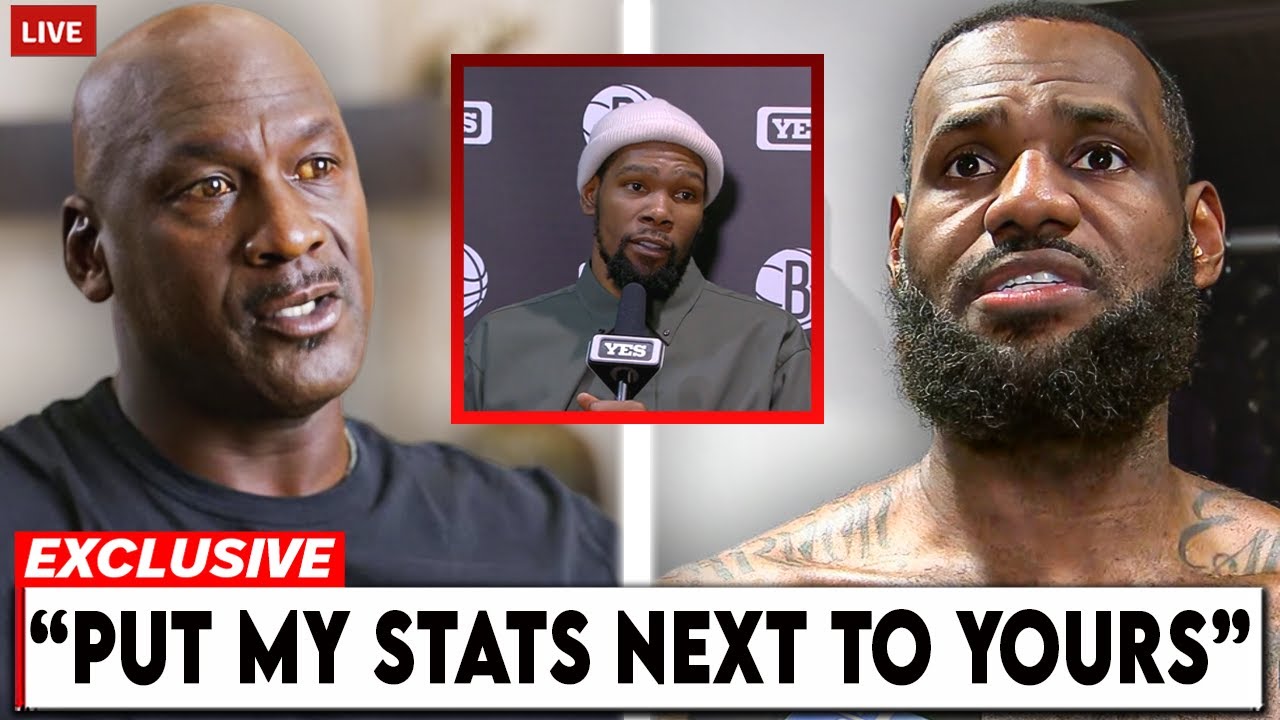
When discussing player commitment and whether athletes reach a point where they consider walking away, Durant dropped the bombshell line that immediately went viral. With a visible smirk, he said, “Some people say ‘I want to go play baseball,’ and then I want to come back. Or some people say ‘I’m going to go 22 straight.'” The room went momentarily quiet before LeBron James erupted in a full, hearty laugh. Everyone watching knew the meaning: Durant was calling Michael Jordan a quitter for his brief career switch, while simultaneously crowning LeBron James for his career longevity.
What happened in that moment was not just standard sports banter; it was a profound act of historical revisionism and emotional disregard. In their eagerness to elevate longevity above dominance, James and Durant chose to completely disregard the agonizing truth behind Jordan’s sudden departure, reducing one of the most painful moments in basketball history to a cheap punchline. The backlash was immediate, fierce, and utterly necessary, with the weight of Jordan’s uncompromising legacy delivering a humiliation far more devastating than any response they could have anticipated.
The Tragedy They Ignored: The Murder of James Jordan
The most revolting aspect of Durant’s joke and James’s laughter is the crucial, tragic context they conveniently left out. Michael Jordan did not retire in 1993 because he was bored or seeking a new challenge; he walked away because he was grieving. That summer, Jordan’s father, James Jordan, the man who shaped his commitment and competitive fire, was tragically murdered during a robbery. He was shot and left on the side of the road.
At the absolute peak of his powers, having just accomplished the historic three-peat (three consecutive championships), Jordan did the only thing he could to cope with unimaginable grief: he honored his father’s memory. The pursuit of playing professional baseball was a shared dream between father and son. His decision was not about quitting the sport; it was about protecting his soul and finding a way to pay tribute to the man who drove him to greatness.
To dismiss this deeply personal, emotionally wrenching journey—a story that speaks volumes about Jordan’s humanity—as merely choosing a pastime before a brief return, is not just intellectually dishonest; it is insulting. Neither Durant nor James acknowledged James Jordan, instead choosing to weaponize a tragedy in their attempt to redefine greatness.
The Iron Fist of Jordan’s Perfection
:max_bytes(150000):strip_icc():focal(779x439:781x441)/michael-jordan-1-34dfe8b20e0c4cc7af5b7e023bcd2678.jpg)
To suggest Jordan “quit” is to fundamentally misunderstand his entire philosophy. Jordan’s retirement came not after a loss, not after a decline in play, but after reaching the absolute pinnacle of basketball perfection: a three-peat. Basketball experts still agree that his run from 1991 to 1993 was the single greatest stretch of play in league history. He completed a near-perfect decade, winning six titles, six Finals MVPs, five regular season MVPs, and ten scoring titles in just 13 full seasons. That resume represents total, complete dominance.
Jordan’s philosophy was simple and brutal: chase perfection, not longevity. He once stated that if he burned out, he burned out. His commitment was to give “110% at all times,” believing that maximizing every single season was more important than merely playing 20 years.
This is where the culture war truly takes shape: intensity versus survival. Jordan’s career was defined by quality; Durant and James, in their eagerness to be crowned for durability, argue for quantity. They suggest that simply sticking around is more impressive than being unstoppable. But Jordan’s legacy is built on the fact that he packed the achievements of two full Hall-of-Fame careers into one highly intense, relatively short run.
The Hypocrisy of the Accusers
The mockery coming from Kevin Durant and LeBron James is steeped in irony and a breathtaking lack of self-awareness.
First, consider Kevin Durant, the man who threw the punchline. Durant’s career is famously punctuated by decisions that redefined the term “quitting” for an entire generation. In 2016, after losing to the 73-win Golden State Warriors in the Western Conference Finals, he immediately joined them. This move is widely regarded as one of the most gutless decisions in league history, a capitulation for the sake of easy championships. Since leaving the Warriors, Durant has demanded trades out of both Brooklyn and Phoenix, fleeing situations when they became challenging or pressure mounted. This is the man who calls Michael Jordan a quitter for honoring his murdered father.
Durant’s argument that playing 20 years is the real goal falls apart when examining his own commitment. Despite advocating for longevity, he has only played a full 82-game season three times in his entire career.
Then there is LeBron James, who sat there laughing along, co-signing the disrespect. James has never been shy about seeking the path of least resistance when adversity strikes. He “took his talents to South Beach” when things were tough in Cleveland, he bolted back when Miami declined, and he ran to Los Angeles when the second Cleveland tenure grew uncomfortable. Every major career decision was calculated to improve his odds of winning by assembling a super team, a stark contrast to Jordan’s singular focus on maximizing the team he had.
More damningly, James’s career is the genesis of the modern “load management” crisis. He has only played a full 82-game season once in over two decades. This is the very mindset Jordan rebuked, prioritizing personal comfort over competition and respect for the game. Jordan addressed this culture directly: “I never wanted to miss a game because it was an opportunity to prove myself. The fans are there watching; I want to impress that guy way up in the top deck who probably worked his butt off just to afford a ticket.” That is the chasm that separates them: Jordan’s respect for the fan experience and the integrity of competition versus the modern prioritization of personal convenience.
The Statistical Nightmare of Longevity
The true, undeniable response from Jordan’s legacy comes in the form of cold, hard statistics that destroy the longevity argument completely.
Michael Jordan played just 15 seasons in total, 13 full seasons when accounting for his retirements. In that time, he achieved near-perfection.
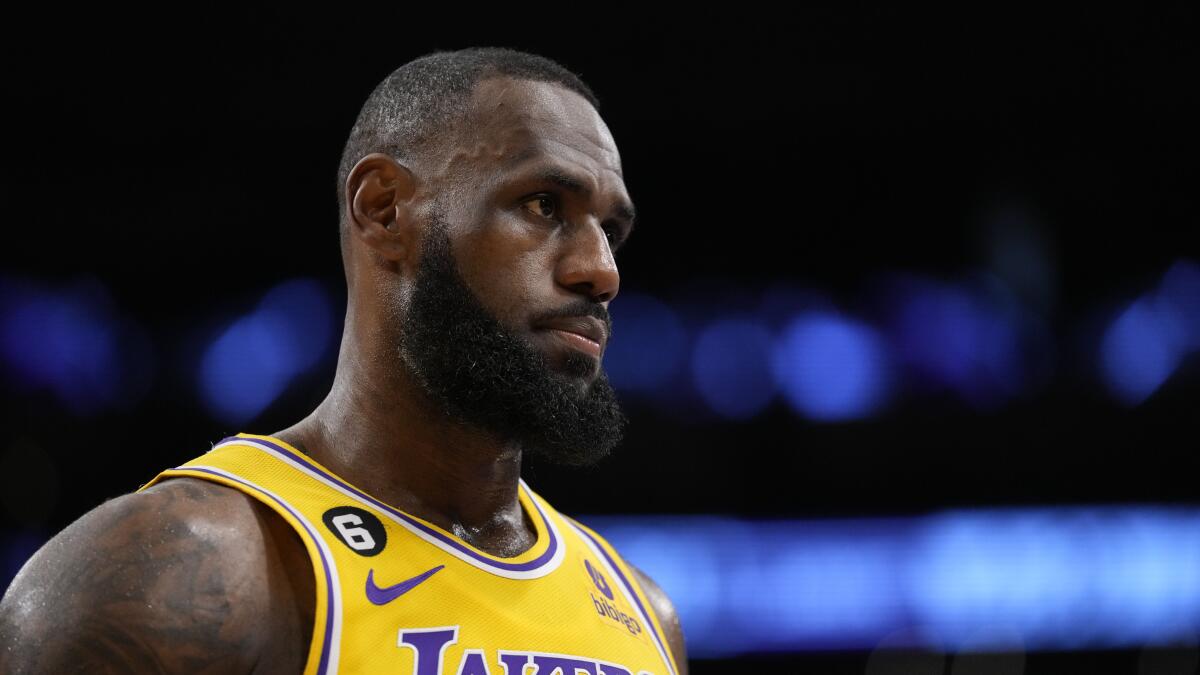
Now, look at his accusers. Kevin Durant and LeBron James have played a combined 39 seasons—nearly three times as long as Jordan’s peak dominance. Yet, between them, they possess:
-
Total Championships: Six (matching Jordan alone).
-
Total Regular Season MVPs: Five (Jordan has five).
-
Total Finals MVPs: Six (matching Jordan alone).
-
Total Scoring Titles: Five (Jordan has ten).
-
Total All-Defensive Selections: Five (Jordan has nine).
In almost 40 years of combined professional basketball, they have achieved less in the major statistical categories of dominance than Jordan did in basically a single decade. Twice the time, half the results. This is the reality of longevity versus greatness, and no amount of podcast chatting can rewrite that historical fact.
Legacy Defends Itself
The instant, ferocious backlash was led by those who played with and against Jordan. Stacy King, a three-time champion with the Bulls, sarcastically dubbed the podcast “Cry Me a River” and tore into James and Durant for their constant need to convince the public of their own greatness. “Great players don’t have to tell people they’re great,” King asserted, calling out Durant’s hypocrisy regarding playing full seasons.
Jordan’s true, ultimate response, however, requires no words from him at all. It is his continued relevance. Even now, decades after his final retirement, when the NBA needs to fix its culture—when the league needs to address the problems of load management, declining competition, and a lack of respect for the game—they don’t call LeBron. They call Michael Jordan. They bring back the standard bearer, the man who showed everyone what excellence looks like.
Durant and James can laugh all they want, but at the end of the day, they are still measured against him. Every debate about the greatest player still starts with his name. Jordan didn’t chase years; he chased greatness, and greatness does not need 20 seasons to prove itself. It only needs one moment, one game, one perfect decade, to show the world what the best looks like. And that is a fact no joke, no podcast, and no amount of longevity will ever change.