The atmosphere inside the crypto.com Arena was supposed to be one of triumph. The King had returned. After weeks away due to injury, the sight of LeBron James back on the court for the Los Angeles Lakers should have been the final, definitive piece that solidified their hot start to the season. The team had defied expectations, building a respectable 10-4 record and proving they could win even in his absence, fueled by the energy of young stars like Austin Reaves and the savvy play of others. The narrative was simple: LeBron would elevate a great situation to an unstoppable one.
Instead, what unfolded was a sporting collapse so immediate, so jarring, and so perfectly timed with the superstar’s re-entry that it has sparked serious, uncomfortable questions inside the Lakers organization and across the NBA. It was not just a loss, or a close game; it was a devastating blueprint for disaster, leaving an already tense front office, including a reportedly “furious” team owner, wondering if the solution to their problems has now become the problem itself.
The seismic event occurred during a seemingly routine game against the Utah Jazz, a team languishing in 11th place in the Western Conference standings. At the start of the fourth quarter, with LeBron James resting on the bench, the Lakers held a manageable 87-82 lead. What happened next was the Lakers playing their best, most free-flowing basketball of the night: they went on an aggressive 11-3 run, transforming a small margin into a commanding 13-point cushion, 98-85, with just over five minutes remaining. The team was clicking, the pace was high, and the ball movement was infectious. The game felt over.
Then, LeBron James checked back in.
The moment his sneakers hit the floor, the Lakers’ world fell apart.
Within a mere four minutes of game time, that comfortable 13-point lead evaporated into a single, terrifying point: 107-106. The Utah Jazz, a team struggling to stay afloat in the West, unleashed an absolutely punishing 21-8 run on the Lakers, all while their biggest star was trying to find his rhythm. The chemistry vanished. The intensity dissolved. The blueprint for disaster was complete.
The question hanging over the franchise, a question that the mainstream media is reluctant to ask, is chillingly direct: Is LeBron James actively destroying the chemistry this team built without him?
The Crisis of Coaching and Logic
The collapse raises a far more immediate and critical question about the decision-making on the Lakers’ sideline. Why did head coach JJ Redick put LeBron back into a game that was all but secured? Logic suggests the veteran should have remained on the bench. The team was flowing perfectly, up by 13 points against a sub-par opponent with only five minutes left to play. Furthermore, James had been out with an injury, and reintroducing him into a high-leverage, non-essential crunch-time situation unnecessarily risked a re-injury. There was no logical reason to play him.
The superstar’s own words after the game only deepened the controversy. James admitted that his return was far from being in sync with the team. “This week was kind of like my training camp for me,” he stated, adding, “I didn’t get an opportunity to practice with the guys at all.”
An athlete admitting they haven’t practiced with their teammates, yet being placed on the court during the crucial moments of a close game, points to one of two uncomfortable truths: either it was a monumental lapse in judgment by Redick, or the coach was overruled. The whispers suggest the latter—that James, prioritizing his rhythm or, as some cynics suggest, the need to “pad the stats a little bit,” forced his way onto the floor. Regardless of the true source, the decision nearly cost the Lakers an essential victory and exposed a foundational flaw in their current structure.
The Damning Numbers and the Eyeball Test
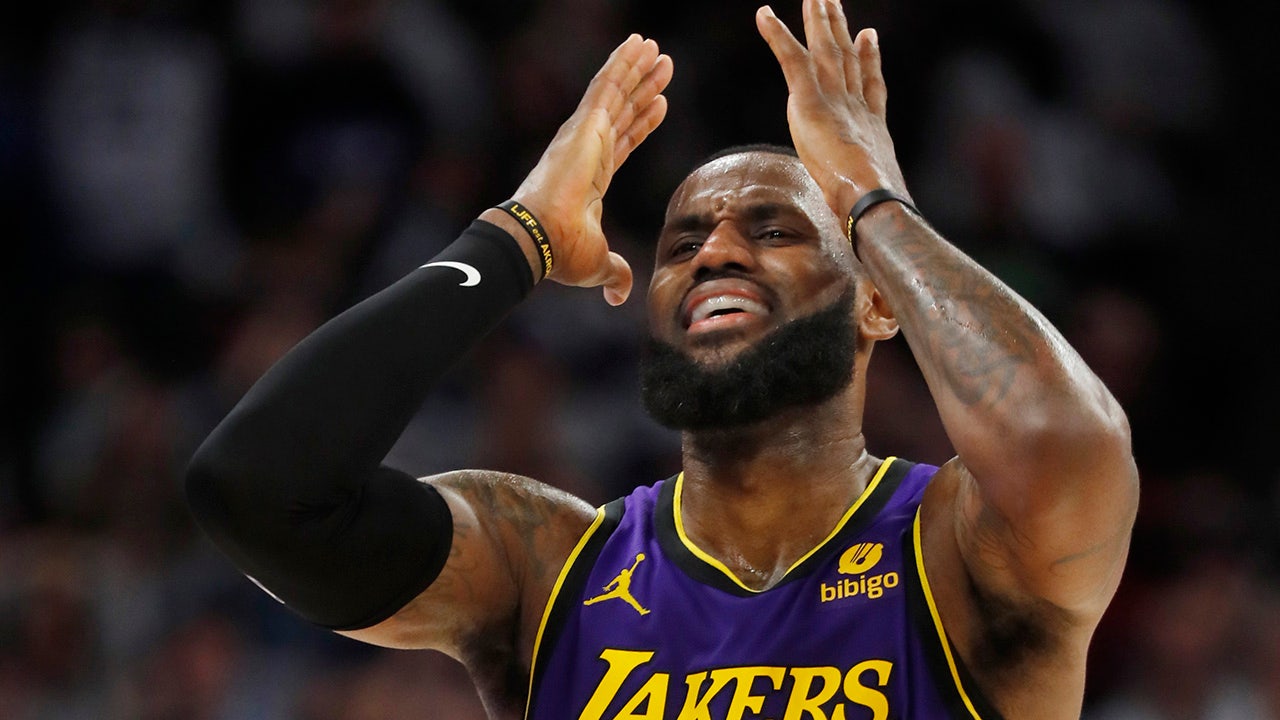
Beyond the staggering 21-8 collapse that defined the final minutes, a deeper look at LeBron’s individual metrics from that evening paints an equally troubling picture. In a game the Lakers won by a single point, LeBron James finished with a plus/minus of -14. To put this in perspective, he was the worst plus/minus player on the entire Los Angeles Lakers roster. The team was demonstrably better when he was off the court.
His shooting efficiency was just over 40% from the field (8-of-18) and a shocking 0-of-4 from three-point range. While excuses can be made about finding his rhythm after an injury, the numbers are damning.
Even more concerning than the statistics is the eyeball test, especially on the defensive end. Those who watch LeBron James closely, possession after possession, witnessed a palpable lack of defensive effort. There were multiple occasions where he could be seen pacing himself on defense, failing to step up and challenge shots from opposing players. This lack of consistent defensive intensity immediately lowered the entire team’s energy and focus, which the Jazz promptly exploited. The Lakers’ run-and-gun, high-energy defensive identity, which had been the hallmark of their successful start, instantly faded with his return.
The Convenient Schedule: A Setup for False Confidence
The controversy surrounding LeBron’s re-entry is amplified when examining the team’s post-injury schedule. Following his return, James and the Lakers were given an almost comically soft run of opponents. His first five games back were against: the Utah Jazz (11th in the West), the Clippers (12th in the West), the Mavericks (13th in the West), and the Pelicans (dead last in the West).
This scheduling was not a coincidence. It appears calculated—a perfect setup to ensure easy wins, pad James’s statistics, and allow his supporters to scream about how the Lakers are “unbeatable” now that he is back. It is a deliberate effort to build false confidence and reshape the narrative after a prolonged absence. The issue is that both of his initial wins against the lowly Jazz were far from dominant performances; they were close, competitive games against a team struggling to stay above water.
The real tests are yet to come, and they will serve as the ultimate barometer for the team’s chemistry. Immediately following this soft schedule, the Lakers face the Phoenix Suns and the high-performing Toronto Raptors. If the pattern of defensive struggles, lost leads, and erratic flow continues against true playoff contenders, the uncomfortable questions about LeBron’s effect on the team’s dynamics will become impossible to ignore.
The Cost of Minutes: A Son’s Sacrifice

For a team already dealing with a minute crunch, someone had to pay the price for LeBron’s 34 minutes in his second game back. The sacrifice turned out to be the most emotionally charged one possible: his own son, Bronny James.
As soon as LeBron returned to the active roster, Bronny was sent right back down to the G-League. The team brass, wanting to avoid taking minutes away from the successful duo of Austin Reaves or Rui Hachimura, instead chose to sacrifice the development of the younger James, sending him back to the developmental league while his father played heavy minutes in a game where, by all logical measures, he should have been resting. The optics are harsh: a successful young player’s development is immediately disrupted to accommodate a star whose physical presence on the court is currently hurting the team’s bottom line.
Conclusion
The Los Angeles Lakers have traded a successful, high-energy identity for a struggling, stat-padding superstar. The collapse against the Utah Jazz wasn’t just a blip; it was a flashing warning sign, validated by James’s league-worst -14 plus/minus. The question for the Lakers front office is no longer if LeBron James can still play at an elite level, but whether they can afford the chaos, the disrupted chemistry, and the defensive lethargy that comes with forcing him onto the court regardless of the game situation or his physical readiness. The reported fury of the owner is understandable; they watched a secure victory and a cohesive team melt down the moment the man they pay $50 million a year to lead them stepped back onto the floor. The next few games will determine if this is a temporary hiccup or the beginning of a genuine crisis.