Clara Winslow stood just inside the entrance, her dress simple navy blue secondhand. It fit well enough and complimented her figure. But in this room of glittering shoulders and designer tags, she felt like a faded photograph. She clutched her purse with both hands, her breath caught somewhere between her chest and her throat.
This was never her scene. But the literacy fundraiser was important. her library’s entire community outreach budget could hinge on the donors in this room. She scanned the crowd. Familiar faces, some friendly, some politely indifferent. The mayor was here, the newspaper editor, a few local developers she knew by name, only because their projects had once displaced the neighborhoods her reading program served. Then she saw him, Marshall Drake.
Her spine tensed before she could stop it. He was smiling, of course. That same smooth, practiced smile he used to disarm reporters and lean into boardroom deals. His tailored suit hugged his frame like it had been made with his arrogance in mind. Beside him, Sloan Pierce glowed in emerald satin and whispered something in his ear that made him laugh too loud, too deliberate.
Clara turned slightly, angling her body toward the drink table. Maybe he wouldn’t see her. Maybe she could coast through the night unnoticed. But the hush in the space around her told her otherwise. Clara Winslow. Marshall’s voice rang behind her, charming and sharp all at once, still attending charity events solo.
She turned pasting on a smile she didn’t feel. Hello, Marshall. Good to see you. He looked her up and down like she was a book he’d once read and outgrown. “Same dress from last year’s gayla,” he asked innocently enough for the people nearby to chuckle. Clara’s stomach twisted, but she held her ground.
“It’s timeless,” she replied, steady but quiet. Sloan gave a polite smile, the kind that said she was above whatever this was, but still found it amusing. I admire that,” Marshall continued. “You’ve always been committed to keeping things simple.” Clara forced herself to breathe. This wasn’t new. Marshall had always known how to twist a compliment into something smaller than kindness.
Once she might have shrunk tonight, she stood a little taller. “I still work at the library,” she said calmly. where simplicity usually means we can fund another afterchool reading session. “Oh, right,” he said, as if remembering a distant charity project. Still trying to save the world one book at a time. Admirable.
Her cheeks burned, but she nodded. Then, louder so others could hear, he added. “Of course, I offered you more than that once. A bigger life, real influence. But some people just don’t like stepping out of the shadows, do they? The weight of eyes turned her way. Claraara’s pulse thudded in her ears. She felt pinned like a bug under glass.
She looked around, desperate for an escape, anywhere. And then she saw him. Sitting alone on a bench just off the ballroom’s wraparound veranda, half lit by the glow of old brass lanterns, a man in a dark gray suit and open collar shirt, stared at something on his phone, his expression unreadable, calm, untouched by the noise inside.
He looked safe. She didn’t think. She just moved. Clara stepped past the velvet rope, her heels clicking softly across the stone floor until she reached the man. He looked up just as she stopped in front of him. “I’m sorry,” she said, her voice barely above a whisper.
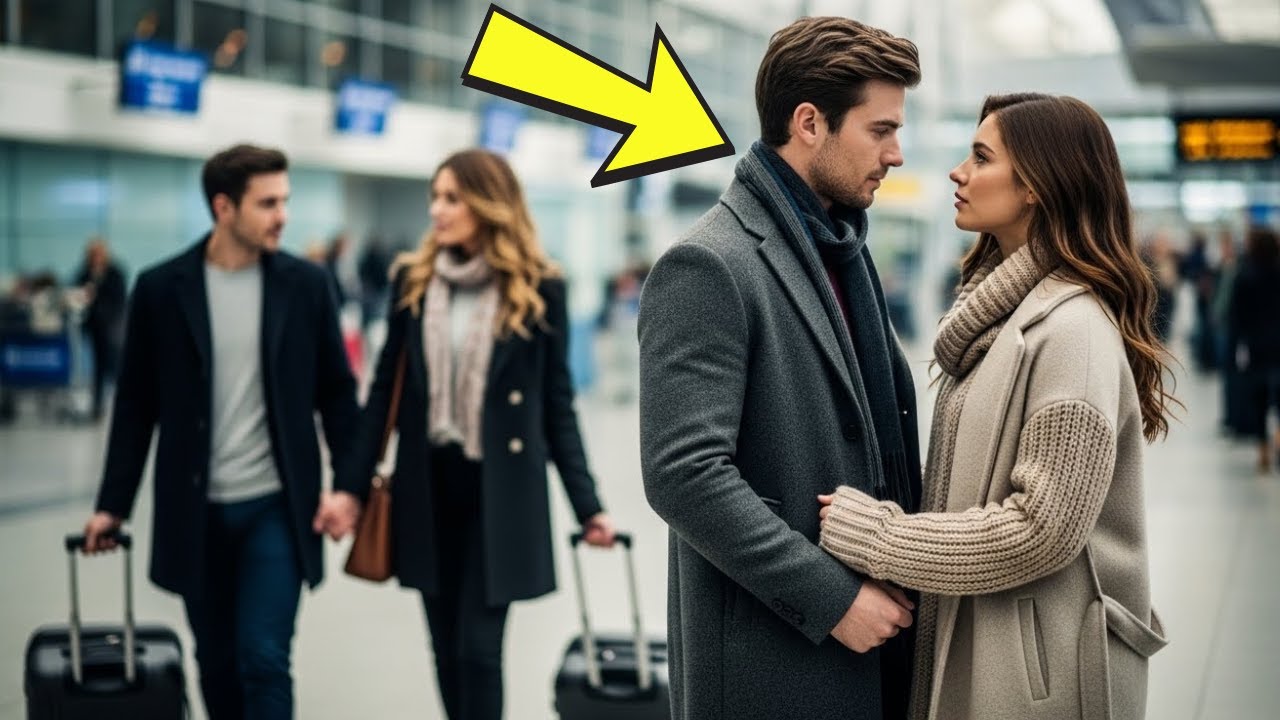
“I know this is strange, but can you pretend to know me just for a minute? Please just hug me.” a pause. Then, without hesitation, the man stood. He was taller than she expected, not imposing, but solid like the earth beneath your feet when you’re about to fall. His eyes were soft, gray, curious, but not alarmed. He reached out gently, not grabbing, not assuming, just offering.
Clara stepped into his arms like stepping into warmth on a cold morning. The embrace was firm, but respectful. Not dramatic, not romantic, just present. Marshall’s voice behind her faltered. The stranger leaned down slightly and spoke just loud enough to be heard by those inside. “There you are,” he said, as if they’d been looking for each other all evening.
“I was starting to think I’d been stood up.” Clara blinked, then nodded, playing along. “Sorry, lost track of time.” His arm rested lightly around her back and he guided her slowly towards the ballroom’s edge, away from the spotlight. People turned. The whispers came quickly. Who’s that with Clara? Isn’t he? I’ve seen him before, haven’t I? Clara could barely breathe.
But in his presence, her embarrassment slowly turned into something else. Relief. Gratitude. A strange trembling calm. When they reached a quiet al cove near the coat check, he dropped his arm and stepped back to give her space. “Are you okay?” he asked. She nodded, tears prickling behind her eyes. “I didn’t know what else to do. I just needed not to feel small. Not tonight.
You don’t owe me an explanation,” he said. “I’ve had nights like that.” She gave a faint, shaky smile. “Thank you. for playing along. He nodded once, respectful and calm. Bo Harrington, he said, extending his hand. Clara blinked. The name barely registered just a polite detail. A name to match the kindness.
She shook it gently. Clara Winslow. A beat passed. Then the ballroom doors opened again. Marshall and Sloan stepped out, trying to act like nothing had happened, but the shift in their expressions when they saw Clara with B said everything. Sloan looked at Bo once and her brows lifted. She leaned into Marshall, whispering again.
Bo noticed, then glanced at Clara. Friends of yours, she swallowed. My ex and his upgrade. Bo smiled just slightly. Not smug, just amused. Well, he said you made quite the impression. I didn’t mean to, Clara whispered. B’s voice dropped lower, steadier. Sometimes the best things in life are unplanned.
She met his eyes, and for a second, the noise of the ballroom faded. “Why did you help me?” she asked. He studied her for a moment, thoughtful. “Because I’ve been the person wishing someone would.” He stepped back. No lingering touch, no expectation. Good luck in there, Clara Winslow.
And just like that, he was gone, slipping into the crowd as if he’d never been there. Clara stood alone again, the lights of the civic center reflecting off the marble floor like stars in a too bright sky. But something had shifted. She wasn’t invisible. Not anymore. If you enjoyed this video, comment one to let me know. If not, comment too. Your thought matter to me either way.
It was almost midnight when Clara got home, her heels abandoned at the doorway, her feet bare against the old pine floors of her apartment. She stood in the small kitchen, staring at the electric kettle as it winded to life, one hand still resting over her ribs where Bose’s arm had steadied her earlier.
Not tightly, just enough to say, “You’re not alone. The warmth hadn’t left her chest since. She poured hot water over a tea bag, but the scent of chamomile barely registered. Her mind was still on the ver, the hum of the gala, the way Marshall’s smirk had cracked for the first time in years. All it had taken was one man, one moment, one line, delivered with quiet confidence.
Clara wrapped her hands around the mug and sank into the couch, only half aware of the soft chime of her phone. She ignored it. Then another, then several more like a wave building. When she finally checked, her stomach flipped. Southern Stranger saves Savannah Librarian from Gala shame. Mysterious hug catches eyes and hearts.
Who is he? Civic cent’s hug herd round the city. Clara blinked. Eva had tagged her in a post, a video. The phone trembled slightly in her grip as she tapped it open. There it was, the moment captured from across the ballroom through a column of white orchids, bow rising, Clara walking into his arms.
The words lost in the footage, but the expression on his face unmistakable ease, assurance, care. She kept watching again and again. The comments below were dizzying. This man deserves a medal. I don’t know who he is, but I’d marry him right now. That woman is me. I felt that moment in my bones. Clara’s thumb hovered over the screen. She should have felt flattered.
Instead, a tight knot of panic twisted in her chest. She hadn’t asked to go viral. She hadn’t asked for any of this. Her phone buzzed with a call. Eva. Clara answered on the second ring. I know. She said voice flat. Oh my god. Eva breathed on the other end. Clara, I posted the video before dessert. I didn’t think it’s everywhere.
I noticed you went from book club sweetheart to mystery romance heroine in 2 hours. I mean, there are tick tocks. Someone added soft piano music. They’re calling him the Southern Shield. Clara sank deeper into the couch, covering her eyes. Ava, I’m going to lose my job. Eva scoffed. You’re going to get a book deal or a Hallmark movie? Maybe both. I’m serious. So am I. There was a pause.
The kind that hums with more than silence, Clara Eva said gently. He didn’t do it for the camera. He didn’t even know there was a camera. I saw his face. That wasn’t performance. That was real. Clara swallowed hard, pressing her palm against her forehead. I don’t even know his last name.
Bo Eva said, “That’s what he told you, right?” “Yes, Bo Harrington.” There was a beat, then typing. “Give me 10 minutes,” Eva said. “I’ll find him.” No, Eva. But the line had already clicked dead. Clara exhaled slowly, the warmth of her tea now forgotten. She stared out the window. The moon hung low above the moss draped oaks, casting shadows across the city. She loved the city that was suddenly watching her.
The next morning, Savannah was awake early, and so was Clara. She arrived at the library before sunrise, the corridor still echoing from the cleaning staff’s vacuums, the smell of lemon polish and old pages lingering in the air. She thought maybe if she kept moving, the attention would forget her.
But by 9:05, the phones started ringing. By 10:12, the front desk had already turned away two local news crews. And by 10:37, her director, Mrs. Delaney, called her into the office. Clara,” she said kindly, folding her hands on the desk. “You’ve worked here 10 years. Everyone loves you, but we’re a public institution. We can’t manage this kind of media frenzy.” Clara’s throat tightened. “It’ll pass.
” Mrs. Delaney tilted her head. “I know, but donors are calling. Some are thrilled, others confused. You’ve always been the quiet one, the steady one. And now this is becoming a story. Clara forced a breath out through her nose. It wasn’t supposed to be. I believe you, Mrs. Delaney said. I do, but the board’s meeting Friday. They’ll want to discuss your visibility.
Clara left the office with that word echoing in her ears. Visibility? Like she had done something wrong just by being seen. By the end of the day, she was back on her couch, exhausted and empty. She hadn’t even changed out of her skirt. Her inbox overflowed with media requests and curious messages. One in particular stood out from June Waverly subject regarding Mr. Harrington. Clara opened it slowly. Miss Winslow, my name is June. I’m Mr.
Harrington’s assistant. He’s asked if you might have time to meet briefly tomorrow at your convenience. No media, no photos, just a quiet conversation. Warmly, June, Clara stared at the screen. He remembered. He wanted to talk. Her heartbeat louder than the quiet in the room.
The next morning, she stood outside a quiet coffee shop tucked between two art galleries near Telare Square. She wore her hair down this time, not to impress, just not to hide. Bo was already inside. he stood when she walked in, just like last time. No tuxedo, just a simple button-down and dark jeans. Understated, but impossible to miss.
Claraara, he said with a small nod, motioning to the chair across from him. Thank you for coming. She sat folding her hands in her lap. I almost didn’t. I’d understand if you hadn’t. A server brought them drinks. Hers a black tea. His just water. Bo watched her quietly, giving her space to speak first. I didn’t mean for that night to become what it did, she said. I was just trying not to fall apart.
I know, he said softly. You don’t owe me an apology. There was a pause. Then she looked up into his calm gray eyes. Why did you help me? Bo took a moment before answering. because sometimes one moment of dignity is worth more than a hundred quiet humiliations. He looked at her steady and I saw someone who deserved better.
Clara blinked her throat suddenly too tight to swallow. I’m not used to being seen, she whispered. Maybe that’s the problem. Bo replied. Maybe you should be. She sat in silence, words slipping through her mind, but none strong enough to hold on to. Then he leaned in just slightly. I have a proposition, he said.
Clara’s heart stumbled. Not what you think, he added quickly, but something that might help us both. She stared at him, unsure whether to be intrigued or terrified. And then he said it. “Let’s pretend to be a couple, just for a little while.” The air around them shifted. He wasn’t smiling. He was serious. And for the first time since the ballroom, Clara wasn’t sure what scared her more.
The fact that this was happening, or the part of her that wanted to say yes. The word pretend echoed in Clara’s ears like it didn’t belong in the quiet air between them. She stared at B across the cafe table, watching as he calmly sipped his water, like he hadn’t just suggested they upend the narrative of both their lives.
Outside the window, tourists strolled past beneath the mosscovered oaks of Telair Square, smiling at art galleries and fountains, completely unaware that inside this little shop, Clara Winslow’s world had tilted sideways. “A fake relationship,” she said slowly, testing the words like they might crack in her mouth. B nodded, “Just long enough to calm the attention. Shift the story.” Clara blinked.
Why would you want that? He leaned back slightly, folding his hands in front of him. Because right now, your name is linked with mine. And people are talking. The longer we say nothing, the more they’ll decide what’s true. You want to control the story, she said, not accusing, just understanding. I want to protect both of us. B said quieter now.
And I think we could help each other. Clara looked down at the table at the thin silver spoon resting beside her teacup. The idea felt ridiculous, absurd, like a movie script. But she also remembered the way the library board had looked at her, the way Mrs. Delaney had hesitated, the emails she hadn’t dared open last night.
She felt like her own story had slipped out of her hands, and now this stranger was offering to steady it. Still, she hesitated. People already think it’s real. Wouldn’t this just feed the fire? Bo tilted his head. Letting them write the fire or directing it ourselves. Those are the options. And when it ends, she asked. What happens then? His voice softened.
We part ways cleanly, respectfully. Clara wanted to laugh, but her throat was too tight. That sounds terribly grown up. Bo smiled faintly. I try. She didn’t say yes. She didn’t say no. But when he asked if he could walk her back to the library, she nodded. The breeze off the river was light stirring her hair as they strolled past rot iron balconies and flowering planters.
Savannah had a way of slowing time, softening the edges of decisions. But Clara felt every step like a clock ticking down to something she couldn’t define. At the library steps, she paused. If we do this, we do it my way. Bo looked at her serious again. Of course. No pressure. No pretending in private. Just enough to keep the narrative clean. Agreed.
And if I ever say stop, you don’t owe me a reason, he said gently. You just say the word. Clara studied him, searching for the catch, the angle, the flaw. But there was none. Just those calm gray eyes and a quiet steadiness that somehow made her feel like she was the one holding the power. She nodded once. Then we start tomorrow. Bo didn’t smile. He just touched the brim of an imaginary hat and walked away.
And that was when it really began. The first appearance was the next evening at a local artist’s reception in Pilaski Square. Clara wore a dress Eva had picked out for her soft green flowy more confidence than comfort. Bo met her at the corner of the square, not with flowers or fanfare. Just a simple, you look great. He offered his arm. She took it inside.
The crowd noticed. Whispers started almost immediately. She’s the one from the video. That’s him, right? The hug guy. Did you know he owns half of River Street real estate? Clara felt like she was moving through fog. Every step calculated every smile just shy of natural. Bo stayed close without crowding.
When someone asked how they met, he said, “It started with a question. She asked. I answered nothing more. When someone asked what she did, Bo didn’t speak over her. He turned to her and said, “Tell them about the literacy program.” Ah, it’s why I admire her. The word admire sent a flicker of heat through her spine.
That night after he walked her to her car, she sat in the driver’s seat long after he’d gone fingers still curled around the steering wheel like she wasn’t sure how to move forward anymore. By the end of the week, their relationship was the talk of Savannah. Articles called them refreshing, mysterious, a modern southern fairy tale. Local reporters reached out. Clara declined every interview. Bo declined more politely. At the library, Mrs.
Delaney approached her again. We’re getting emails from Charleston, even Birmingham, requests for interviews, inquiries about our programs, Clara tensed. I didn’t plan this, I know, Delaney said. But the board is intrigued. For now. For now. Everything felt temporary, fragile, like porcelain wrapped in paper and shipped across states one jolt away from shattering.
The central conflict wasn’t Marshall. Not yet. It was visibility. It was Clara’s face on people’s phones. It was the sense that she’d borrowed a life too big for her, and everyone was waiting to see if she could walk in it without tripping. Then came the Sunday brunch. a soft affair at the gray art deco ceilings and mimosas and the gentle clink of good cutlery.
B invited her quietly, simply saying, “A few friends.” Nothing formal. She agreed, but her stomach flipped the entire drive there. When she arrived, the hostess smiled like she already knew who Clara was. She was shown to a table by the tall windows where B sat beside two sharply dressed men and a woman with striking silver hair.
B stood when Clara approached pulling out her chair. Clara, this is Wyatt Martin and Deardre. Ah, Dearre said with a ry smile, the librarian who’s captured all of Savannah’s attention. Clara blushed, offering a handshake. I’m afraid that wasn’t my intention. Deardree chuckled. Good. We’re always short on people who don’t seek the spotlight.
As conversation flowed, business, philanthropy, local elections, Clara felt the first edges of discomfort settle in. She didn’t belong here. These were people who owned things, companies, buildings, airwaves. Clara owned a teapot that whistled too loud and a stack of overdue book invoices. Bo caught her eyes once during a lull in the conversation and said softly, “You’re doing fine.” That single sentence steadied her.
After they parted ways, he walked her back to her car again, a ritual neither of them commented on. I keep thinking this is going to collapse, she said, finally resting one hand on the driver’s side door. Bo looked at her for a long moment. You think it’s pretend on my side? She didn’t answer. He took a small step closer. Not invasive, not suggestive.
Just closer, Clara, he said gently. I’m not good at pretending. The quiet between them pulsed and then before she could respond, her phone buzzed. A message from Eva. Check the news. Marshall just gave a statement about you. Clara’s breath caught. The line between pretend and real just got sharper and maybe more dangerous than she thought.
If you enjoyed this video, comment one to let me know. If not, comment two. Your thought matter to me either way. Clara sat in her car with the engine off the brunch, sunlight still warm on her skin, but her hands were cold on the steering wheel. The screen of her phone glared back at her. Eva’s message hovering like a dare. Check the news. Marshall just gave a statement about you. Her breath caught shallow and fast. She tapped the link.
There he was. Marshall Drake. Flawless suit. That same syrupy draw crafted for public attention. Standing on the steps of his downtown office building, a row of news microphones lined up like waiting mouths. We wish Clara the best, he was saying, his smile soft, pitying. She’s always been passionate about her causes.
I just worry. When emotions are high, people can make choices that aren’t entirely in their own best interest. The reporter leaned in. Are you suggesting she’s being taken advantage of? Marshall gave the smallest shrug, just enough to signal something without claiming anything. I’m saying that fame is a tricky thing.
It’s not always gentle. And not everyone is built to carry it. Clara’s jaw clenched. Her hands trembled. Fame. She hadn’t asked for this. She hadn’t built this. And yet here he was planting doubtcrafting concern, spinning her story into something fragile and foolish.
She pressed the power button on her phone and tossed it into the passenger seat like it might bite her. An hour later, she was home, but not alone. Eva sat cross-legged on her couch, scrolling through her tablet with an expression somewhere between war ready and furious. “He knows what he’s doing,” Eva said, tapping the screen. He’s setting the stage, trying to paint you as impulsive, emotional, needing protection.
Clara pulled her hair into a messy knot, pacing the length of the room. It’s so calculated. He’s not even saying anything directly. Exactly, Eva muttered. That way, if you call him out, you look hysterical. If you stay quiet, the damage is done. Clara leaned against the counter, eyes closed. What do I do? Eva looked up. You don’t hide. You don’t run. You own the narrative. Clara gave a breathy, bitter laugh.
I don’t have a narrative, Eva. I have B and a story. We’re pretending to live. Eva tilted her head. Then maybe it’s time to stop pretending. Before Clara could respond, her phone buzzed again. Unknown number. She stared at it. Let it buzz. watched it stop. A moment later, a text arrived. From Bo, I saw the clip. I’m outside.
Only if you want to talk. Clara’s heart fluttered once sharply. She moved to the window and peeked through the slatted blinds. There he was, leaning against the hood of a lowprofile black car hands in his pockets. No entourage, no urgency, just waiting. She didn’t tell Ava anything, just slipped on her shoes and walked out the door.
The air was thick with early summer heat. He looked up when she stepped outside, his expression unreadable but soft. “I wasn’t sure if you’d come down,” he said. “I wasn’t sure either.” They stood in silence for a moment, the only sounds the distant hum of a lawn mower and the cicas rising. Bo finally spoke. He’s good. I’ll give him that.
Clara looked at him. You think I’m making a mistake? No. Bo said gently. I think he’s making it harder for you to know who you are in this. She swallowed, throat dry. It’s starting to feel like none of it is real. His eyes met hers. Do you want it to be? She blinked. That wasn’t the answer she expected.
It wasn’t even a question. It was an invitation. Bo took a step forward, slow and careful. “Let me help you take back the story,” he said. “Not with lies, not with drama, just with presents. How I’m invited to a fundraiser gala next weekend benefiting childhood literacy.” Clara looked up surprised. “That’s my world. I know,” he said.
“I asked them to add your name to the speaker list.” She stared. “Bo, what if they think I’m using you?” He gave a small smile. “Let them. You and I will know the truth.” Clara’s eyes burned. She blinked hard. Then she whispered. “I don’t want to be saved. I’m not trying to save you,” he said. “I just don’t think you should stand alone.
” She breathed out slowly like the air had weight. “All right,” she said. we go together. Later that night, she stood barefoot in the middle of her living room dress options, laid out across the couch phone, clutched to her ear. “You’re really doing this?” Eva asked, excitement, buzzing through the line. “I am,” Clara said. “And Eva.
” “Yeah, I need you to come with me when I pick out the dress.” “You serious? I’m serious?” A pause. Then Eva’s voice, soft but proud. Let’s show them who they’re dealing with. The week passed in a blur of fittings press calls and quiet rehearsals. Bo was respectful, consistent, never overstepping. He always asked before assuming.
He never tried to rewrite her words, only helped her find the strongest ones. They met twice more before the gala. Once for coffee, once for a walk along the river. No cameras, no stories, just shared air. On Friday evening, the night before the event, Clara received an envelope at her doorstep. No return address, just her name.
Inside was a printed screenshot of her hugging bow at the civic center, scrolled in pen across the image, still pretending no signature, but she didn’t need one. Clara held the paper with both hands, steady as stone, and for the first time in years, she didn’t flinch. Instead, she took a breath and picked up her phone. She texted Bo, “Let’s give them something worth talking about.” When she pressed send, she smiled, not out of defiance, out of clarity.
This wasn’t about pretending anymore. This was about owning her place, her voice, her moment, and tomorrow the world would see exactly who Clara Winslow was becoming. The night of the gala arrived with the weight of an opening curtain. Savannah’s skies were stre with lavender and copper as the sun dipped below the horizon, and the ivycovered archways of the Mercer House shimmerred beneath delicate string lights.
The courtyard buzzed with laughter, soft jazz, and the scent of magnolia carried on the evening breeze. Inside, white linen tables gleamed with silver place settings and handwritten name cards. It was elegance built for whispers and performances. Clara stood beneath the portico, smoothing the front of her deep plum gown. Ava had helped her choose it, fitted but graceful, with sheer sleeves and a low back that hinted at strength more than seduction.
Her hair was swept into a soft twist, strands pinned with delicate silver clips shaped like stars. She felt both regal and exposed. Behind her, Eva adjusted the edge of Claraara’s dress. This,” she whispered, “is your queen moment.” Clara gave a nervous smile. “Let’s hope the kingdom shows up.” Before Eva could respond, the crowd at the entrance shifted. B had arrived.
The first thing Clara noticed was how effortlessly he wore his midnight blue tuxedo, sharp tailored, understated. But it wasn’t the suit that made people stop and turn. It was the way he looked at her, as if no one else in the world existed. Clara’s breath caught. He walked toward her calm as always, but with the faintest smile that curved, as if he knew a secret only she had told him.
“You clean up nicely,” she said, voice barely above a whisper. He offered her his arm. “So do you, Clara Winslow.” They walked through the crowd together, a symphony of subtle glances and half-finished conversations trailing behind them. The energy shifted as they passed. Attention sharpened. Curiosity thickened. But Clara didn’t shrink.
Not tonight. At their table near the front, nestled between the keynote stage and a sprawling floral arrangement, Bo pulled out her chair and waited until she was seated before taking his own. Guests filtered in around them. Business leaders, donors, media figures, all dressed in their finest, all stealing second glances.
Across the room, Clara caught sight of Marshall. He was standing near the wine table, holding court with two city officials. When his eyes met hers, he paused just long enough to register surprise. Then he smiled. That politician’s smile, cool, tight, practiced. Clara turned back to Bo, heartbeating a little faster. The first speaker took the podium.
Polite applause followed. Then a slideshow, a few small talks about local education and philanthropy. Clara’s name was printed on the program. She hadn’t forgotten. She just hadn’t let herself think about it. B leaned in, nervous. Her voice caught in her throat. I thought I wouldn’t be, but now you’ve spoken to rooms fuller than this, not ones waiting to see if I stumble. Bo paused, then said gently.
Then let them wait and give them something worth remembering. She looked at him. I’m not doing this because of you, she said, her voice steady. I’d be disappointed if you were, he replied. That was the moment she stood, every head turned as she climbed the steps to the stage, one hand lightly brushing the rail, the other tucked calmly at her side. The spotlight felt warmer than expected.
Clara looked out across the crowd, noticing familiar faces and skeptical expressions. The mayor, the news anchor who’d declined to interview her, the head of the city’s development council, and near the back, Marshall. Her fingers gripped the edge of the podium for a moment, then she exhaled. My name is Clara Winslow, she began.
And for most of my life, I’ve stayed quiet. I’ve chosen the corner seat, the back row, the less noticeable path, because I believed the story I was told, that the spotlight belonged to someone else. She scanned the room. Not rushed, not apologizing, but something happened. A moment that to most people seemed simple. A hug, a kind stranger, a second of grace in a humiliating night.
Bose’s gaze stayed locked on her, and suddenly people had questions. Was it real? Was I pretending? Was I deserving? She paused. Let the silence hold. And I realized when we don’t control our own stories, someone else will. There it was, the shift. People leaned forward. I’m not here tonight because of gossip or a viral video. I’m here because literacy saved me.
Because a teacher once handed me a library card and said, “Here, this will take you places.” And she was right. Books took me to safety, to courage, to identity. A flicker of movement, someone wiping at their eye in the third row. Children in this city deserve more than the minimum. They deserve imagination. They deserve stories that look like them, sound like them, include them. That’s what my team does.
That’s what tonight supports. Clara’s voice trembled for a beat, but didn’t break. And if being seen is the price of giving that to them, then I’m done hiding. The room went still. Then applause. Slow at first, then stronger. real. Ava stood first, then others followed. Clara stepped down from the stage, heat rising in her chest, her knees shaking as she reached the table.
B stood as she approached. Before she could say anything, he leaned in. “I don’t know you,” he murmured softly. “But I believe in you.” Clara blinked, surprised, then smiled. “You remembered?” I remember everything he said holding her chair as she sat across the room. Marshall was no longer smiling.
He raised his glass in a slow, sarcastic toast. Clara met his eyes and didn’t look away. Later, after the speeches and the toasts as the string quartet played something soft and timeless, Bo offered his hand. Clara hesitated. “I don’t dance,” she whispered. “Neither do I,” he said. But I’ll stand still if you do. She laughed once quietly, then took his hand.
And on a dance floor lined with candle light and curiosity, they didn’t move much, just stood close, just existed together in a story that suddenly didn’t feel borrowed. It felt like the beginning of something they were both about to write. Clara didn’t sleep that night. After the gala, after the endless congratulations and curious stairs, after the champagne toasts and the gentle weight of Bose’s hand at the small of her back, she came home kicked off her heels and stood barefoot in her kitchen, staring out at the quiet street. Her body buzzed with everything she
couldn’t name. Adrenaline, hope, fear, and something else. She pulled the clips from her hair one by one, watching them pile in her hand like stars falling out of the sky. Then her phone vibrated. From B. You made it impossible for anyone to forget your name tonight. Sleep well, Clara. You earned it.
She stared at the message. Simple, gentle, no expectations, but it curled around her ribs like warmth. The next morning brought headlines, praise, and questions. Librarian steals the show. Clara Winslow’s surprise speech. Lights up. Gayla. Harrington’s mysterious partner draws attention and support. Who is she? Really? Savannah’s most talked about woman speaks from the heart.
And then a smaller headline buried halfway down the page. Bo Harrington’s holdings quietly double in value. What’s next for Savannah’s real estate mystery? Clara paused, rereading it. She’d never Googled him. Not once. She didn’t want to turn him into someone with numbers instead of a name. But now the curiosity itched. She closed her laptop, shook it off, but it lingered.
That afternoon, June showed up at the library with a box of pastries from back in the day bakery and a folder in her hand. Bo hadn’t come. Clara wasn’t sure if that made her relieved or disappointed. June smiled as she walked in. You made a few fans last night. Clara chuckled. They liked the dress. They liked your spine.
June placed the pastries on the breakroom counter, then held out the folder. What’s this? Clara asked. A proposal. Clara hesitated. It’s not from B. June clarified. It’s from me. Sort of. Clara opened the folder. Inside was a formal pitch clean lines branding budget sheets titled Winslow Literacy Center in partnership with the Harrington Foundation. Clara’s eyes froze on the words.
You want to build something? she asked quietly. June nodded. Bose’s been looking for a long-term initiative, something quiet, rooted. “You’re it. I’m not a charity case.” “No,” June said softly. “You’re a cornerstone.” Clara looked down again, heart skipping, her name on a letterhead in an actual plan. “This This is real.” June smiled.
“Only if you want it to be.” Clara swallowed. What does he want in return? June’s smile didn’t falter. Nothing, except maybe that you keep being exactly who you are. Clara felt her breath catch the kind of catch that sits in the space between awe and terror. She closed the folder slowly. Let me think. Of course. June stood to leave, but hesitated.
You know, she said he’s not used to letting people in. Clara looked up. That makes two of us. That evening, Clara sat on her back porch with a mug of tea cooling between her hands. The sun was dipping below the rooftops, setting the Spanish moss on fire. And then the knock came. She didn’t move for a beat. Just stared at the door. When she opened it, B stood there.
No suit, no pretense, just jeans, rolled sleeves, and eyes that looked like they’d been waiting. June dropped off something, she said quietly. “I know. You could have warned me.” “I could have,” he said. “But I didn’t want to pressure you.” Clara crossed her arms, but not defensively. Just to hold something steady.
Is this why you got close to me? Because I was useful. Bose’s expression shifted, wounded, but not surprised. No. She held his gaze. Then tell me the truth. I didn’t know who you were, he said. Not really. That night at the gala, I saw someone drowning in silence. And I knew what that felt like. Clara blinked. You? He nodded. I’ve spent most of my life being what people needed me to be.
Investor, philanthropist, quiet billionaire, even mystery man, a beat. But no one ever just asked me to stand still until you. She swallowed the ache rising again. I didn’t plan any of this, he said. I didn’t plan to admire you. I didn’t plan to stay. But you stayed, she whispered. He nodded.
and I will if you let me.” The air between them held everything that hadn’t been said. Claraara stepped back just enough to let him inside. They didn’t speak for a long moment. Then she turned toward him, hands still trembling slightly. “I don’t know how to do this,” she said. “Me either, but I want to try.” Bo exhaled. “That’s all I’ve been waiting to hear.” She looked down.
“They called you a mystery in the paper today.” B smiled. “I’m used to it. I don’t want to be someone who’s afraid of what she doesn’t know,” she said softly. “So tell me really.” “Who are you, Bo?” he stepped closer. “No more space between them.” “My name is Bowmont Langston Harrington Thr,” he said, voice low.
I own over 30 properties in this city. I sit on four boards. I funded museums, scholarships, housing projects. But the truth is, he stopped. What? She asked gently. The truth is none of that ever felt real until you said my name like it mattered. Clara felt the tears pressing up. Not sadness, just the overwhelming gravity of being seen.
She nodded slowly, then reached out, brushing his knuckles with hers. He looked down at the contact, then up at her, and for the first time, the silence between them wasn’t heavy. It was full, alive, hopeful. Somewhere deep inside her, something began to shift. A sense that maybe this wasn’t just a story she’d fallen into. Maybe it was hers to write.
Clara hadn’t known that falling for someone could feel like both standing still and free falling at once. Over the next two weeks, something unspoken between her and B began to shape itself. Not rushed, not loud, but undeniable. They didn’t name it. They didn’t need to. The small things were louder than any declaration. The way B showed up at the library with lemon muffins on the morning she looked tired.
The way Clara saved a seat for him in the corner reading Nook, even if he didn’t say he was coming, it was becoming something real, something neither of them had scripted. And that’s exactly when things started to shift. It began subtly an email from the city permitting office requesting clarification on the zoning plans for the Winslow Literacy Center.
Then a call from a donor who suddenly needed more time to consider. Then came the city council meeting where a proposal for repurposing a nearby lot land B had already purchased and earmarked for the center was suddenly reopened for bids. Clara noticed the signs, but it was Ruthie who said it out loud. “He’s pushing back,” Ruthie said, sitting with Clara on a shaded bench outside the library one morning.
Clara looked up from the email on her phone. Who? Marshall? She blinked. He can’t block the center. He’s not on the board. He doesn’t need to be, Ruthie said calmly. Men like that don’t stop at the door. They slip in through the side. Clara’s stomach twisted. But he’d have to go out of his way to to what Ruthie looked over at her to make your life smaller. To remind you that your voice only matters when it echoes his.
Clara didn’t answer. Ruthie reached over and took Clara’s hand, gently but firmly. You gave a speech, sweetheart. You stood up and the minute you did, you stopped being harmless to him. Clara stared at the sidewalk. Ruthie squeezed once, then stood.
So now you ask yourself, are you going to shrink or are you going to stretch? That night, Bo invited her to dinner at his place. She’d never been. They’d always met on neutral ground coffee shops, quiet restaurants, the library. But now he wanted her to see where he lived. When she arrived, she paused in the driveway, staring at the rot iron gate that opened to a long treelined path.
It wasn’t gaudy, not cold or sharp or sterile. It was private, elegant in a way that felt timeless. Bo met her at the front door. “Sorry,” he said with a small smile. “I should have warned you. It looks more dramatic than it is. She stepped inside half joking.” “Do you own a piano? You don’t play three,” he said. They came with the house. She laughed.
Dinner was quiet, wine, roasted chicken, something with rosemary and citrus. He cooked. She teased him about his apron. For a moment, it felt like something soft enough to last. But as the dishes sat untouched on the table and the candles burned low, Clara turned serious. “Did you know about the zoning roll back?” she asked. “Bo looked at her.
” He didn’t pretend to misunderstand. “I found out yesterday.” “And the funding gaps.” He hesitated. “They’re pulling back because Marshall’s making calls.” her heart clenched. Why is he doing this? What does he want? Bo leaned forward. He wants you quiet, still predictable. And what do you want? B’s answer came quickly. You loud, unpolished, speaking truth, even when it shakes.
Clara’s breath hitched. But then he added, “And I want to fix this before it grows.” She stood and crossed the room, tension in every step. “You’re not a fixer, Bo. You don’t get to sweep in with money and influence and clean up what someone else dirtied. I’m not trying to buy your piece,” he said gently. “I’m trying to protect it.
” She turned to face him fully. “Then let me fight it.” “He stood slowly together.” Claraara exhaled together. The next day, Eva helped her draft a public letter. a clear, unapologetic piece laying out the mission of the Winsslow Center and the petty obstruction being attempted against it. She didn’t name Marshall. She didn’t need to.
She posted it at 10:04 a.m. By noon, it had been shared by three local papers. By 200 p.m., a prominent author retweeted it with the caption, “Every city needs a Clara.” That night, her inbox was full. donations, volunteers, stories. She read one aloud to B on the phone. It was from a retired woman named Cheryl in Charleston. I was in your shoes once. I thought I was alone.
You reminded me I wasn’t. Thank you. And then just before she hung up, Bose’s voice came through the line. You really don’t see it. Do you see what you’re not just building a center? He said, “You’re building something that lasts longer than both of us.” She didn’t reply right away.
She just held the phone to her ear and let his words settle. Later that night, a delivery arrived at her door. It was a small box wrapped in brown paper and twine. Inside a handbound journal on the first page in Bose’s handwriting to write your story exactly as you live it. I’ll be reading every page. Clara traced the letters with her fingers.
For the first time in years, she felt something growing inside her that had nothing to do with survival. It was hope, unfiltered, unapologetic, and it was hers. Clara sat alone in the library’s quietest corner, the one tucked behind the stacks, where the light always hit soft and golden in the afternoons. The handwritten thank you cards from students lay in a pile on her lap.
Crayon hearts uneven letters and messages like Miss Clara is my hero had piled in all week since her letter went public. But her heart wasn’t steady. Not today. Because that morning the city zoning office emailed her again with a formal notice that a review hearing had been scheduled. The cent’s approval was under consideration due to community concern.
Clara read the line three times before she let herself blink. Community concern. Marshall was making his move dressed in bureaucracy and smiles. She folded the letter, slid it into her journal, and closed it without writing a single word. As she stood to leave, Ruthie met her near the front desk with a coffee in hand and an unreadable look in her eyes.
“Heard about the hearing,” she said softly. Clara nodded. “You know what that means? It means they’re trying to stall me,” Clara replied, voice low. Ruthie offered her the coffee. “It means you’re rattling doors that were supposed to stay closed.” Clara took a long sip. And people like Marshall don’t like unlocked doors.
Ruthie touched her shoulder gently. Just don’t forget to knock first before you break them wide open. That night, Clara didn’t go straight home. She drove out past the edges of Savannah’s historic district, down a winding road, lined with sleepy oaks and shuttered stores, until she reached the building Bo had purchased for the Winslow Center.
The property sat quiet under the amber wash of dusk. The sign still read Graham Supply Depot. Its paint chipped the windows dusty, but she could already see it. the bookshelves, the reading garden, the afterchool rooms full of voices and pages turning and dreams getting just a little bit louder.
She leaned against her car, arms crossed, trying to find calm in the silence. The sound of tires crunching gravel broke the stillness. B’s car pulled in slowly. He stepped out, no coat, his dress shirt rolled up at the sleeves. I figured you might be here, he said, walking to stand beside her. You check my GPS, she teased half-heartedly.
No, I know your heartbeat. She looked over startled. He gave a small smile. That corner of your mouth goes tight when something’s wrong. It’s been that way since noon. Clara looked down. Zoning hearing two weeks. I know. She hesitated. You’re awfully calm for someone who’s sinking a lot of money into this.
Bo turned towards the building. You’re not the kind of investment I worry about. She glanced at him, then away. You ever feel like this city only listens when someone with money speaks? She asked. Yes, Bo said without hesitation. That’s why I stopped speaking for a long time. But it doesn’t have to stay that way. Clara sighed.
I just wanted to give kids what I didn’t have. A voice, a room where their story mattered. You still can, he said gently. But we’re going to have to make some noise. She looked up. Noise. B nodded. A week from now, the historic district commission is doing a walkthrough of key community spaces. We put the center on the list. Let them see it.
Let them meet you. Let them hear from the people you’re fighting for. Clara blinked. Is that allowed? Bo grinned. There’s no rule against being proud. She was quiet for a long moment, then whispered. What if I’m not enough? Bo turned to her, his voice low and firm. Clara Winslow, you are the only one I trust to lead this. You are more than enough.
She felt tears press at the back of her throat, but held them there. He held her gaze for a moment longer before walking to the building’s front door and unlocking it. “Come inside,” he said. “Let me show you something.” She followed him into the darkened space. The walls were still bare, the floor scuffed from years of dust and disuse, but in the far corner, a single standing lamp cast a warm glow on the floor.
plans tacked to the wall. B flicked on the lamp. Clara stepped closer. Her name was on the title block, the Winsslow Center for Literacy and Belonging. Belonging? She whispered. He nodded. Because it’s not just about books, it’s about what books make possible. She looked at him heart full. Then something shifted quietly deeply. She reached for his hand.
Not as a thank you, not as a favor owed, just as her own choice. He took it without hesitation. They stood there in a room still waiting to become what they dreamed. And she said almost to herself, “I don’t think I’ve ever had anyone stand beside me this way before.” Bo leaned in his voice, soft. Then let this be the first time of many.
her fingers tightened around his. And in that unfinished room, surrounded by ideas and blueprints and hope drawn in pencil, Clara finally felt what it meant to be seen, not just as a story worth telling, but as one worth fighting for. Clara stood at the front of the old depot the morning of the walk-through hands tucked inside her coat, watching the city’s black SUV pull up slowly along the curb.
A clipboard wielding staffer stepped out first, followed by three members of the historic district commission pressed suits, polished shoes, and guarded smiles. Bo arrived moments later, his car already parked down the block. He didn’t say anything as he joined Clara on the steps. He just offered her that steady presence she was starting to need more than she’d ever admit.
“You ready?” he asked, voice low. No, she said truthfully. But I’m doing it anyway. That’s what makes it powerful. She swallowed the rising nerves, then stepped forward as the group approached. Ms. Winslow, the woman in the center, said, extending a hand. Thank you for the invitation.
We’re eager to see what you’ve been working on. Thank you for coming, Clara replied. I believe this space can be more than a restored building. it can restore something in the community itself. That was her opening line. She’d rehearsed it for hours, and it landed. She saw it in the slight nod the woman gave in the way the youngest of the commissioners pulled out a notepad before stepping inside.
The interior still looked rough, exposed brick stacks of boxed books, sample furniture pushed to the side, but Clara had intentionally left it that way. She didn’t want it to feel polished. She wanted it to feel in progress, just like the people it would serve. This will be the main reading hall, she said, gesturing to the open space. There will be soft seating areas and archive of regional literature and shelves categorized by reading level and language.
She walked them through the plans with careful passion, touching each corner of the dream she’d built, piece by piece. B stayed behind her, silent but close. And here she said, “Stopping in a sunlit nook near the back is where we’ll host story circles.
It’s where I want children and adults to read aloud to hear their voices and believe they matter.” The youngest commissioner glanced up. “Do you have anyone lined up to lead those?” Clara hesitated, then smiled. Not officially, but we’ve got an 83year-old woman named Ruthie who’s already threatened to run the place if I ever slack off. They laughed genuine warm, and Clara felt something loosen in her chest.
The group moved toward the exit, murmuring observations to one another. But just as Clara turned to walk them out, the staffer handed her a printed agenda for next week’s zoning hearing. Her heart sank as she scanned the document. At the bottom of the list, community presentation.
Marshall Drake concerns reproximity to residential development and lack of community consultation. Clara’s breath stalled. Bo leaned in having read it over her shoulder. He’s not done. No, she whispered. He’s just getting started. That night, Clara sat at her dining table journal open but untouched. Eva paced the living room too keyed up to sit.
He’s framing it like you skipped process. Eva said as if this was some backdoor deal. He knows exactly what he’s doing. Clara murmured. If he turns this into a she went around the rules issue, I lose credibility. Ava turned to her. Then you have to get ahead of it. I’ve already spoken, given interviews, posted. Eva crossed her arms. I’m not talking about speaking. I’m talking about showing.
Clara looked up. Open the doors early, Eva said. Let the community in. Not the donors, not the politicians, the people. Let them walk through. See what it will be. Let them speak for you. Clara blinked. You think anyone will come? Eva raised an eyebrow. Clara, you’re the woman who stood up in a room full of power and didn’t blink. People are watching.
They’re just waiting for a reason to show up. Bo called her later that evening. He didn’t say much at first, just listened as she told him the plan. Finally, he said, “You’re not reacting. You’re leading. That’s why you’ll win.” Clara pressed her fingers to her temple. “You think I’ll win? I know you’ll be heard.
” The open house was set for Saturday afternoon. No press, no fanfare, just a small flyer on the library bulletin board, a post on Clara’s personal page, and word of mouth. She expected a handful of people, a few curious neighbors. Instead, by noon, the parking lot was full. Parents with children, teachers, retirees, college students. Some came with books to donate, others just came with questions.
Clara gave tours, told stories, listened. Bo worked quietly in the background, helping organize boxes, lifting furniture, offering coffee. At one point, Ruthie stood in the middle of the unfinished reading hall with a group of kids gathered around her. She opened Charlotte’s Web and began to read aloud, voice, steady wise, filled with life.
Clara watched from the corner, hand covering her mouth. This This was what she’d been fighting for. When the last family left and the sun dipped behind the trees, Bo found her sitting on the floor near the blueprint wall, back resting against a stack of chairs. He sat beside her, stretching his legs out. “Ava was right,” he said. “People showed up.
” Clara nodded because this space was always theirs. I just needed to remember that. Bo looked at her for a long moment. Can I ask you something? Of course. If you had known how hard this would be, would you still have done it? Clara didn’t hesitate. Yes. He leaned his head back against the wall, eyes closed. So would I, he whispered.
She turned toward him, studying the edges of his face in the fading light. Bo, if this center fails, if the hearing shuts us down, he opened his eyes and met hers. It won’t. But if it does, she said softly. Will I still matter to you? He didn’t smile. Didn’t soften the moment. He just reached out and took her hand. You mattered before you built this.
You’ll matter long after. Clara looked down at their fingers twined in silence. And for the first time in this fight, in this story, she wasn’t scared of the next page. Because no matter what came next, she knew now she was no longer writing it alone. The hearing room was smaller than Clara expected.
Rows of worn oak chairs lined the space in neat formation, and the city seal hung heavy behind the commissioner’s bench. Early afternoon light filtered through the high windows, casting long slants of brightness across the floor. Clara stood just inside the threshold, clutching her folder of prepared remarks, her palms damp.
People filtered in slowly, a mix of familiar faces and complete strangers. Eva took a seat in the second row notebook in her lap. Ruthie came too, wearing a bold red scarf like armor. June sat beside B near the back, her expression unreadable, but her presence a quiet show of solidarity. But Clara couldn’t see Marshall yet.
It unsettled her. She sat in the front row as the room filled. Every shuffle, every whisper, every clearing of a throat seemed too loud. Her heart pulsed in her ears. Then the door at the back opened. He walked in like he owned the oxygen in the room.
Marshall Drake wore a dark tailored suit, his signature smile fixed in place and a leather binder tucked under one arm. He scanned the crowd as if he were assessing the worth of each person, then nodded curtly when he made eye contact with Clara. She didn’t look away. Don’t let him shrink you, Eva whispered behind her. I won’t, Clara said. The commissioners entered. Gavl, roll call. Announcements.
Then came the motion to open the floor for project discussions. The chairperson turned toward her. Miss Winslow, would you like to begin? Clara stood slowly, gathering her breath. Her shoes echoed as she stepped to the podium. Good afternoon, she began her voice, steady but soft. My name is Clara Winslow.
I’m the director of the upcoming Winslow Center for Literacy and Belonging. I’m here today not to ask for special treatment, but for the right to build something we’ve already begun together. She let that sit in the room for a beat. The community has spoken loudly. We’ve held open houses, shared plans, welcomed questions, and what we’ve seen is hope.
Not just from students or teachers, but from grandparents, from veterans, from people who thought maybe they were too old or too forgotten to be seen. She lifted her chin. This building, this space, isn’t a symbol of charity. It’s a symbol of worth. Her hands trembled slightly as she turned a page. We’ve followed every process. We filed every permit.
And now someone who holds power in this city wants to delay or derail that progress under the guise of community concern. But I ask you, whose community are we protecting? There was a shift in the room. Clara closed the folder and met the commissioner’s eyes.
I invite you not just to consider this plan, but to remember the lives it will shape. She stepped back, heart pounding so hard it echoed in her ears. Applause wasn’t allowed in city hearings, but there was a quiet murmur, a hum of approval Clara didn’t need to hear to feel. The chairperson nodded. Thank you, Miss Winslow. Next, we’ll hear from Mr. Drake. Marshall rose and walked to the podium, slowly measured.
He placed his leather binder down with care, like every movement was curated. Members of the commission, he said with a warm, practiced tone. “I come to you today not to oppose community progress, but to ensure that progress respects tradition, zoning ordinances, and the long-standing culture of our neighborhoods.” Clara tensed. Marshall smiled faintly.
You’ve all seen the renderings. You’ve read the coverage. It’s a beautiful idea, noble even. But its placement, mere feet from a residential block already strained by traffic and noise, raises questions. He flipped open his binder. Clara glanced at Bo. His expression was still, but his jaw clenched. I’ve gathered statements from nearby homeowners.
a petition with over 30 names folks who weren’t consulted during this project’s planning. Many of them are simply asking for the chance to be heard. Clara’s fingers curled into fists. Now, Marshall continued, “I’m not against literacy or centers, but we must ensure that when we build for the future, we don’t trample the past. This city has always valued careful, quiet change.
” He closed his binder with a soft snap. And in that spirit, I urge the commission to pause this project, open a broader discussion, and find a location that better serves everyone. He stepped down. Clara wanted to scream. But more than that, she wanted to rise and speak again to remind them that careful, quiet change was often code for change that doesn’t make anyone uncomfortable.
But before she could move, the youngest commissioner cleared her throat. Mr. Drake, she said this petition. Were these neighbors informed the building was previously zoned for commercial use? Marshall’s mouth twitched. The commissioner continued flipping through her copy of the permit. Because based on this, that detail wasn’t included. Marshall didn’t respond. “And one more question,” she said, glancing at Clara.
“Was Ms. Winslow ever invited to your community meetings to discuss this project? Silence. I thought not, the commissioner said, then looked at the others. I’d like to motion that we table the discussion on relocation and instead move forward with a formal review of the project in its current proposed site. Clara felt breath rush into her lungs.
The motion was seconded. The chairperson nodded. Motion passed. Project review will proceed as planned. Clara sat back in her chair, stunned. It wasn’t final approval. But it wasn’t a delay either. It was progress. After the hearing, the room emptied slowly. Some people offered quiet encouragement as they passed.
Others avoided her gaze. Marshall didn’t approach. He left without a word. Bo walked up behind her as she gathered her things. “You didn’t just stand your ground,” he said quietly. “You widened it.” Clara looked up at him. That was only the beginning. He nodded. “I know.” They stepped outside into the bright, crisp air. For the first time in days, the sun felt warm.
Clara turned to B, something breaking open in her chest. I don’t want to wait for things to feel easy to move forward anymore. Bose’s gaze locked with hers. Then let’s move. She nodded once, the corners of her mouth lifting in a breath of something close to relief, close to joy. And for the first time, the story didn’t feel like it was building toward a battle.
It felt like it was building towards something lasting. The news came on a Monday morning. Clara had just unlocked the library door when her phone buzzed with a message from Eva. Just four words. You need to sit. Clara froze. Her hand still on the doornob, her heart already racing.
She stepped inside, set her bag down, and opened the link Eva had attached. Her name was on the front page of the Savannah Herald. But not just her name. Bose. The headline read, “Local billionaire behind secret funding of controversial literacy project.” Clara read the article once, then again. It laid out everything the property acquisition, the funding, the board connections.
It painted Bo not as a quiet investor, but as a puppeteer pulling strings behind the scenes to win favor, influence zoning and install Clara as a public face to cover it all. None of it was true. Not like that. Not in the way they twisted it. But it didn’t matter. The spin was clean, precise, and vicious.
By the time Clara arrived at the center, a small crowd had already gathered out front. Not protesters, not supporters, just people watching. Inside, Bo was waiting for her. His sleeves were rolled, his face unreadable. Clara, he started. You knew this could happen?” she said barely above a whisper. He nodded once. “I did. And you didn’t tell me I didn’t want to scare you before there was something to be scared of.
” Clara stepped back, her voice tightening. “That wasn’t your call.” Bose’s eyes flicked to the window, then back to her. I’ve always tried to stay out of the spotlight, but Marshall’s not fighting with facts. He’s using whispers. He’s trying to paint this as a rich man’s vanity project. Clara pressed a hand to her chest. And I’m the mask. No.
B said, stepping toward her. You’re the soul of it. She looked at him blinking hard. But now it doesn’t matter what I built. They think I was just a face he bought. B’s expression cracked for the first time. I never meant to make you a target. Then why didn’t you tell me who you were? she asked, voice trembling. Who you really were? Silence.
Bo inhaled. Because every time someone learns the number before they learn the name, I lose them. Clara’s lips parted, stunned. Do you think I care about your money? No, he said gently. I think you care about truth, and I should have given you all of mine. She turned away, pacing, breath shaking.
I fought so hard for this space, for my voice, and now the world thinks it was handed to me like a PR stunt. It wasn’t, Bo said. And we’ll prove that, how she snapped by holding another fundraiser in your mansion. He winced, but he didn’t defend himself. Clara stopped her back to him. Her voice came quieter. You should go. Bo didn’t move. Please,” she whispered.
He left without another word. The silence that followed was louder than anything. Later that afternoon, Ruthie stopped by with cinnamon rolls and a knowing look. She didn’t speak right away, just set the tin on the table and waited until Clara finally slumped into a chair. He should have told me. Maybe Ruthie said. Or maybe he thought he had time.
I don’t know how to fix this. You don’t, Ruthie said, handing her a napkin. You keep showing up anyway. That’s what real stories do. They outlive the first scandal. Clara didn’t eat. Couldn’t. She just stared at the floor, unsure if what she was feeling was betrayal or grief or both.
That evening, her inbox filled again, only this time, not with donations or support, with questions, accusations. The board emailed her a formal request to pause public communications until the matter is clarified. By midnight, her name was trending locally. By morning, they’d called a special meeting to reassess her position as director.
And somewhere in the quiet between those two hours, Clara sat at her kitchen table, staring at the lamp Bo had once gifted her, and whispered into the dark, “I didn’t ask for this.” But the story had already turned its page, and now it was her choice to fade out or to fight louder than ever before. The boardroom was too quiet. Clara sat alone on one side of the long mahogany table, a picture of untouched water in front of her hands, folded in her lap, so tightly her knuckles had gone white.
The air smelled faintly of citrus cleaner and nerves. Across from her, five board members glanced down at their notes. No one smiled. No one made eye contact. She’d walked into the building that morning knowing the odds weren’t in her favor, but she still carried herself like someone with something worth protecting because she did. The center wasn’t just a building. It was a promise.
And now they were treating her like a liability. Miss Winslow began. Chairwoman Dalton clearing her throat and clasping her hands. As you know, the recent article in the Herald has raised concerns regarding transparency and influence. While we appreciate the passion you bring to the project, the board must consider the long-term optics.
Optics, that word again. Clara stayed composed. I was not aware of Mr. Ellison’s financial status when we began working together. One of the men leaned forward, adjusting his glasses. But you are aware now, and yet you continued to partner with him, even after it became apparent the media had a different narrative.
Clara met his eyes. I continued because the work matters, because the center matters. And your reputation doesn’t? Another board member asked quietly. Clara’s voice dropped, but it didn’t waver. If I have to choose between keeping my reputation clean or keeping my commitment to children who need a voice, I choose them. There was silence, then whispering.
Chairwoman Dalton leaned back. We’re not removing you, but we are asking you to step back from public leadership until this situation is resolved. You’ll remain as founder, but the board will appoint an interim director for external communication. Clara didn’t flinch. That hurt more than outright dismissal. It was a silencing wrapped in politeness.
She stood slowly gripping the edge of the table. With respect, chairwoman, stepping back is not an option because this project doesn’t exist without the people who built it, and it doesn’t exist without trust. Dalton’s eyes narrowed. Clara, I’ve told the truth, Clara said every step of the way. If that’s not enough for you, I understand.
But I won’t let someone else speak on my behalf when I’ve spent years teaching others how to find their own voice. She walked out before they could respond. Out of the building, out into the sunlight that felt too sharp for how raw she was inside. Eva was waiting by the sidewalk phone in hand, already scanning news headlines. “They’re not firing me,” Clara said flatly. “Just shelving me.
Ava winced. That’s worse. Clara nodded. I thought so, too. They stood in silence. Then Eva said, “Bo called me.” Clara stiffened. “He didn’t ask about you,” Eva continued. “He just apologized. Said he never wanted to be the reason you doubted yourself.” Clara looked away, throat tight. He was the only person I didn’t have to explain myself to. And now I feel like I don’t even know what parts of us were real.
Then ask him, Eva said gently. Clara shook her head. He should have fought harder to be honest. But so should you, Eva replied. You told everyone else your story was worth being messy being seen. But when it came to your own heart, you ran the second it got complicated. That landed. Clara turned back towards the center where sunlight caught the edges of the front windows, making the unfinished space look almost golden.
Later that night, she returned after hours. The building was quiet. Still, she sat on the floor back against a wall. the open journal in her lap filled with quotes from students and sticky notes of hope. She thought of every child who’d come through her doors afraid to speak, of every woman who felt she had to shrink to be accepted.
And she realized she’d spent the last few weeks trying not to lose control of her narrative when what she needed was to live it fully, even if it broke her a little, even if it meant standing on a stage alone. She reached for her pen and wrote a single sentence. You don’t get to decide the shape of my voice. Then, without giving herself time to hesitate, she turned the page and began to draft her letter to the board.
Not as a resignation, but as a reclaiming. Clara Winslow wasn’t stepping down. She was stepping in louder, clearer, and more herself than ever before. The envelope was cream colored, unassuming. It had no return address, just her name written in a hand Clara hadn’t seen in weeks.
She found it tucked inside the front gate of the center early Wednesday morning, the kind of morning where the sky felt undecided between sunlight and storm. She held the envelope for a long moment before she opened it. Inside was a single folded page, neatly typed. No signature, but she knew the voice behind every word. Clara, I don’t expect forgiveness. Not today and maybe not ever.
But I owe you something more honest than I gave you. You once asked me why I stayed out of the spotlight. The truth is, money changes people long before they ever have it. It changes how they see the world, how they’re seen by others. I spent most of my life learning how to disappear behind it to be useful without being questioned.
But you saw me before the headlines, before the name. And for a moment, I believed I could just stay in that light without explaining the shadow. That was cowardice, not protection. You deserved the full truth. Not just the part that made me easier to love. You once told me you didn’t know how to trust something that felt too good. And I told you I wasn’t going anywhere.
I meant that. But maybe what matters more is this. You don’t need me to stand beside you to stand tall. You’ve already shown this city what courage looks like. Not polished, not safe, just real. And that’s the kind of story I want to believe in. Always. Bel didn’t realize her fingers were trembling until the paper shifted in her grip.
She folded it back carefully, pressing it to her chest, eyes closed. He hadn’t begged. He hadn’t defended. He had simply told the truth. Later that day, Ruthie found her rearranging the bookshelves in the children’s section, though there weren’t any kids there yet.
Clara looked up as Ruthie approached, slipping the letter into her pocket before the older woman could ask. “You look like someone who’s been spoken to,” Ruthie said gently, crouching beside her to stack a few worn paperbacks. “I was,” Clara whispered. You ready to speak back? Clara smiled faintly. I think I already did. She stood brushing dust from her hands and turned toward the main window where across the street she saw B.
He wasn’t coming closer. He was simply standing there looking at the building like it still mattered to him. And then he turned. Clara moved before she could second guessess it. She crossed the street fast, heart pounding, not rehearsing anything, not shielding herself behind certainty. He turned back just as she reached him.
“I got your letter,” she said, stopping a foot away. He nodded. “I meant every word.” “I know,” she said. “But you left something out.” His brow furrowed. “You didn’t ask me how I felt,” she said. I didn’t think I had the right. You don’t, she said quietly. But I’m going to tell you anyway. He waited, breathd. You broke my trust, she said.
You hid something I should have known. But I’ve spent my whole life building walls around the parts of me I thought were too complicated to be loved. And then you came along and made me believe I didn’t have to do that anymore. She paused, voice catching. And I’m mad, she continued. And I’m hurt. But I also miss you.
Bo blinked just once like that sentence had knocked the air out of him. I don’t need saving. Clara said, “I never did. But I think I do need someone who sees all of me and stays.” Anyway, Bo stepped forward then, so close now she could feel his breath. “I see you, Clara. and I’m still here.” She stared at him for one long aching second, then rested her forehead against his chest. “Just a second. Just enough.
” He wrapped his arms around her, careful, steady, like he was hugging something fragile and precious at the same time. She let herself stay there because love, she realized, wasn’t about erasing the pain. It was about choosing to stay even when the pages got messy.
Even when the ending wasn’t promised yet, the air inside the center buzzed with a quiet tension, the kind that came right before something big. Chairs were being unfolded, sound cables laid across the polished floors, and a small podium was set up beneath the mural that Clara and her students had painted weeks ago, a hand reaching upward toward a book toward light. Tonight was the community’s final open forum before the cent’s launch.
And Clara wasn’t hiding anymore. She stood in the center of it all, sleeves rolled, clipboard in hand, eyes sharp with purpose. She’d rewritten her speech three times, but tonight she wasn’t going to read from notes. Ruthie walked in carrying a tray of tea and a crooked smile. Your hands shaking, yet Clara laughed under her breath. Only a little.
You know, I’ve watched a lot of people talk in front of crowds, Ruthie said, setting the tray down. But very few of them say anything worth remembering. Clara looked up. And what about me? Ruthie winked. I think they’ll remember everything. The room filled slowly. Neighbors, teachers, parents, reporters, even some of the board members she hadn’t seen since the last meeting. Eva slid into a seat near the front. Her phone already out for filming.
And then just as the room hushed, Bo walked in. No fanfare, no suit, just him. He didn’t try to sit up front or make himself seen. He found a quiet seat near the back and gave her the smallest, most grounding nod. Clara stepped up to the podium and took a deep breath. Thank you for coming tonight,” she began her voice steadier than she expected.
“This place doesn’t open with a ribbon cutting or a perfect headline. It opens with all of you.” She paused. “I know not everyone here agrees with what this center means. Some think it’s too ambitious. Some think it’s too noisy, too bold.” She glanced around the room, meeting the eyes of strangers and friends alike.
But that’s exactly why it’s needed. A murmur of agreement rose. For too long, learning has been treated like a privilege when it should be a given. And belonging, that’s not a luxury. That’s survival. She looked down for a breath, then back up. I made mistakes. I trusted the wrong timelines.
I underestimated the damage silence can do. and I let fear convince me that I needed to earn my place in rooms like this. Her voice trembled just slightly. But this center, it isn’t built from fear. It’s built from voices, stories, real ones. Someone near the back stood up. It was Mrs.
Temple, the elderly woman from across the street who had once told Clara she wasn’t sure about all the fuss. She cleared her throat. My grandson started reading again because of you. Clara’s chest tightened. Another hand went up. I’ve lived here 30 years, a man said. Never felt like a place like this was for people like me until now. Clara swallowed hard. The room was no longer quiet. It was breathing, rising.
One after another, people stood. small stories, big ones, confessions, gratitude, even a few tears. By the time they finished, Clara couldn’t speak. She didn’t need to. The center had already spoken for itself. Afterward, as the crowd began to thin, Bo walked up slowly. “Wasn’t sure if I should come,” he said.
“I’m glad you did.” “You were,” he exhaled. “You were everything tonight. Clara looked up at him softer now. I don’t need you to rescue me. I know, but I think she said carefully. I want you beside me. If you’re willing to build something real, slowly. His smile broke through gently. I’ve never wanted anything quick.
They stood there in the middle of the space they’d nearly lost, surrounded by chairs and echoes and hope. Clara reached for his hand, not for balance, not for appearances, just because it felt right. And in that quiet shared breath, something unspoken settled between them. Not an ending, but a foundation. The morning of the cent’s grand opening arrived with the kind of golden light that made everything feel like it had been waiting for this exact day.
Clara stood in the main hallway barefoot on the freshly polished floors, holding a paper cup of lukewarm coffee, and letting her eyes trace every little imperfection they hadn’t quite fixed. Paint that didn’t reach the ceiling, a crooked tile near the supply closet, a shelf slightly off balance in the reading nook. And still, it was perfect because it was real and it was hers. and she hadn’t let them take it.
The doors would open in 2 hours. The mayor was scheduled to give a short speech. The board had unanimously reinstated her as executive director, though they stopped short of an apology. It didn’t matter. The truth had already spoken louder. She walked slowly through the space, her footsteps echoing gently.
The scent of fresh books mixed with cinnamon rolls from the bakery across the street. Ruthie had delivered three trays before sunrise and threatened anyone who tried to rearrange them. In the main room, streamers hung from the ceiling, uneven but joyful. Children’s drawings covered the walls.
Stick figures, stars, open books, hearts, and one that simply read in a shaky crayon scroll. Miss Clara helps me talk. She stared at that one longer than the rest. Found you. Bose’s voice came from behind, quiet and warm. She turned and there he was. No suit, just jeans, a soft navy sweater, and a small bunch of sunflowers in one hand. I figured roses would be too obvious, he said. She smiled. You figured right.
He walked toward her, holding out the flowers like it wasn’t a grand gesture, just something thoughtful, something steady. They’re beautiful, she said, taking them. Thank you. I was going to write a speech, he said. Something elegant and poetic about second chances and how love doesn’t always arrive on time, but it shows up when you’re finally ready.
Clara looked up at him, heart full and still soft. And I realized I’d rather just be here for whatever comes next. A silence stretched between them, full but not empty. She reached up, brushing a strand of hair behind her ear. You know, the first time I saw you, I thought you were either lost or trying too hard. He laughed. Fair, but you stayed, she said.
Even when it would have been easier to leave. So did you. They stood there, not rushing the moment. Then softly, she said, “I think the hardest part of falling in love when you’ve spent your life being self-sufficient, is realizing you don’t have to carry everything alone anymore.” Bo nodded.
“I’m not here to carry you, just to walk beside you, even when it’s messy. Especially then.” She looked down at the bouquet, one hand still cradling the stems. You remember what I said to you in the parking lot the day I found out who you really were. Bose’s brow creased. You asked me to leave. No, before that. She paused. I said, “Just hug me for a second.” He remembered now, his jaw tightened slightly.
Clara stepped forward slowly. “Well,” she whispered, “I’m asking again.” This time, he didn’t hesitate. He wrapped his arms around her, secure and unshaken, and held her like he’d been waiting to do it forever. Not as a billionaire, not as a man with answers, just someone who’d finally found where he belonged.
And she let herself melt into him, her cheek resting against his shoulder, the weight of the last few months dissolving in the quiet. Outside, voices began to gather. Guests arriving, cars pulling into the lot, children’s laughter ringing through the street. Inside, it was still just the two of them for one more breath. Then Clara stepped back, eyes shining. Ready to open the doors? He grinned.
Only if you cut the ribbon. Oh, I’m making Ruthie do that. She threatened me with glitter glue if I didn’t. They laughed, walking out side by side toward the entrance. A dozen cameras were already waiting. Parents held their children’s hands. Seniors leaned against walkers.
Teachers, artists, neighbors, all lined the sidewalk in front of a building that months ago had been nothing but an empty shell. Clara took the microphone from Ava, who mouthed, “You got this.” before stepping back. She looked out at the crowd, not just with nerves this time, but with awe. I used to believe she began that you had to be the loudest person in the room to be heard. That love had to be loud, too.
Big gestures, big apologies, big dreams. She glanced at Bo, who smiled, quiet and proud. But sometimes, she continued, “Love is a second. Just one second of courage, one second of honesty, one second of reaching out when you could have stayed silent.” Her voice cracked just a little. This place exists because of seconds like that.
So, thank you for giving me a second and for showing up. The crowd clapped. Some cried. Ruthie wiped her eyes and dramatically declared, “I’m never letting go of that mic stand again.” Laughter broke out as she cut the ribbon too fast, of course, and with slightly too much flare. And just like that, the doors opened. Not just to a building, to something better.
Inside, Clara watched people step over the threshold with wide eyes and open hearts. B reached for her hand, not to guide her, but to walk with her. She squeezed once, then let go to greet the first little girl, who ran inside, book in hand, asking where the fairy tales were kept. Clara knelt beside her and smiled. They’re right here, sweetheart.