She learned the world first through sound. Before she ever understood faces or colors, she knew footsteps. She could tell who was coming by the way shoes met the floor. Heavy steps meant a tired worker. Light steps meant a child running without worry. The sound of keys told her when someone was nervous. The pause before a voice told her when someone was hiding something.
She lost her sight when she was very young. No one could remember a clear moment when it happened. It was not an accident people talked about. It was just something that slowly became part of her life, like rain that never fully stops. By the time she was old enough to ask questions, the world had already gone dark, but silence never followed.
Her hearing became sharp, almost gentle in the way it noticed things others ignored. The hum of old lights, the breath of a room before someone spoke, the difference between a happy laugh and one that tried too hard.
Dot music entered her life, quietly docked in the small apartment where she grew up, there was an old upright piano pushed against a wall. One of the keys stuck. Another made a dull sound, no matter how softly it was touched. The piano had been there longer than she had. No one remembered who bought it. It was simply part of the room, like the cracked window or the table with uneven legs.
She began touching the keys before anyone taught her how do at first. She pressed one note at a time. She listened. She waited. Then she pressed another. Slowly she learned how sounds spoke to each other. Which ones wanted to stay close? Which ones wanted space. She did not know the names of notes. She did not know rules.
She only knew how a sound made her feel. When she played, the room felt larger. Dot. Her guardian would stop what they were doing and listen from the doorway. Neighbors sometimes paused in the hallway without knowing why. No one said much about it. People rarely know what to say when something beautiful appears in an ordinary place. Dot.
As she grew older, the piano became her way of understanding the world. She could not see faces, but she could hear emotion. When she played, she placed those feelings into sound. Loneliness had a slow weight. Hope lifted notes higher. Fear sat quietly between pauses. She learned to tell stories without words. Still, the world outside their home was not kind.
People spoke loudly to her even when she did not ask. Some spoke slowly as if she could not understand. Others avoided her completely, unsure of where to stand or what to say. She learned to smile in the right moments and stay quiet when it was easier. Music was the place where she did not have to explain herself. Years passed like this. One afternoon, a visitor came to the building.
He was a music teacher who lived nearby. He had heard the piano through an open window and followed the sound. He stood in the hallway listening for a long time before knocking dot that day changed everything. The teacher spoke carefully, unsure if he was crossing a line. He asked who taught her to play.
When he learned she taught herself, he did not speak for a moment. He asked to listen again. She played one piece, then another. Each time the room felt full in a way that could not be explained. From then on, he came once a week. He brought books she could not read, but he explained them with patience. He showed her patterns, timing, and structure.
He never tried to change the way she felt music. He only gave her tools to express it better. He was the first person who spoke to her as if she already belonged in that world. Dot. As word slowly spread, opportunities appeared. Small gatherings, quiet rooms. A few listeners who leaned forward without realizing it.
She never saw their reactions, but she heard the shift in their breathing. She heard the silence when a piece ended. The kind that means people are afraid to break the moment. Still she remained mostly unseen. Dot big halls and famous stages felt far away like places meant for other people. People with strong names and perfect posture.
People who looked the part. Then came the invitation dot. It arrived as a formal message read aloud to her. A respected music conservatory was hosting a public master class. Talented performers from different backgrounds were invited to play.
A legendary conductor would be present, someone known across countries, someone whose opinion could open doors or close them forever. The message spoke of opportunity and excellence. Dot. It did not mention doubt. Her teacher hesitated when he finished reading. He knew what the world could be like. He knew how quickly admiration could turn into judgment. But he also knew what her music could do to a room.
He asked if she wanted to go. She did not answer right away. She sat at the piano that evening and played longer than usual. Her fingers moved slowly, carefully, as if she were asking the instrument a question. When she finished, she rested her hands in her lap and nodded dot she wanted to go. The day of the master class arrived dot. The building was large and echoed with movement.
Voices bounced off high walls. shoes clicked against polished floors. The air smelled clean and distant, like a place that did not expect mistakes. She held her walking cane firmly as she was guided inside. Conversation softened as people noticed her. Some stopped talking, others whispered, “Dot, she felt it immediately. The weight of being different in a room built for saying this dot.
” She was guided to a seat near the stage. The piano there was grand and perfectly tuned. She could hear it before she touched it. The quiet power waiting inside around her. Performers stretched fingers, adjusted posture, spoke about schools and awards. Their confidence filled the space. No one spoke to her. On the stage, the maestro arrived. His presence was strong even before he spoke. His steps were firm.
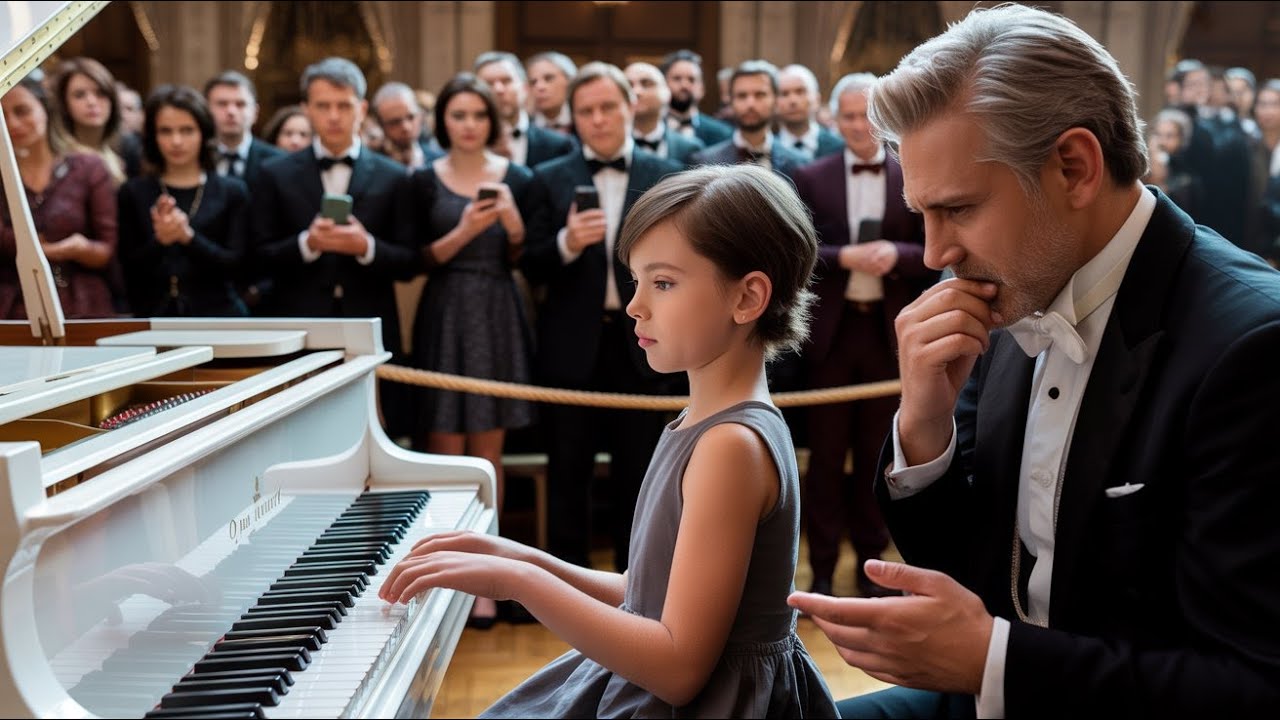
His voice carried authority shaped by years of being listened to. People straightened when he entered. Some smiled too quickly. Others looked nervous. He was known for his sharp mind and sharper words. She did not see him, but she heard everything, the way the room leaned toward him. The small pause before applause.
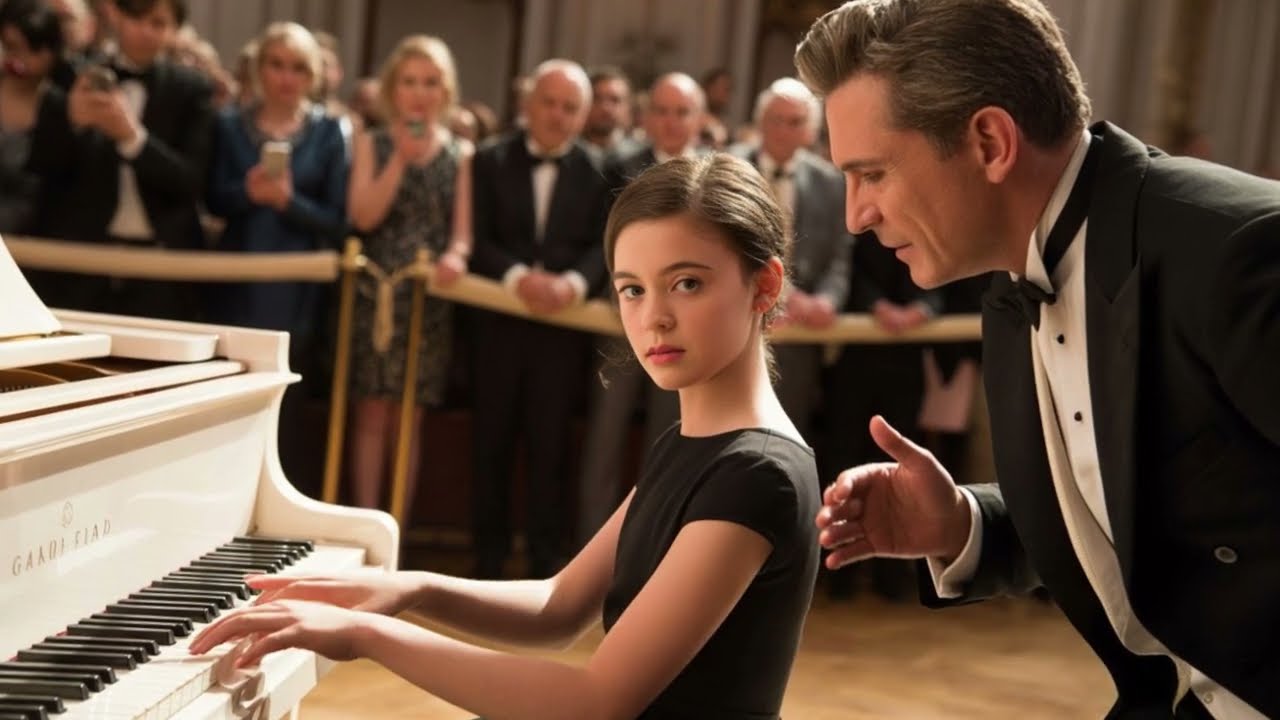
The quiet respect mixed with fear. Dot as the session began. Performers were called one by one. Some played well, some played safely. The maestro commented on technique, precision, control. His praise was rare. His criticism was clean and cold dot. Then her turn was announced. A brief silence followed. She stood slowly, adjusting her grip on the cane and walked toward the stage.
Each step echoed louder than she expected. She could feel eyes on her, measuring her before she played a single note. She reached the piano bench and paused. Dot. The room felt different now, tighter, waiting. She placed her hands on the keys, breathing in the quiet. Before she could begin, the maestro spoke. His voice was calm.
But something in it made the room still. And that was the moment when everything she had known until then was about to be tested. The maestro did not raise his voice. He did not need to. When he spoke, the room leaned toward him without thinking. His words came slowly, carefully shaped as if each one already knew it would be heard. He asked her name.
She answered softly. He paused as if deciding whether the answer mattered. Then he said it. He wondered aloud if this masterass was the right place for someone with her condition. He said it in a polite tone, almost gentle, but demeaning landed hard. He spoke about standards, about fairness, about how music at this level required more than emotion.
The room shifted. Some people looked down at their hands. Others glanced toward her, then quickly away. A few faces showed discomfort, but no one spoke. She remained still at the piano. She had heard this kind of doubt before, though never in a place like this. Never in front of so many people who mattered. Her chest tightened, but her face stayed calm.
Years of learning when to speak and when not to had taught her that silence was sometimes safer. The maestro continued, “He spoke about discipline, about tradition, about how music was built on rules that could not be bent for sympathy. He made it sound reasonable, logical, almost kind, but beneath his words was a question that did not need to be asked out loud. Dot.
Did she belong here? Her teacher, seated a few rows back, shifted in his chair. He wanted to stand. He wanted to say something, but the weight of the room pressed him down. He knew how quickly a moment like this could turn against them. The maestro finally gestured toward the piano. He said she could play, not because he believed in her, but because he believed the result would support his point. A quiet breath moved through the audience.
She placed both hands on the keys. For a brief moment, nothing happened dot in that pause. She felt everything. the size of the hall, the distance between herself and the listeners, the sharp edge of judgment hanging in the air. Her fingers trembled slightly, not from fear, but from the effort of staying present, she reminded herself.
Why she was there, not to prove anyone wrong, not to impress, only to tell the truth the only way she knew how dot she began to play dot. The first notes were soft, almost uncertain. They drifted into the room like a question. Some people leaned back, expecting little. Others waited for a mistake. Then the melody settled. Her hands moved with care, but not hesitation.
Each note followed the next as if it had been waiting its turn for years. The sound grew warmer, deeper. It filled the space without pushing God. Something changed. The whispers stopped. Dot. The maestro sat straighter without realizing it. The music did not rush. It did not try to show skill. It spoke slowly, confidently, like someone who had nothing to hide.
There was sadness in it, but not weakness. There was strength, but not pride. People began to feel it before they understood it. A woman in the front row closed her eyes. A young performer forgot to turn the page of his notes. Someone near the back held their breath. The music carried memories no one had planned to share. Lonely nights, missed chances, quiet hopes people kept to themselves.
Her fingers moved across the keys with a kind of listening as if she were responding to the piano rather than controlling it. The melody rose, then pulled back, giving space for silence to speak. Dot. The maestro’s expression shifted Dot. At first, it was confusion. This was not what he expected. There were no obvious mistakes to point out.
No weak foundation to criticize Dot. Then came discomfort. He recognized something in the music that unsettled him. Not technique, but honesty, the kind that cannot be trained or demanded. Dot. As the piece continued, the hall felt smaller, more personal. The distance between the stage and the audience disappeared. There was only sound and feeling.
She did not see the faces. Watching her dot, she did not need to. She felt the room listening. When the final notes faded, she let her hands rest on the keys a moment longer. She allowed the silence to exist. She had learned that silence could say as much as sound. Dot. No one moved. The pause stretched heavy and full. Dot.
Then applause broke out. Not polite applause. Not careful applause. Dot. Real applause. Dot. It came in waves, surprising even the people clapping. Some stood without realizing it. Others wiped their eyes quickly, hoping no one noticed. Dot. The maestro did not clap at first. He stared at the piano.
his jaw tight. The room waited for him the way it always did. Finally, he placed his hands together once, twice. The sound was firm, controlled. The applause slowly faded. All eyes returned to him. He cleared his throat. He spoke about interpretation, about emotional connection. He searched for words that would place him back in control of the moment. He mentioned balance.
He mentioned dynamics, but something was different now. Dot. His voice lacked certainty. Dot. The comments felt smaller than the music that had just filled the hall. He stopped for a brief second. He looked at her not as a problem to solve, but as a person. Then he asked her where she learned to play. Like that dot, she answered simply. She said she listened. A few people smiled.
The maestro nodded slowly as if considering an idea he had avoided for a long time. He dismissed her from the stage with a short gesture. She stood, picked up her cane, and walked away. Her steps felt lighter than before. Back in her seat. Her teacher leaned close and whispered that she had done well.
She nodded, though she already knew, not because of the applause, but because she had been honest. The masterclass continued. Other performers played. The maestro returned to his sharp critiques. But the room was not the same. Something had been shifted. People glanced at her more often.
No, some with respect, some with curiosity, some with something close to regret. The maestro spoke less dot between performances. He sat quietly, his fingers tapping against his knee. He replayed the music in his mind, though he did not want to dot. It reminded him of a time before titles and praise. A time when music was not a tool, but a companion.
When the session ended, people stood in clusters, talking softly. Some approached her, offering kind words. She thanked them, unsure how to accept attention she could not see. The maestro watched from a distance. He did not approach her dot not yet, but something had been planted, and it would not be easy to ignore.
The days after the master class did not move easily for her, life returned to its familiar rhythm. The small apartment, the old piano, the sounds she trusted. Yet something new sat quietly inside her, like a door left slightly open. She did not think about applause or faces. She thought about the way the room had listened.
She thought about the silence after the last note. Dot. She practiced as she always had, not longer, not harder, just honestly. When her fingers found a mistake, she did not scold herself. She listened again and adjusted. Music had never punished her. It only asked for care that her teacher visited later that week.
He tried to sound casual, but his voice gave him away. He said people were talking. He said the maestro had asked questions after she left. He said doors sometimes open slowly, even when no one admits it. She smiled and poured tea. She did not ask for more details. Waiting had taught her patience. Across the city, the maestro sat alone in his study.
The room was lined with awards and framed photos. Famous halls, important people, moments that once felt alive but now felt distant, like pictures taken by someone else. He replayed the music in his mind. Dot not the notes exactly, but the feeling, the calm certainty, the lack of performance, dot it disturbed him.
He had built his life on control, precision, authority. He believed music needed firm hands to shape it. He believed rules kept it honest. Yet her playing had followed none of his expectations. And still it had reached everyone. He told himself it was emotion without structure, that it lacked discipline, that the audience had been fooled by novelty, but the arguments did not settle him. That night he sat at his own piano for the first time in weeks.
He placed his hands on the keys and waited. Nothing came. The silence felt heavy. When he finally played, the sound felt stiff, careful, like a speech prepared too long in advance. He stopped. Frustration rose quickly. He remembered being young, before titles, before people leaned forward when he entered a room.
He remembered playing in a small space where mistakes were allowed where music was something to share, not manage. Dot a memory made his chest tighten. He stood and closed the piano lid harder than necessary. Dot at the conservatory. Whispers continued. Students spoke about the blind pianist in lowered voices, careful not to sound impressed. Teachers debated quietly, some defending tradition, others admitting they felt something rare.
Invitations arrived for her dot small ones at first. A private gathering, a short performance, nothing grand. She accepted a few, declined others. Crowds still drained her. She chose places where listening mattered more than watching Dot. At one gathering, the maestro appeared without warning. She did not know he was there until she felt the room change.
The air shifted the way it had during the master class. People sat straighter. Breathing grew careful. She finished her piece before anyone spoke. Applause followed, quieter than before, but just as real. The maestro approached her slowly. Up close, his voice sounded different, less sharp, more measured. He said her performance stayed with him. She thanked him.
He asked questions about how she practiced about how she chose pieces. He did not mention her blindness. Not once she answered simply. She spoke about listening, about letting sound guide her instead of forcing it. He nodded, though his eyes showed struggle. He invited her to visit the conservatory again, not for a performance, for a conversation.
Dot, she agreed. The meeting was held in a quiet room with tall windows. Sunlight moved across the floor in a way she could feel rather than see. The maestro sat across from her, hands folded. He spoke honestly, perhaps for the first time in years. He said he had judged too quickly. He said he had been wrong.
The words did not come easily. They felt unfamiliar in his mouth. She listened without interrupting. He asked her what music meant to her. She paused before answering. She said music was. How she made sense of things she could not explain. How she stayed connected to people even when words failed. How it reminded her she was not alone.
The maestro looked down. He admitted he had forgotten that feeling. Dot’s silence filled the room. Not uncomfortable, but thoughtful, he asked if she would consider working with the conservatory, teaching, perhaps, sharing her approach with students who had learned to chase perfection at the cost of honesty.
She hesitated, dot she had never imagined herself teaching. She had always been the one listening. She asked for time. He agreed. Dot. As she left, students watched quietly. Some smiled, others looked confused. Change often unsettles those who benefit from the old ways. That evening, she sat at her piano and played a piece she had never played before.
It came to her slowly, forming as she listened. It carried both uncertainty and hope across the city. The maestro listened to a recording of her performance. This time he did not analyze. He simply listened. He felt something softened. Dot. The lesson was not complete. But it had begun. The decision did not come to her all at once for days. She carried the maestro’s invitation quietly the way she carried most important things.
She did not rush to answer. She let the idea sit beside her while she practiced, while she listened to the sounds of the building at night. While she walked familiar streets with her cane, tapping steady paths, teaching others, felt heavy dot, she had spent her life learning how to listen, not how to lead.
Yet she could not ignore the feeling that something was shifting, not just for her, but around her. People who once spoke over her now waited. People who once doubted now watched more closely. The change was slow, but it was real. Dot. She agreed to return to the conservatory dot this time. She was not there to perform, that the room was smaller than the main hall.
Chairs were arranged in a circle instead of rows. There was no stage, no distance between speaker and listener. Students entered quietly, unsure of what to expect. The maestro introduced her. His voice was steady, but different than before. It carried less command and more care. He spoke about perspective, about listening beyond rules.
He did not speak of her blindness as a weakness. He spoke of it as a way of seeing differently. She sat among the students, not in front of them. Not at first. No one spoke. Then a young performer asked how she learned to trust herself without written music. Another asked how she handled doubt. A third asked how she stayed calm when judged. she answered honestly. Dot.
She said she felt doubt all the time. She said fear never fully leaves. She said the difference was choosing not to let those feelings decide her worth. Room softened. Dot. Students began sharing their own struggles. The pressure to be perfect. The fear of disappointing teachers. The feeling of being unseen despite hard work. She listened. Dot.
The maestro watched quietly from the edge of the room. He realized something than she was teaching without trying. Two weeks passed. Word spread quickly. More students asked to attend the sessions. Teachers stopped by, some curious, some skeptical. The conservatory felt different on those days. Less rigid, more human. Dot.
The maestro found himself listening more than speaking. He noticed how students played after meeting her. Not cleaner, not louder, but truer. One afternoon, the conservatory announced a public concert. The maestro would conduct. He asked her to perform. This time, there was no hesitation in his voice. The invitation felt heavier than the first. She understood what it meant.
Not just a performance, but a statement. A chance for him to stand beside her in front of the same world that once doubted her. She agreed. A night of the concert arrived. The hall was full dot. She could feel it in the air. The low hum of expectation. The layered sounds of hundreds of people settling into seats. Programs rustling. Soft coughs echoing. Backstage. She sat quietly.
hands folded. Dot. The maestro approached her. He spoke without ceremony. He said he was nervous. She smiled. She told him that meant he still cared. When her turn came, the hall fell silent. She walked to the piano with steady steps. This time there were no whispers. No doubt hanging in the air.
Only attention dot the maestro raised his hands. The music began dot. It was not the same piece as before. This one carried weight and light together. It spoke of struggle and release, of falling and standing again. The orchestra followed her lead. The maestro watched her closely, not the control, but to understand something inside him loosened. He allowed the music to breathe. The audience felt it.
They leaned forward, not because they were told to, but because they wanted to. When the final note faded, a silence was deep dot and applause rose filling every corner of the hall. The maestro turned toward her. He bowed, not as a formality, but as respect. He spoke to the audience. He admitted he had once been wrong.
He said music head reminded him why he began. He thanked her. The words were simple, but they carried weight. That night, as people slowly left the hall, many stopped to speak with her. Some shared stories, some shared gratitude, some said nothing at all, letting silence do the work. The maestro stood nearby, listening. He did not interrupt. He did not need to.
The lesson was no longer private. Dot. It had become shared. Life did not change overnight. That surprised many people. Dot. After the concert, there were no sudden crowds waiting outside her door, no loud celebrations, no dramatic speeches about success. What came instead was quieter and deeper. She returned home the same way she always did.
The same hallway, the same familiar sounds, the same piano waiting patiently against the wall, but something inside her had settled. dot not pride dot not relief something steadier dot she had spoken through music and the world had listened that was enough dot in the weeks that followed the conservatory invited her back regularly not as a guest not as a symbol as part of the place she led listening sessions where students played without judgment no scores on the table no comments at the end unless they were asked for at First, the silence made people uncomfortable. They were used to being corrected over
time. They learned to hear themselves. Some struggled. Some cried quietly. Some smiled for the first time. While playing, she never told them, how to be better. She only reminded them how to be. Honest. Do the maestro attended these sessions. Often he sat in the back and listened dotted times.
He closed his eyes. People noticed the change in him. He interrupted less. He praised more carefully. When he corrected, he explained why. He began asking questions instead of giving answers. One evening, after most students had left, he stayed behind. He told her he was afraid.
The word sounded strange coming from someone like him. He said he was afraid of becoming irrelevant. Afraid that the world was changing and leaving him behind. Afraid that if he loosened his grip, everything he built would fall apart. She listened. Then she said something simple. She said, “Music never belonged to him to begin with.” Dot.
It belonged to everyone who was willing to listen. He laughed softly. Dot the sound surprised them both. news of her story traveled beyond the conservatory. People shared it not as a tale of pity but as a reminder. Articles spoke about listening differently about talent found in unexpected places about the danger of judging too quickly.
She did not read the stories. Dot. Others told her what mattered. That young musicians felt seen that parents listened more closely to their children. Dot. The teachers paused before speaking. Dot. She accepted invitations carefully. Dot. She chose places where people wanted to understand. Not just admired. Dot. At a small community hall.
She played for an audience that included children, workers, and elderly listeners. The piano was slightly out of tune. The lights buzzed. None of it mattered. The music filled the room. Afterward, a child asked how she knew what to play. She knelt down and said she listened. The child nodded. As if that explained everything, the maestro continued conducting.
But he conducted differently now. He allowed pauses. He allowed mistakes. He trusted the musicians more. Some critics noticed and questioned the change. They said his style had softened, that his performances were less sharp. Dot. He did not argue. He said they were more alive. One afternoon, he invited her to walk with him through the conservatory halls.
He described the portraits on the walls, the faces of people who had shaped the institution. He admitted most of them looked the same. sounded the same. Thought the same. He asked her what she thought the future should look like. She said it should sound fooler. He smiled. Dot. The conservatory slowly changed. Scholarships widened. Auditions focused less on perfection and more on expression.
Students from different backgrounds found space where they once felt unwelcome. Not everyone agreed. Dot. Some left, dot, some complained, but many stayed. Dot, and the music grew richer. Dot at home. She continued her quiet life. She cooked simple meals. She walked familiar roots. She practiced everyday, not for an audience, but for herself.
Sometimes she played late into the night, letting the sounds mix with the city outside. Cars passing, distant voices, life continuing. Dot, she thought about the moment at the master class. When doubt had filled the room, she did not feel anger. She felt understanding. People often fear what they do not know how to hear. Years later, students would speak of that time as a turning point.
They would describe a woman who taught them without demanding attention. A maestro who learned how to listen again. She never corrected their stories. She knew truth changes shape depending on who carries it. Dot. One evening. After a long day, she sat at the piano and rested her hands on the keys without playing.
She listened dot to the quiet dot to her breath. Dot to the steady rhythm of a life fully lived. Some lessons are loud. Others arrive softly and stay. This one did not fade. Dot. It lived on in every person who chose to listen before judging dot and in the music that followed.