The ascent to the pinnacle of corporate power is often a calculated, cold process, and no one embodied this more perfectly than Ethan Hail, the youngest tech mogul in the city, CEO of the monolith known as Hail Industries. His empire was built on sharp decisions, relentless drive, and the rumored absence of a heart. His world was one of glass towers, impenetrable control, and calculated risk. Yet, the foundation of this seemingly unbreakable structure was compromised not by a faulty IPO or a market crash, but by a quiet, unintentional night with his executive assistant, Emma Rivera, and the two words she left behind: a resignation letter.
Emma, at 27, was everything the city skyline ignored: overworked, underpaid, and tethered to the job by the crucial necessity of paying her brother’s medical bills and avoiding eviction. When she was asked to step in as a last-minute replacement date for a high-profile charity gala, she accepted, never imagining that the evening’s trajectory—fueled by too many toasts and too many glances that felt like shared secrets—would land her alone in Ethan’s penthouse, the city lights spinning beneath them like a dizzying lie.
The following morning, Emma’s world was shattered, not by scandal, but by guilt and a profound sense of having crossed an irreparable professional and personal boundary. In the early hours, she penned her resignation, a final, trembling sigh clutched in her hand. For Emma, it was self-preservation; she knew that for men like Ethan, women like her were momentary stories, forgotten by Monday. She was not a charity case, and she refused to become a cautionary tale.

The Crack in the Armor
When Ethan Hail summoned her to his office that morning, Emma braced for the awkward silence of a mistake to be buried, but she met with something far more volatile: sincerity. Ethan, the man of granite composure, looked at her with an unreadable but intense gaze. He produced the one thing she thought she had lost—a tiny silver earring—and in the moment their fingers brushed, the walls around him crumbled.
“You’re not resigning,” he stated, his voice quiet but absolute. He had seen the letter. He saw her fear, her self-condemnation. “You think walking away solves anything? You think I’d let you just vanish after what happened?”
The moment became a profound confrontation of their unequal positions. When Emma insisted the night was a mistake and that their roles—boss and employee—could not be undone by fleeting passion, Ethan’s confession cut through her defenses. “Maybe it wasn’t,” he whispered. “I’ve spent years building walls around my life. Then you showed up—quiet, stubborn, brilliant—and suddenly nothing feels the same. You’re the first person who ever made me feel human again.”
Despite his raw honesty, Emma retreated, pulling away from a promise she couldn’t afford to believe. As she left, his final words followed her, the words she would later cling to through the storm: “You are to me.”
The Storm of Scandal and The Fall of a King
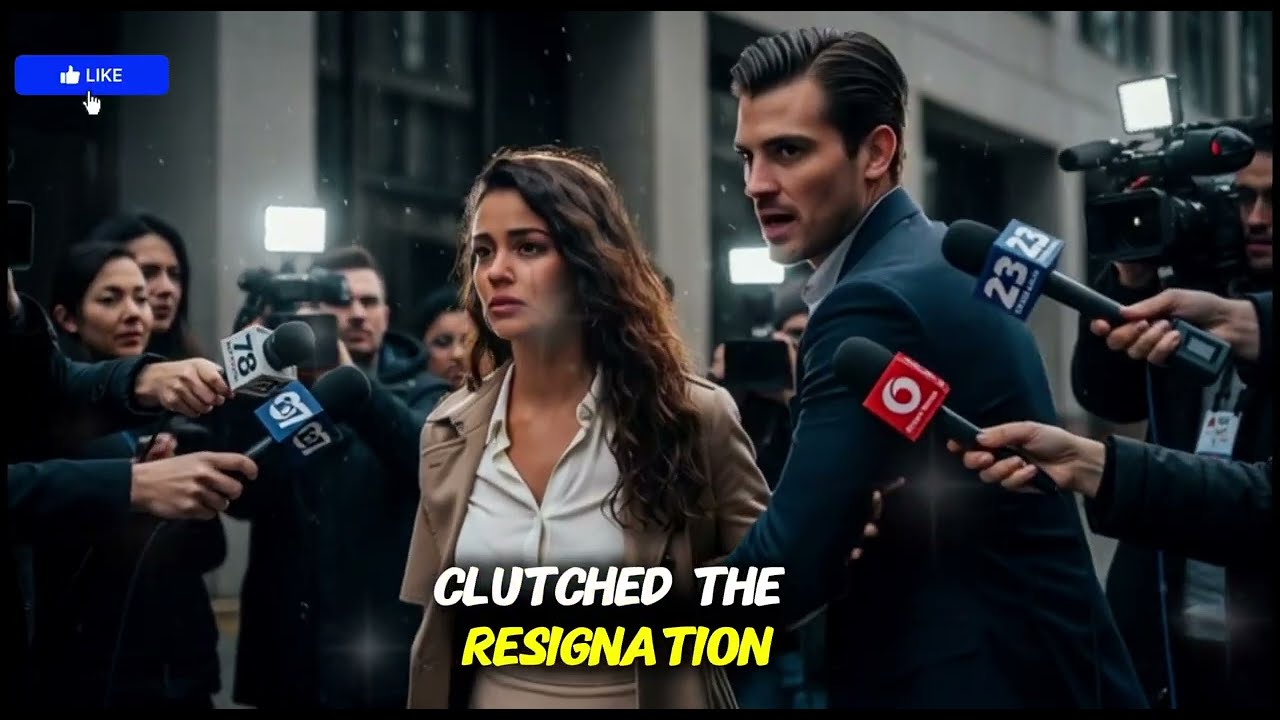
The office floor soon became a cage of glass and gossip. Whispers followed Emma down the hallway, and her life, once invisible, became a scrutinized headline. The inevitable happened: photos of Emma and Ethan from the gala balcony were leaked to the media, fueling a ferocious scandal. The articles were brutal, dissecting Emma’s life, digging into her brother’s medical bills and her student loans, portraying her as a cunning assistant “climbing the ladder the easy way.” She went from invisible employee to national headline and pariah overnight.
The board of directors, terrified of the plummeting stock, demanded a crisis strategy: a denial, a calculated silence, or an immediate, quiet dismissal of Emma. But Ethan, true to his word, refused to let her be ruined. In an act of radical, reckless defiance, he commandeered the Hail Industries official social media account and posted the same viral photo with a caption that was both a love letter and a declaration of war: “She’s not a scandal. She’s the best decision I ever made.”
This decision, prioritizing personal integrity over corporate stability, immediately sealed his fate. The board, led by the furious Charles Denton, moved swiftly. In a silent, rain-soaked boardroom, they voted their visionary CEO out, citing his actions as a liability that compromised the company’s reputation. “You’ve jeopardized everything we built,” Denton spat. “I didn’t jeopardize it,” Ethan replied, stripped of his title but not his composure. “I humanized it.”
Ethan Hail lost his multi-billion-dollar empire in the space of an hour, all for the woman the world called his junior assistant. He walked out of the towering monument to his success, a man of staggering wealth suddenly alone and without purpose, finding himself on a cold park bench near the river, the city skyline a cruel mockery of what he’d sacrificed.
The Whistleblower’s Victory

Meanwhile, Emma’s life continued to spiral. Her security badge was deactivated, her desk cleared, and she was forced to take refuge in her small, box-filled apartment, where hopelessness settled like the smell of the rain. Ethan, in a gesture that proved his sincerity, tracked her down at her backup diner job to give her an envelope—an anonymous donation covering her brother’s treatment fund. “I didn’t do it for you,” he told her, “I did it because I finally understood what you tried to teach me. That love isn’t control. It’s freedom.”
The storm, however, hadn’t finished. A new, more insidious article appeared, sourced by a familiar email address: Linda, Ethan’s executive assistant, had sold the story and claimed the relationship was a “PR stunt” to protect her own position. This final betrayal was the trigger for Emma’s transformation. No longer the quiet assistant, she grabbed her coat and, with Ethan by her side, drove back to the company headquarters—not to beg, but to fight.
In a stunning return to the boardroom, Emma, though trembling, stood tall before her persecutors. She filed an official claim under the state’s whistleblower protection laws for unethical dismissal, defamation, and privacy violation. She accused the board of destroying her life and using her as a scapegoat, stating, “For the first time, I’m in line. My own.” It was a magnificent moment of self-defense, a complete and total reclamation of her dignity that stunned the room, including the man who once employed her.
A New Architecture of Love and Purpose
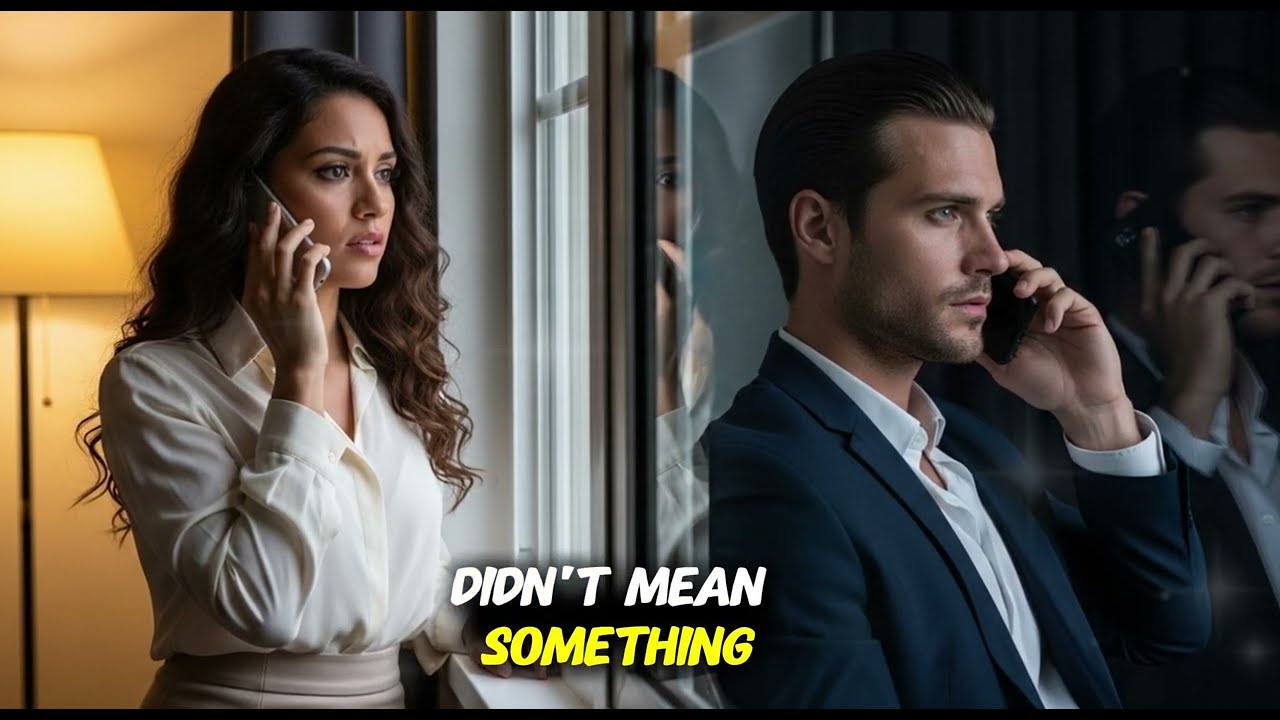
Emma didn’t stay with Ethan immediately. She walked away from the chaos to build something that was unequivocally her own. Three months later, on the corner where the diner once stood, a small, elegant office with gold lettering appeared: Rivera Consulting, Media Ethics and Recovery. She had turned her pain into purpose, using her experience as a pariah to help journalists and whistleblowers clear their names.
Ethan, meanwhile, had truly vanished from the headlines, having sold his shares and devoted his assets to the Hail Foundation, choosing freedom over control. He had kept only two things from their past: her silver earring and her crumpled resignation letter.
The final meeting took place on the rooftop terrace of the foundation, the place where their story had begun. Ethan, stripped of his corporate suit and entourage, stood before her, looking older, warmer, and more profoundly human. “You didn’t lose yourself,” he told her, finally reading the resignation letter she’d left months ago. “Emma found her.”
He had lost his empire, but he had found his soul. For Emma, standing equal to him for the first time, the foundation of their love could finally be built on truth, not power. Their kiss was quiet, trembling, and full of forgiveness. As the night pulled back from the rooftop, the Foundation sign below flickered once, then went dark, only to be replaced by a new name: “The Rivera-Hail Initiative for Second Chances.”
It was a final, beautiful affirmation: love, when stripped of pretense and control, is not a mistake, but the ultimate act of courage. They had both lost everything fake to find what was real. And for two people who once tried to resign from their connection, they finally understood that some stories don’t end with goodbye; they just wait for the right chapter to begin. This was the chapter where they learned that love, and life, only truly start when you are willing to let go of everything that holds you back.