A Rapper’s Desperate Plea: K Shordy Alleges Detective Framed Him, Then the Judge Threw Him in The Hole
The phrase “Save it for trial” rings with the cold, unyielding finality of the American justice system. But for Theres “K Shordy” Pow, a 24-year-old rapper from Jacksonville, Florida, those four words were not just a dismissal; they were a death sentence to his defense and the catalyst for four months of agonizing isolation.
Currently serving a 12-year prison term for a prior gun charge, K Shordy is now facing a high-stakes murder trial. But as his trial date approaches, the stakes have transformed from simply a question of guilt to a fundamental question of judicial integrity. From behind the walls of his cell, K Shordy has launched a stunning, detailed, and deeply emotional campaign, writing letters directly to the court alleging that the lead detective on his case is intentionally framing him through fabricated testimonies, tampered evidence, and a deliberate cover-up of police misconduct.
This is the story of a young man fighting for his life, caught in a cycle of gang violence, who now claims his true fight is not against the criminal charges, but against a system allegedly corrupted by a single dishonest officer.

The Murky Waters of Jacksonville Gang Warfare
K Shordy’s life, as detailed in the documents reviewed, is deeply entangled with the relentless, retaliatory violence of Jacksonville’s street culture. A documented member of the Fulio06 gang block, he had already survived two previous attempts on his life. In one devastating incident on March 19, 2020, K Shordy survived a shooting, but his girlfriend, Anandi, was tragically killed. Documents show the attackers, later charged, were seeking revenge because they believed K Shordy had killed Dcoin Saxton.
This history sets the stage for the murder charge he now faces: the fatal ambush of Xavier Maize, also known as 187 Noace, on September 28, 2021. Detectives quickly labeled the shooting as gang-related, identifying K Shordy as the gunman. The investigation hinged on a black Range Rover, allegedly used in the murder and owned by the mother of co-defendant Jacobe Sykes (Tufo).
But it is the evidence linking K Shordy to the Range Rover and the crime scene that forms the core of his defense—or rather, his central claim of corruption.
The Framing Allegations: A Case Built on Lies?
In a series of heartfelt and meticulously detailed letters to Judge Kevin Bias and Judge Sherula, K Shordy laid out his complaints, risking further retribution but clinging to the hope that a court would intervene. His primary target: Lead Detective Howard Saunders.
K Shordy alleges Saunders is responsible for creating “tainted evidence” to build the case. The defense centers on several glaring discrepancies that, if true, prove the detective deliberately misled the court to obtain search warrants.
1. The Mysterious Phone and Fabricated Witnesses
The first piece of evidence cited by the state involves a phone ping placing K Shordy near the crime scene around the time of the murder. Saunders testified that the phone belonged to K Shordy. However, K Shordy claims AT&T Mobile confirmed the number provided by Saunders had “no subscriber.”
To connect the phone to K Shordy, Saunders relied on witness statements, specifically naming Marquita Jones and Tamaya Bradley, claiming they were with K Shordy the day before the homicide and communicated with him on the number.
K Shordy’s rebuttal is explosive: he claims he has never met Marquita Jones in his life and points out a catastrophic contradiction in the detective’s own documentation. K Shordy alleges that Saunders’ incident report contradicts his court testimony by stating that Miss Jones merely told him an unnamed friend saw an Instagram Live post in which K Shordy allegedly claimed responsibility for the homicide. In short, she knew of him due to neighborhood disputes, not that she was with him.
K Shordy writes that Tamaya Bradley’s deposition further shattered the detective’s narrative, stating she “doesn’t recall saying that or recognize any number from me,” implying Saunders was granted a search warrant based on “false information.”
2. The Phantom Report and the Ballistics Mismatch
The next thread of suspicion concerns the suspect vehicle. Saunders claims K Shordy was pulled over in the Range Rover nine days before the incident and that this was documented in a field report. K Shordy says he has received the reports but found no such documentation anywhere. Even more troubling, his attorney questioned Detective CE Hogue for the report number, who allegedly evaded the question entirely.
The most damning piece of forensic evidence, however, revolves around the weapons. The victim, Xavier Maize, was murdered by a .40 caliber handgun. Yet, the firearm allegedly recovered at the arresting address and linked to a picture on K Shordy’s phone (of a lap and a holster concealing a weapon) was documented as a Glock 9mm.
“You wouldn’t even need a forensic or ballistic report to prove this firearm isn’t responsible,” K Shordy wrote, claiming Saunders knew the weapons didn’t match but pushed the narrative anyway, using the existence of a gun on his phone as material evidence to secure the arrest warrant. He argues the detective prioritized an arrest over the truth, violating his right to due process and a fair trial.
3. Destroyed Body Cameras and Phone Violations
K Shordy’s allegations of misconduct extend to the night of his arrest. After the Range Rover crashed and he and co-defendant Lorino Span were handcuffed, he claims two phones were found “in the vicinity unlocked.” He asserts that officers were told not to touch the phones because they were evidence.
However, K Shordy claims that 80% of the body camera footage of the arrest was destroyed by officers who were “purposely covering them to hide the malicious acts.” He claims he watched officers go through the unlocked phones while he was held on the crime scene for hours, before they officially formulated a plan and got a search warrant for devices they had already illegally searched. He states the intent was clear: to “corrupt evidence” within the phone.
Furthermore, Saunders claimed Detective Gerriga identified K Shordy as the passenger when the suspect vehicle fled. K Shordy states that Gerriga’s deposition reveals this is false, as he only identified Lorino Span.
The Courtroom Showdown and Four Months in Confinement

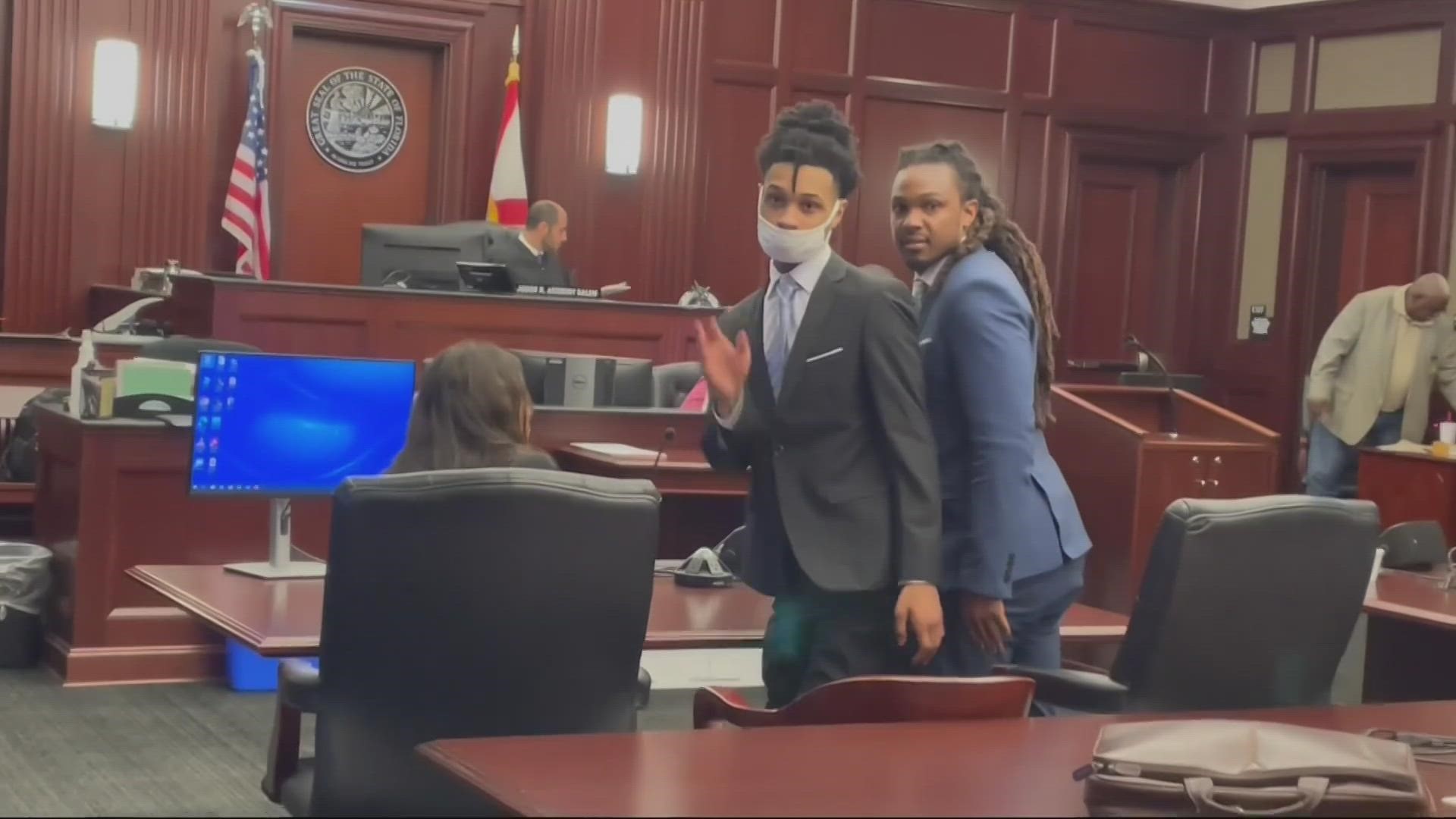
The culmination of K Shordy’s desperation came in court on April 10, 2024. After patiently waiting to speak to Judge Bias about the “intentional trying to frame me,” the Judge cut him off with the now infamous response: “Save it for trial.”
Frustration boiling over from 35 months in and out of courtrooms, K Shordy muttered, “This is crazy,” under his breath and shook his head. This small, human moment of despair was all the fuel the Judge needed. Judge Bias, with a smirk, asked if the remark was intended for him.
K Shordy’s response—“No, you would know”—was perhaps not the most prudent legal maneuver, but it was an understandable retort from a man who felt his very freedom was being stolen by procedural delay and alleged corruption.
Hours later, he was brought back to court. Judge Bias, though noting he “didn’t see you being contempt on camera,” took the remark “as a threat” and recommended phone restrictions. The jail’s interpretation of this recommendation was draconian: K Shordy was placed in confinement for 23 hours a day, with no phone access, for four months.
“Your honor this is cruel and unusual punishment for something I did not do,” he pleads in a later letter, detailing his psychological anguish and his inability to communicate with his family. Even a simple request to lift the phone restrictions, which he described as a “blessing,” was blocked when a male lieutenant advised against receiving any mail from him to the Judge, effectively silencing him completely.
K Shordy’s plea is no longer just for his freedom; it is for his fundamental right to a fair process. He has no fingerprints or DNA on the murder weapon, and even official phone analysis shows the tower pings only give a radius, with one location potentially 150-200 miles away from the crime scene.
He begs the court to allow a suppression hearing to challenge the alleged photo on the phone—the only way, he argues, his trial could be considered “fair enough.”
The shocking allegations of detective perjury, evidence tampering, and the severe, questionable judicial punishment levied for a simple verbal objection have ripped open the façade of K Shordy’s case. It forces the public to ask: If these claims are true, can justice truly be served when the evidence used to indict a man is allegedly built upon a deliberate foundation of lies?
The full weight of the justice system is bearing down on K Shordy. With his life on the line and his voice choked off by the walls of confinement, his letters remain a powerful, desperate cry for the chance to prove, not in a sensationalized court of public opinion, but in a fair and uncorrupted courtroom, that he is being framed.