In the glittering, high-stakes world of Hollywood, a star’s career is often measured by the accolades they collect, the box office records they break, and the iconic characters they bring to life. For Anika Noni Rose, a Tony Award-winning powerhouse whose voice defined a generation, the measurement is far more complex. Her journey is a profound study in the brutal, unseen sacrifices required to achieve true cultural impact—a testament to relentless preparation and an unwavering personal commitment to legacy. Behind the triumphs of Dream Girls and the historic joy of The Princess and the Frog, Rose navigated physical pain, intense pressure, and the unexpected burden of becoming an icon, a story that continues today as she leads the charge in an urgent fan movement to save the future of her most beloved character.
The narrative of Rose’s rise begins not in a spotlight, but in the quiet, supportive environment of Bloomfield, Connecticut. Born in 1972, her path was paved by her parents, who never sought to steer her away from her dream of acting. Instead, they offered a crucial, foundational question: “How are you going to prepare yourself?” This simple query became the guiding philosophy of her life. She was a natural talent who tried everything—track, saxophone, soccer—but it was the rush of adrenaline she felt on stage during a high school production of Fame that cemented her destiny.
Rose’s preparation was deliberate, strategic, and uncompromising. She chose to study theater at Florida A&M University, a historically Black college, before honing her craft at the American Conservatory Theater in San Francisco. This deep, formal training set her apart, providing the bedrock for a career defined by versatility. She arrived in New York City with no job prospects, yet within months, she made her Broadway debut in Footloose in 1998. The theater world finally crowned her in 2004 when she starred as Emmie Thibodeaux in Caroline, or Change, a role that earned her the Theater World Award, the Lucille Lortel Award, and the highest honor in American theater: the Tony Award for Best Featured Actress in a Musical. Rose’s middle name, Noni, means “gift of God,” a sentiment she tearfully acknowledged during her acceptance speech, confirming her arrival as a force of nature.
The Six-Inch Sacrifice: The Brutal Truth of Dream Girls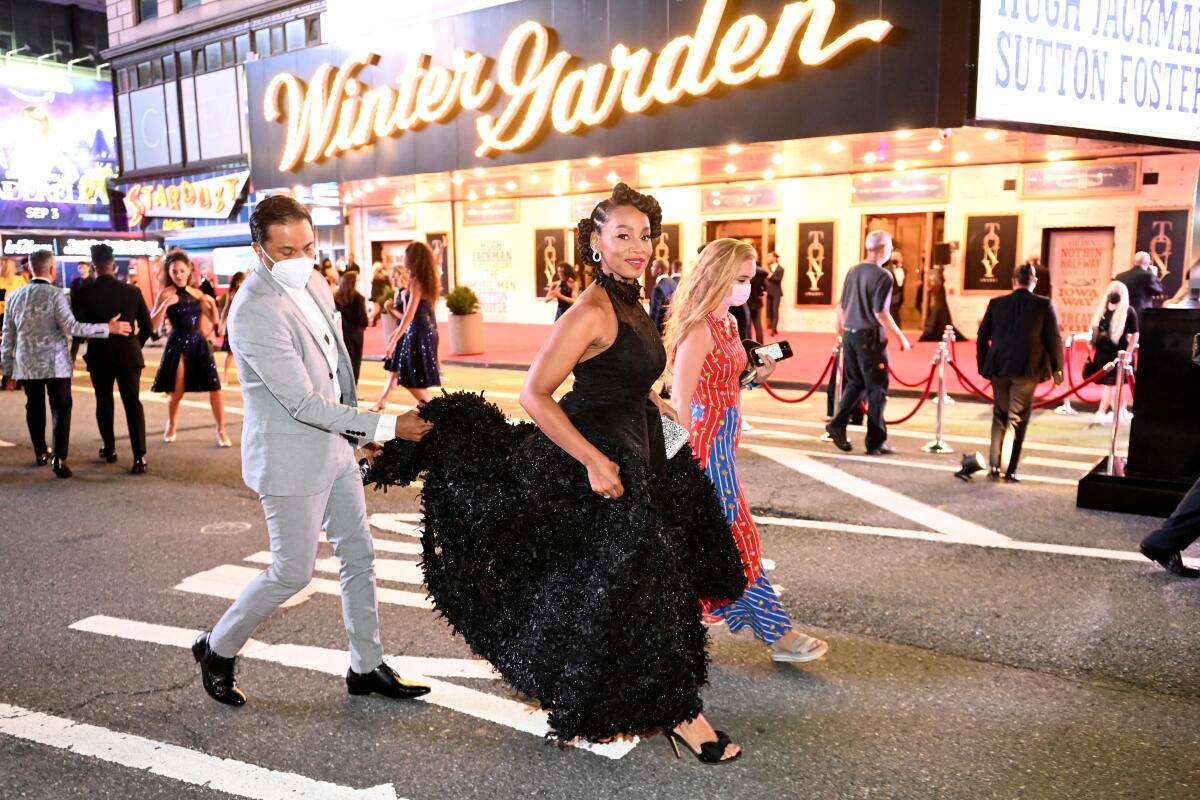
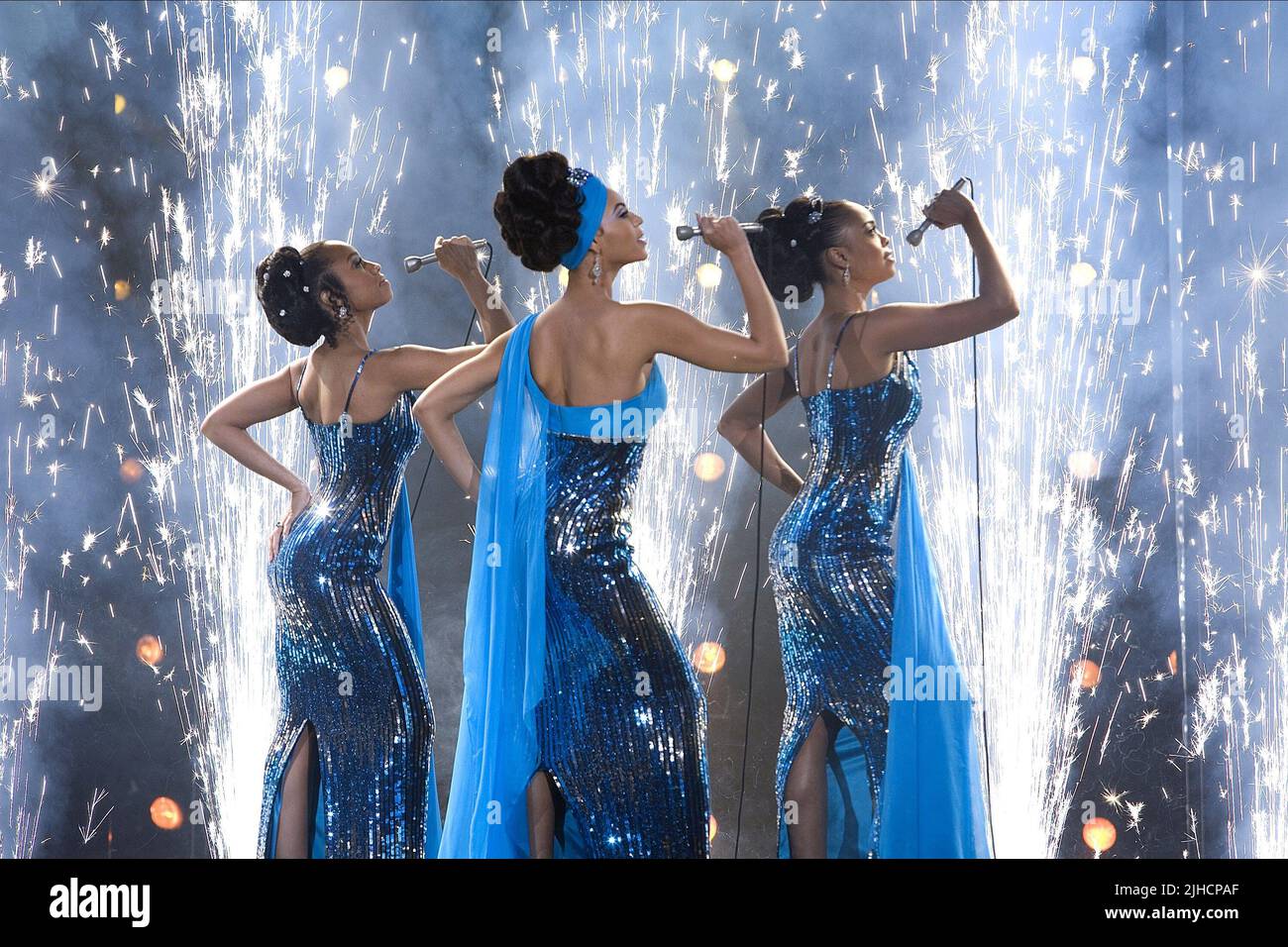
The accolades of Broadway led to the seismic opportunity that would thrust her onto the global stage: the 2006 film adaptation of Dream Girls. Rose was cast as Lorrell Robinson alongside a constellation of stars—Beyoncé Knowles, Jennifer Hudson, and Eddie Murphy. It was a dream scenario, a cultural phenomenon in the making, but it came with a shocking, physical demand that has remained one of the hidden costs of her cinematic success.
Anika Noni Rose stands at 5’2.5”, a stature that became a serious point of concern for the filmmakers. Her co-stars, Beyoncé and Jennifer Hudson, stood several inches taller, creating a logistical headache for director Bill Condon. How could they frame the three “Dreamgirls” together effectively without Rose appearing dwarfed? The solution, as brutally pragmatic as it was physically damaging, was imposed instantly: Rose had to wear five-and-a-half to six-inch heels for the entire run of the show.
For weeks, every complex musical number, every scene involving movement or choreography, was performed atop towers of leather and steel. This was not a fashion choice; it was a mandate of visibility, a painful concession to Hollywood’s rigid expectations of how a female ensemble must look on screen. The physical toll was immense, leaving her in agonizing pain for weeks. Yet, it was in this very moment of forced physical sacrifice that Rose proved her commitment to her craft, enduring the pain to ensure her place in a generation-defining film. The blending of the three women’s voices, which Rose recalls hitting with electric perfection during their first rehearsal, was the only thing that mattered, a sound so perfect it transcended the height disparities and the accompanying pain.
The Unexpected Burden of Princess Tiana
If Dream Girls required a physical sacrifice, her next iconic role demanded a profound emotional and professional one. In 2007, Disney was preparing to break a seventy-year tradition with The Princess and the Frog, the studio’s first fairy tale featuring a Black princess. They needed a voice that could embody the weight of representation, the joy of a young woman with massive dreams, and the burden of being “the first.” They chose Anika Noni Rose to voice Princess Tiana.
For Rose, it was the fulfillment of a childhood aspiration to be a Disney voice, though she never specifically dreamed of being a princess. The moment The Princess and the Frog premiered on December 11, 2009, Tiana became an immediate icon, and Rose’s life was irrevocably altered. She hadn’t anticipated the immense sense of responsibility that followed. For the next several years, Rose made a conscious, difficult choice: she turned down certain film and television roles that she felt were in opposition to the image of Tiana—the inspiring, aspirational figure she wanted Tiana to be for young girls around the world.
“I owed it to the image that Tiana was to keep myself,” she later explained. This self-imposed ethical constraint is a powerful, yet little-known, dimension of her legacy. It is an act of artistic guardianship, demonstrating a profound understanding of how cultural icons impact the world far beyond the screen. This extraordinary dedication led to her being named a Disney Legend in 2011 at the age of just 38, a recognition of the indelible mark she had made on the studio’s history.
From Trauma to Tiana’s Palace: The Continuing Journey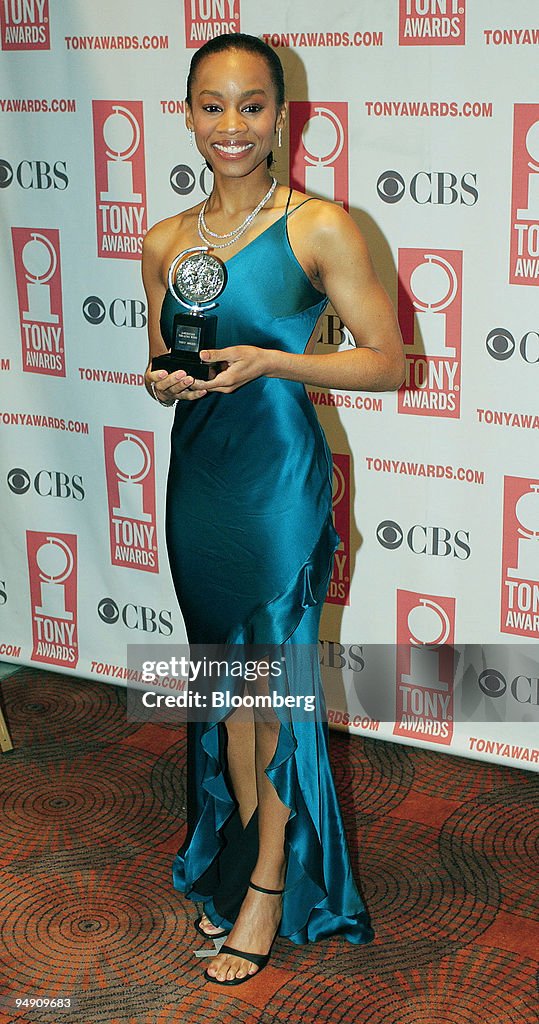
Rose’s career trajectory is marked by a refusal to be categorized or limited by the labels of “princess” or “singer.” Her work with Tyler Perry in 2010’s For Colored Girls saw her tackle devastating, adult trauma. The role, adapted from Ntozake Shange’s intense play, took an emotional toll, but its impact was transformative. Rose recalls a moment when a friend confided in her that the film had given her the courage to speak about her own trauma for the first time. It was a profound realization of the true power of her work: not just to entertain, but to heal and validate.
She continued her prolific work across mediums, earning a second Tony nomination for the 2014 revival of A Raisin in the Sun, and captivating audiences in television hits like Roots, Power, and The Quad. During the 2020 pandemic lockdown, she instinctively responded to the moment, creating a weekly series called “Bedtime Stories for the Littles,” reading books to ease the fears of small children, often including the Princess and the Frog book, Tiana’s Growing Experiment.
The Tiana legacy, however, is not just about the past; it is a living, evolving story, fiercely protected by its fans. In 2020, Disney announced that the controversial Splash Mountain ride would be reworked into Tiana’s Bayou Adventure to remove its affiliation with Song of the South. Rose’s response was immediate enthusiasm, and she was confirmed to reprise her voice role for the attraction, which opened in 2024. The transformation also brought Tiana’s Palace restaurant to Disneyland, a concept Rose had dreamt of for years.
The Cancellation and the Call to Action
Yet, the victory was short-lived. Disney’s decision to abruptly cancel the highly anticipated Tiana Disney+ series, which would have continued the character’s journey, sent shockwaves through the fandom. For a character who represents a watershed moment in representation, the cancellation felt like a step backward, a betrayal of the investment the audience had made in Tiana’s future.
In a move that solidifies her role as a true artist and advocate, Rose has not remained silent. She is deeply grateful for the fan love and is encouraging the ongoing flood of emails to Disney demanding the series be reinstated. It is a powerful message: the journey is not over, and the audience has a voice.
This advocacy connects directly to the philosophy she now shares in her first children’s book, Tiana’s Perfect Plan. The book, which follows Tiana’s attempt to bake a perfect cake for her in-laws, ultimately concludes that perfection lies in the effort, not the outcome. Rose admits she wrote the book for herself, the lifelong perfectionist constantly tying herself into knots.
At 52, Anika Noni Rose refuses to rest on her laurels or utter the phrase, “I’ve made it.” She fears that to declare the journey over would be to stop the journey itself. She continues to train, to grow, and to learn, offering the same advice to young actors today: “Train yourself. Even if you think you’re the best thing that’s ever been heard or seen, train yourself.”
From the physical pain of six-inch heels to the emotional weight of a cultural landmark, Anika Noni Rose’s career is a blueprint for achieving artistic greatness while fighting for legacy, representation, and the continuation of dreams, both her own and those of the millions who find themselves in the voice of a princess. She is currently set to voice a role in the upcoming Mufasa: The Lion King and Zootopia 2, confirming that her journey is far from complete, and her powerful voice will continue to shape the most important stories in Hollywood for years to come.